How to Invest in Argentina from Abroad in 2026: The Milei Trade, Explained
LATIN AMERICA · INVESTING · 2026
Key Facts
—Easiest route. the Global X MSCI Argentina ETF (ARGT) on the NYSE bundles the market into one holding.
—Big names. ADRs of YPF, Grupo Financiero Galicia, Banco Macro and Pampa Energía trade in New York.
—The story. Milei’s reforms have cooled inflation and lifted the Merval to post-election highs.
—The catalyst. MSCI is weighing a return to emerging-market status; JPMorgan estimates an upgrade could draw close to US$1 billion.
—Big projects. the RIGI regime offers 30-year tax and legal stability for investments over US$200 million and runs until July 8, 2027.
—The risk. currency controls have eased but Argentina’s volatility and FX history are real.
—Currency. the peso has steadied, but FX remains the biggest swing factor.
Argentina is Latin America’s boldest 2026 trade: a reform story that has lifted the Merval to post-election highs and put a possible MSCI upgrade in play. Foreigners reach it most easily through US-listed ADRs and a single ETF — and should respect the country’s history of volatility.
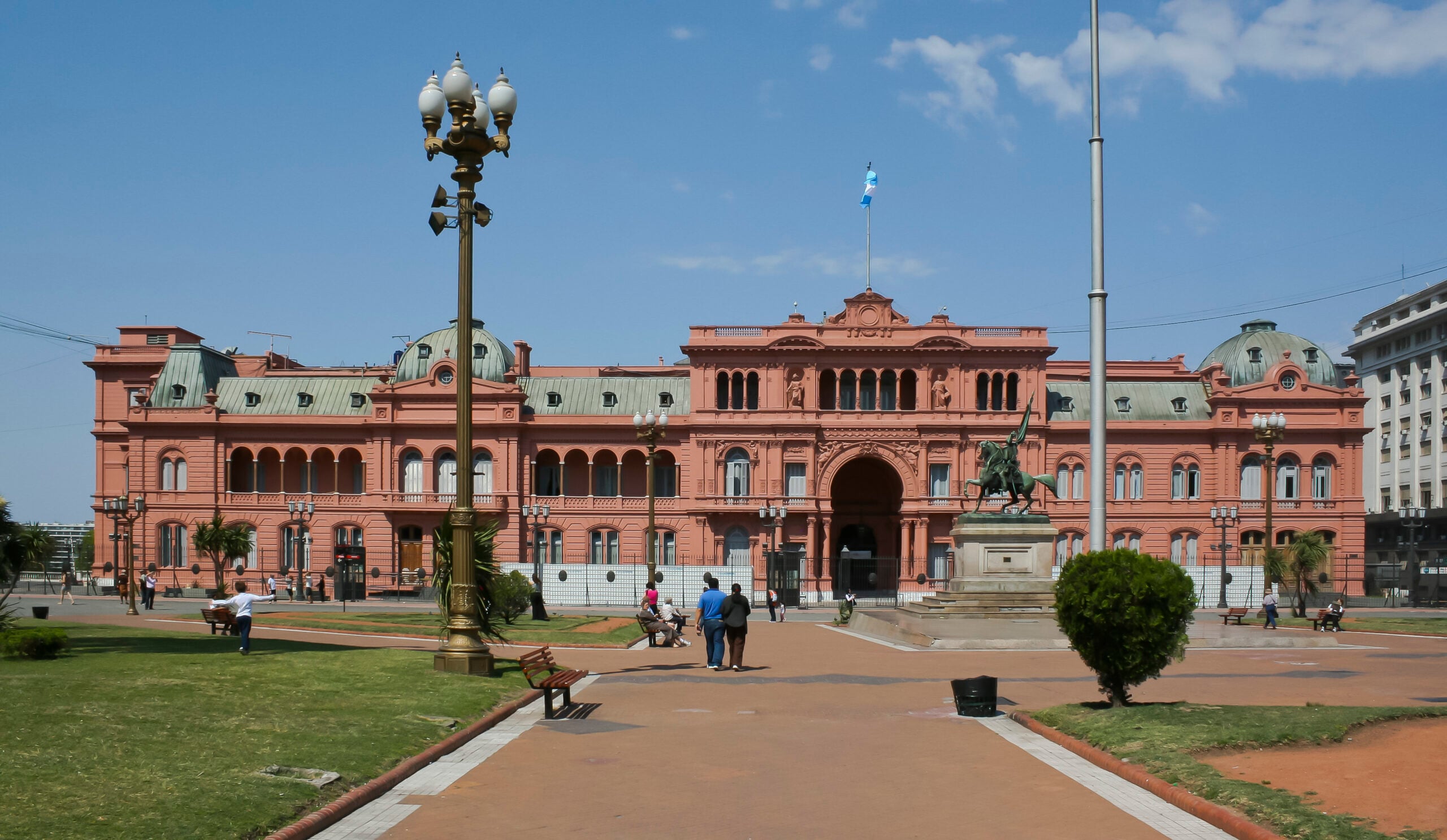
The easy route: ADRs and the ARGT ETF
The cleanest way in for most foreigners is the Global X MSCI Argentina ETF, ticker ARGT, which trades on the NYSE and spreads your money across the market’s leading names. It needs no local account.
Argentina also has an unusually deep roster of ADRs in New York — oil company YPF, banks like Grupo Financiero Galicia and Banco Macro, and energy firm Pampa Energía — giving single-stock investors direct, dollar-priced access.
The direct route and CEDEARs
Inside Argentina, locals invest through the BYMA exchange and often use CEDEARs, certificates that track foreign shares. For a foreigner abroad, the ADR and ETF routes are simpler and avoid the country’s currency plumbing.
Opening a local brokerage account is possible but means navigating Argentine tax IDs and an FX system that, while liberalising, still rewards local guidance.
Live Market IntelligenceArgentina — Live Market Board
Rio Times · Live Market Intelligence
Argentina — Live Market Board
—
206,495.23
-0.86%
70,249.54
+1.43%
10,985.55
+0.54%
3,017,221
—
2,560.37
+1.07%
59,870.67
-0.52%
| Instrument | Last | Change | YoY | Prev. | High | Low | Volume |
|---|---|---|---|---|---|---|---|
| MERVAL | 3,017,221 | — | +30.51% | 3,022,485 | 3,042,365 | 2,991,150 | — |
| USD/ARS | 1,493 | +0.10% | +12.96% | 1,491 | 1,494 | 1,480 | — |
| YPF | 7,810 | +0.26% | +72.84% | 7,790 | 7,850 | 7,600 | 1,763,858 |
| GGAL | 6,980 | -0.78% | +1.82% | 7,035 | 7,115 | 6,920 | 1,564,062 |
| PAMPA | 5,115 | +0.69% | +26.70% | 5,080 | 5,140 | 5,000 | 721,190 |
| TXAR | 747.50 | -2.35% | +18.67% | 765.50 | 770.00 | 742.50 | 771,892 |
| ALUAR | 938.00 | -1.21% | +29.83% | 949.50 | 951.00 | 932.50 | 135,426 |
| TGS | 8,870 | -0.17% | +15.05% | 8,885 | 9,075 | 8,720 | 143,546 |
| CEPU | 2,156 | +1.84% | +28.36% | 2,117 | 2,165 | 2,086 | 404,146 |
| MIRGOR | 1,650 | -1.20% | -92.90% | 1,670 | 1,670 | 1,635 | 20,877 |
| COME | 40.93 | -0.73% | -30.47% | 41.23 | 41.60 | 40.50 | 4,258,884 |
| LOMA NEGRA | 3,130 | +0.08% | +5.80% | 3,128 | 3,205 | 3,090 | 182,992 |
| BYMA | 275.00 | -1.70% | +35.14% | 279.75 | 282.50 | 272.00 | 1,409,575 |
| TELECOM ARG | 4,233 | -0.70% | +55.19% | 4,263 | 4,335 | 4,160 | 31,896 |
| GLOBANT | 38.10 | -2.26% | -49.65% | 38.98 | 38.70 | 36.77 | 793,552 |
| MERCADOLIBRE | 1,870 | -3.59% | -20.71% | 1,940 | 1,927 | 1,870 | 329,640 |
The Milei reform trade
The whole case rests on President Milei’s shock therapy, which has cooled inflation and steadied the peso, and on the market’s bet that the turnaround holds. The Merval jumped roughly a tenth in dollar terms in May to its highest since the October vote.
Investors are pricing a normalisation story: lower inflation, fewer controls and a return of foreign capital. The reward is large if it works, which is exactly why the trade has drawn Wall Street back.
The MSCI upgrade catalyst
A potential reclassification of Argentina to MSCI emerging-market status is the catalyst many investors are watching. JPMorgan estimates an upgrade could trigger close to US$1 billion of near-automatic buying from funds that track the index.
The caveat: most analysts expect a watch-list step in 2026 rather than a full upgrade, with any reclassification possibly landing the following year. It is a question of when, not just if.
RIGI and the investment wave
For larger investors, the RIGI incentive regime offers 30-year tax, currency and legal stability for projects above US$200 million, and it runs until July 8, 2027. It has already drawn billions in committed mining and energy investment.
RIGI is aimed at direct investors rather than stock buyers, but it underpins the broader bull case: a pipeline of dollars heading into Argentine energy and metals.
The risks to respect
Argentina’s history is the risk. Currency controls have eased but not vanished, the peso has a long record of sharp devaluations, and reform momentum depends on politics holding.
This is general information, not investment advice. Argentina suits investors who can stomach big swings and size the position accordingly — it is a high-risk, high-reward corner of the region, not a core holding.
A simple way to start
Many investors start with a small ARGT position to capture the broad reform trade, then add a single ADR such as YPF or Grupo Financiero Galicia for conviction.
Whatever the route, decide your loss tolerance up front. In Argentina the currency, more than any company, will drive your dollar return.
What the bull case really needs
The Argentine bull case has three legs: inflation continuing to fall, the currency staying broadly stable, and reforms surviving the political cycle. Knock out any one and the trade wobbles, which is why investors watch the monthly data so closely.
When all three hold, the re-rating can be powerful, because Argentina starts from deeply depressed valuations. The market is pricing a recovery that is real but not yet guaranteed.
The sectors leading the rally
Energy and finance have led. YPF and the broader Vaca Muerta shale story anchor the energy case, while banks such as Grupo Financiero Galicia and Banco Macro are leveraged to falling rates and a normalising economy.
Utilities like Pampa Energía and a handful of industrials round out the ADR roster. For a foreign investor, that means the rally is concentrated in a few liquid, dollar-traded names.
How to size an Argentina bet
Because the swings are large, most investors keep Argentina to a small, clearly defined slice of a portfolio. The aim is to capture meaningful upside if the reform story works without risking serious damage if it stalls.
A small ARGT position, perhaps alongside one high-conviction ADR, is a common structure. The key discipline is deciding the maximum you are willing to lose before you buy.
What could go wrong
The clearest risk is a return of currency stress: a sharp devaluation would hit dollar returns even if local stocks rise. Political setbacks that slow the reforms are the other main danger.
This is general information, not investment advice. Argentina has rewarded brave investors before and punished them too, so the position should reflect risk you can genuinely afford.
A market for the patient
Even believers treat Argentina as a long game. The reform process is measured in years, with setbacks along the way, so the investors who do best tend to set a position and resist trading every headline.
The reward for that patience, if the turnaround holds, is exposure to one of the cheapest re-rating stories in emerging markets. The discipline is to size it so that volatility is uncomfortable, never ruinous.
Frequently Asked Questions
Can a foreigner invest in Argentina?
Yes, most easily through US-listed ADRs or the ARGT ETF; a local BYMA account is possible but more complex.
What is the easiest way to invest in Argentina?
The Global X MSCI Argentina ETF (ARGT) on the NYSE.
Why is Wall Street interested in Argentina in 2026?
Milei’s reforms, a rallying Merval, the RIGI investment regime and a possible MSCI upgrade that could draw about US$1 billion.
What is RIGI?
Argentina’s incentive regime offering 30-year tax and legal stability for investments over US$200 million; it runs until July 8, 2027.
Is Argentina safe to invest in?
It is high risk and high reward — reforms have helped, but currency volatility and Argentina’s track record remain. This is general information, not investment advice.
Connected Coverage
Best Latin American Country to Invest In 2026
This article was produced by The Rio Times’ automated newsroom system. How we use AI · Report an error · Editorial responsibility: Matthias Camenzind, Editor-in-Chief
In depth
Expat Guide to Argentina
What The Rio Times publishes for foreigners who live in or move to Argentina.
Start here
- Argentina Security and Crime Explained 2026
- Argentina Money Guide for US Travelers
- Best Places to Live in Argentina for Expats 2026
- How to Open a Bank Account in Argentina as a Foreigner in 2026: Tax ID, Dollars, Apps
City guides
Coming up in Argentina
- Los Pericos Gran Rex Concert Set for 22 October 2026 in Argentina 22 Oct
- Mendoza Things to Do, 9 to 31 October 2026 31 Oct
- IRONMAN San Juan in Argentina on 1 November 2026 1 Nov
- Mar del Plata Film Festival 2026: 5 to 15 November 5 Nov
Understand Argentina