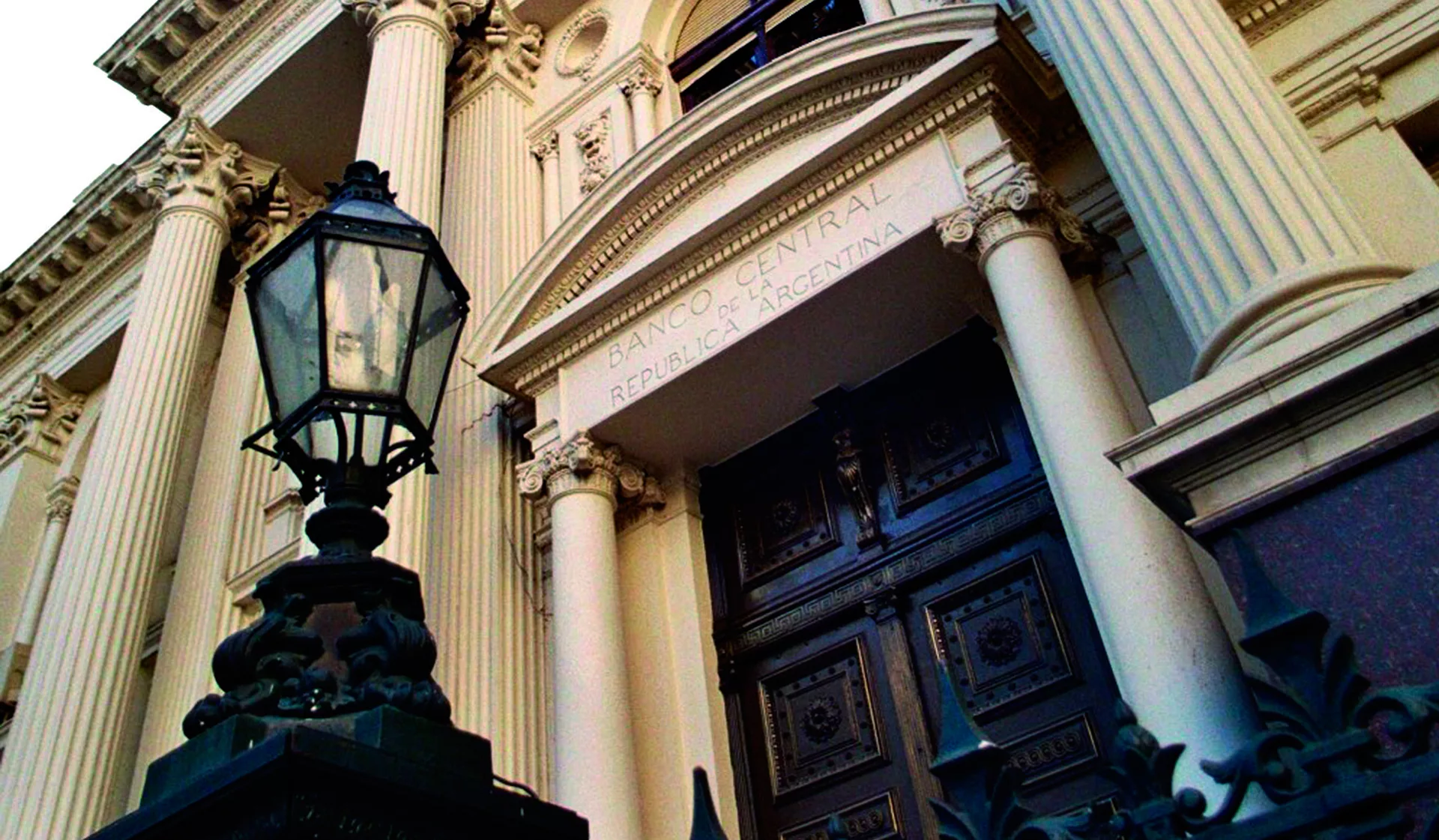
Argentina’s central bank says markets see a calm 2027, an election year, and that its programme aims to turn a shortage of dollars into a surplus. Vladimir Werning, the bank’s deputy governor (its vice president), made the case on Tuesday 17 November 2026 at the two-day monetary conference of the Central Bank of Argentina (BCRA) in Buenos Aires.
For US investors, the message bears on two things they can price: the peso and the country-risk spread, the extra yield investors demand to hold Argentine dollar bonds instead of US government bonds (Treasuries). Werning blamed the recent rise in that spread on politics, not on the economic plan, Agencia Noticias Argentinas, a national news agency, reported.
Key Facts
- Who. Vladimir Werning, deputy governor of Argentina’s central bank (BCRA), speaking at its monetary conference.
- Message. On Tuesday 17 November 2026 he said markets expect a calm 2027 and rejected looser policy.
- Peso forecast. Surveyed analysts expect about 1,590 pesos per US$1 in December 2026.
- Prediction markets. Polymarket, a prediction market, prices Javier Milei at about 44% to win in 2027 (12:56 p.m. ET).
- Power Index. Argentina ranks 4th of 14 in The Rio Times Latin America Power Index, with 60.2 points (November 2026 edition).
Argentina’s central bank says markets expect a calm election year in 2027, and that rising country risk reflects politics rather than the economic plan.
What the Central Bank Said
“El mercado ve una Argentina tranquila, ordenada y sin problemas hacia 2027” (“The market sees a calm, orderly Argentina without problems heading into 2027”), Werning said on the second-to-last panel of the conference, Agencia Noticias Argentinas reported. He added that, like Economy Minister Luis Caputo, he expects 2027 to be an unusual year because of the strength of the economic programme.
He said the programme turns the inherited situation around: Argentina once had too many pesos and too few dollars, and the aim is the reverse. On country risk he said: “La suba del riesgo país no se debe a un riesgo del modelo económico actual; es meramente política” (“The rise in country risk is not due to a risk in the current economic model; it is purely political”).
Werning also rejected calls to loosen monetary policy to lift activity before the election, calling them “muy peligrosas” (“very dangerous”), Infobae, an Argentine news outlet, reported on 17 November. He said those who propose it “claramente no conocen la historia de Argentina” (“clearly do not know Argentina’s history”), Agencia Noticias Argentinas reported.
The Big Picture: A Programme Tested by an Election
Election-related volatility drove demand for foreign currency to a record US$35 billion, according to BCRA data cited by the Buenos Aires Herald, an English-language Argentine daily, on 30 October. On 29 October the bank said the third quarter brought a technical recession, meaning falling output over successive quarters, and blamed external headwinds; it forecast a strong fourth quarter.
The bank also described its cushion this way: a US$5 billion portion of its currency swap line with China (an exchange of currencies between central banks) remains in force, and a US$20 billion arrangement with the United States is in force but not activated, the same report says. BCRA president Santiago Bausili said the bank has “no projections” of a currency run.
Werning’s own aim is clear from his words: keep monetary policy tight and let the dollar-surplus story build. The bank’s published conference programme offers no comparison with neighbouring countries, so we do not rank Argentina’s outlook against the region.
Why It Matters for US Investors
The BCRA’s own market survey, published on 5 November 2026, shows the scale of the move analysts expect. Forty-five forecasters put the average wholesale peso-dollar rate at 1,558 pesos per US$1 in November and 1,590 in December (BCRA market expectations survey, October edition).
That is a gradual slide of about 2% in one month, which is the mechanism the central bank wants: a slow, predictable adjustment that does not spill into prices. The same survey sees the economy growing 0.7% in 2026 against the 2025 average, so the calm Werning describes is a calm at low growth.
The Case Against Calm
Emmanuel Álvarez Agis, an economist at the consultancy PxQ, argued in July that the exchange rate would decide the 2027 vote: Milei wins at 1,500 pesos per US$1, the race is open at 2,000, and he loses at 2,500, Cronista, an Argentine financial daily, reported on 7 July. He also warned that a cheap dollar helps fight inflation but hurts jobs.
In Plain English
- Country risk: the extra yield investors demand on Argentine dollar bonds compared with US Treasuries.
- BCRA: Argentina’s central bank, which sets interest rates and manages the peso.
- Deputy governor: the central bank’s second-ranking official, below president Santiago Bausili.
What Prediction Markets Say
Traders on Polymarket, a crypto-based prediction market, price Javier Milei at about 44% to win Argentina’s 2027 presidential election. Axel Kicillof, the governor of Buenos Aires province, stands at about 30%, with about US$1.6 million traded across all candidate contracts in that market (as of 12:56 p.m. ET on 18 November 2026).
Why we show this: prediction markets turn real-money bets into a live probability that moves within minutes of the news, which is why investors, campaigns and newsrooms in the United States now follow them closely. We show them next to polls and official results, never instead of them.
What Is Not Known
Werning gave no figure for country risk or for the peso, so the size of the expected calm is unquantified. It is also unclear how far the political factors he cites, such as the electoral reform now before the Senate, will move the spread before 2027.
What to Watch Next
The central bank takes its next market survey in the last three business days of November, so the new peso and inflation forecasts should follow in early December; the publication date is not confirmed. The Senate is also due to debate a bill on 26 November that would suspend the PASO, Argentina’s party primaries, for 2027, which our earlier report covers.
Frequently Asked Questions
What did Argentina’s central bank say about 2027?
Deputy governor Vladimir Werning said on 17 November 2026 that the market sees a calm, orderly Argentina heading into 2027. He rejected looser monetary policy before the election.
Why did country risk rise, according to the central bank?
Werning said the rise is political and does not reflect a risk in the current economic model. He gave no figure for the spread.
What does the central bank survey expect for the peso?
The BCRA’s 5 November survey puts the average rate at 1,558 pesos per US$1 in November and 1,590 in December 2026. It was based on 45 forecasters polled on 28 to 30 October.
Who disagrees with the calm outlook?
Economist Emmanuel Álvarez Agis of PxQ argued in July that the exchange rate level will decide the 2027 election. He also warned that a cheap dollar hurts jobs.
Connected Coverage
Sources: Central Bank of Argentina, conference programme; Central Bank of Argentina, market expectations survey, published 5 November 2026; Agencia Noticias Argentinas via Pregón, 17 November 2026; Infobae, 17 November 2026; Buenos Aires Herald, 30 October 2026; Cronista, 7 July 2026.
In depth
This article was produced by The Rio Times’ automated AI newsroom. Editorial responsibility: Matthias Camenzind, Publisher and Editor-in-Chief. The Rio Times also runs Ask Rio Times, which answers from 100,000+ of our own articles, the daily Latin America Power Map, and prediction-market odds on elections and markets.. How we use AI · Report an error