
MAURITANIA · MINING
Key Facts
- The country Mauritania is a West African Atlantic nation, with Nouakchott as capital and a growing mining industry.
- What happened Zeus Resources, an Australian explorer, said on Friday 30 October 2026 it owns 51% of Sab Metals Mauritania.
- The project Diaguili is a copper-gold exploration site in the southern Guidimakha region, held under permit 2475B2.
- The deadline The permit expires on Friday 6 November 2026 unless Mauritania renews it for three years.
- Still open No drill hole has tested the new target yet, and rock sample results are still pending.
Zeus Resources, a small Australian explorer, said on Friday 30 October 2026 that it owns 51% of the firm holding Diaguili, a Mauritanian copper-gold project. The stake is a first step toward full ownership, and it gives the foreign explorer control of the site’s management.
The next test comes within days, because the exploration permit runs out on Friday 6 November 2026. Zeus says the permit can be renewed for another three years, and the rest of the purchase depends on that renewal.
Who Is Buying and What They Bought
Zeus Resources Limited is listed on the Australian Securities Exchange in Sydney as ZEU, and it explores for metals rather than mining them. On Tuesday 20 October 2026 it told investors it had finished the first stage of buying Sab Metals Mauritania SARL, which holds the Diaguili permit.
The first stage gave Zeus 51% of Sab Metals and the job of managing the project. The share sale agreement was signed in July 2026, and Zeus repeated the terms in its quarterly report on 30 October.
The Price and the Path to 100 Percent
For the first stage Zeus paid US$350,000 in cash, which is a US$400,000 price less a US$50,000 exclusivity fee paid earlier. It also issued 66,743,879 new shares, which the company values at US$400,000.
The full price is US$2.0 million, split evenly between cash and Zeus shares, and it is paid in four stages over 24 months. The company says stages two, three and four depend on, among other things, renewal of the exploration permit.
What the Survey Shows Under the Ground
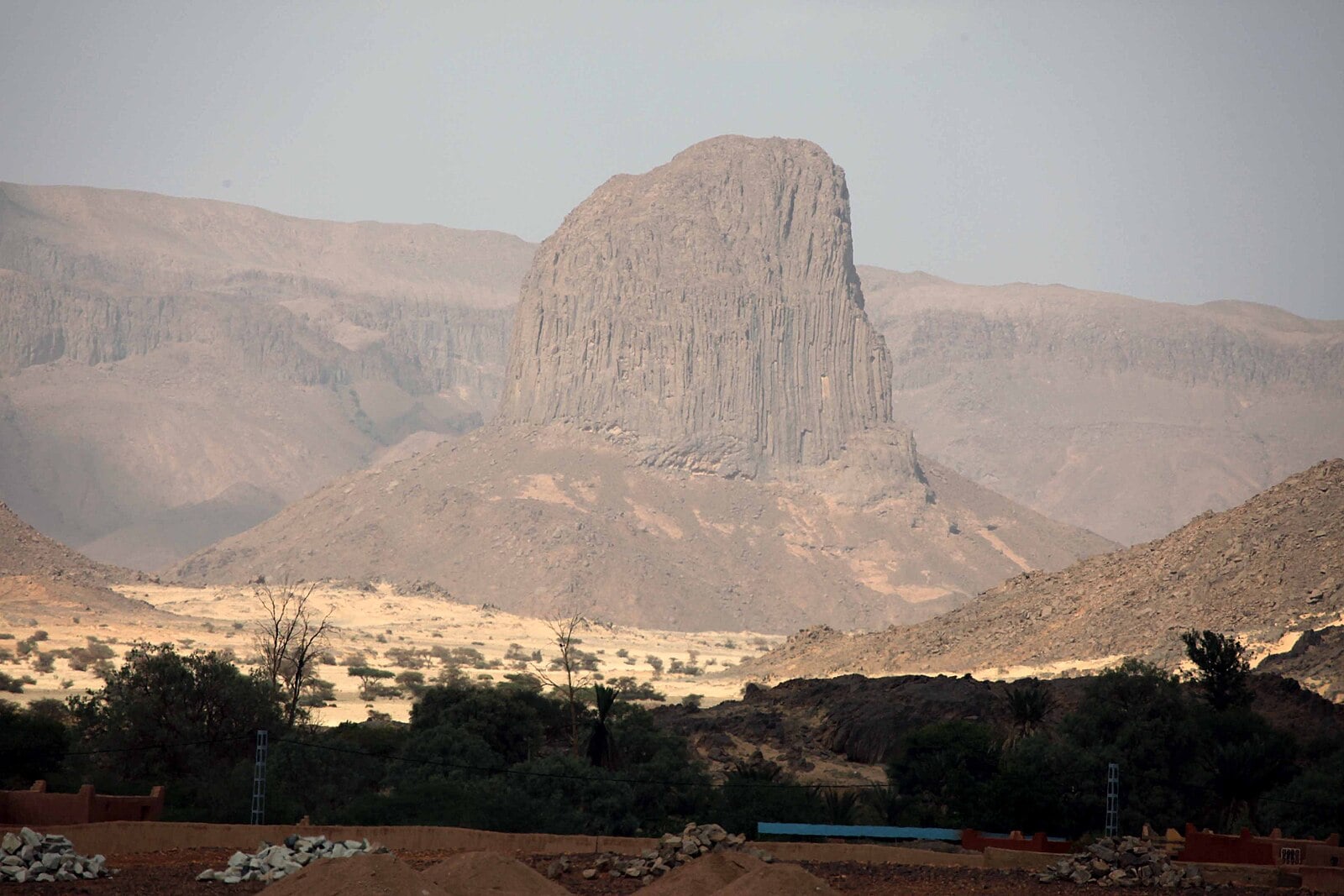
Diaguili sits in the Guidimakha region, near the borders with Senegal and Mali, in a belt of old rocks that Zeus says has copper-gold potential. An airborne survey flown in 2008 measured how well the rocks below conduct electricity, and Zeus had that data reprocessed on 12 October 2026.
The new model shows a conductor about 1.7 kilometres long and up to 500 metres wide, lying roughly 150 to 170 metres below the surface. A conductor is a zone that carries electric current well, which can signal metal-rich rock but can also be harmless.
Green Stains on the Rock and Old Drill Holes
On a site visit on Tuesday 1 September 2026, the company saw malachite and chrysocolla in outcrops at several points. These are green copper minerals that often show copper is nearby, but only laboratory results can show how much metal the rock holds.
Zeus took four rock chip samples over about 1.07 kilometres, and the assay results are still pending. Of 48 earlier drill holes with recorded depths, 43 stopped short of 100 metres vertical depth, and most lie west of the new target.
The Drilling Plan and the Cash Behind It
Zeus Resources has hired the contractor Tayssir Drilling for a first diamond-drilling programme of about 1,200 metres, due to start in November 2026. The holes will test the new conductor and deeper extensions of known copper-gold mineralisation.
On 30 September 2026 the company held A$2.84 million in cash (about US$2.0 million at 1.42 Australian dollars per US dollar on 31 October 2026). That includes a A$765,000 term deposit (about US$538,000), and the company estimates the cash covers 14.3 quarters of spending.
What It Means for US Readers
Copper is central to power grids, electric vehicles and data centres, and Washington wants more sources of it. A small Mauritanian project will not change supply soon, but explorers are moving into West Africa, where Mauritania is also building a gas export business.
Zeus trades in Sydney, so American investors would need an international broker, and its shares trade below one US cent. Most exploration projects never become mines, and a failed permit renewal or a poor drill result could end the story quickly.
What Is Not Known
It is not known whether Mauritania will renew permit 2475B2 before it expires on 6 November 2026, or on what terms. The company has not said how much copper or gold the rock holds, and no drill hole has yet tested the new conductor.
The sellers of Sab Metals are not named in the company’s announcement, and the size of stages two to four is not public. The company also has not said when each remaining payment falls due.
More: Africa news in English, every day from The Rio Times.
Frequently Asked Questions
What did Zeus Resources buy in Mauritania?
Zeus Resources bought 51% of Sab Metals Mauritania SARL, which holds the Diaguili copper-gold exploration permit. The company announced the completion of this first stage on 20 October 2026.
How much is Zeus paying for the Diaguili project?
Zeus Resources says the full price is US$2.0 million, half in cash and half in Zeus shares, paid in four stages over 24 months. Stage one cost US$350,000 in cash plus shares valued at US$400,000.
When does the exploration permit expire?
Permit 2475B2 expires on Friday 6 November 2026. The company says it is eligible for a further three-year renewal.
Has any copper or gold been found at Diaguili?
Surface copper minerals were seen and a 1.7 kilometre geophysical target has been mapped. No drilling has yet confirmed how much metal is there, and sample results are pending.
When will drilling start?
Zeus Resources has signed a contract for about 1,200 metres of diamond drilling, due to begin in November 2026. The start depends on the permit and on weather and logistics.
Sources: Zeus Resources Limited, Completion of First Tranche of Diaguili Acquisition (ASX announcement), 20 October 2026; Zeus Resources Limited, Quarterly Activities Report and Appendix 5B (ASX announcement), 30 October 2026.
This article was produced by The Rio Times’ automated newsroom system. How we use AI · Report an error · Editorial responsibility: Matthias Camenzind, Editor-in-Chief