Mauritania Explained: Iron Ore, Offshore Gas, Migration and the 2029 Question

GUIDES · MAURITANIA
Key Facts
- —Capital Nouakchott, on the Atlantic coast. Mauritania is the hinge between Arab North Africa and sub-Saharan West Africa, and Europe’s key partner on the Atlantic migration route to the Canary Islands.
- —Population About 5.3 million in 2025 (World Bank), spread over roughly 1.03 million square kilometres, almost twice the size of France. Around 90 percent of the land is Sahara.
- —Currency The ouguiya (MRU), at about 40.2 to the US dollar on 30 September 2026. It was redenominated in 2018, when one new ouguiya replaced ten old ones.
- —Language Arabic is official. Pulaar, Soninke and Wolof are national languages, and French is still widely used in business and government.
- —GDP About US$11.7 billion in 2025, or roughly US$2,200 per person (World Bank). The IMF projects real growth of 4.7 percent in 2026.
- —Government An Islamic republic with a strong executive president. Mohamed Ould Ghazouani has held office since August 2019 and was re-elected in June 2024 for a final five-year term.
Mauritania explained in one sitting: a desert state of 5.3 million that ships iron ore, now exports gas, and guards one of Europe’s busiest migration routes.
Mauritania explained properly starts with its position. It is a quiet, stable country in a region of coups and insurgencies. That stability is exactly why Brussels, Washington and energy companies pay attention.
What kind of country is this?
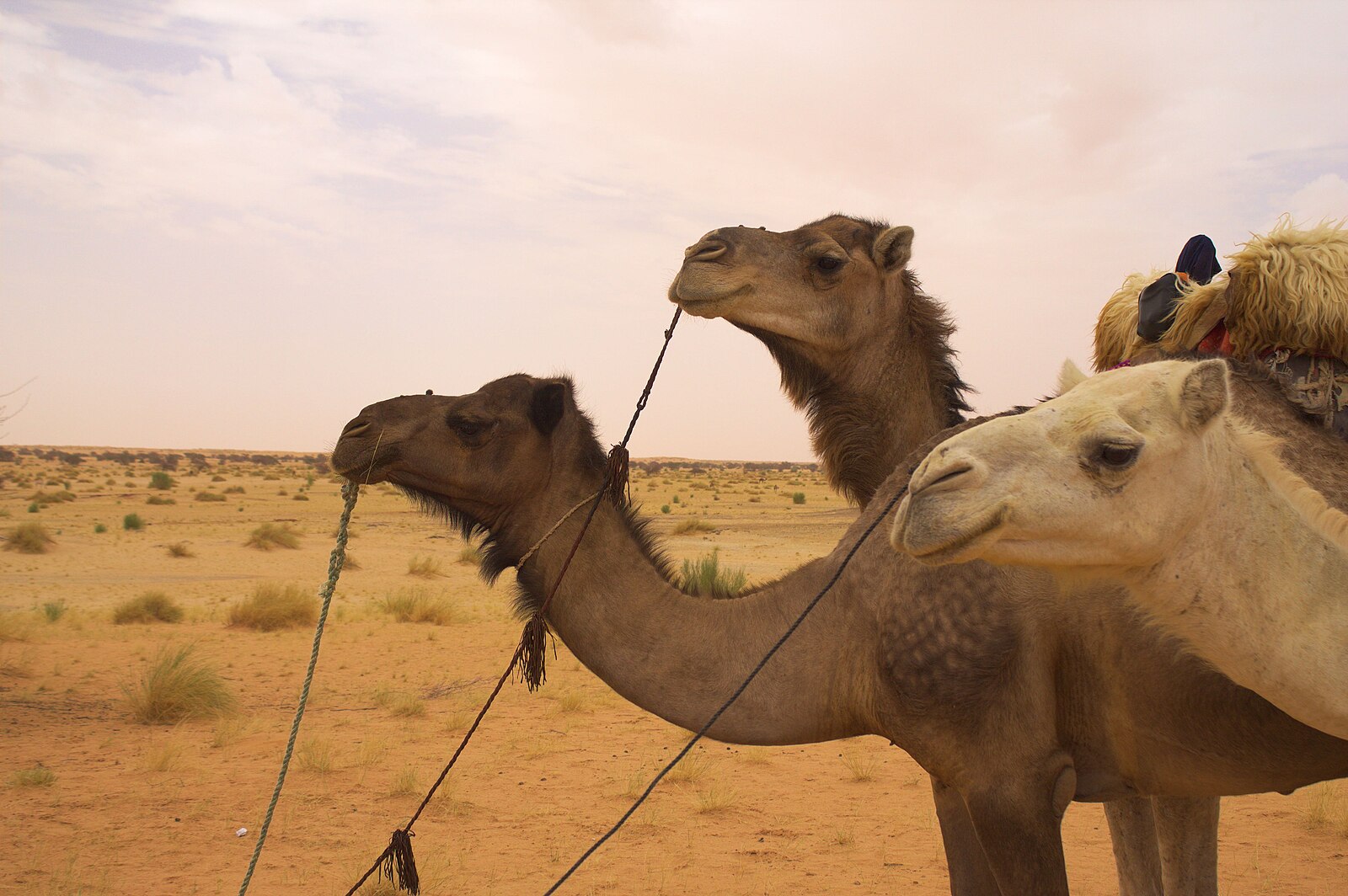
Mauritania sits on the Atlantic coast of north-west Africa, between Morocco-administered Western Sahara, Algeria, Mali and Senegal. It covers about 1.03 million square kilometres. Around 90 percent of that is Sahara desert, so most people live along the coast and the Senegal River in the south.
The country gained independence from France on 28 November 1960. It calls itself an Islamic Republic, and almost all of its people are Sunni Muslims. Nouakchott, the capital, is home to roughly a quarter of the population. Nouadhibou, near the northern border, is the second city and the main port.
Society is divided along lines that shape politics to this day. Arabic-speaking Moors are historically split into a dominant white Moor (Beidane) group and the Haratine, descendants of slaves. They live alongside Pulaar-, Soninke- and Wolof-speaking Black African communities. Slavery was abolished only in 1981 and made a crime in 2007.
Those divisions are not history. The runner-up in the 2024 presidential election, Biram Dah Abeid, built his career as an anti-slavery campaigner. Language policy, land in the river valley and access to state jobs remain sensitive topics.
Mauritania also belongs to two worlds at once. It is a member of the Arab League and part of the Maghreb, yet it borders the Sahel and trades heavily with West Africa. On Western Sahara, the long dispute next door, it has kept a policy of neutrality since it withdrew its own claim in 1979.
Who runs Mauritania and how
Power sits with the president. Mohamed Ould Ghazouani, a retired general and former defence minister, took office in August 2019. His election was described at the time as the first peaceful handover between elected presidents since independence, after a string of coups from 1978 to 2008.
Ghazouani was re-elected on 29 June 2024 with 56.12 percent of the vote. Biram Dah Abeid came second with 22.10 percent and rejected the result. Turnout was 55.39 percent. Three people died in clashes in the southern town of Kaédi on 2 July, and the authorities cut mobile internet nationwide.
The Constitutional Council confirmed the result on 4 July 2024. Under the constitution, a president may serve two five-year terms, and that limit is written into clauses the text itself bars from revision. Ghazouani’s second term therefore runs to 2029.
Day-to-day government is led by Prime Minister Mokhtar Ould Djay, appointed on 2 August 2024. He previously ran the president’s office. The ruling party, El Insaf, controls the 176-seat National Assembly, elected in May 2023.
The army remains the real backbone of the state. Most of the country’s presidents since 1978 have been army officers. That history explains why foreign partners watch civil-military relations closely, even in calm years.
How the economy works
Mauritania’s economy produced about US$11.7 billion of output in 2025, according to the World Bank. That is roughly US$2,200 per person, which places it among lower-middle-income countries. Growth is tied to three things: mining, fishing and, since the end of 2024, natural gas.
Iron ore and SNIM
Iron ore is the oldest pillar. The state-controlled mining company SNIM digs ore near Zouérat in the north. It then hauls it roughly 700 kilometres by rail to Nouadhibou, on some of the longest trains in the world.
SNIM produced around 14.7 million tonnes in 2025, its third straight year above 14 million. The company says it aims to raise production and sales to 15.5 million tonnes in 2026. Gold, mined mainly at the Tasiast mine, is the other big export earner alongside iron ore.
Offshore gas with Senegal
The newest pillar sits offshore. The Greater Tortue Ahmeyim (GTA) field straddles the sea border with Senegal and is run by bp with Kosmos Energy and the two state companies. It produced first gas at the end of 2024, and bp loaded the first liquefied natural gas (LNG) cargo in April 2025.
The plant is designed for about 2.3 million tonnes of LNG a year. In the second quarter of 2026 it ran faster than that, averaging about 2.65 million tonnes a year, with nine cargoes lifted, Kosmos reported. The partners are now studying extra domestic gas sales in both countries.
Fishing, the IMF and the budget
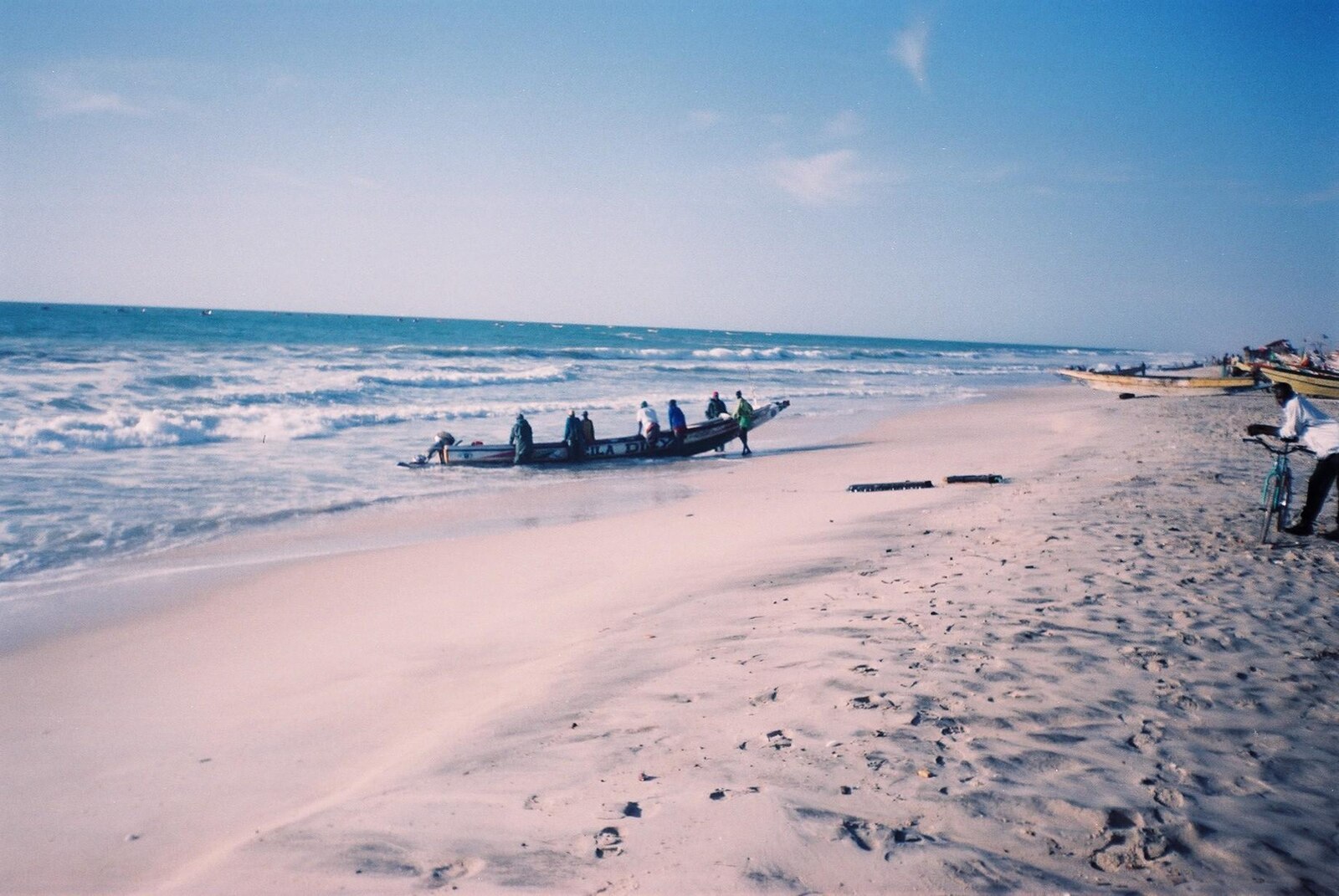
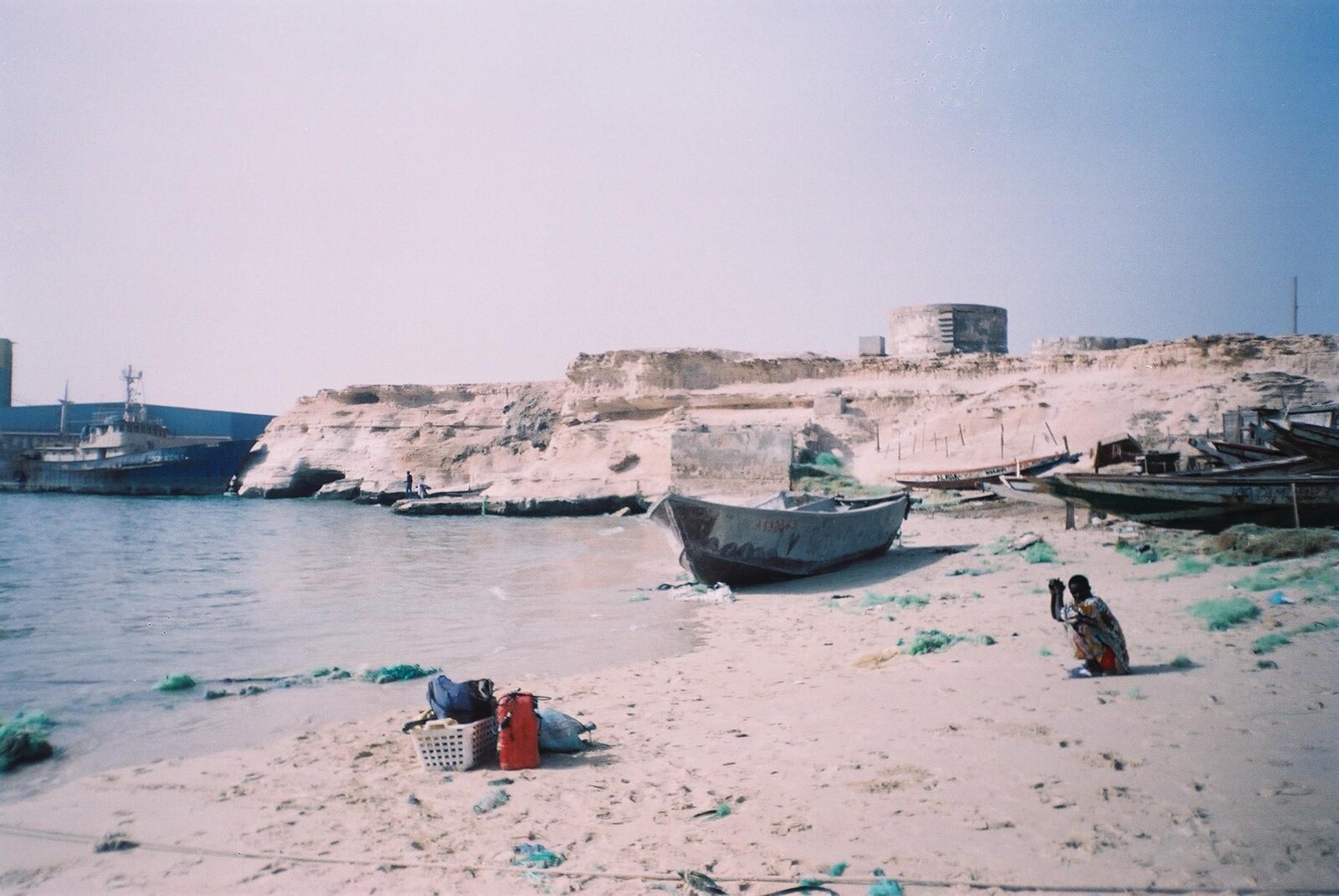
Fishing is the third pillar. Mauritania’s waters are among the richest in West Africa, and they feed both industrial fleets and thousands of small pirogues. Much of the rural economy still rests on herding and farming along the Senegal River.
The state works closely with the International Monetary Fund. On 24 June 2026, the IMF board approved new 42-month lending arrangements worth about US$95.8 million. It also completed the fifth and final review of an earlier climate-focused one. The Fund projects public debt at 40.5 percent of GDP in 2026.
What is happening right now
As of 24 September 2026, three stories dominate. The first is prices. The central bank raised its policy rate from 6 to 6.5 percent on 18 May 2026, citing returning inflation pressure. Costlier imported fuel and disruption on the Mali border have pushed prices up since.
Teachers’ unions are pressing for higher pay, and the state is reorganising fuel imports. The National Hydrocarbons Commission has put the country’s entire liquid fuel supply out to tender, for six months from 3 December. That ends a decade in which the Swiss-based trader Addax Energy supplied the market almost alone.
The second story is politics. Since August, ruling-party officials have campaigned for Ghazouani to stay beyond 2029, despite the entrenched two-term limit. More than 15 opposition parties met on 15 September 2026 to agree a common line against a third term, the French broadcaster RFI reported.
The president has not publicly said he will seek a third term. A national dialogue between government and opposition is being prepared, but one opposition party suspended its part in the preparations on 16 September.
The third story is the Sahel. Mali’s war has pushed refugees west for more than a decade. The UN refugee agency estimated about 305,000 refugees and asylum seekers in Mauritania at the end of August 2026, most of them Malians. Nearly all registered refugees live in the south-eastern Hodh Chargui region, around the Mbera camp.
Mauritania itself has not suffered a major terrorist attack on its soil since 2011, according to the US State Department. The G5 Sahel security alliance it once hosted collapsed after Mali, Burkina Faso and Niger quit. Nouakchott now manages its eastern border largely alone.
Migration to the Canary Islands
Migration is where Mauritania meets European politics. In 2024, the Atlantic route to Spain’s Canary Islands carried a record of almost 47,000 people. Many of them left from or passed through Mauritanian waters. That year the European Union promised Mauritania €210 million (about US$238 million), partly for migration control.
Arrivals then fell sharply. Spain’s interior ministry counted 17,788 arrivals in the Canary Islands in 2025, down 62 percent. Between 1 January and 15 August 2026 it counted 4,808, another 59.5 percent drop on a year earlier.
The crackdown has a cost. In an August 2025 report, Human Rights Watch alleged abuses by Mauritanian security forces against migrants, including rape, torture and extortion. No official inquiry has confirmed those allegations.
What to watch
15 October 2026. Bids close in the fuel supply tender, and the winner is due to take over national supply on 3 December. The price and the name of the new supplier will show how exposed the budget is to oil prices.
31 October 2026. The UN Security Council must decide whether to renew MINURSO, its mission in Western Sahara. Any shift in that dispute changes the security picture on Mauritania’s northern border.
Monthly inflation data. Each new reading shows whether the May rate rise is working, and how much room the government has on public-sector pay.
GTA and SNIM volumes. Watch quarterly cargo counts from bp and Kosmos, any decision on a second gas phase, and whether SNIM reaches its 15.5 million-tonne target.
The third-term question. Any move to reopen the constitution, or a clear statement from Ghazouani, would reset politics well before the 2029 election.
IMF reviews. The new programme is reviewed periodically. Completed reviews release money and signal that fiscal targets are on track.
What this means for foreigners
For investors, Mauritania offers stability that most of its neighbours cannot. The opportunities are concentrated in mining, gas services, fishing, ports and renewable energy. The risks are a small domestic market, a thin banking system, and heavy dependence on commodity prices.
For travellers, the country is safer than its Sahel neighbours but not without risk. Western governments’ travel advice generally warns against border areas near Mali and parts of the far north. Check your own government’s current advice before booking.
Business runs in Arabic and French, with little English outside the gas sector and international agencies. Cash still dominates daily life, and card payments are limited beyond hotels in Nouakchott and Nouadhibou.
For Europeans, Mauritania matters for a simpler reason. How Nouakchott polices its coast directly shapes how many boats reach the Canary Islands, and the EU now pays for part of that effort.
Connected Coverage
Mauritania Opposition Unites Against a Third Term for the President
Mauritania Gas Is Flowing. Uranium and Hydrogen Are Queued
Mauritania Is Betting on Gas Without Letting Go of Its Iron
Migrant Deaths Off West Africa Deepen Sahel-Atlantic Crisis
Senegal Explained: The Country, the Faye Government and What to Watch
Sources: Output and population from the World Bank, the lending programme and projections from the IMF, gas volumes from bp and Kosmos Energy, refugee numbers from UNHCR, and migration counts from Spain’s interior ministry. All accessed 24 September 2026.
- World Bank — World Development Indicators, GDP, GDP per capita and population, 2025
- International Monetary Fund — press release 26/223, 24 June 2026
- bp — first cargo from Greater Tortue Ahmeyim LNG
- Kosmos Energy — second quarter 2026 results
- UNHCR — Mauritania refugee population overview, 31 August 2026
- US State Department — Country Reports on Terrorism 2023, Mauritania
- Spain’s interior ministry 2025 arrival figures, as reported by AFP
- Spain’s interior ministry 2026 arrival figures to 15 August, as reported by EFE
- Arab Iron and Steel Union — SNIM 2025 production and 2026 target
- Financial Afrik — Central Bank of Mauritania rate decision, May 2026
- Exchange rates, 30 September 2026
What Is Not Known
Whether Ghazouani will seek a third term. He has not said so, and changing the entrenched limit would need a route the constitution does not openly provide.
How long the fall in Canary Islands arrivals will last. Smugglers have shifted routes before, and the abuse allegations against border forces have not been independently resolved.
Whether the gas partners will commit to a second, larger phase at GTA, and on what timetable. No final investment decision had been announced by late September 2026.
How far inflation will rise, and whether the fuel tender will lower or raise the cost of imports.
Frequently Asked Questions
Who is the president of Mauritania?
Mohamed Ould Ghazouani, a retired general and former defence minister. He took office in August 2019 and was re-elected on 29 June 2024 with 56.12 percent of the vote. The constitution limits presidents to two five-year terms, so his mandate runs to 2029.
What does Mauritania export?
Mainly iron ore, gold and fish, and since 2025 liquefied natural gas. The state miner SNIM produced around 14.7 million tonnes of iron ore in 2025. The offshore Greater Tortue Ahmeyim field, shared with Senegal, loaded its first gas cargo in April 2025.
What language is spoken in Mauritania?
Arabic is the official language. Pulaar, Soninke and Wolof are recognised national languages, and French remains widely used in business and administration.
Is Mauritania part of the migration route to the Canary Islands?
Yes. Many boats on the Atlantic route to Spain leave from or pass through Mauritanian waters. Arrivals in the Canary Islands fell 62 percent in 2025, to 17,788, and fell another 59.5 percent between January and mid-August 2026, year on year, according to Spain’s interior ministry.
How big is the economy of Mauritania?
About US$11.7 billion in 2025, or roughly US$2,200 per person, according to the World Bank. The IMF projects real growth of 4.7 percent in 2026.
This article was produced by The Rio Times’ automated newsroom system. How we use AI · Report an error · Editorial responsibility: Matthias Camenzind, Editor-in-Chief