Mauritania Gas Is Flowing. Uranium and Hydrogen Are Queued
MAURITANIA · ENERGY & MINING
Key Facts
- —First gas The Greater Tortue Ahmeyim field delivered first gas on 31 December 2024 and its first cargo on 17 April 2025.
- —The partners The operator holds 56%, with 27% held by a partner and 10% and 7% by the Senegalese and Mauritanian state companies respectively.
- —The capacity Reported nameplate differs by operator, at 2.3 or 2.7 million tonnes a year. Around 36 cargoes are targeted for 2026.
- —The growth Real GDP grew 6.3% in 2024 and 4.0% in 2025. The IMF projects 4.7% for 2026 as gas reaches full capacity.
- —The uranium The Tiris project was fully permitted in July 2024. A 2023 study put steady-state output at 2.0 million pounds a year over a 16-year mine life.
- —The hydrogen A convention for the AMAN project was signed in September 2026. Financing is not secured and a final investment decision is not expected before 2030.
Mauritania has become a gas exporter. The uranium mine and the hydrogen megaprojects queued behind it are permitted, announced and, so far, not built.
From First Gas to Thirty-Six Cargoes
The Greater Tortue Ahmeyim field sits on the maritime boundary between Mauritania and Senegal, in water up to 2,850 metres deep. It delivered first gas on 31 December 2024.
The first liquefied natural gas followed in February 2025. The first cargo loaded on 17 April 2025, about 174,000 cubic metres, from a floating liquefaction vessel around ten kilometres offshore.
The ownership is split four ways. The operator holds 56%. A partner holds 27%. The Senegalese state company holds 10% and the Mauritanian state company 7%. Some gas is allocated to domestic demand in both host countries.
Capacity figures differ between the two operator-side sources. One states 2.3 million tonnes a year, the other about 2.7 million. Both are operator statements, and the gap has not been reconciled publicly.
The ramp-up has been quick. The field reached nameplate in December 2025, having delivered around 18.5 cargoes across 2025. Up to 36 cargoes are targeted for 2026, and early-2026 running rates averaged near 2.9 million tonnes a year equivalent.
A second phase has been under study since 2023. The concept is a gravity-based structure with new wells and subsea equipment, targeting 2.5 to 3 million tonnes a year. That would take total capacity above 5 million tonnes. No final investment decision had been taken as of March 2026.
What It Has Done to the Numbers
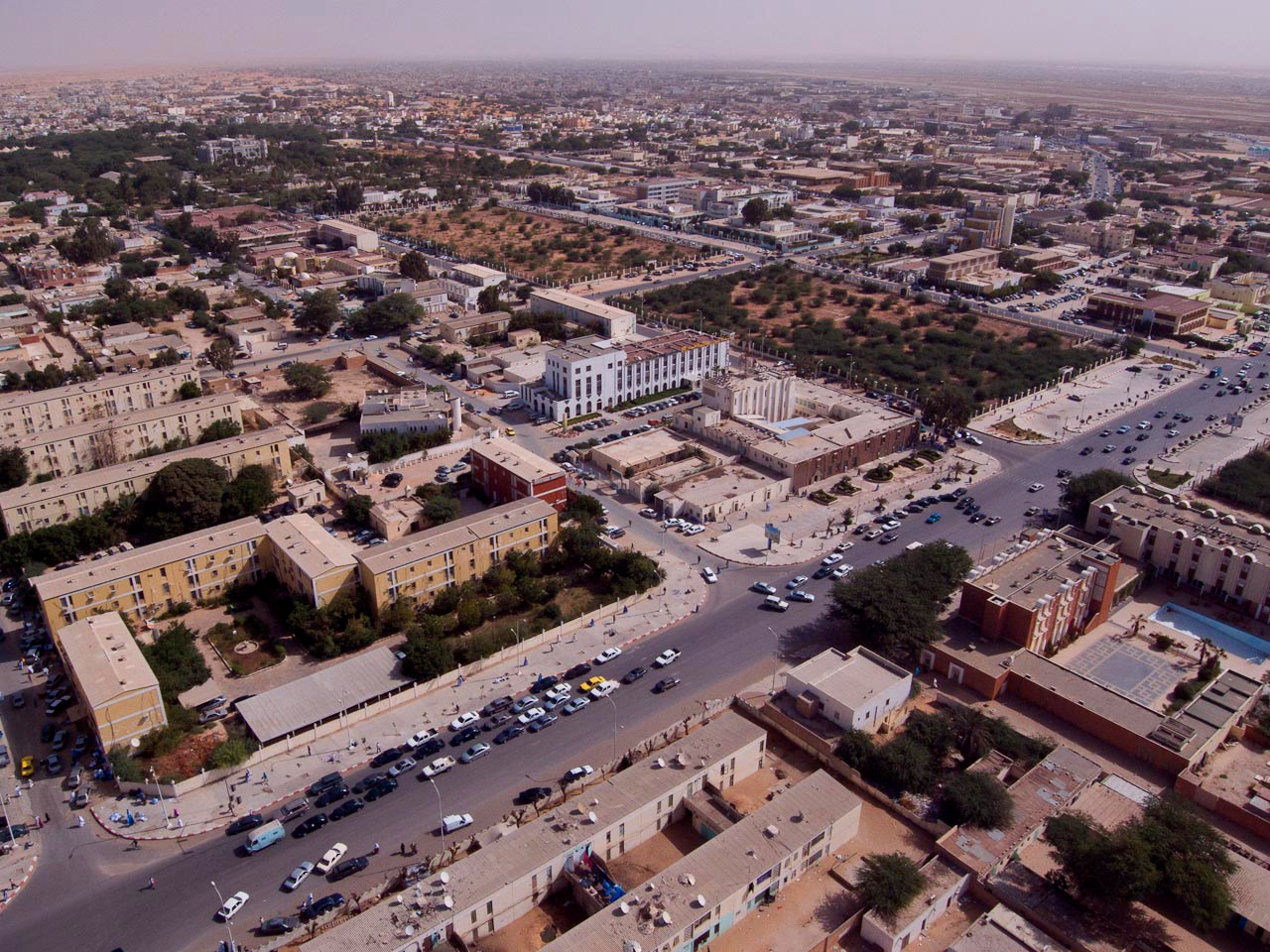
The macroeconomic effect is real but less dramatic than the project’s profile suggests.
Real GDP grew 6.3% in 2024 and 4.0% in 2025. The IMF projects 4.7% for 2026 and 4.5% for 2027. The 2025 slowdown reflects a contraction in the extractive sector and a slowdown in fisheries, not a failure of the gas project.
Inflation ran at 3.1% at end-2024 and 4.1% at end-2025, with 3.0% projected for 2026. The fiscal balance moved from minus 1.4% of GDP in 2024 to minus 0.3% in 2025. It is projected to reach balance in 2026 and a surplus of 1.0% in 2027.
Public debt is falling steadily, from 43.5% of GDP in 2024 to 40.7% in 2025, with 37.6% projected for 2026. Reserves stood at about US$2.16 billion in 2025.
A new 42-month IMF arrangement was approved on 24 June 2026, with total access of about US$95.8 million. That is a modest programme by any measure, which is itself a signal about how the Fund reads the country’s financing position.
One caution belongs here. Gold export revenues are expected to rise significantly, but the exporters are foreign-owned and repatriate dividends. Export revenue and national income are not the same thing.
Iron Ore Still Pays the Bills
Before gas, and still alongside it, Mauritania is an iron ore country.
The national mining company employs nearly 7,000 people and accounts for about 9% of GDP. It upgrades ore from roughly 30% iron content to 66% before export.
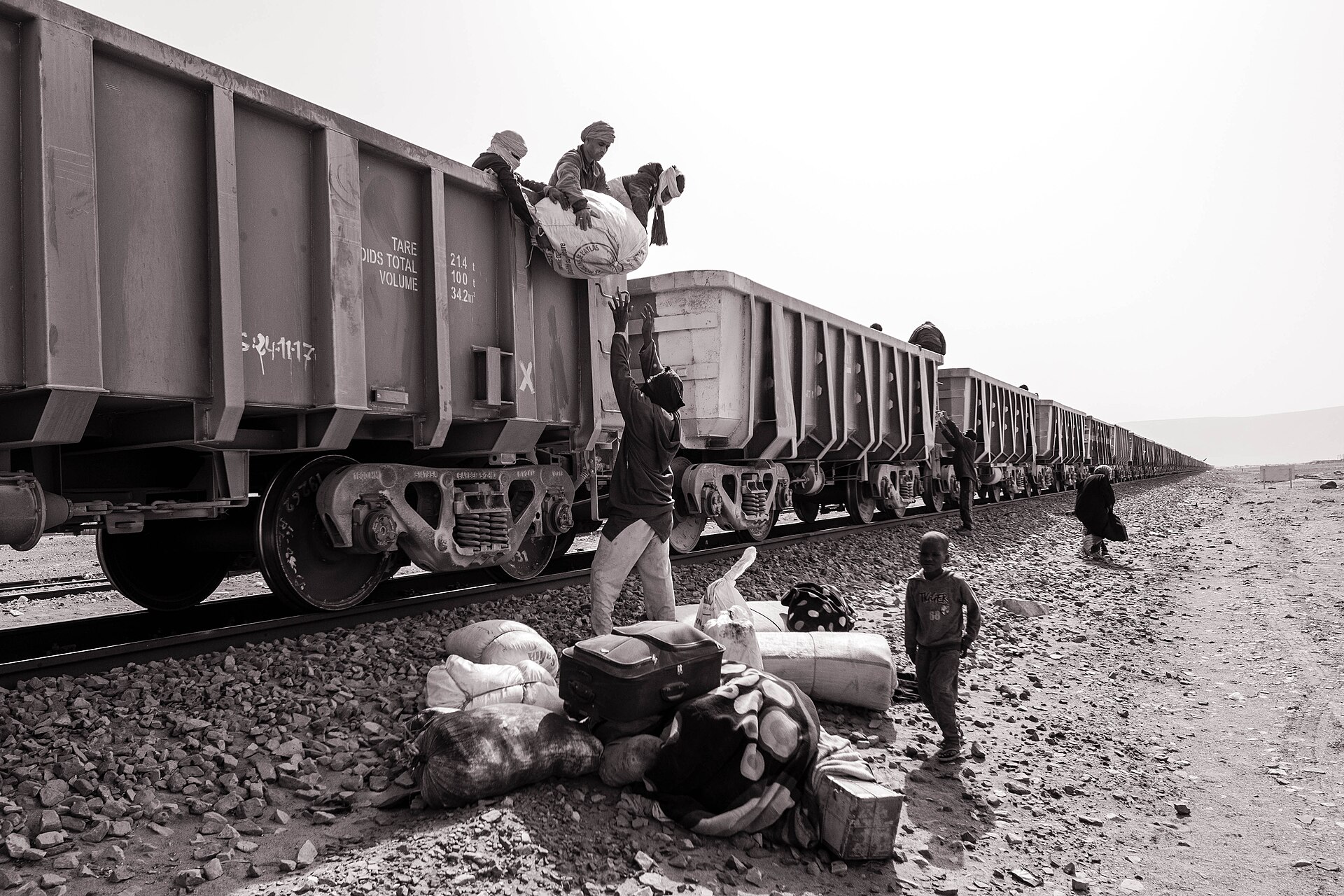
The logistics are the striking part. A 700-kilometre railway runs from the inland mines to the coast, carrying trains up to 2.5 kilometres long. The port channel has been deepened over 25 kilometres, allowing vessel loading up to 230,000 tonnes.
The medium-term production target is 45 million tonnes. Trade reporting puts a 2026 sales target at 15.5 million tonnes after a record 2025, though that figure comes from industry press rather than the company.
The company has installed 19 megawatts of solar and wind. A wind farm at Nouadhibou supplies nearly 30% of plant electricity and avoids around 12,000 tonnes of carbon dioxide a year.
Uranium and Hydrogen: Permitted, Announced, Unbuilt
Two projects are routinely described as Mauritania’s next chapter. Both deserve precision about where they actually stand.
The Tiris uranium project holds mining exploitation licences granted in February 2019 and was fully permitted in July 2024. A feasibility study from March 2023 sets out the economics. It gives a 16-year mine life and steady-state output of 2.0 million pounds of uranium oxide a year, 25.5 million pounds in total. Capital cost is put at about US$178.2 million. Ownership is 85% with the developer and 15% with the Mauritanian state. It would be the country’s first uranium mine.
The word to hold onto is permitted. We found no confirmation of a final investment decision or construction start in 2026, and the economics above date from 2023.
Green hydrogen is a larger set of announcements. Mauritania adopted a dedicated hydrogen code, ratified in September 2024, offering tax exemptions and reduced import duties. The AMAN project has been announced at 30 gigawatts of wind and solar, producing green hydrogen and ammonia. The headline cost is about US$40 billion, across more than 8,500 square kilometres.
A convention for that project was signed on 16 September 2026, the first under the hydrogen code. It carries more weight than the earlier memorandum. The production target stated there is 1.2 million tonnes of hydrogen a year, lower than the 1.7 million previously announced.
The project has entered front-end engineering design. Financing is not secured, no firm offtake agreements have been announced, and a final investment decision is not expected before 2030. For context, only one of 31 African hydrogen projects announced for 2030 has reached that decision.
What This Means If You Invest Here
The useful distinction for anyone assessing Mauritania is between revenue that exists and revenue that has been announced.
Gas exists. Cargoes are loading, the field reached nameplate, and the volumes appear in the national accounts. Iron ore exists, with a railway and a port behind it.
Uranium and hydrogen are at earlier stages than their press coverage suggests. A permitted mine without a financing decision is an option, not an asset. A hydrogen convention with no offtake and no investment decision before 2030 is a framework, not a project.
That is not a criticism of the country. It is how large resource projects work everywhere, and Mauritania has been unusually successful in converting one of them into actual exports within a decade.
The fisheries sector deserves a line of its own, because it affects anyone trading here. The European fisheries partnership protocol running from November 2021 expires in November 2026. It carries an annual financial contribution of about €60.8 million and fishing opportunities up to 280,050 tonnes a year. What replaces it has not been settled.
For the fiscal picture, the most important unknown is what gas actually contributes to the treasury. No figure for government gas revenue has been published, in ouguiya or in dollars.
A Border Field Means a Shared Decision
One feature of the gas project shapes everything downstream, and it is easy to overlook. The field straddles a maritime boundary.
Greater Tortue Ahmeyim is developed under an inter-governmental agreement between Mauritania and Senegal, with each state company holding a stake. Revenue, domestic gas allocation and any expansion decision involve two governments rather than one.
In practice that has worked. First gas arrived, cargoes are loading, and both state companies hold equity. But it also means the second phase is a bilateral decision as much as a commercial one. An operator can propose a gravity-based structure; two treasuries have to agree on what it is worth to them.
For anyone modelling Mauritanian gas revenue, that is the structural point. The resource is shared, the infrastructure is shared, and the country’s 7% direct stake is smaller than headlines about a gas economy imply.
Domestic allocation is the other half of it. Gas routed to power generation at home does not earn export revenue, but it displaces imported fuel and can lower the cost of electricity. Which of those two uses dominates over the next decade is a policy choice both countries still have to make.
What Is Not Known
The fiscal contribution of the gas project to the Mauritanian state is not published.
Whether the second phase of the gas project has moved beyond pre-engineering, and whether it has an investment decision date, is not established.
No final investment decision or construction start has been confirmed for the uranium project, and its published economics date from March 2023.
The hydrogen project scales all trace to developers or an industry body rather than to Mauritanian government sources.
The mining company’s actual 2025 production tonnage has not been published by the company.
And what happens to the European fisheries protocol after November 2026 is unsettled.
Connected Coverage
- Taxes in Morocco for Expats 2026: The 37% Band Starts Early
- Kenya Residency Visa Requirements 2026: Class K Starts at 35
- Taxes in Ghana for Expats 2026: Residency Can Raise Your Rate
Sources
- IMF — Mauritania, new 42-month arrangement approved June 2026
- IMF — Mauritania country report, June 2026
- bp — first gas at the Greater Tortue Ahmeyim project
- Ecofin Agency — AMAN green hydrogen project advances, financing unsecured, September 2026
Frequently Asked Questions
When did Mauritania start exporting gas?
First gas from the Greater Tortue Ahmeyim field flowed on 31 December 2024, with the first cargo loaded on 17 April 2025. The field reached nameplate capacity in December 2025.
How much gas does the field produce?
Reported nameplate capacity differs between operator sources, at 2.3 or 2.7 million tonnes a year. Around 36 cargoes are targeted for 2026, with early-2026 running rates near 2.9 million tonnes a year equivalent.
Is the uranium mine operating?
No. The Tiris project was fully permitted in July 2024, but we found no confirmation of a final investment decision or construction start. Its published economics date from a March 2023 study.
How advanced are the hydrogen projects?
A convention for the AMAN project was signed in September 2026 and the project has entered front-end engineering design. Financing is not secured, no firm offtake agreements have been announced, and a final investment decision is not expected before 2030.
This article was produced by The Rio Times’ automated newsroom system. How we use AI · Report an error
Read More from The Rio Times