
GUIDES · PARAGUAY
Key Facts
- —The country Paraguay is a landlocked republic of 7.01 million people with a US$49.3 billion economy in 2025. It is the only South American state that recognises Taiwan.
- —Who governs Santiago Peña, a conservative of the Colorado Party, has been president since 15 August 2023. Rubén Ramírez Lezcano is foreign minister as of October 2026.
- —Beijing On 12 October 2026 China sanctioned technology minister Gustavo Villate over Taiwan ties. Paraguay’s foreign ministry rejected the measure the same day.
- —Washington A status of forces agreement signed on 15 December 2025 cleared Congress on 10 March 2026. It lets US personnel train and exercise in Paraguay.
- —Trade China supplied 34.5% of Paraguay’s imports in 2025, while Brazil and Argentina took 60.6% of registered exports. The EU trade deal has applied provisionally since 1 May 2026.
- —Power Index Paraguay ranks 10th of 14 in The Rio Times Latin America Power Index, with 36.0 points (October 2026 edition).
- —What it means for you US investors face a beef and energy economy caught between Taipei and Beijing. US travellers face no new restrictions from the sanctions order, which names one minister.
Paraguay is a small landlocked country sitting inside three great-power contests. Beijing, Washington and Brussels each want something from Asunción, while Brazil and Argentina decide most of what it can sell.
Paraguay geopolitics turns on one unusual fact: it is the only South American state that recognises Taiwan rather than China. That choice, made in 1957 and renewed by President Santiago Peña, now shapes its trade, its security pact with Washington and a fresh sanctions order from Beijing.
This guide takes each power in turn as of October 2026: China and Taiwan, the United States, Brazil and Argentina, the European Union and the rest. For US readers the stakes are beef sales, a defence agreement and a test of how hard Beijing will press a small ally.
Where Paraguay Sits on the Map
Paraguay had 7.01 million people and an economy of US$49.3 billion in 2025, the World Bank’s data show. Output grew 6.6% that year, and exports of goods and services equalled 37.2% of GDP.
The country has no coast, so its trade crosses Brazil and Argentina by road, river and rail. Those two neighbours took 60.6% of its registered exports in 2025, the Central Bank of Paraguay’s December 2025 report shows.
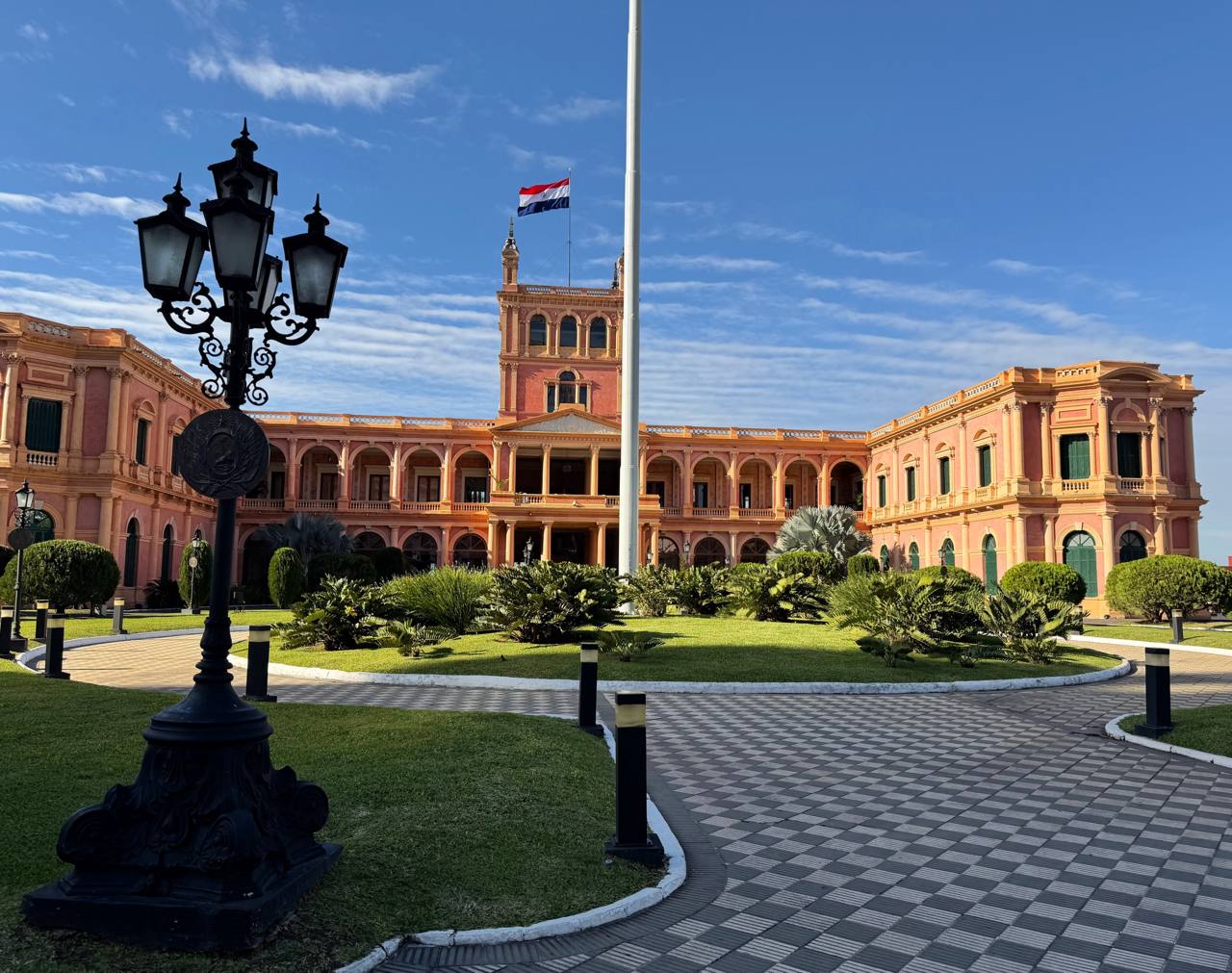
Santiago Peña leads a conservative government of the Colorado Party, which has long dominated Paraguayan politics. Rubén Ramírez Lezcano is foreign minister, and Gustavo Villate runs MITIC, the ministry of information and communication technologies.
Electricity is the country’s other great asset, because its hydropower dams produce far more than it uses. The central bank put electricity exports at 15,685.7 gigawatt hours in 2025, down 2.1% on 2024.
Taiwan and the Pull of Beijing
Paraguay has recognised Taiwan since 1957 and has no diplomatic relations with the People’s Republic of China. It is the last government in South America to keep that tie.
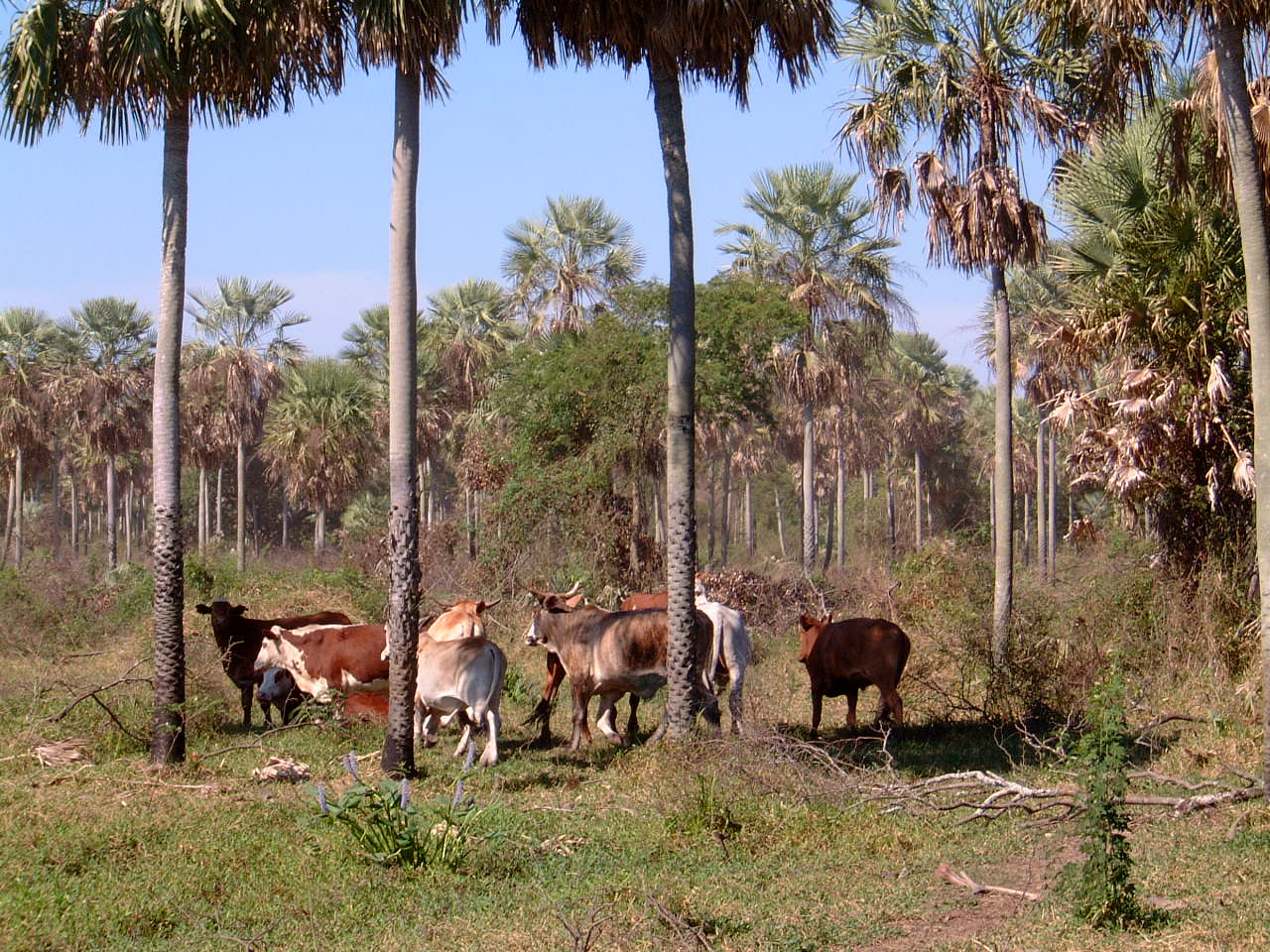
Taiwan is also a customer, taking US$271.5 million of Paraguayan beef in 2025. Only Chile, at 30.8% of beef sales by value, and the United States, at US$304.0 million, bought more.
China is not among the three largest buyers of Paraguayan registered exports, which were Brazil, Argentina and Chile in 2025. It is, however, Paraguay’s largest source of imports.
China supplied US$6.12 billion, or 34.5%, of Paraguay’s imports in 2025, up 18.1% on 2024. Mobile phones, portable computers and tyres led the list.
The gap between what Paraguay buys from China and what it can sell there is the pressure point. Rio Times reporting on Beijing’s lobbying of Paraguayan lawmakers is in Taiwan’s Last South American Ally Faces Beijing Blitz.
The Sanctions Order of 12 October 2026
On 12 October 2026 China’s foreign ministry issued Order No. 21 against Gustavo Villate, Paraguay’s technology and communications minister. It froze his assets in China, barred Chinese people and groups from dealing with him, and denied him entry to China, Hong Kong and Macau.
The order cites China’s Anti-Foreign Sanctions Law and says some Paraguayan politicians have persistently backed ties with Taiwan. A separate measure hit Belize’s foreign minister, Francis Fonseca.
Paraguay’s foreign ministry rejected the sanctions the same day, saying they create unnecessary friction and that Paraguay once again ratifies its firm support for Taiwan. Villate said the sanctions respond to Paraguay’s advances with Taiwan in technology and would not change the government’s roadmap.
The sanctions followed a joint statement on 10 July 2026 by MITIC and the US Embassy in Asunción. It said a joint review had found several actors linked to the Chinese government inside Paraguayan state networks.
Rio Times reports on the order are China Sanctions Paraguay Minister Over Taiwan on Monday and Paraguay Rejects China Sanctions on 12 October. Both followed within a day of the announcement.
The United States and the Defence Pact
Washington has moved closer to Asunción on security. The two governments signed a Status of Forces Agreement, known as a SOFA, in Washington on 15 December 2025.
A SOFA sets the legal terms for foreign troops on a host country’s soil. This one covers the temporary presence of US military and civilian personnel for training, exercises and port visits.
Paraguay’s Chamber of Deputies completed congressional approval on 10 March 2026 by 53 votes to 8, with 4 abstentions. The Senate had voted the week before, and Peña promulgated the law within days.
US personnel receive privileges and immunities, and the United States keeps criminal jurisdiction over them. Opposition lawmakers and a civil-society group called the terms a surrender of sovereignty, while Chamber president Raúl Latorre said Paraguay must improve its capacity to fight drug trafficking.
Trade ties are smaller than the security ones. The United States supplied US$1.09 billion, or 6.1%, of Paraguay’s imports in 2025, mostly diesel, medicines and naphtha.
The July 2026 cyber statement shows the cooperation at work, because MITIC and the US Embassy jointly named China-linked intruders. Beijing’s sanctions on Villate, whose ministry issued that statement, put the two files side by side.
Brazil, Argentina and the Itaipú Question
Brazil and Argentina matter more to Paraguay than any distant power. In 2025 Brazil took US$3.43 billion, or 31.0%, of registered exports, and Argentina took US$3.28 billion, or 29.6%.
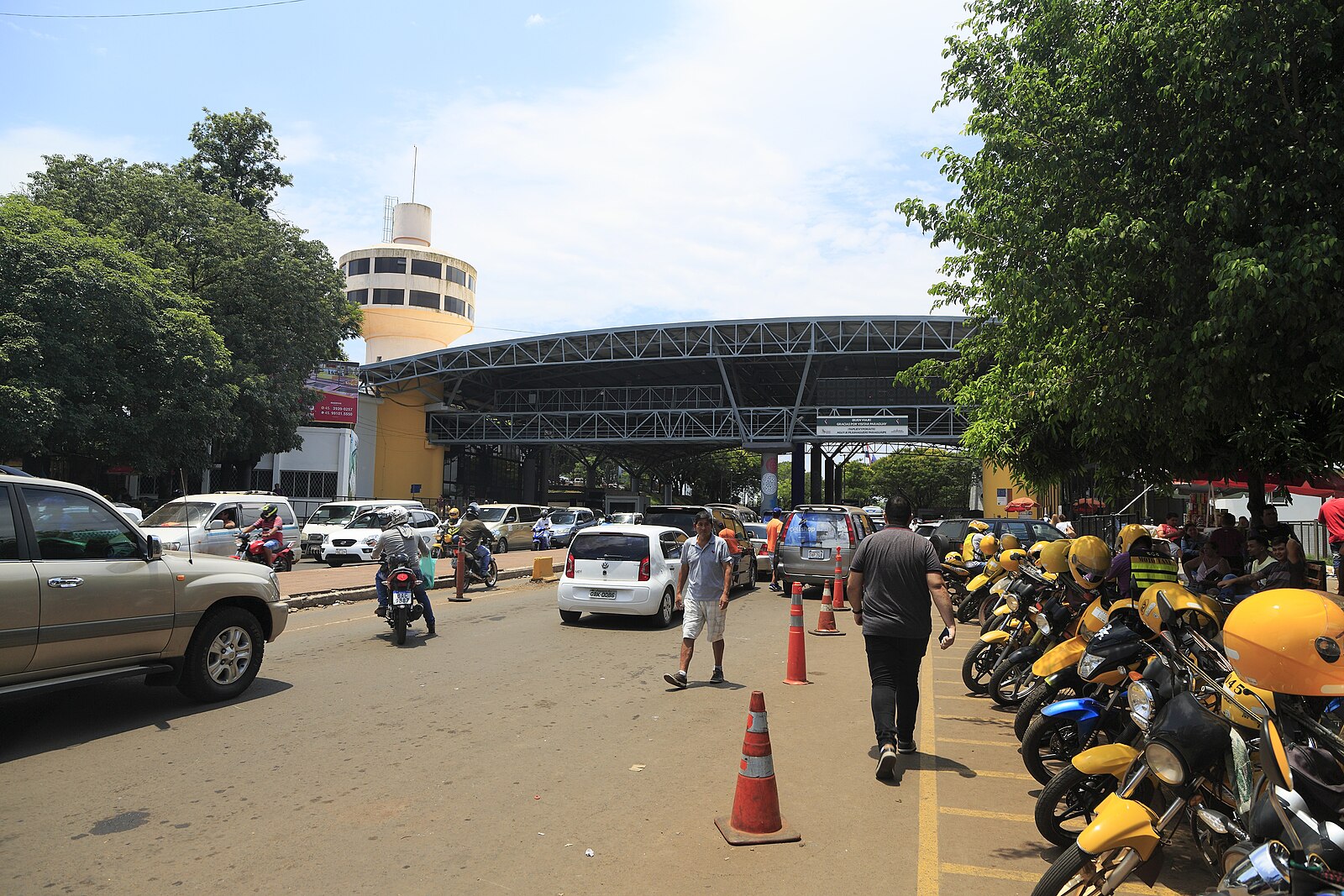
Argentina bought 80.8% of Paraguay’s soybean exports by value in 2025, and Brazil bought 14.3%. Soybeans earned US$2.35 billion that year, down 25.7% from 2024.
Brazil is also Paraguay’s partner in the Itaipú dam, built under a 1973 treaty and shared equally. Annex C of that treaty sets the financial terms, and its review, due in 2023, is still open.
Paraguay wants to sell its unused share of the power on the open Brazilian market at better prices. Brazil wants lower tariffs for its own consumers, and its presidential runoff falls on 25 October 2026.
The Itaipú tariff stood at US$19.28 per kilowatt a month as of June 2025, the outlet Infonegocios reported. Peña has said he wants Annex C closed before the end of 2026, the outlet La Política Online reported in May 2026.
Peña and Lula met in Campo Grande, Brazil, in March 2026 and told their teams to advance in the shortest possible time, but no agreement has been reported. Itaipú’s Paraguayan director, Justo Zacarías Irún, has said the talks depend on Brazil’s election climate.
History still colours the relationship, since Brazil fought Paraguay in the Triple Alliance War of 1864 to 1870. As of October 2026 the most active files between the two governments are Itaipú and trade inside Mercosur.
Coverage of the US pact in March 2026 recorded no official reaction from Brasília or Buenos Aires. Both are Paraguay’s main regional partners, though their strategic interests do not always match Asunción’s.
Borders, rivers and migration are covered in Paraguay Neighbours Explained, a Southern Cone Guide. This guide stays with power politics.
The European Union and the Mercosur Deal
The European Union and Mercosur signed their partnership and interim trade agreements on 17 January 2026 in Asunción. Paraguay held the Mercosur rotating presidency in the first half of 2026 and handed it to Uruguay at a summit in Asunción on 30 June 2026.
Paraguay’s Congress approved the deal on 17 March 2026, the last Mercosur state to do so. Law No. 7634/2026 completed the national procedure on 30 March 2026.
The European Commission says the interim trade agreement has applied provisionally since 1 May 2026. The European Parliament has asked the EU Court of Justice for an opinion on the wider pact, so full entry into force is not set.
Inside Mercosur, Paraguay is pressing for a share of the duty-free quotas for exports to Europe. At a foreign ministers’ meeting in Montevideo on 2 September 2026, Ramírez Lezcano asked for 25% of the quotas for each member, and no agreement was reached.
Argentina and Uruguay want quotas to follow existing trade patterns with the EU, and Brazil wants them to reflect members’ wider trade. Uruguay’s foreign minister, Mario Lubetkin, proposed another meeting within 45 to 60 days.
Because Brazil and Argentina have far larger farm sectors, a split by past trade would leave Paraguay with a smaller slice. That is why Asunción argues for equal shares, as the Rio Times report Paraguay Mercosur Row Is About Who Gets the EU Quotas explains.
Russia, the Gulf, Turkey, India and BRICS
Russia bought US$62.5 million of Paraguayan beef in 2025, or 3.0% of beef export value, the central bank’s December 2025 report shows. That made it the sixth-largest beef market, behind Chile, the United States, Taiwan, Israel and Brazil.
Beyond beef, no Russian loan, base or large investment in Paraguay appears in the public records consulted. Russia is not among the three largest buyers of Paraguayan registered exports.
The Gulf states, Turkey and India are not among the three largest buyers of Paraguayan goods, which were Brazil, Argentina and Chile in 2025. There is little to report on treaties, loans or bases with any of them.
Paraguay is not a member of BRICS, the bloc that includes Brazil, China, India and Russia. China, a founding member of the group, treats the Taiwan question as a core interest, as its Order No. 21 of 12 October 2026 states.
Who Wants What From Paraguay
- China: an end to Paraguay’s recognition of Taiwan, shown by Order No. 21 of 12 October 2026 and by US$6.12 billion of exports to Paraguay in 2025.
- Taiwan: a loyal ally and a beef customer, with US$271.5 million of purchases in 2025.
- United States: a security partner under the 15 December 2025 SOFA and a market for US$304.0 million of beef in 2025.
- Brazil: Itaipú power, a 31.0% share of registered exports in 2025 and a say in Annex C.
- Argentina: Paraguay’s soybeans, at 80.8% of that crop’s export value in 2025, and a 29.6% share of registered exports.
- European Union: access to a market opened by the interim trade agreement, applied provisionally from 1 May 2026.
- Russia, the Gulf states, Turkey, India and BRICS: little to report beyond US$62.5 million of beef sold to Russia in 2025.
What It Means for US Readers
Investors should note that Paraguay sold US$304.0 million of beef to the United States in 2025 and that its economy grew 6.6%. The main risks are a wider Chinese squeeze on Taiwan’s allies and the slow Itaipú talks.
Travellers and expats face no new rules from the sanctions order, which names one minister and one Belizean counterpart. Business visitors to Asunción should still expect Taiwan and the US pact to stay in the news.
US defence planners gain a legal framework for training in Paraguay under the SOFA. Companies with data in Paraguay should expect closer cyber scrutiny after the July 2026 joint statement.
Connected Coverage
What Is Not Known
It is not known whether Beijing will sanction more Paraguayan officials or add economic penalties. Paraguay has shown no sign of changing its Taiwan policy as of 17 October 2026.
The terms of any new Itaipú tariff and the date of an Annex C deal are not known. Brazil’s runoff on 25 October 2026 may shape the timing.
The final split of EU quotas among Mercosur members is not set, and the Court of Justice opinion could delay full EU ratification. The US tariff rate that now applies to Paraguayan goods is also not covered here.
A full count of Paraguay’s votes at the UN General Assembly on Ukraine, Gaza and Cuba is not set out in this guide. The cost and timetable of the Taiwan-linked projects Villate mentioned have not been published.
Frequently Asked Questions
Which countries does Paraguay recognise: Taiwan or China?
Paraguay recognises Taiwan, as it has since 1957, and has no diplomatic relations with the People’s Republic of China. It is the only South American state to do so as of October 2026.
Why did China sanction a Paraguayan minister?
China’s foreign ministry issued Order No. 21 on 12 October 2026 against technology minister Gustavo Villate, saying some Paraguayan politicians persistently back ties with Taiwan. It froze his assets in China and banned him from entering China, Hong Kong and Macau.
What does the US-Paraguay SOFA allow?
The Status of Forces Agreement, signed on 15 December 2025, covers the temporary presence of US military and civilian personnel for training, exercises and port visits. Congress completed approval on 10 March 2026, and US personnel keep privileges, immunities and US criminal jurisdiction.
Who are Paraguay’s biggest trade partners?
Brazil and Argentina took 31.0% and 29.6% of registered exports in 2025, while China supplied 34.5% of imports. Chile ranked third for exports, at 9.4%.
Is Paraguay part of the EU-Mercosur trade deal?
Yes, Paraguay is a Mercosur member and its Congress approved the deal on 17 March 2026. The interim trade agreement has applied provisionally since 1 May 2026.
What is the Itaipú dispute between Paraguay and Brazil?
Itaipú is a dam the two countries share under a 1973 treaty, and Annex C sets its financial terms. Paraguay wants to sell its spare power at better prices, and the review that was due in 2023 is still unfinished.
Sources: World Bank, population, GDP, growth and exports for Paraguay; Banco Central del Paraguay, report of December 2025 (preliminary 2025 trade data); China Ministry of Foreign Affairs, Order No. 21, 12 October 2026; Ahram Online, 12 October 2026; La Nación (Paraguay), 12 October 2026; Hoy (Paraguay), 10 July 2026; Hoy (Paraguay), 10 March 2026; NTN24 on the SOFA vote; La Opinión, 17 March 2026; European Commission, EU-Mercosur agreements; El Observador (Uruguay), 18 March 2026; Aduana News, provisional application and Law No. 7634/2026; La Nación (Paraguay), Mercosur summit, 30 June 2026; La Política Online, Mercosur quotas, 2 September 2026; La Política Online, Itaipú, 6 May 2026; La Nación (Paraguay), Itaipú editorial, 25 March 2026; Infonegocios, pending Paraguay-Brazil talks, 10 June 2025; Taiwan Ministry of Foreign Affairs, overseas missions. All accessed 17 October 2026. Figures are in US$, so no exchange-rate conversion is needed.
This article was produced by The Rio Times’ automated newsroom system. How we use AI · Report an error · Editorial responsibility: Matthias Camenzind, Editor-in-Chief
Expat Guide to Paraguay
What The Rio Times publishes for foreigners who live in or move to Paraguay.
Start here
- Investing in Paraguay as a Foreigner 2026 — Taxes and Property
- Uruguay vs Paraguay for Expats in 2026: Cheap Living or a Tax Holiday
- Moving to Paraguay in 2026 — Rents, Heat and the First Year
- Retire in Paraguay 2026: Residency Steps, Tax Rules and the Real Timeline
City guides
Coming up in Paraguay
- Los Iracundos Ciudad del Este, Paraguay: Lago Shopping Show on 25 October 25 Oct
- Marco Antonio Solís in Asunción, Paraguay: Gratitud Tour Plays the Jockey Club on 31 October 31 Oct
- Ed Sheeran in Asunción, Paraguay: First-Ever Show in the Country at La Nueva Olla on November 26, 2026 — FINNEAS Opens 26 Nov
Understand Paraguay