Venezuela Signs US Oil Deals as Half Its Crude Heads North
Key Facts
- —What happened Venezuela signed a production contract with Hunt Oil and a services deal with SLB, the firm formerly called Schlumberger.
- —How big a jump Crude flowing to American refineries sits above 500,000 barrels a day, roughly half of Venezuela’s output.
- —The real story US Gulf Coast refineries are built for heavy Venezuelan crude, which is the practical reason the trade exists at all.
- —The catch No contract terms, reserves, investment amounts or timetables were published; everything comes from the Venezuelan side.
- —Who it touches US firms Hunt Oil and SLB return to Venezuela, but PDVSA still operates the fields and holds the reserves.
- —What comes next The deals depend on US licensing that can be withdrawn, leaving half of national output exposed to a Washington decision.
Two agreements with American firms, and a US official putting shipments at more than 500,000 barrels a day. The central bank added a growth figure nobody outside can check.
Venezuela has signed a production contract with Hunt Oil and a services agreement with SLB, the firm formerly called Schlumberger. A US energy official says about half the country’s crude now goes to American refineries.
What Venezuela actually signed
Hydrocarbons minister Paula Henao announced a contract with Hunt Oil, the American producer. It covers two onshore oil and gas fields in eastern Venezuela.
One of them is Carito. The agreement is a participation contract, meaning Hunt takes a share of production rather than a fee.
The second deal is with SLB, the oilfield services company that used to be called Schlumberger. Henao called it a framework agreement for integrated reservoir studies across the country.
That distinction matters. A reservoir study is a services contract, not a production-sharing agreement and not a certification of reserves.
Neither Hunt Oil nor SLB has published its own account of the agreements. The terms come from the Venezuelan ministry.
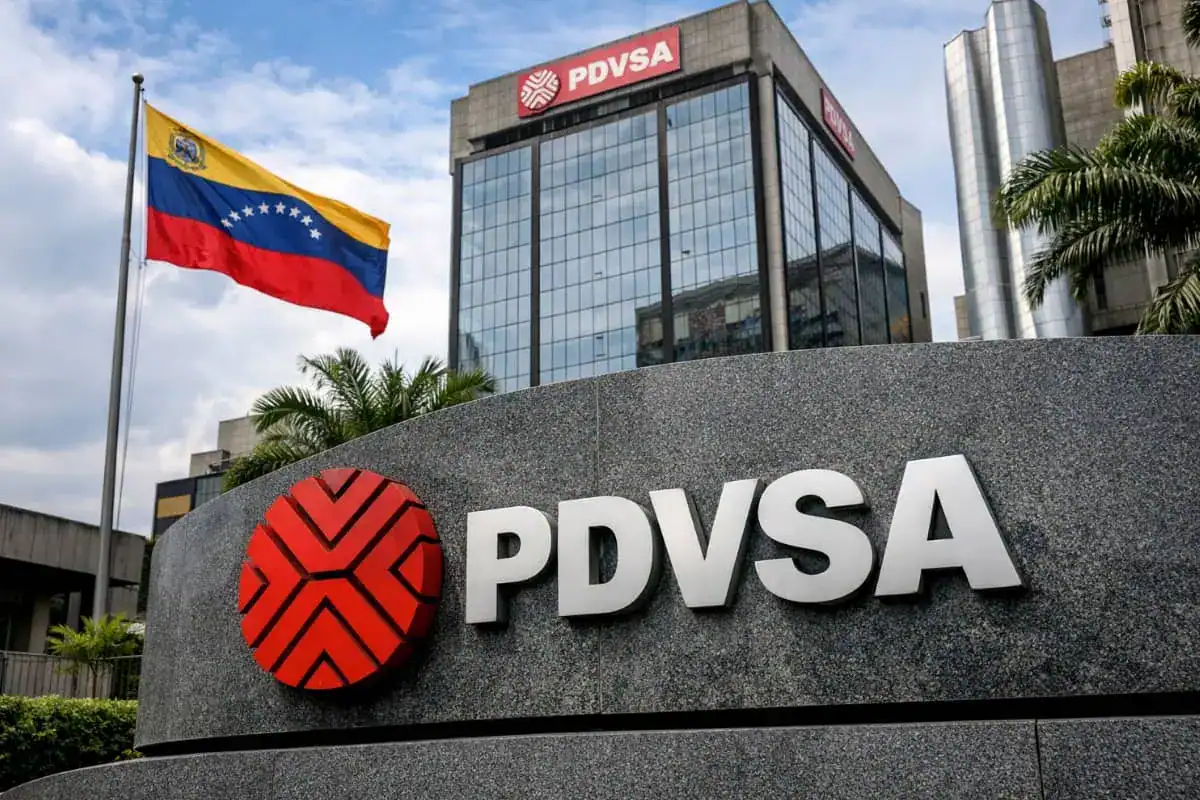
Both deals sit alongside PDVSA, the state oil company that holds Venezuela’s reserves. The ministry announced them; PDVSA operates the fields.
How much oil is going to the United States
Kyle Haustveit, a US deputy assistant secretary of energy, put the flow north of 500,000 barrels a day. Reuters carried his remarks.
He was describing the last couple of months rather than a single shipment or a full year.
He put that at roughly half of Venezuelan production, and gave total output as about 1.25 million barrels a day. Reuters carried the remarks.
The refineries taking it were built for heavy Venezuelan crude. That is the practical reason the trade exists at all.
Half of national output going to one buyer is a concentration, not just a recovery. It leaves Venezuela exposed to a single licensing decision in Washington.
The growth figure, and who is making it
The Central Bank of Venezuela said the economy grew 7.14 percent in the second quarter against the same quarter of 2025. Oil activity rose 9.10 percent and non-oil activity 5.79 percent.
The bank said this brings Venezuela to 21 continuous quarters of higher economic activity. Acting president Delcy Rodríguez repeated the figure on 16 August.
Both statements come from institutions with a direct interest in the answer. The central bank went years without publishing national accounts at all.
There is no independent series to check them against. Read the number as the government’s claim rather than as a measurement.
The oil and non-oil split is worth noting. The bank credits growth to both, which is a stronger claim than an oil-price rebound alone.
Why the oil trade resumed
Venezuela sat under US sanctions that cut it out of the American market for years. Licences have since reopened parts of the trade.
The two new agreements follow a memorandum of understanding that Venezuela and SLB signed in Caracas in June.
Venezuela’s heavy crude needs specific refining capacity. The US Gulf Coast has it, and few other places do.
What this does not tell you
None of the announcements carries a reserves figure, an investment amount or a production target. The ministry has not published contract terms.
Nor has either company published its own account of the agreements. Everything so far comes from the Venezuelan side.
Nor is there a timetable. When either agreement starts producing anything is unstated.
For investors watching the region
Venezuela’s output has climbed from the floor it hit at the end of the last decade. At 1.25 million barrels a day, that is a real recovery from a very low base.
It is also well below where the country was two decades ago. Both things are true, and the government’s framing tends to mention only the first.
For investors, the signal is that American firms are willing to sign again. The risk is that the permission behind it can be withdrawn.
Sources
Frequently Asked Questions
What did Venezuela sign with Hunt Oil and SLB?
A production participation contract with Hunt Oil covering two onshore fields in eastern Venezuela, including Carito. SLB signed a separate framework agreement for reservoir studies.
How much Venezuelan oil goes to the United States?
A US deputy assistant secretary of energy, Kyle Haustveit, put it at north of 500,000 barrels a day. He said that is roughly half of output of about 1.25 million barrels a day.
Did Venezuela’s economy really grow 7.14 percent?
That is what the Central Bank of Venezuela reported for the second quarter. The bank is a government institution, it suspended national accounts for years, and no independent series exists.
What is SLB?
SLB is the oilfield services company formerly known as Schlumberger. It sells technical services to oil producers rather than producing oil itself.
This article was produced by The Rio Times’ automated newsroom system. How we use AI · Report an error · Editorial responsibility: Matthias Camenzind, Editor-in-Chief