Venezuela Economy 2026 — Oil Flows to Washington but Cash Runs Out at Home
Economy · Venezuela
Key Facts
- —The paradox Venezuela’s oil increasingly flows to the United States, yet cash is scarce at home.
- —The deal The Pentagon’s Office of Strategic Capital took a 35% stake in NABEP, a new Venezuelan oil venture, the White House said on September 1, 2026.
- —The government Acting President Delcy Rodríguez, not Nicolás Maduro, now runs Venezuela. The US captured Maduro in January 2026 and is trying him in New York.
- —The street Venezuela has about 28 million people, per United Nations estimates, and physical banknotes have nearly vanished from daily life.
- —The neighbours Brazil alone blocked Venezuela from BRICS membership in October 2024. Chevron and GeoPark are both expanding their Venezuelan operations.
To understand Venezuela in 2026, forget the old question of regime survival. Ask the stranger one that replaced it.
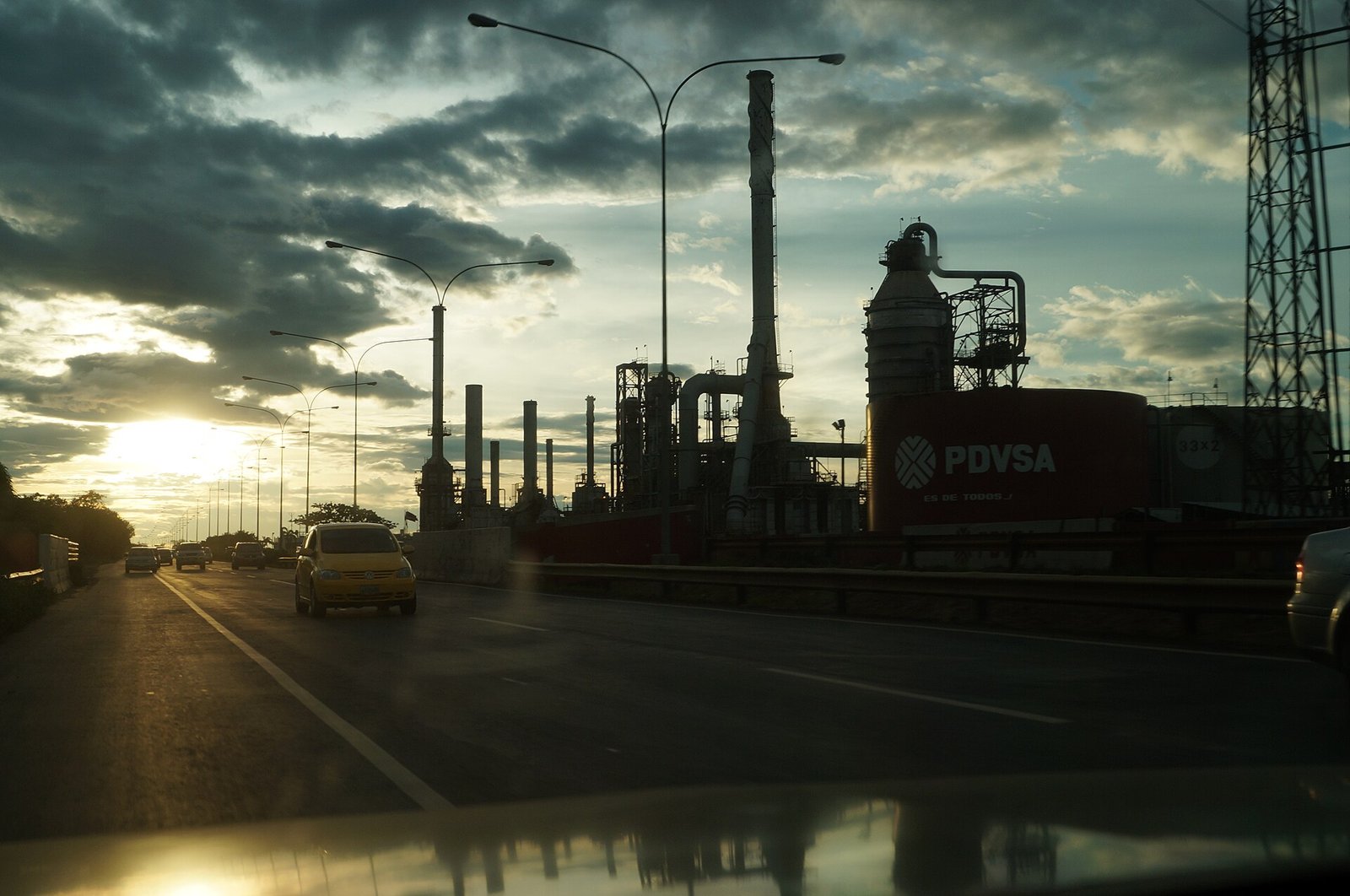
How does a country send more oil to its former adversary, yet still run out of cash?
Who actually runs the country
US forces captured President Nicolás Maduro on January 3, 2026. They flew him to New York to face drug-trafficking charges, NBC News and NPR reported.
His vice president, Delcy Rodríguez, was sworn in as acting president two days later. The US State Department recognized her as Venezuela’s legitimate leader in March 2026, PolitiFact reported.
Maduro is now fighting his own case. On September 3, 2026, his lawyers asked a New York judge to dismiss it, claiming head-of-state immunity, Al Jazeera reported.
That immunity claim is personal, about his own criminal trial. It is separate from the oil deal described below.
The oil architecture
The centerpiece of the new relationship is NABEP, short for North American Blue Energy Partners. It is Venezuela’s second-largest oil operator, after Chevron, the White House said on September 1, 2026.
The Pentagon’s Office of Strategic Capital holds 35% of NABEP. The State Department can also buy a fifth of NABEP’s oil at cost, NPR reported.
Rodríguez’s government gave NABEP 100-year rights to 17 oil fields holding an estimated 65 billion barrels. NABEP’s founder, businessman Alejandro Betancourt, pledged US$100 billion (804.81 bolívares per dollar, Venezuela’s central bank, September 3, 2026) in new investment.
Venezuela itself still sits under broad US sanctions. Only specific licenses make deals like this legally possible.
So does the lifting of personal sanctions on Rodríguez, law firm Holland & Knight and CNBC reported.
Where the oil money actually goes
Since Maduro’s capture, every dollar the state oil company PDVSA earns abroad must go into an account the US Treasury controls. That includes royalty payments, Venezuelan outlet La Patilla reported on August 24, 2026.
PDVSA billed US$15.9 billion in the first seven months of 2026. Roughly 40% of that came from sales to the United States alone, La Patilla found.
That is the real answer to Venezuela‘s paradox. The oil money mostly never reaches Caracas to begin with.
Chevron and the wider oil race
Chevron, Venezuela’s largest operator, plans a US$7 billion (804.81 bolívares/dollar) investment to roughly double its output. It aims to go from about 280,000 barrels a day to 600,000, Chevron said on September 2, 2026, CNBC reported.
GeoPark, a smaller operator, wants to nearly triple its worldwide output by 2030. One part of that plan is a Venezuelan field, now producing about 11,000 barrels a day.
The other part is Argentina’s Vaca Muerta shale region, GeoPark said on September 2, 2026.
What Venezuela’s oil actually adds up to
Venezuela now pumps roughly 1.1 to 1.25 million barrels of oil a day, Al Jazeera reported on September 2, 2026. That is far below the 3 million barrels it pumped daily in the late 1990s.
More than 500,000 barrels a day, over 40% of the total, now moves to the United States. That share has grown sharply since Rodríguez took over, the same report found.
China still buys Venezuelan crude too. But the new US arrangement makes that harder, energy analysts at Asia Times wrote on September 2, 2026.
The country without banknotes
Venezuela’s entire money supply was worth 2.59 trillion bolívares, about US$3.3 billion (798.33 bolívares/dollar, September 1, 2026), in late August 2026. Only 2% to 3.5% of that exists as printed cash; the rest is digital.
The largest banknote in circulation is worth 500 bolívares, about US$0.63. An average Venezuelan holds roughly US$3 to US$5 in physical cash, against about US$300 in Brazil and US$1,500 in Mexico.
So people use phone transfers, cards, and worn US dollar bills instead. Roughly US$5 billion in physical dollars now functions as the country’s real everyday cash.
More: Venezuela news in English, every day from The Rio Times.
Counting Barrels Versus Counting Bolívars
The oil recovery numbers sound strong. Venezuela pumped about 1.1 to 1.2 million barrels per day by mid-2026. That is far above the 392,000 barrel low in 2020. But it is still about one-third of the 3.5 million barrel peak of the late 1990s. One energy overview notes current production near 1.2 million bpd, while proven reserves sit at roughly 303 billion barrels, the largest in the world. The gap between what sits underground and what actually reaches buyers explains why oil money does not feed the local economy.
Export data shows the same split. Reuters reported May 2026 exports reached 1.25 million barrels per day, a seven-year high. April exports were 1.23 million bpd, compared to a 2016 level of 3.5 million bpd. More cargoes went to the United States, India, and Europe. These shipments happen because of narrow U.S. licenses, not full sanctions removal. Chevron alone produced around 280,000 bpd in mid-2026, up from 225,000 the prior quarter. The license terms remain active, but they are limited.
At home, the bolívar is scarce. Most retail trade uses U.S. dollars. The official minimum wage is extremely low in local currency. Remittances from abroad have become a major source of household cash. So while oil export numbers climb, the cash circulating in Venezuelan pockets does not match. The economy is dollarized in practice, but not in wages or public budgets. This split between export statistics and household reality is the missing angle: barrels leave, dollars arrive abroad, and bolívars at home stay thin.
Prices, immunity, and what to watch
Venezuela’s annual inflation rate was 565% at the end of 2025. Economists at a Caracas forum in February 2026 forecast it would ease to about 174% for 2026.
That is still severe, just less so than before.
Separately, the Trump administration wants US courts to grant Rodríguez immunity too, PolitiFact reported. That is in an unrelated civil lawsuit over alleged torture under the Maduro government, a July 2026 Justice Department filing showed.
A hearing on that request is set for September 30, 2026.
Opposition leader María Corina Machado, who won the 2025 Nobel Peace Prize, has long argued that real change should include free elections. A deal with Maduro’s successors is not the same thing, she and her allies have said, NPR reported in January 2026.
Nearly 7.9 million Venezuelans have left the country since 2015, according to the UN-backed regional platform R4V. There is no clear sign yet of that reversing.
Three things will show whether the new arrangement works. Does NABEP’s ownership survive past November’s US midterm elections?
Do banknotes return, and do any migrants come home? For now, oil moves north, and cash stays scarce at home.
Connected Coverage
Washington Set to Take 35% of the Venezuela Oil Vehicle Nabep
Venezuela Cash: A Country of 28 Million Is Running Out of Banknotes
GeoPark Bets on Venezuela and Vaca Muerta to Nearly Triple Output
The Big Picture
Venezuela Transformation — the complete coverage hub
Latest developments
- Saab Partner Pulido Arrested by US, in Court Tuesday — 12 October 2026
- Venezuela’s Rodríguez Lands in Rome With 4 Ministers — 11 October 2026
- Venezuela Lists 127 Hopefuls for Supreme Court Panel — 11 October 2026
- Santiago Rent for Foreigners in 2026, US$422 to US$886 — 11 October 2026
This article was produced by The Rio Times’ automated newsroom system. How we use AI · Report an error · Editorial responsibility: Matthias Camenzind, Editor-in-Chief
Expat Guide to Venezuela
What The Rio Times publishes for foreigners who live in or move to Venezuela.
Start here
- Healthcare in Venezuela for Expats: Clinics, Insurance and the Private Option
- Taxes in Venezuela for Expats: What Foreigners Pay During the Transformation
- Venezuela Visa and Residency 2026, Entry Rules and Steps
- Spain and Portugal Close Their Golden Visa Doors, Forcing LATAM Investors to Reroute
Understand Venezuela