USA & Canada Intelligence Brief — Monday, October 5, 2026
Executive Summary
USA & Canada Intelligence Brief for October 5: Quebec votes on a 2029 sovereignty referendum, and the U.S. services PMI is forecast at 55.7.
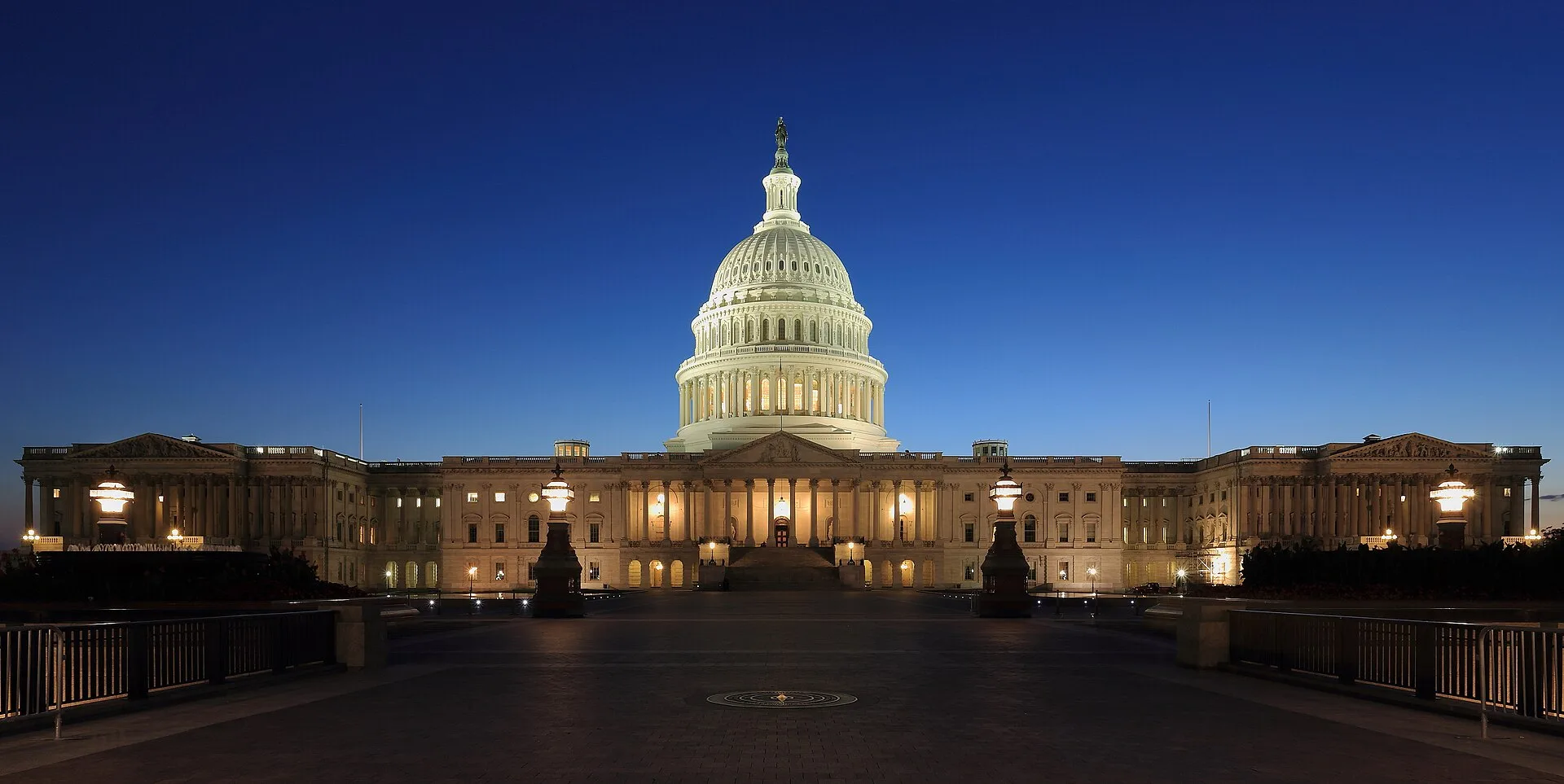
North America’s temper this Monday is a continent waiting for a result. Quebec votes, the Senate does not sit, and the services sector is about to publish the first hard read on whether the American economy is still expanding or merely holding its shape. The day’s motion is institutional: a court opens its year in a temporary building, a parliament returns to a bill designed to make the state move faster, and a trade negotiation remains exactly where it was left.
The register is a low hum of managed strain. The U.S. Trade Representative said there was no urgency to resume talks with Canada, Southwest Florida News Network reported on 5 October. In Quebec, nearly one-quarter of voters had already cast ballots before election day, CTV News Montréal reported on 5 October, a sign that the province’s argument with itself is not a quiet one.
What steadies the continent is the calendar of data. Canada’s August trade balance arrives on Tuesday, the U.S. trade balance the same day, and both countries publish employment figures by Friday. The Bank of Canada’s senior deputy governor has said monetary policy is a blunt tool for housing, a reminder that the central banks are watching, not acting, this week.
The through-line is a federation and a superpower each trying to shorten the time between decision and consequence. Ottawa wants one-year project approvals, Quebec wants a referendum in 2029, and Washington wants the services PMI to stay above 55. All three are ways of asking the same question: how much patience is left.
Key Facts
—The vote. Quebec’s provincial election is on Monday 5 October, with polls closing at 8 p.m.; Élections Québec said nearly one-quarter of voters had already voted in advance, CTV News Montréal reported on 5 October.
—The referendum promise. The Parti Québécois, led by Paul St-Pierre Plamondon, campaigned on holding a sovereignty referendum in 2029, CTV News Montréal reported on 5 October.
—The trade stall. U.S. Trade Representative Jamieson Greer said there was no urgency to resume Canada–U.S. trade negotiations, Southwest Florida News Network reported on 5 October.
—The bill. Parliamentarians resumed debate on Bill C-39, a 243-page economic and labour bill proposing a one-year timeline for federal project decisions and “national interest” zones, the Lethbridge Herald reported on 5 October.
—The trial. Six Nations of the Grand River began proceedings on 5 October against the federal and Ontario governments in Toronto over the Haldimand Tract, alleging the Crown sold portions of the land and mismanaged trust funds, CBC News reported on 5 October.
—The court. The Supreme Court of Canada held its opening-of-the-judicial-year ceremony on 5 October at the West Memorial Building in Ottawa, where Chief Justice Richard Wagner was scheduled to speak, CTV News reported on 5 October.
—The services read. The U.S. ISM Services PMI for September is forecast at 55.7 against 55.4 in August, with the prices subindex forecast at 72.9 against 72.6, according to the EODHD economic calendar for 5 October.
—The Canadian PMIs. Canada’s S&P Global Services PMI for September is forecast at 47.5 against 46.8 in August, and the Composite PMI at 48.5 against 47.8, according to the EODHD economic calendar for 5 October.
Quebec Votes On A 2029 Question
The ballot is provincial, but the question is constitutional. Voters across Quebec’s 127 ridings went to the polls on Monday 5 October, with advance turnout already near one-quarter of the electorate, CTV News Montréal reported on 5 October. The Parti Québécois entered the day ahead in polling and campaigned explicitly on a sovereignty referendum in 2029, the same report said.
The context for a U.S. reader is a federation already under trade pressure from Washington. A sovereigntist government in Quebec City would not immediately change Canada’s borders, but it would add a second front to Ottawa’s political management. The Quebec Conservatives, led by Éric Duhaime, could hold the balance of power if no party wins a majority, CTV News Montréal reported on 5 October.
The register in Montreal is anticipation with a long fuse. The referendum is promised for 2029, not this year, which makes the vote a wager on how much the federation can absorb before then. The result will be read in Washington as a signal about Canadian unity at a moment when the trade relationship is already brittle.
Parliament Returns To A Bill About Speed
Ottawa’s answer to the national mood is procedural. Parliamentarians resumed debate on Bill C-39 on Monday 5 October, a 243-page economic and labour bill that proposes a one-year timeline for federal project decisions and creates “national interest” zones where some projects could be pre-approved, the Lethbridge Herald reported on 5 October. The bill also changes when the jobs minister may intervene in labour disputes.
The bill is the government’s attempt to shorten the distance between a project’s announcement and its ground-breaking. For U.S. investors in Canadian mining, energy and transport, the one-year timeline would be a material change from the current multi-year review process. The government also planned to introduce legislation on national defence and security procurement when Parliament resumed, the Lethbridge Herald reported on 5 October.
The register in Ottawa is urgency dressed as efficiency. A government that cannot move the trade file with Washington is trying to move everything else faster at home. The risk is that speed becomes its own political argument, and the bill’s labour provisions will be contested line by line.
Six Nations Opens A Land Trial In Toronto
The legal year begins with a claim that reaches back centuries. Six Nations of the Grand River began proceedings on Monday 5 October against the federal and Ontario governments in Toronto over the Haldimand Tract, CBC News reported on 5 October. The community alleges that the Crown sold portions of the land and mismanaged trust funds, the report said.
The case is the product of decades of dispute, and its scale is large enough to affect how governments and developers treat land along the Grand River. For U.S. readers, the trial is a reminder that Canada’s constitutional order includes treaty obligations that can be litigated, and that the outcomes can shape infrastructure and resource projects for years.
The register in Toronto is patient and formal. A trial is the opposite of a referendum: it moves slowly, on evidence, and its result will be written in legal language. But the claim itself is a statement that the Crown’s accounting has never been settled.
The Supreme Court Opens In A Temporary Home
The court’s ceremony was a study in institutional continuity under renovation. The Supreme Court of Canada held its opening-of-the-judicial-year ceremony on Monday 5 October at the West Memorial Building in Ottawa, CTV News reported on 5 October. Chief Justice Richard Wagner was scheduled to speak, alongside Justice Minister Sean Fraser and Kristen Boon, president of the Council of Canadian Law Deans.
The court’s permanent building is undergoing renovations expected to last at least 10 years, CTV News reported on 5 October. That detail matters because it means the country’s highest court will be issuing its most important rulings from a temporary address for a decade, a small but telling symbol of how much of Canada’s public infrastructure is being rebuilt at once.
The register in Ottawa is formality with a hard edge. The speeches will be about the rule of law, but the setting is a borrowed building. The court’s work continues, and the cases it hears this term will shape federal-provincial relations, Indigenous rights and the limits of executive power.
The Trade File Stays Exactly Where It Was
The sentence from Washington was short and final. U.S. Trade Representative Jamieson Greer said there was no urgency to resume Canada–U.S. trade negotiations, Southwest Florida News Network reported on 5 October. Neither side moved.
The stall is the backdrop for every other Canadian story today. Quebec votes while the trade file is frozen; Parliament debates a bill to speed up projects while the largest export relationship remains in dispute; the Supreme Court opens its year while the federation’s economic assumptions are being rewritten. The trade stall is not a crisis today, but it is the condition under which all other decisions are being made.
The register is patience as policy. Carney’s line is that Canada can wait, and Greer’s line is that Washington does not need to hurry. Both are true, and both are a way of saying that the next move will be someone else’s.
The Services Economy Prepares To Speak
The first hard number of the week arrives at 15:00 Lisbon time. The U.S. ISM Services PMI for September is forecast at 55.7 against 55.4 in August, with the prices subindex forecast at 72.9 against 72.6, according to the EODHD economic calendar for 5 October. A reading above 50 means expansion, and the forecast suggests the services sector is still growing, but the prices number will be watched closely.
Canada’s services picture is weaker. The S&P Global Services PMI for September is forecast at 47.5 against 46.8 in August, and the Composite PMI at 48.5 against 47.8, according to the EODHD economic calendar for 5 October. Both are below 50, which means contraction, and they will land on the same day Quebec votes.
The register in markets is a pause before the data. The U.S. Senate has no floor activity scheduled for Monday, Congress.gov reported on 5 October, which means the political calendar is quiet while the economic calendar is not. The services PMI will be the first test of whether the American consumer is still spending on experiences, and the prices subindex will be the first test of whether services inflation is still sticky.
What This Means From Latin America
The trade stall between Washington and Ottawa is a reminder that North American integration is not a settled fact. For Mexico, the other party to the USMCA trade pact, Greer’s statement that there is no urgency to resume talks with Canada is a signal about how Washington treats its northern neighbour. Latin American governments that depend on U.S. market access will read it as a warning about the durability of trade agreements.
The Canadian services PMI, forecast below 50, matters for Latin American exporters who sell into the Canadian market. A contracting Canadian services sector means softer demand for everything from tourism to business services, and the Canadian dollar at 1.4247 to the U.S. dollar, according to EODHD rates on 5 October, makes Canadian imports more expensive in local currency terms.
Bill C-39’s proposed one-year project timeline could affect Latin American mining and energy companies with Canadian operations or partnerships. Faster approvals would be a competitive advantage for Canadian projects, and the “national interest” zones could concentrate investment in specific corridors. The bill is still in debate, but its direction is toward speed.
The dossier carries the full country health check and the outcome table with its Latin America column — open the USA & Canada Intelligence Dossier.
What We Are Watching
- Monday 5 October, 15:00 Lisbon: U.S. ISM Services PMI — Forecast at 55.7 against 55.4 in August, with prices at 72.9 against 72.6; the first read on September services inflation and growth.
- Monday 5 October, 14:30 Lisbon: Canadian S&P Global Services PMI — Forecast at 47.5 against 46.8 in August; a reading below 50 would confirm contraction in Canadian services.
- Tuesday 6 October, 13:30 Lisbon: Canadian and U.S. trade balances — Canada’s August balance is forecast at 1.3 billion against 0.77 billion; the U.S. balance is forecast at -89.8 billion against -88.6 billion.
- Tuesday 6 October, 15:00 Lisbon: Canadian Ivey PMI — Forecast at 65.2 against 64.3 in August; a private-sector read on Canadian business conditions.
- Friday 9 October, 13:30 Lisbon: Canadian unemployment — September unemployment is forecast at 6.5 per cent against 6.4 per cent in August; the first labour-market read since the trade stall hardened.
- Friday 9 October, 15:00 Lisbon: U.S. Michigan inflation expectations — One-year expectations forecast at 4.7 per cent against 4.6 per cent; a read on whether consumers expect inflation to persist.
Background: USMCA 2026 Trade Pact Guide.
Background: Oil and Energy in Latin America 2026: A Guide.
Frequently Asked Questions
What is at stake in the Quebec election on Monday?
Quebec voters are electing all 127 members of the provincial legislature on Monday 5 October, with polls closing at 8 p.m., CTV News Montréal reported on 5 October. The Parti Québécois, led by Paul St-Pierre Plamondon, campaigned on holding a sovereignty referendum in 2029, the same report said. Nearly one-quarter of voters had already cast ballots in advance, according to Élections Québec.
Why are Canada–U.S. trade talks stalled?
U.S. Trade Representative Jamieson Greer said there was no urgency to resume negotiations, Southwest Florida News Network reported on 5 October. Neither side has set a date for the next round, and the stall is the backdrop for Canada’s domestic policy debates.
What does Bill C-39 propose?
Bill C-39 is a 243-page economic and labour bill that proposes a one-year timeline for federal project decisions and creates “national interest” zones where some projects could be pre-approved, the Lethbridge Herald reported on 5 October. It also changes when the jobs minister may intervene in labour disputes. Parliamentarians resumed debate on the bill on Monday 5 October.
What is the Six Nations land trial about?
Six Nations of the Grand River began proceedings on Monday 5 October against the federal and Ontario governments in Toronto over the Haldimand Tract, CBC News reported on 5 October. The community alleges that the Crown sold portions of the land and mismanaged trust funds. The case is the product of decades of dispute and could affect land and resource decisions along the Grand River.
This article was produced by The Rio Times’ automated newsroom system. How we use AI · Report an error · Editorial responsibility: Matthias Camenzind, Editor-in-Chief