
UGANDA · SECURITY
Key Facts
- —The country Uganda, in East Africa, is led by President Yoweri Museveni and has had troops in Somalia since 2007.
- —What happened Army chief Gen. Muhoozi Kainerugaba said on 29 October that Uganda has started withdrawing its troops.
- —The mission The troops serve in AUSSOM, the African Union force that backs Somalia’s government against the militant group al-Shabaab.
- —The pressure The United States has said it will not back renewing the mission’s UN mandate in December.
- —Not announced No troop number or end date for the Ugandan exit has been published.
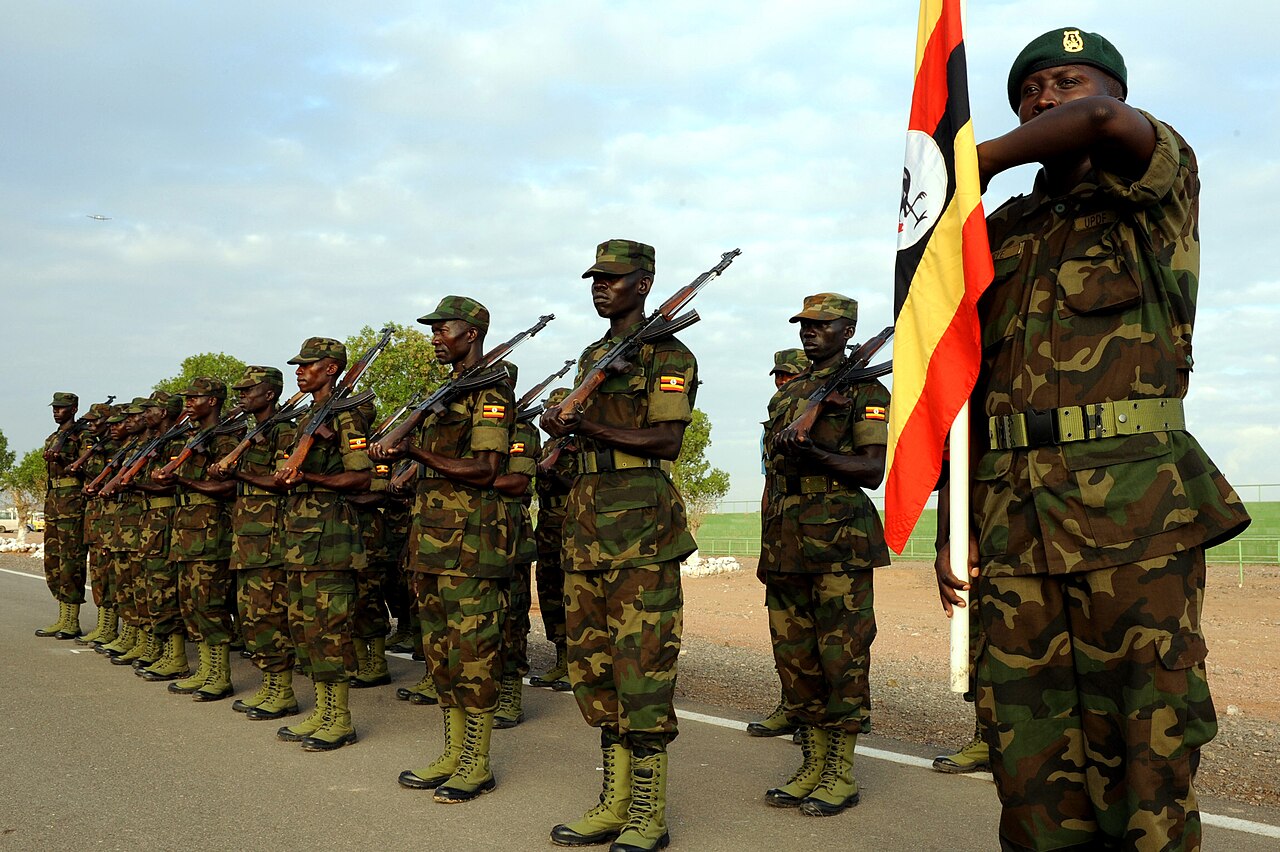
Uganda troops have begun to leave Somalia after nearly 20 years, the head of Uganda’s armed forces said on Thursday 29 October. General Muhoozi Kainerugaba, who commands the Uganda People’s Defence Forces (UPDF), wrote on X: “As we promised, we have started withdrawing UPDF from Somalia”.
Uganda troops form one of the largest contingents in the African Union force that fights al-Shabaab, a militant group the US lists as terrorist. Their exit comes as UN logistics support for the mission is due to be wound down from January 2027.
In Plain English, Who Is Who
AUSSOM is the African Union Support and Stabilisation Mission in Somalia, the multinational force that has backed Somalia’s government since 1 January 2025. It follows two earlier African Union missions, and Uganda was the first country to send troops to the original one in 2007.
Al-Shabaab, Arabic for “the Youth”, is an armed Islamist group in Somalia that is linked to al-Qaeda. The United States lists it as a terrorist organisation.
UNSOS is the United Nations Support Office in Somalia, which supplies the mission with food, water, fuel, medical help and transport. General Muhoozi is the son of President Museveni and Uganda’s Chief of Defence Forces.
Why Uganda Troops in Somalia Matter
General Muhoozi said Uganda is handing over security to Somali forces after 20 years of “blood and sacrifice”. Ugandan soldiers have fought alongside the Somali National Army against al-Shabaab and helped secure strategic towns and government sites.
Uganda troops have been one of the largest contingents throughout, so their departure is a significant change for the mission. The UPDF has not published how many troops are leaving or how many remain.
The UPDF website shows that on 30 October it flagged off a new unit, Battle Group 48, for AUSSOM after almost five months of training. The posting does not mention the withdrawal.
Why Uganda Is Pulling Out Now
The withdrawal comes as the mission runs short of money and supplies. Funding from UNSOS has fallen by 25%, which has hurt frontline operations, and the office’s total budget is about US$500 million.
In July the United States told the African Union it would not back renewing the mission’s mandate at the UN Security Council in December. In September Washington gave the UN 12 more months to wind down UNSOS from January 2027, with the timetable due at the Council.
At a summit of troop-contributing countries in Kampala on 31 July, Museveni said Somalia would not be abandoned. “If the international community wants to pull out, let them”, he said.
The US Counterterrorism Angle
The United States has carried out air strikes in Somalia this year. US Africa Command, which runs American military operations in Africa, confirmed 63 strikes by 29 May, against militants including al-Shabaab and a smaller ISIS branch.
Uganda troops have helped hold towns and government sites alongside Somali forces, work that air strikes do not replace. How the handover to Somali forces will work has not been explained.
What It Means for US Readers
Al-Shabaab is a US-listed terrorist group, and Washington has backed air strikes rather than the UN-funded supply line for African ground troops. Al-Shabaab has attacked civilians in Somalia and neighbouring Kenya, which matters to travellers and firms in East Africa.
Watch the Security Council talks in December, because the mission’s current authorisation ends on 31 December 2026. For background, read our August report on Uganda keeping troops in Somalia, Somalia’s geopolitics and Uganda’s geopolitics.
What Is Not Known
The UPDF has not said how many Uganda troops will leave, over what period, or whether this is a first stage. It is also unclear how the withdrawal relates to the new battle group it sent to the mission on 30 October.
It is not known which Ugandan positions will be handed over, or whether the Security Council will renew the mission in December. For the wider country picture, see our Uganda explainer.
More: Uganda news in English, every day from The Rio Times.
Frequently Asked Questions
Is Uganda withdrawing its troops from Somalia?
Uganda’s army chief said on 29 October that the withdrawal has started. No troop numbers or end date have been published.
What is AUSSOM?
AUSSOM is the African Union Support and Stabilisation Mission in Somalia, which began on 1 January 2025. It backs Somali forces against al-Shabaab and protects civilians.
Why is the mission short of money?
Funding from the UN support office that supplies the mission has fallen by 25%. The United States says it will not back renewing the mission in December and has agreed to a 12-month UN wind-down from January 2027.
Does this matter to the United States?
Yes, because al-Shabaab is a US-listed terrorist group that the US strikes from the air. A weaker African ground force could change the security picture for travellers and firms in East Africa.
Sources: Uganda People’s Defence Forces: Battle Group 48 flagged off for the Somalia mission, 30 October 2026; Chief of Defence Forces Gen. Muhoozi Kainerugaba, public statement on X, 29 October 2026; UN Security Council Resolution 2809 extending the AUSSOM authorisation to 31 December 2026, December 2025; African Union Support and Stabilisation Mission in Somalia (AUSSOM): UN Security Council resolutions, 2026; US Africa Command: strike announcements in Somalia, 2026.
Editorial responsibility: Matthias Camenzind, Editor-in-Chief · Editorial standards · Report an error
Part of our ongoing coverage
Africa: The New Scramble — the great-power contest over the continent.
Horn of Africa and the Red Sea
- Horn of Africa 2026: Why It Matters and Who Backs Whom
- Ethiopia’s Neighbors Explained, Ports, Eritrea, Somalia
- Eritrea Explained 2026, a Red Sea Country Guide
- Somalia Explained: Al-Shabaab, Somaliland, the Ports and the Fight Over a 2026 Vote