Mogadishu Property Boom Surges as al-Shabaab Tax State Hits Somalia Economy
Politics · Somalia
—The stakes. Somalia’s economy is growing while al-Shabaab extracts an estimated US$100 million to US$150 million a year through a parallel tax system that reaches into Mogadishu.
—The boom. More than 6,000 buildings went up in Mogadishu between 2020 and 2025, fuelled by port trade, construction and real estate investment.
—The lifeline. Remittances and external financing now shape the macroeconomic picture after Somalia reached the HIPC Completion Point in December 2023.
—The transition. ATMIS ended on 31 December 2024 and AUSSOM has run the mission since 1 January 2025. Its funding and force-generation shortfall is what now shapes the risk environment for businesses and property owners.
—The choice. Investors and diaspora members must navigate a market where federal authority and al-Shabaab taxation overlap in the same neighbourhoods.
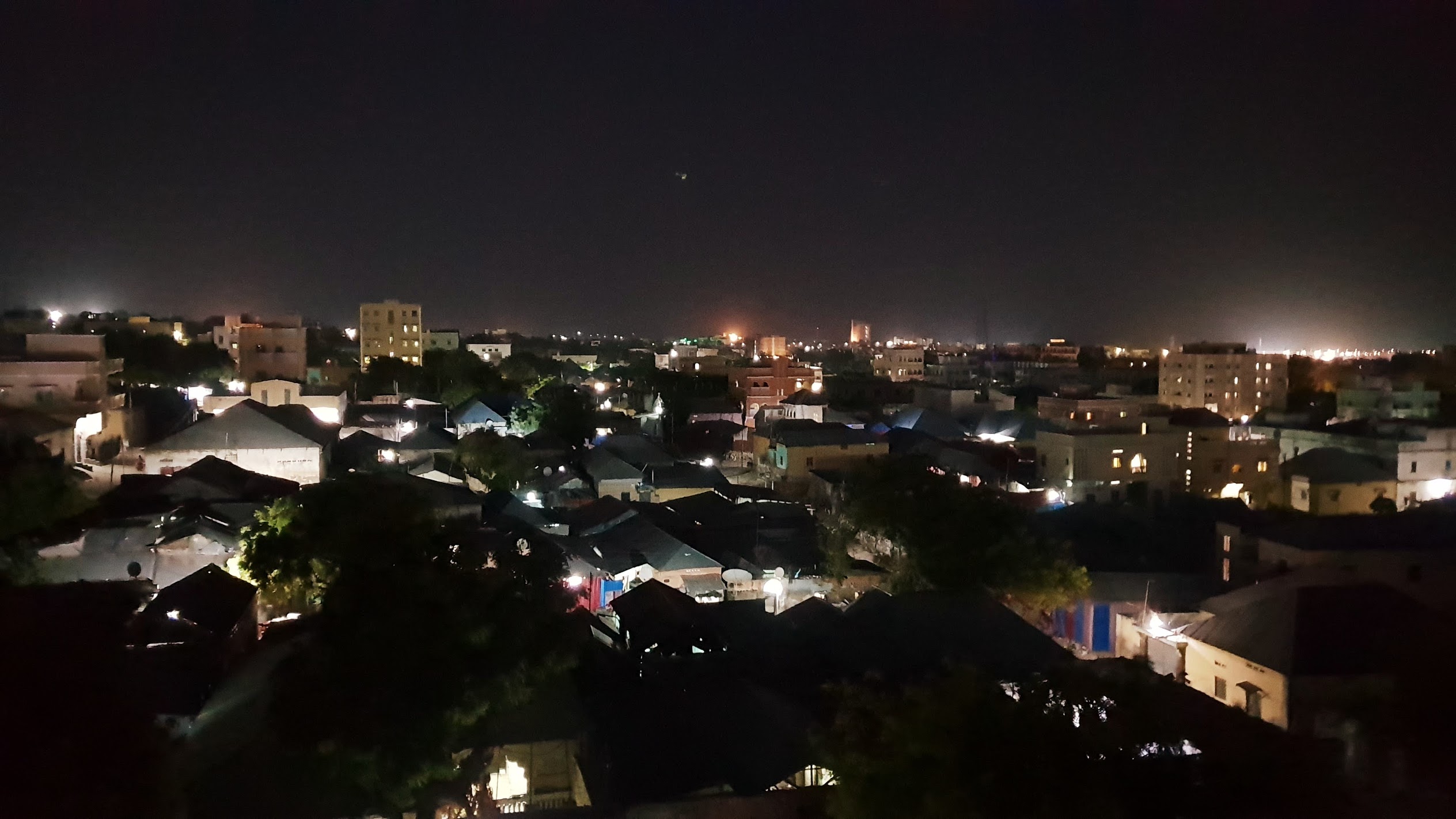
Somalia is running two economies at once. One is visible in Mogadishu’s construction cranes and new apartment blocks; the other operates through al-Shabaab checkpoints, registries and courts that tax the same commercial activity.
A state that cannot monopolise tax or violence
The Federal Government of Somalia (FGS) controls the centre of Mogadishu but does not hold a monopoly on taxation or force across the country.
The BTI 2026 Somalia report finds that al-Shabaab maintains shadow governance structures even in towns formally under FGS control.
That includes parts of Mogadishu itself, where the insurgency collects money from businesses and import and export trade.
The result is not a lawless vacuum. It is a competing system in which two authorities bill the same economy.
For any investor, the first question is no longer whether Somalia is risky. It is which authority you will actually pay.
How al-Shabaab’s tax-parallel-state works
Al-Shabaab runs a centralised taxation system with published, fixed rates at checkpoints across south-central Somalia.
The EU Agency for Asylum says checkpoint taxes fall into four streams: gadiid for transit, badeeco for goods, dalag for farm produce and xoolo for livestock.
Traders who pay receive receipts that allow passage through later checkpoints without paying again.
If an assessment is disputed, traders can appeal to al-Shabaab courts, which adds a layer of formalised enforcement.
This is not random extortion. It is an administered fiscal regime designed to be predictable for those who comply.
The Amniyat, zakat and the asset registry
Al-Shabaab’s intelligence wing, the Amniyat, keeps a registry of citizen assets across much of south-central Somalia.
The registry covers parts of Mogadishu and is used to assess the annual 2.5 percent zakat, or Islamic wealth tax.
African Arguments reported in June 2026 that the Africa Center for Strategic Studies has documented an Amniyat-run registry of taxable assets, a capacity most insurgent groups never build.
The group also collects levies on real estate transactions, import flows and business activity even where it has no permanent presence.
Refusing to pay can bring threats, violence or displacement, according to the EUAA, making the tax system coercive as well as organised.
Revenue scale and adaptation
Estimates of al-Shabaab’s annual revenue range from US$100 million to US$200 million.
A 2025 assessment by the Combating Terrorism Center at West Point put the figure at US$100 million to US$200 million from forced taxation, extortion, smuggling, ransom payments and money laundering. Western analysts cited by African Arguments in June 2026 use a narrower US$100 million to US$150 million range.
The EUAA notes that the group introduced new products and tariffs in 2024, including a levy on scrap metal.
This continuous adaptation shows that al-Shabaab watches economic trends and adjusts its fiscal reach accordingly.
For businesses, that means the tax burden is not static, and new charges can appear as sectors grow.
Mogadishu’s property and port boom
Mogadishu has experienced a rare construction surge despite the conflict.
In mid-2025 the mayor told the BBC that more than 6,000 buildings had been constructed in the city over the previous five years.
The port remains central to the economy, serving as the main gateway for imports and a key source of customs revenue.
But al-Shabaab also taxes import and export flows through the main port, meaning the boom feeds both the federal budget and the insurgency.
Real estate growth is visible, yet the parallel tax system means new buildings and property transactions are monitored by more than one authority.
Remittances and the macroeconomic lifeline
Remittances from the Somali diaspora are a major source of hard currency and household income.
They support consumption, construction and trade in Mogadishu and other urban centres.
The documented revenue streams are checkpoint taxation, zakat levied on a registered asset base, business protection fees, port and import levies, property transaction levies and the charcoal and livestock trade.
For the federal government, remittances stabilise the balance of payments even when formal tax collection remains weak.
For diaspora investors, the dilemma is that money sent home for family or property can end up taxed by the insurgency.
Debt relief after HIPC and new financing access
Somalia reached the Heavily Indebted Poor Countries (HIPC) Initiative Completion Point in December 2023.
That milestone triggered large-scale debt relief and sharply reduced the external debt ratio.
The International Monetary Fund says the relief opens access to new external financing for inclusive growth.
In practice, this means Somalia can now borrow on better terms and court development finance for infrastructure.
But the security environment limits how widely those funds can be deployed outside protected urban zones.
The ATMIS to AUSSOM transition
International security support is shifting from the African Union Transition Mission in Somalia (ATMIS) to a new mission structure.
The African Union Support and Stabilisation Mission in Somalia (AUSSOM) is the successor arrangement endorsed by the Security Council.
The transition changes force composition and operational posture at a moment when al-Shabaab continues to press territory and revenue sources.
For investors, the handover adds uncertainty about protection for port infrastructure, roads and real estate assets.
A funding gap at AUSSOM could widen al-Shabaab’s tax reach and raise the cost of doing business.
Turkey, Gulf states and external patrons
Turkey and Gulf states maintain strategic and economic interests in Somalia, including in Mogadishu’s port and logistics sector.
Their involvement brings investment and military cooperation but also ties Somali politics to external rivalries.
Port and construction deals backed by Gulf or Turkish partners are among the most visible signs of the urban boom.
These projects create jobs and confidence in Mogadishu while remaining exposed to al-Shabaab targeting and extortion.
Foreign firms often operate inside security bubbles, which limits how deeply they integrate with the local economy.
What this means for investors
The core calculation is that revenue in Somalia is high-potential but double-taxed and coercively monitored.
A building project in Mogadishu can yield strong returns while also attracting al-Shabaab levies through contractors, suppliers or transport costs.
Investors who ignore the parallel tax system underprice their risk and may face threats to staff or assets.
Those who understand it can build compliance costs into deals and choose sectors less exposed to checkpoints.
Port, construction and real estate offer the clearest visible growth, but every sector touches the insurgency’s fiscal web.
What the diaspora should know
Diaspora members are both the financial lifeline and a target of the parallel tax system.
Sending money to family or investing in property means participating in an economy where al-Shabaab also collects.
The 2026 reality is that most Somalis already live under both authorities, paying federal and insurgent levies.
That does not mean avoiding Somalia, but it does mean treating al-Shabaab’s tax reach as a permanent cost.
For those building or buying property in Mogadishu, the boom is real, but so is the second set of books kept on it.
The Big Picture
Latest developments
- AU Urges Ethiopia, Eritrea and Egypt to Show Restraint — 3 October 2026
- Ethiopian Troops Retake Mekelle Airport From TPLF — 3 October 2026
- Rwanda’s Bank of Africa Offers Coffee Seasonal Loans — 3 October 2026
- Kenya MPs Seek Diploma Rule for 2027 Candidates — 3 October 2026
This article was produced by The Rio Times’ automated newsroom system. How we use AI · Report an error · Editorial responsibility: Matthias Camenzind, Editor-in-Chief
Horn of Africa and the Red Sea
- Horn of Africa 2026: Why It Matters and Who Backs Whom
- Ethiopia’s Neighbors Explained, Ports, Eritrea, Somalia
- Eritrea Explained 2026, a Red Sea Country Guide
- Somalia Explained: Al-Shabaab, Somaliland, the Ports and the Fight Over a 2026 Vote