
SURINAME · GOLD
Key Facts
- The country Suriname is a Dutch-speaking country on South America’s north coast with fewer than one million people and a large gold industry.
- What happened On Tuesday 20 October 2026, the state oil company and a Chinese-owned gold miner told President Jennifer Simons about their expansion plan.
- The jobs The Suriname gold expansion needs about 3,600 new workers, and the companies say they want to train and hire Surinamese rather than bring in foreigners.
- The timing The expansion is meant to be operating in 2027.
- The numbers The mine produced 306,535 ounces of gold in 2025 and says it delivered US$630 million in direct and indirect benefits to Suriname that year.
- Still open No cost, output target or hiring timetable has been given for the expansion.
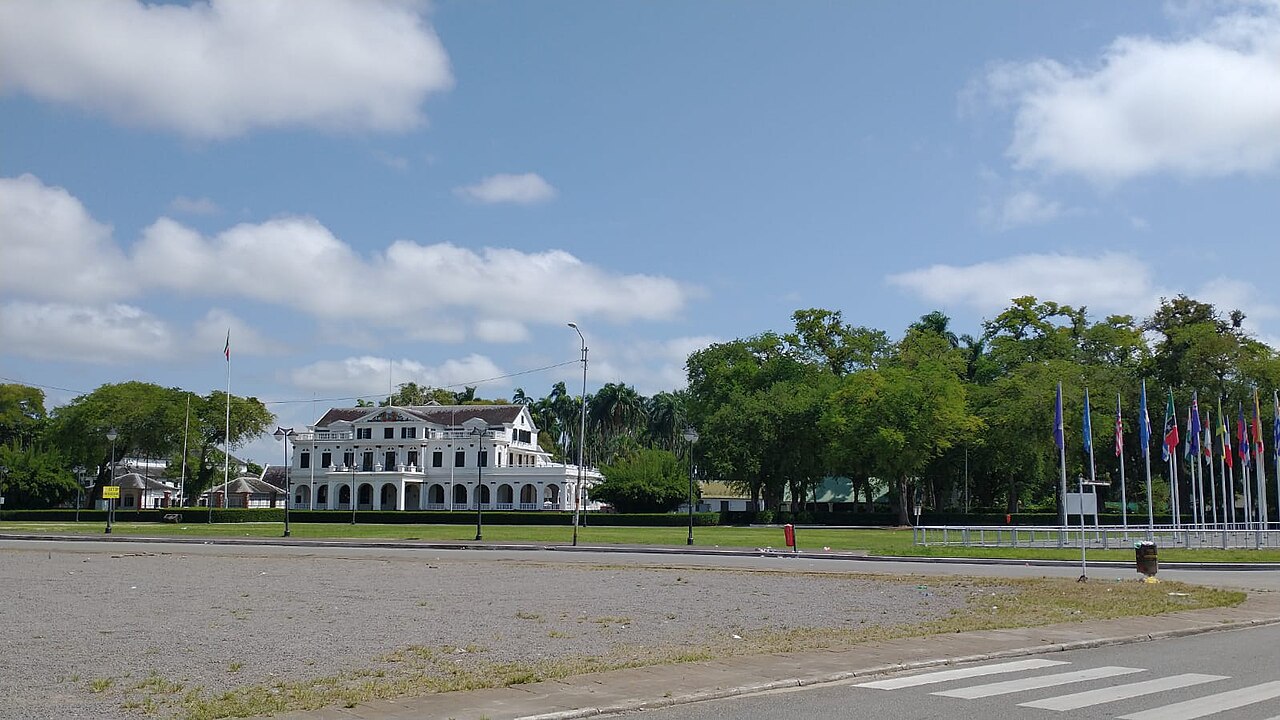
Suriname’s state oil company Staatsolie and the gold miner Zijin Rosebel need about 3,600 new workers for a planned Suriname gold expansion, the government says. They presented the plan to President Jennifer Simons at her office in Paramaribo on Tuesday 20 October 2026.
The Suriname gold expansion matters to US readers because a Chinese-owned miner and a state oil company plan to mine more gold there. It also touches US interests, since Newmont, the Colorado-based miner, runs the Merian gold mine in Suriname.
Who Is Behind the Plan
Staatsolie Maatschappij Suriname is the state-owned oil company and holds the state’s 30% share in the Saramacca gold project. Zijin Rosebel Gold Mines, owned by China’s Zijin Mining Group since early 2023, runs the Rosebel mine in the Brokopondo district.
Saramacca is a gold project run as a joint venture with Rosebel under an agreement signed in April 2020. Rosebel operates the project and takes 70% of the production, while Staatsolie takes 30%.
More on the oil company is in our Staatsolie profile. The government statement says the two companies discussed the joint venture and the expansion of the Saramacca mining project.
What the Companies Told the President
Jerry Finisie, the community relations and development manager at Zijin Rosebel, spoke for both companies after the meeting. He said planning for the expansion had shown a shortage of workers and that the project needs about 3,600 new jobs.
The companies asked how they and the government could close that gap together. President Simons was willing to look at options with them, according to the government statement.
The Training Gap
Finisie said the main problem is not a lack of job seekers but a mismatch with the skills mining companies need. He argued that targeted technical and vocational training is the answer.
Talks centre on existing schools such as the Natuurtechnisch Instituut, known as Natin, and on short courses to prepare people for mining jobs. Finisie told job seekers to train or retrain, and said the same advice applies to the coming oil and gas sector.
The Scale of Rosebel’s Plans
At its annual shareholder meeting in July 2026, Rosebel presented a three-year investment programme of about US$1.25 billion. It includes a larger processing plant at Rosebel, a new processing facility at Saramacca and a 90-megawatt power plant.
Rosebel said at the time that these projects would bring more than 2,000 direct and indirect jobs. Its gold output rose 5.46% to 306,535 ounces in 2025.
The company also says it delivered US$630 million in direct and indirect benefits to Suriname in 2025, including US$363 million paid to the government. Surinamese nationals made up 94.56% of its workforce that year.
What It Means for You
For US readers who follow gold, the Suriname gold expansion is meant to be operating in 2027, though no production target has been given. For investors, it shows Chinese capital and Suriname’s state oil company working side by side in mining.
Foreign workers should not count on openings, because both companies say they prefer to hire Surinamese. Our reports on Suriname’s work permit survey and on Newmont’s Merian mine show how closely the country watches foreign mining firms.
What Is Not Known
The government statement gives no cost for the Suriname gold expansion, no new gold output target and no timetable for hiring. It also does not say how many of the 3,600 jobs are for Surinamese job seekers or what qualifications they need.
The companies have not said how the 3,600 figure relates to the more than 2,000 direct and indirect jobs they cited in July. Nor is it clear which training courses will start first or who will pay for them.
More: Latin America news in English, every day from The Rio Times.
Frequently Asked Questions
Who are Staatsolie and Zijin Rosebel?
Staatsolie is Suriname’s state-owned oil company, and Zijin Rosebel Gold Mines is the gold miner that runs the Rosebel mine. Zijin Rosebel is owned by Zijin Mining Group of China, and Staatsolie holds the state’s 30% share in the Saramacca project.
How many jobs does the Suriname gold expansion need?
The government says the Suriname gold expansion needs about 3,600 new jobs. In July the mine’s owner had spoken of more than 2,000 direct and indirect jobs from its growth projects.
Will foreign workers be hired?
The companies say they do not intend to recruit foreign workers and prefer to train and employ Surinamese. In 2025, 94.56% of Rosebel’s workforce were Surinamese nationals.
When will the expansion start operating?
The companies expect the Suriname gold expansion to be operating in 2027. No date has been given for when hiring starts.
Sources: Government of Suriname (gov.sr), 20 October 2026; GFC Nieuws, 20 October 2026; Rosebel Gold Mines, 23 July 2026; Rosebel Gold Mines, 17 July 2026; IAMGOLD, 24 April 2020.
This article was produced by The Rio Times’ automated newsroom system. How we use AI · Report an error · Editorial responsibility: Matthias Camenzind, Editor-in-Chief