Why Spain’s Prime Minister Pedro Sánchez Could Lose His Job
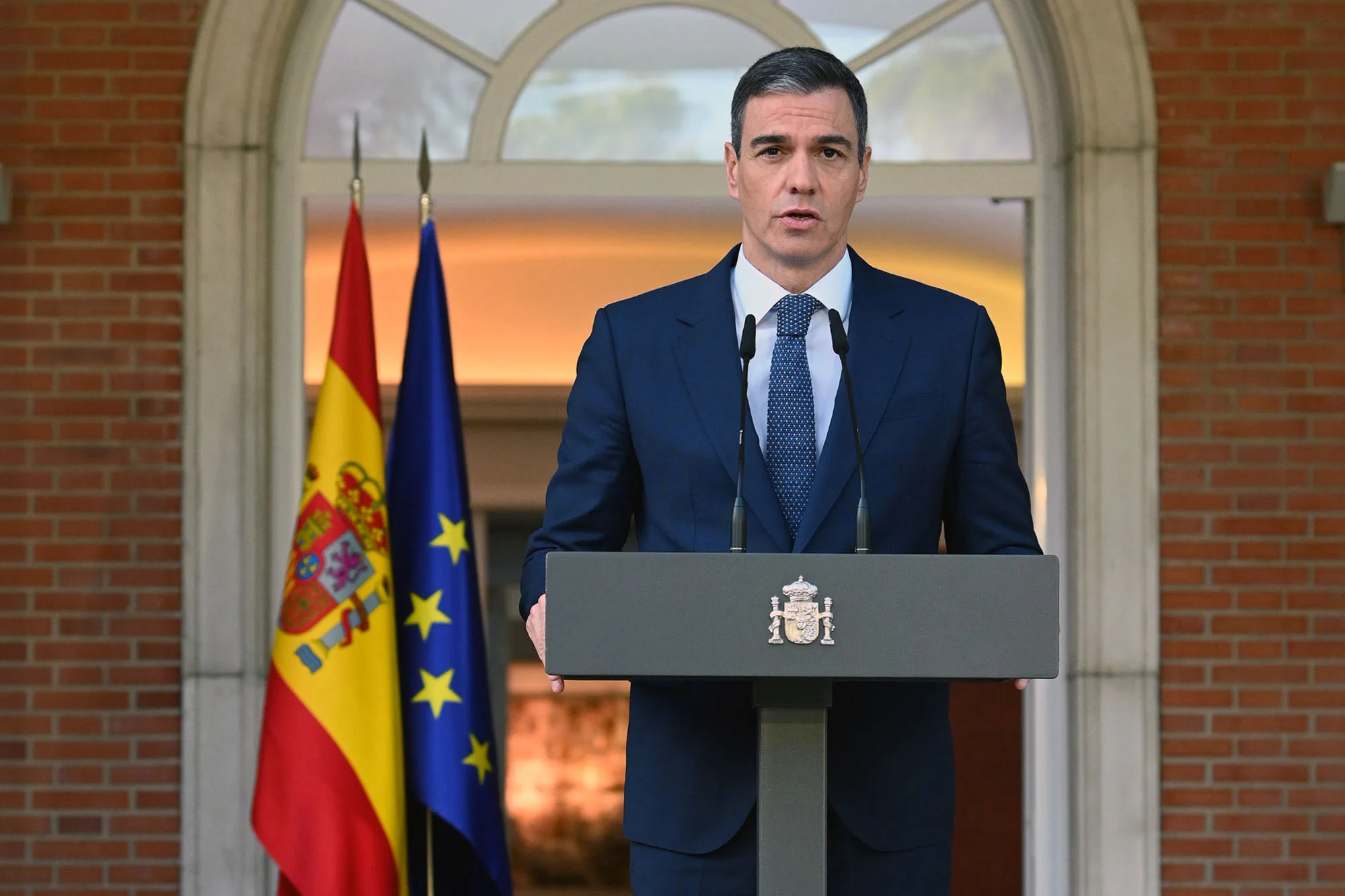
Spain votes on 29 November, and this guide explains in plain English the court cases around Prime Minister Pedro Sánchez, how the vote works and what traders expect.
Key Facts
- —The vote Spain votes on Sunday 29 November in a snap election called after parliament rejected housing decrees.
- —The scandals His ex-minister got over 24 years in prison, his wife faces trial, his brother appeals a conviction.
- —Sánchez himself No court has named him a suspect; he says he never knew of the wrongdoing.
- —Prediction markets Polymarket: Feijóo 82.5% to become prime minister, Sánchez 14.4% (21 October, 7:44 a.m. ET).
- —Stakes The winner steers a NATO ally at odds with Washington and Latin America’s second-largest foreign investor.
Pedro Sánchez, Spain’s Socialist prime minister since 2018, faces voters on Sunday 29 November in a snap election he called after Congress rejected his housing decrees. He goes into the campaign with a former minister in prison, his wife facing a jury trial and his brother appealing a conviction, although no court has named Sánchez himself as a suspect.
For American readers the stakes reach beyond Madrid, because Spain is the eurozone’s fourth-largest economy, a NATO ally that refused US use of its bases for strikes on Iran and the second-largest foreign investor in Latin America after the United States. Prediction markets make Alberto Núñez Feijóo, leader of the conservative People’s Party, the clear favourite to succeed him.
In Plain English
- Socialists (PSOE): Sánchez’s centre-left party, in power since 2018.
- People’s Party (PP): the main conservative party, led by Alberto Núñez Feijóo.
- Vox: a national-conservative party led by Santiago Abascal, tough on migration.
- Junts: a Catalan party that wants independence and once kept Sánchez in power.
- Investiture vote: the vote in which Congress elects the prime minister.
- National Court: Spain’s national court for the most serious crimes, such as terrorism, organised crime and major corruption.
- Polymarket and Kalshi: websites where people bet real money on events, which turns prices into probabilities.
- Spain Regularisation Drew 1.17 Million Applications
Spain's migrant regularisation closed on 30 June 2026 with 1,174,978 applications, far above the government's estimate. Here is who qualified.
- Senegalese Migration to Spain: Why Boats Are Back
Canary Islands arrivals are down 33.5% this year but jumped from September. We explain the route shift, Senegal's jobs data and what is still unknown.
- Spain's Snap Election 2026 and the Latin America Stakes
Spain votes on 29 November 2026 after Pedro Sánchez lost a housing vote. The result could reshape Spanish investment, visas and trade with Latin America.
- Spain's Courts Put Venezuela's Delcy Rodríguez in an Awkward Spotlight
Venezuela's acting president has been courting Madrid and Washington.
- Spain’s Sánchez and Venezuela’s Delcy Rodríguez Agree to Keep Talking
Pedro Sánchez and Delcy Rodríguez agreed to keep talking about Venezuela after a brief UN encounter. What was said and why it matters.
Spain election 2026: all our coverage, odds and explainers →
What Is the Pedro Sánchez Scandal?
There is no single Sánchez scandal but a cluster of court cases around people close to him, his party and his government. None of them names the prime minister as a suspect, and on 24 June he told Congress that he had neither known of nor would have tolerated the practices described.
The Cases at a Glance
- Former minister José Luis Ábalos: convicted, 24 years and 3 months in prison.
- Former party official Santos Cerdán: under investigation, not charged.
- His wife, Begoña Gómez: sent to a jury trial, no date yet.
- His brother, David Sánchez: convicted, barred from public office, appealing; ruling not final.
- Former attorney general Álvaro García Ortiz: convicted, resigned.
- Former prime minister José Luis Rodríguez Zapatero: under investigation.
- Pedro Sánchez: not named as a suspect in any case.
A Former Minister Jailed Over Mask Contracts
On 22 June 2026 the Supreme Court sentenced José Luis Ábalos, Sánchez’s transport minister until 2021 and a former organisation secretary of the Socialist party, to 24 years and 3 months in prison. His adviser Koldo García received 19 years and 8 months for the same scheme of kickbacks on face-mask contracts during the Covid-19 pandemic, with convictions for criminal organisation, bribery, influence peddling and embezzlement.
The businessman Víctor de Aldama, who cooperated with investigators, received 4 years and 6 months, suspended on conditions that include community service. In October the court rejected requests by Ábalos and García to annul the verdict, which leaves only an appeal to the Constitutional Court, and both have been in jail since November 2025.
A Second Party Official Under Investigation
Santos Cerdán, who followed Ábalos as the party’s organisation secretary, spent 142 days in pre-trial detention in 2025 in a separate investigation into alleged kickbacks on public works contracts. National Court judge Ismael Moreno is still investigating that case, and no indictment or trial date has been set.
The Prime Minister’s Wife Faces a Jury Trial
Begoña Gómez will face a jury trial in Madrid for influence peddling and misappropriation of public funds, linked to a chair she ran at the Complutense University and to the work of her assistant at La Moncloa, the prime minister’s office. Judge Juan Carlos Peinado sent the case to trial on 21 September, although the public prosecutors and the defence had asked for it to be dropped, and no trial date has been set.
A Madrid appeals court narrowed the charges in July, dropping business corruption and misappropriation of private funds. The group Hazte Oír, acting as a private accuser, is seeking 13 years in prison, and Spanish media citing court sources expect the trial in 2027.
“I never knew of, nor would I have tolerated, any of these practices.”
Pedro Sánchez to Congress, 24 June 2026 (translated from Spanish)
The Prime Minister’s Brother Was Convicted
On 14 July a court in Badajoz convicted David Sánchez of administrative malfeasance, the knowingly unlawful use of public authority, over a job created for him at the Badajoz provincial council in 2017. It barred him from public office for nine years without a prison term and acquitted him of influence peddling.
He has appealed, and so have the prosecutors, who had sought his acquittal at trial. On 15 October the chief prosecutor of the Extremadura region defended that position and said his office would go to the Supreme Court if needed.
The Attorney General Was Convicted
Álvaro García Ortiz, the attorney general appointed by Sánchez’s government, was convicted by the Supreme Court in November 2025 of revealing confidential data in a tax case involving the partner of Madrid’s conservative regional president, Isabel Díaz Ayuso. He was barred from the post for two years and resigned days later.
A Former Prime Minister Under Investigation
José Luis Rodríguez Zapatero, the Socialist prime minister from 2004 to 2011, was named a formal suspect on 19 May by National Court judge José Luis Calama, mainly for influence peddling, in the investigation of the 2021 state rescue of the airline Plus Ultra. The rescue was worth €53 million (about US$59 million), and a court-ordered appraisal valued jewellery found in a safe in his Madrid office at more than €1.3 million (about US$1.5 million).
The judge says the origin of the jewels has not been proven and has ordered a second appraisal. Zapatero testified as a suspect on 17 June without any restrictions being imposed on him, and in July the judge let investigators examine €200,000 (about US$224,000) in payments he received from Peru’s Grupo Gloria.
Investigations Into the Party’s Money
Judge Santiago Pedraz of the National Court is investigating an alleged effort to gather compromising information on judges, prosecutors and officers of the Guardia Civil police, in which the Socialist party’s manager Ana Fuentes and Cerdán are suspects. On 9 October he declined, for now, to charge the party itself as a legal entity.
Judge Moreno is separately examining cash the party paid to Ábalos and García between 2017 and 2024, and Spain’s Court of Audit has sent him the party’s donor records. Spanish media reported on 20 October that the inquiry also covers donations to Sánchez’s 2017 campaign for the party leadership, although no suspect has been named in that strand.
Is Sánchez Himself Under Investigation?
No court has named the prime minister as a suspect. The Supreme Court, the only court that can try him while he holds office, has rejected complaints filed against him by Vox and by activist groups such as Manos Limpias, most recently in January and March 2026.
That is the core of the campaign fight. The opposition says the cases show corruption at the heart of the Socialist party, while Sánchez denies that corruption is widespread in his party and says he did not know of the practices.
Why Spain Is Voting on 29 November
Sánchez called the election on Monday 5 October, three days after Congress voted down two housing decrees. The main package would have extended many leases and frozen evictions of vulnerable tenants sued by investment funds and large landlords until 2030, while a second decree would have made lease renewals nearly automatic.
The Votes That Broke the Government
- 178 to 172: the main housing package is defeated on 2 October.
- 184 to 166: the lease-renewal decree is defeated the same day.
- Against both: the People’s Party, Vox, Junts and the small Navarrese party UPN.
The Basque Nationalist Party (PNV) and Canarian Coalition also opposed the second decree. Junts had withdrawn its support for Sánchez in October 2025, which left him without a reliable majority and unable to pass a budget, so Spain still runs on an extended version of its 2023 budget.
Royal Decree 806/2026, published in the Official State Gazette on 6 October, dissolved both chambers and set the vote for 29 November. The official campaign runs from 13 to 27 November, and the new Congress and Senate meet on 23 December.
Housing is the issue that broke the government, and it dominates the campaign. House prices rose 12.2% in the year to the second quarter of 2026, according to the National Statistics Institute (INE), and the eviction of an 87-year-old tenant from the Madrid flat her family had rented for about 70 years became a symbol of the protests after she died on 7 October.
The CCOO and UGT unions have called a general strike over housing and wages for 11 November, their first joint general strike since 2012. The government has re-approved both decrees with small changes, and the standing committee of Congress is expected to vote on them on 12 November while parliament is dissolved.
Migration is the second pressure point. About 72,000 people crossed into the Spanish enclave of Ceuta on 30 and 31 July, according to the interior minister, and the government delegation in Ceuta had counted at least 75 dead by 4 August.
How Spain Chooses Its Next Prime Minister
Spain’s Congress has 350 seats, so a candidate for prime minister needs 176 votes in a first investiture ballot, or more yes than no votes in a second ballot 48 hours later. If no candidate wins within two months of the first vote, parliament is dissolved and Spain votes again.
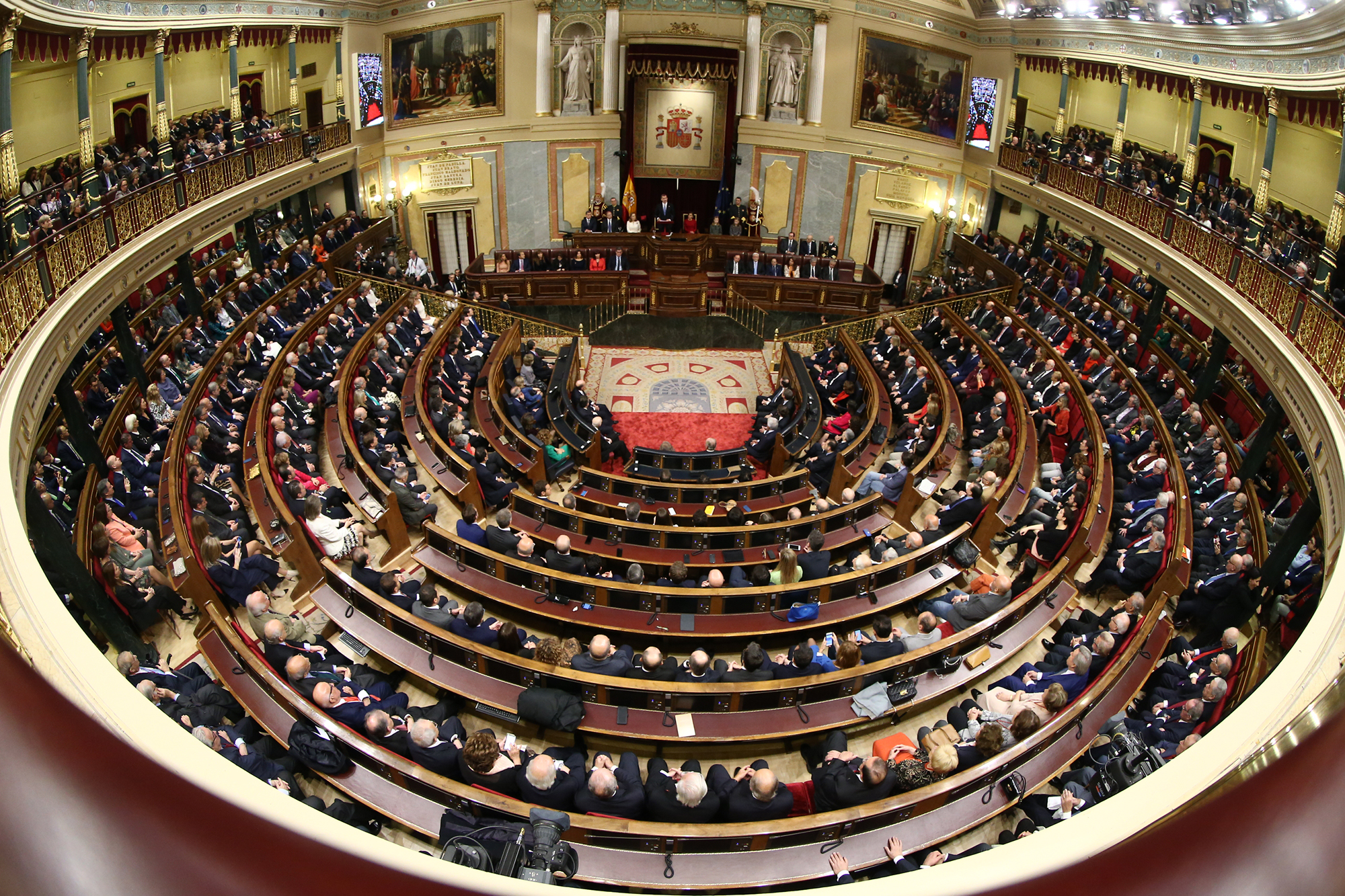
In July 2023 the PP won 137 seats, the Socialists (PSOE) 121, Vox 33 and the left-wing alliance Sumar 31. Sánchez was re-elected by 179 votes to 171 in November 2023 with the backing of Sumar and of Catalan, Basque, Galician and Canarian parties, including Junts.
The main contenders on 29 November are these parties. Each line gives the party’s position and who leads it.
- Socialists (PSOE): centre-left, led by Sánchez, who again heads its list in Madrid.
- People’s Party (PP): conservative, led since 2022 by Feijóo, the former president of the Galicia region.
- Vox: a national-conservative party led by Santiago Abascal, with a hard line on migration and Catalan separatism.
- Frente Amplio: a left-wing alliance presented on 17 October by United Left, Movimiento Sumar, Más Madrid, Comuns and other groups, headed by the former Barcelona mayor Ada Colau.
- Podemos: a left-wing party that failed to agree a joint list with Frente Amplio and runs separately in most regions.
- Junts and ERC: Catalan pro-independence parties; Junts is led by Carles Puigdemont, who left Spain after the 2017 independence attempt.
- PNV and EH Bildu: Basque nationalist parties, the PNV on the centre-right and EH Bildu on the left.
The polls disagree on who is ahead. The state-run Centre for Sociological Research (CIS) put the PSOE at 34.0% and the PP at 22.2% in its October survey, carried out from 1 to 6 October.
Private pollsters show the reverse. The firm 40dB, polling for El País and Cadena SER, put the PP at 31.9%, the PSOE at 28.1% and Vox at 18.9% on 9 October, and an average of four polls compiled by El Independiente gave the PP and Vox 202 seats together, well above a majority.
Feijóo confirmed on 20 October that his party is negotiating with Vox over the Senate and said he would probably need another party to complete a majority. He did not rule out Vox joining his government, and whether Vox would join a coalition or back him from outside is the central unknown of the vote.
Will Pedro Sánchez Resign?
Sánchez has given no sign that he will step down and is running again at the top of the Socialist list in Madrid, followed by Defence Minister Margarita Robles and Justice Minister Félix Bolaños. On 25 June Congress passed a non-binding PP motion, backed by Vox and Junts, that urged him to consider a confidence vote and to resign, and Bolaños said it had zero political effect.
Even a defeat on 29 November would not remove him at once. Under the constitution the outgoing government stays in office as a caretaker until a new one takes over, so a new prime minister can take office only after the new Congress meets on 23 December.
That is why traders on Polymarket give only a small chance that he is out by 31 December but a much larger one for the end of January. The two January contracts state that serving as acting prime minister does not count as leaving office, so they pay out only if a successor takes over or Sánchez announces his resignation.
What Prediction Markets Say
At 5 a.m. ET (11 a.m. in Madrid) on 21 October, Polymarket gave Feijóo an 82.5% chance of becoming Spain’s next prime minister and Sánchez 14.4%, with about US$2.0 million traded on that question. Kalshi, which is regulated in the US by the Commodity Futures Trading Commission (CFTC), showed Feijóo at 81% and Sánchez at 17%.
Polymarket also gave the PP an 82.5% chance of winning the most seats on 29 November, and priced the chance that Sánchez is out of office by 31 January 2027 at 61%. The live card below updates every 20 minutes.
Prediction markets · Spain’s 29 November election
Implied chances from traders’ prices on Polymarket and Kalshi.
Who becomes Spain's next prime minister
Polymarket: US$2.0 million traded.
Kalshi (regulated in the US by the CFTC), prime minister after the next election: Alberto Núñez Feijóo 81% · Pedro Sánchez 17% · Santiago Abascal 7% (19,794 contracts traded).
Which party wins the most seats on 29 November
Polymarket: US$121,000 traded.
Pedro Sánchez out as prime minister by...
Polymarket: US$883,000 traded. The January contracts do not count time as acting prime minister, and a successor can take office only after the new Congress meets on 23 December.
As of 21 October, 7:44 a.m. ET (12:44 Lisbon), updated every 20 minutes. Prices are bets, not polls, and can move fast.
Why we show this: prediction markets turn real-money bets into a live probability that moves within minutes of the news, which is why investors, campaigns and newsrooms in the United States now follow them closely. We show them next to polls and official results, never instead of them.
Spain’s gambling regulator ordered Polymarket and Kalshi blocked in May 2026, pending a final ruling, because they operate without a Spanish licence. The prices are bets, not polls, and a single poll or court ruling can move them within minutes.
What It Means for Americans and Latin America
In March Spain refused to let the United States use the jointly operated bases at Rota and Morón for strikes on Iran. President Donald Trump said on 3 March that Washington would cut off all trade with Spain and repeated the threat at NATO’s July summit in Ankara, although no trade measure aimed specifically at Spain is in force.
On 14 October the US Federal Maritime Commission proposed a fee on Spanish-flagged ships and limits on some Spanish imports, in a separate dispute over port calls by US-flagged vessels. The proposal is open for public comment until mid-December, so it has no effect yet.
Before NATO’s 2025 summit Sánchez obtained a letter from Secretary-General Mark Rutte promising Spain flexibility in how it meets NATO’s new goal of spending 5% of economic output on defence, and Madrid argues that about 2.1% is enough to meet its commitments. A change of government would test whether Spain keeps that line or moves closer to Washington.
For Latin America the stakes are mainly economic. Spain held 13% to 15% of the stock of foreign direct investment in the region in 2023, second only to the United States, according to the Bank of Spain, through banks such as Santander and BBVA, energy groups and builders.
Madrid hosts the Ibero-American Summit on 4 and 5 November and has said it will invite Venezuela’s acting president, Delcy Rodríguez, which puts Sánchez’s Venezuela policy on display weeks before the vote. Spain also backed the EU trade agreement with Mercosur, which has applied provisionally since 1 May 2026, and we explain what the vote means for Latin America in a separate report.
The economy gives Sánchez his strongest argument, and our guide shows how Spain compares with the rest of Europe. Output grew 2.6% in 2025 and unemployment fell to 9.87% in the second quarter of 2026, the lowest rate since early 2008, but consumer prices rose 4.9% in the year to September.
What Happens Next
- Monday 26 October: deadline for parties to register their candidate lists.
- 4 and 5 November: Ibero-American Summit in Madrid.
- Wednesday 11 November: general strike over housing and wages called by the CCOO and UGT unions.
- 13 to 27 November: official election campaign.
- Thursday 19 November: last day for voters living in Spain to request a postal vote.
- Sunday 29 November: election day; polling stations are open from 9 a.m. to 8 p.m. local time (3 a.m. to 2 p.m. ET in mainland Spain).
- Wednesday 23 December: the new Cortes meet at 10 a.m. Madrid time (4 a.m. ET); the King then consults the parties before the first investiture vote.
- Still open: no dates are set for Begoña Gómez’s jury trial or for a ruling on David Sánchez’s appeal.
The PP and Vox would need 176 seats between them to choose a prime minister in the first ballot. Anything less makes the votes and abstentions of smaller parties decisive in the second ballot.
Our Spain election 2026 dossier gathers every report, explainer and the live odds in one place. It updates automatically whenever we publish a new story.
What Is Not Known
Nobody knows whether the CIS or the private pollsters are right, since they disagree on who is ahead. It is also unclear whether Vox would demand seats in a Feijóo cabinet or back him from outside.
The courts set their own pace, so it is not known when Begoña Gómez will be tried or when the appeal by David Sánchez will be decided. It is also not known when the regulator will issue its final ruling on Polymarket and Kalshi.
Frequently Asked Questions
What is the Pedro Sánchez scandal?
It is a set of court cases around people close to Spain’s prime minister, including his former minister, his wife and his brother. No court has named Sánchez himself as a suspect, and he says he did not know of the practices.
Is Pedro Sánchez under investigation?
No court has named him as a suspect. The Supreme Court, the only court that can try him while he holds office, has rejected complaints against him from Vox and activist groups.
Will Pedro Sánchez resign?
He has given no sign of it and leads the Socialist list in Madrid. If he loses on 29 November, he stays on as acting prime minister until Congress elects a successor.
When is Spain’s next general election?
Spain votes on Sunday 29 November 2026. The campaign runs from 13 to 27 November and the new parliament meets on 23 December.
Who will win Spain’s 2026 election?
Private polls put the conservative People’s Party first, while the state-run CIS puts the Socialists ahead. On 21 October Polymarket gave the People’s Party an 82.5% chance of winning the most seats.
What happens if no party wins a majority?
A candidate needs 176 votes in a first ballot or more yes than no votes 48 hours later. If nobody succeeds within two months of the first vote, Spain holds a new election.
Who is Alberto Núñez Feijóo?
He is the 65-year-old leader of the conservative People’s Party and governed the Galicia region for 13 years. Polls and prediction markets make him the favourite to become prime minister.
Sources: BOE, Royal Decree 806/2026 (6 October 2026); BOE, Royal Decree-law 26/2026; BOE, Royal Decree-law 27/2026; Spanish Constitution, articles 99, 101 and 102; Electoral law (LOREG); Supreme Court, mask-contracts judgment (22 June 2026); National Court, Zapatero summoned as a suspect (19 May 2026); Supreme Court, attorney general judgment; Ministry of Finance, 2026 budget extension (23 December 2025); INE, housing price index Q2 2026; INE, annual national accounts 2025; INE, labour force survey Q2 2026; INE, consumer prices September 2026; Bank of Spain, foreign direct investment between Latin America and Spain (Economic Bulletin 2025/Q1, 2023 data).
More sources: elDiario.es, housing decrees vote (2 October 2026); idealista, vote counts (2 October 2026); El Español, Supreme Court rejects annulment (14 October 2026); Infobae, Cerdán released (19 November 2025); El Independiente, Moreno and Cerdán (15 October 2026); Infobae, Begoña Gómez sent to trial (21 September 2026); The Objective, appeals court ruling (16 July 2026); Demócrata, Begoña Gómez case (July 2026); El Independiente, David Sánchez verdict (14 July 2026); COPE, Extremadura chief prosecutor (15 October 2026); The Objective, attorney general resigns (24 November 2025); elDiario.es, jewellery appraisal (11 June 2026); Infobae, Zapatero testimony (17 June 2026); Infobae, second appraisal ordered (21 September 2026); Euronews, Grupo Gloria payments (15 July 2026); Infobae, Pedraz and the PSOE (9 October 2026); Qué!, Court of Audit donor records (14 September 2026); Herqles, 2017 primary donations (20 October 2026); El Debate, Supreme Court rejects Vox complaint (21 January 2026); Público, Manos Limpias complaint rejected; Mundiario, Sánchez in Congress (24 June 2026); Telecinco, non-binding motion (25 June 2026); COPE, Junts breaks with Sánchez (27 October 2025); Demócrata, 2023 results; elderecho, 2023 investiture; Diario de León, eviction (7 October 2026); Euronews, general strike (7 October 2026); La Región, standing committee vote (16 October 2026); Ceuta TV, Interior Ministry figures (4 August 2026); Electográfica, CIS October barometer (14 October 2026); Electográfica, 40dB poll (9 October 2026); El Independiente, poll average (9 October 2026); COPE, PSOE Madrid list (14 October 2026); Infobae, Frente Amplio (17 October 2026); Infobae, left-wing lists (17 October 2026); Brussels Signal, bases and trade threat (13 May 2026); Euronews, Trump at the Ankara summit (8 July 2026); Atalayar, Rutte letter (23 June 2025); Euronews, Ibero-American Summit invitation (29 April 2026); Euronews, EU–Mercosur provisional application (1 May 2026); Directorate-General for Gambling Regulation, Polymarket and Kalshi blocked (26 May 2026); Forbes España, US maritime commission proposal (15 October 2026); Moncloa.com, US proposal on Spanish exports (16 October 2026); COPE, Sánchez in Congress (24 June 2026); COPE, Feijóo interview (20 October 2026); elDiario.es, Feijóo and Vox (20 October 2026); Central Electoral Board, election calendar; Euronews, postal vote deadlines (6 October 2026); Moncloa.com, candidate lists deadline (21 October 2026); Polymarket and Kalshi public market data (read 21 October 2026). All accessed 21 October 2026.
This article was produced by The Rio Times’ automated newsroom system. How we use AI · Report an error · Editorial responsibility: Matthias Camenzind, Editor-in-Chief
Spain's Election and Pedro Sánchez
- Spain’s Next Leader? Meet Alberto Núñez Feijóo
- Spain Explained 2026, How It Ranks in Europe
- Spain’s Snap Election 2026 and the Latin America Stakes