How Spain Got Here: Pedro Sánchez’s Eight Years in Power
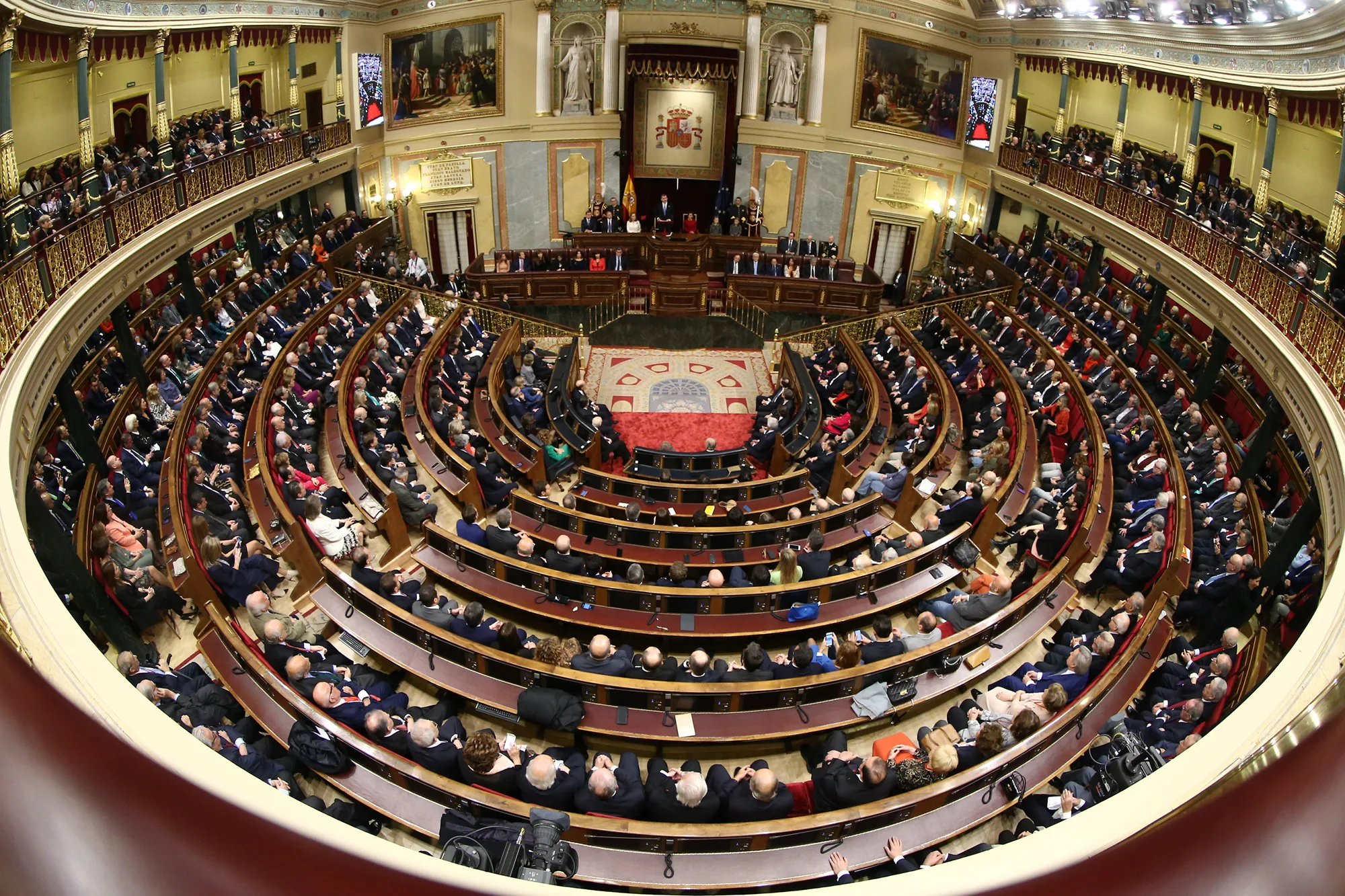
Spain votes on 29 November, and this guide tells the story of how a prime minister who came second in 2023 held on to power, and what it cost.
Key Facts
- —The vote Spain votes on Sunday 29 November after parliament rejected the government’s housing decrees.
- —How he stayed His party came second in 2023; he kept power with separatist votes that came with an amnesty.
- —The courts His ex-minister got over 24 years in prison; his wife and brother face court cases.
- —Prediction markets Polymarket: Feijóo 83% to become prime minister, Sánchez 14.1% (21 October, 10:44 a.m. ET).
- —What it means for you The winner steers a NATO ally at odds with Washington and Latin America’s second-largest foreign investor.
Pedro Sánchez has governed Spain since June 2018, and on Sunday 29 November voters decide whether his eight years in power end. He came second in the last election in July 2023, yet he stayed in office with the votes of Catalan and Basque nationalist parties, after the Catalan separatists demanded an amnesty he had ruled out before the vote.
Since then a former minister and close ally has been sentenced to more than 24 years in prison, his wife has been sent to a jury trial and his brother has been convicted at first instance and is appealing, although no court has named Sánchez himself as a suspect. This is the story of how Spain got here, told through the votes, the court rulings and the documents.
In Plain English: Who Is Who
- Socialists (PSOE): Sánchez’s centre-left party.
- People’s Party (PP): the main conservative party, led by Alberto Núñez Feijóo.
- Vox: a national-conservative party led by Santiago Abascal, tough on migration and Catalan separatism.
- Sumar: a left-wing alliance in Sánchez’s coalition government.
- ERC and Junts: Catalan parties that want independence from Spain.
- Carles Puigdemont: the Junts leader, who left for Belgium in 2017 after a failed declaration of independence.
- EH Bildu: a Basque left-wing alliance that wants independence for the Basque Country.
- PNV: the Basque Nationalist Party, a centre-right regional party.
- Amnesty: a law that wipes out criminal liability for past acts, here those of the Catalan independence campaign.
Eight Years in Fourteen Dates
- 1 June 2018: Sánchez wins a no-confidence vote against the conservative prime minister Mariano Rajoy and takes power.
- 22 June 2021: his government pardons nine jailed leaders of the 2017 Catalan independence attempt.
- 22 December 2022: a reform of the criminal code abolishes the crime of sedition.
- 23 July 2023: the PP wins the election with 137 seats; the Socialists come second with 121.
- 27 September 2023: Feijóo fails to win the investiture vote, by 172 votes to 178.
- 28 October 2023: Sánchez says he backs an amnesty to “make a virtue of necessity”.
- 16 November 2023: Congress re-elects Sánchez by 179 votes to 171.
- 11 June 2024: the amnesty law comes into force.
- 26 June 2025: the Constitutional Court upholds the amnesty, by six votes to four.
- October 2025: Junts breaks with Sánchez and leaves him without a reliable majority.
- 20 November 2025: the attorney general is convicted by the Supreme Court and resigns days later.
- 22 June 2026: former minister José Luis Ábalos is sentenced to 24 years and 3 months.
- 5 October 2026: Sánchez calls a snap election after losing two housing votes.
- 19 October 2026: a Supreme Court judge confirms the lifting of the Spanish arrest warrant for Puigdemont.
The 2023 Election Sánchez Did Not Win
Sánchez first reached power without an election, by toppling Mariano Rajoy of the People’s Party in a no-confidence vote on 1 June 2018. After two elections in 2019 he formed Spain’s first coalition government since the return of democracy, with the left-wing party Podemos, and governed through the pandemic.
On 29 May 2023, the day after heavy losses for his party in local and regional elections, he called a snap general election for 23 July. The gamble half worked: the PP came first with 137 seats, the Socialists second with 121, Vox third with 33 and the left-wing alliance Sumar fourth with 31.
No party came close to the 176 seats needed for a majority in the 350-seat Congress. Feijóo, as leader of the largest party, tried first, but on 27 September 2023 he won only 172 votes, from the PP, Vox and two small regional parties, against 178.
That left Sánchez with a path, but only one. He needed every one of the seven Catalan independence votes of Junts, the party whose leader had left Spain in 2017, on top of the left and the other nationalist parties.
How He Stayed in Power
On Thursday 16 November 2023 Congress re-elected Sánchez in the first ballot by 179 votes to 171. The 179 came from his Socialists, Sumar, the Catalan parties ERC and Junts, the Basque parties EH Bildu and PNV, the Galician nationalists of the BNG and the regional Canarian Coalition.
What His Partners Were Promised
- Sumar: a coalition agreement signed on 24 October 2023 and seats in the cabinet.
- ERC: the amnesty and a pledge to cancel 20% of Catalonia’s debt to the state, which Spanish media put at about €15 billion (about US$17 billion).
- Junts: the amnesty, an international verifier of the deal and a clause on “lawfare”, the claim that courts were used against politicians.
- PNV: a promise to transfer more powers to the Basque government within two years.
- EH Bildu: no published deal; it formally confirmed the yes vote of its six deputies on 30 October 2023.
EH Bildu is a lawful party, but it is the partner that critics attack most. It includes Sortu, which the fact-checking site Maldita describes as taking up the political legacy of Batasuna, the party the Supreme Court banned in 2003 for its links to the armed group ETA, which ended its violence in 2011 and dissolved in 2018.
The deal with Junts was signed on 9 November 2023 by Santos Cerdán for the Socialists and Jordi Turull for Junts, and presented from Brussels, where Puigdemont lived. The vote followed Article 99 of the constitution, which asks for an absolute majority of Congress in a first investiture ballot, and he had it.
The opposition saw it differently. Feijóo told a march against the amnesty in Barcelona, organised by the group Societat Civil Catalana on 8 October 2023, that “neither Catalonia’s dignity nor the presidency of the government is for sale”, and Vox leader Santiago Abascal called the negotiations with the separatists “a real misdeed and a blow to the institutions”.
The anger spilled into the streets. On 12 November 2023 the government delegation in Madrid counted 80,000 people at a PP rally in the Puerta del Sol, and on 18 November it counted 170,000 at a protest in the Plaza de Cibeles under the motto “Not in my name”.
The Amnesty He Had Ruled Out
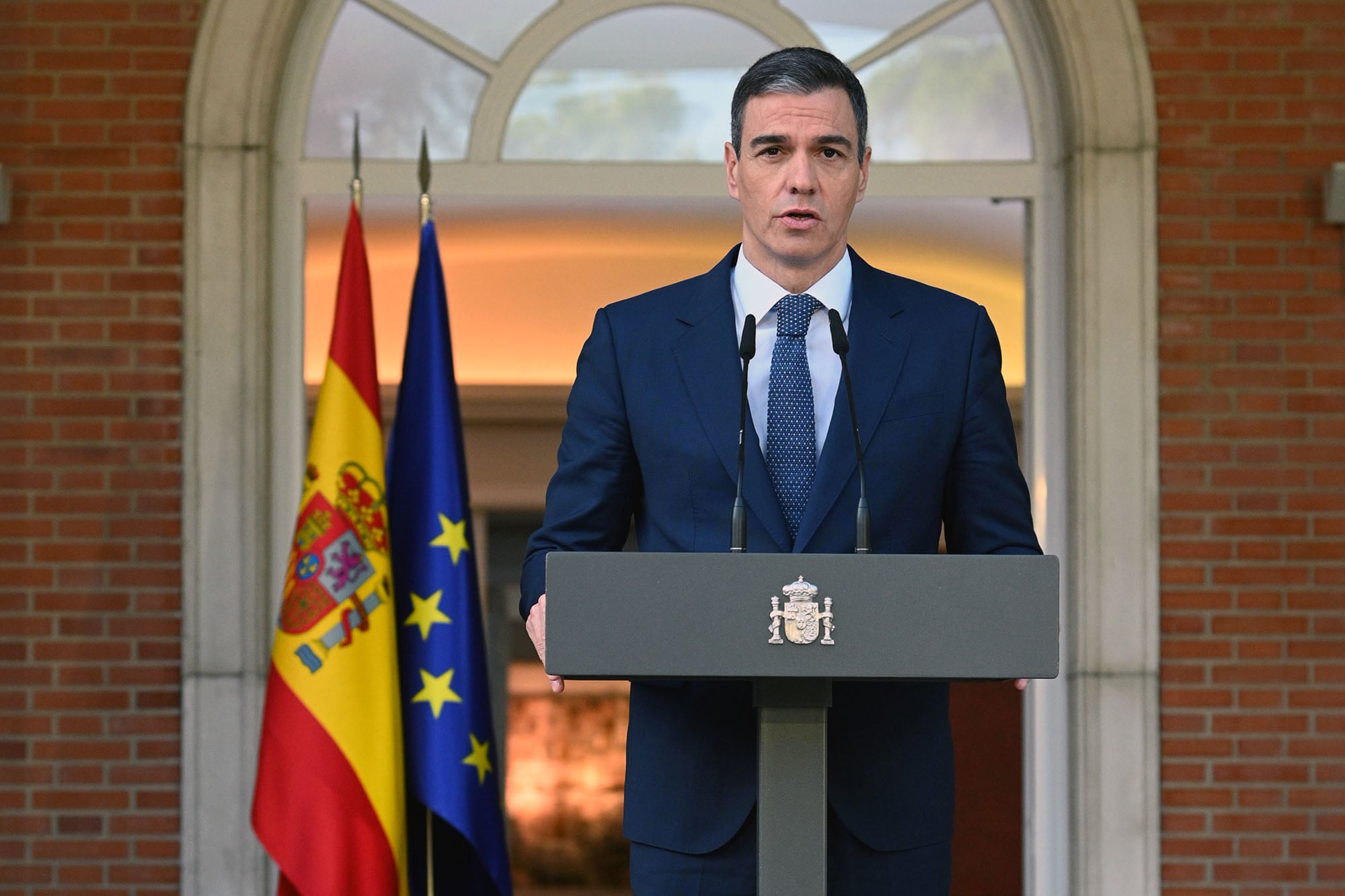
Before the deal, Sánchez had said the opposite. In November 2022, as he announced the abolition of the crime of sedition, he told the television channel laSexta that the separatists wanted an amnesty, “something this government will certainly not accept”, according to the archive of the fact-checking site Maldita.
Days before the July 2023 election he told the same channel, as quoted by the broadcaster COPE: “They have not had an amnesty, there is no self-determination referendum and there will not be one.” Seven Catalan votes later, on 28 October 2023, he told his party’s federal committee that the amnesty was the condition for a progressive government and a way to avoid a government of Vox and the PP.
“I defend the amnesty, to make a virtue of necessity.”
Pedro Sánchez to the Socialist federal committee, 28 October 2023 (translated from Spanish)
The law itself, Organic Law 1/2024, passed Congress on 30 May 2024 by 177 votes to 172 and came into force on 11 June 2024. It covers acts linked to the Catalan independence push between November 2011 and November 2023.
Its legal fate has been a long fight between the courts. In July 2024 Supreme Court judge Pablo Llarena refused to apply it to the embezzlement charge against Puigdemont, arguing that the law excludes cases of personal financial benefit.
On 26 June 2025 the Constitutional Court upheld the law in principle by six votes to four. On 16 July 2026 the Court of Justice of the European Union ruled that EU law does not stand in its way and objected only to the law’s two-month deadline for judges.
On 6 October 2026, the day after the election was called, the Constitutional Court ruled by seven votes to five that the Supreme Court had read the embezzlement exception too broadly. By an order dated 19 October the Supreme Court declared four convicted independence leaders amnestied, and Llarena confirmed the lifting of the Spanish arrest warrant for Puigdemont while criticising the Constitutional Court.
Puigdemont’s embezzlement charge has not yet been amnestied, because the Supreme Court’s criminal chamber still has to rule on it. There was no report of his return by 21 October, and Junts sources quoted by Euronews say he will come back only once the amnesty fully applies to him.
The Court Cases Around Him
While the amnesty moved through the courts, other judges closed in on people around Sánchez. The list below gives each case, the court and its status as of 21 October 2026.
The Cases at a Glance
- José Luis Ábalos, former transport minister: convicted by the Supreme Court, 24 years and 3 months.
- Santos Cerdán, former party organiser: under investigation at the National Court, not charged.
- Begoña Gómez, his wife: sent to a jury trial in Madrid, no date set.
- David Sánchez, his brother: convicted in Badajoz, appealing, ruling not final.
- Álvaro García Ortiz, former attorney general: convicted by the Supreme Court, resigned.
- José Luis Rodríguez Zapatero, former prime minister: under investigation at the National Court.
- Pedro Sánchez: not named as a suspect in any case.
The heaviest blow came from the Supreme Court on 22 June 2026. It sentenced Ábalos, Sánchez’s transport minister until 2021 and once the party’s number three, to 24 years and 3 months for criminal organisation, bribery, influence peddling and embezzlement over pandemic face-mask contracts, and his adviser Koldo García to 19 years and 8 months.
The court found that the businessman Víctor de Aldama, himself convicted as a cooperating defendant, channelled €6.6 million (about US$7.4 million) in commissions through two companies and paid €10,000 (about US$11,200) a month toward Ábalos’s fixed expenses. It ordered the three defendants to forfeit €430,298 (about US$483,000) in bribes, and in October it rejected the bids by Ábalos and García to annul the verdict, leaving only an appeal to the Constitutional Court.
Santos Cerdán, who succeeded Ábalos as the party’s organisation secretary and signed the Junts deal, spent 142 days in pre-trial detention in 2025 in a separate investigation into alleged kickbacks on public works. No indictment or trial date has been set.
Begoña Gómez will face a jury in Madrid on charges of influence peddling and misappropriation of public funds, linked to a university chair she ran and to the work of her assistant at the prime minister’s office. Prosecutors and her defence seek her acquittal, the private accuser Hazte Oír seeks 13 years in prison, and no trial date has been set.
David Sánchez was convicted in Badajoz on 14 July 2026 of administrative malfeasance over a job created for him at the provincial council in 2017 and barred from public office for nine years, without prison. He has appealed, and so have the prosecutors, who had sought his acquittal.
The attorney general appointed by Sánchez’s government, Álvaro García Ortiz, was convicted by the Supreme Court on 20 November 2025 of revealing confidential data in a tax case involving the partner of Madrid’s conservative regional president, Isabel Díaz Ayuso. He was barred from the post for two years and resigned on 24 November.
Zapatero, the Socialist prime minister from 2004 to 2011, was named a formal suspect on 19 May 2026, mainly for influence peddling, in the investigation of the 2021 state rescue of the airline Plus Ultra worth €53 million (about US$59 million). A court-ordered appraisal put jewellery found in a safe in his Madrid office at about €1.3 million (about US$1.5 million); Zapatero says it was a gift from the Saudi king, and the judge has ordered a second appraisal.
The party itself is under scrutiny too. A National Court judge is investigating an alleged effort to gather compromising information on judges, prosecutors and Guardia Civil officers, in which the party’s manager is a suspect, while another examines cash the party paid to Ábalos and García, which the party says reimbursed expenses.
Is Sánchez Himself Accused?
No court has named Pedro Sánchez as a suspect in any of these cases. The Supreme Court, the only court that can try him while he holds office, has rejected complaints filed against him by Vox and by activist groups.
His critics argue that political responsibility does not wait for a court. Feijóo accused Sánchez on 5 October of calling the election out of fear of the court cases, and the former Socialist prime minister Felipe González said in June 2025 that he would not vote for his party with Sánchez as candidate, calling the amnesty an outrage.
“I never knew of, nor would I have tolerated, any of these practices.”
Pedro Sánchez to Congress, 24 June 2026 (translated from Spanish)
Sánchez rejects the idea that corruption is general in his party. When he called the election he pointed instead to his record, saying that “Spain has not stopped growing”.
How Critics Describe the Moment
The opposition frames the vote as a moral test. On 5 October Feijóo called the Sánchez years “this dark period”, spoke of a need for “national reconstruction” and described the choice on 29 November as one between “corruption and decency”.
The numbers show a country split down the middle. The state-run Centre for Sociological Research (CIS) put the Socialists at 34.0% and the PP at 22.2% in a survey carried out from 1 to 6 October, while the firm 40dB put the PP at 31.9%, the Socialists at 28.1% and Vox at 18.9% on 9 October.
An average of four polls compiled by El Independiente on 9 October gave the PP and Vox 202 seats together, far above the 176 needed. Feijóo said on 20 October that he would probably need Vox to complete a majority, and he has not ruled out Vox joining his government.
The Economy: Strong Growth, Thin Wallets
Spain in Numbers
- Growth 2025: 2.6%, against 1.2% for the euro area (Eurostat, 21 October 2026).
- Unemployment: 9.87% in the second quarter of 2026, and 23.77% for people under 25.
- Poverty or social exclusion: 25.7% of people in 2025, against 20.9% across the EU.
- House prices: up 12.2% in the year to the second quarter of 2026.
- Inflation: 4.9% a year in September 2026.
Spain has outgrown the other big economies of the eurozone. Output grew 2.6% in 2025, according to the National Statistics Institute (INE), against 1.2% for the euro area according to Eurostat, and unemployment fell to its lowest rate since early 2008.
Many Spaniards do not feel it. One person in four was at risk of poverty or social exclusion in 2025, house prices rose 12.2% in a year, and the defeat of the housing decrees that triggered the election shows how far the government had lost control of the issue that matters most to voters; our guide shows how Spain compares with the rest of Europe.
Spain and the European Pattern
Spain is not alone in this kind of trouble. Across Europe, fragmented parliaments, minority governments and the rise of national-conservative parties have made governing harder, and France, which faces its own presidential election in 2027, is in a similar bind, as our France dossier shows.
What sets Spain apart is the amnesty. The courts are still fighting over a law that its own author had ruled out before he needed the votes.
What the Odds Say
Traders expect the Sánchez era to end. At 5 a.m. ET (11 a.m. in Madrid) on 21 October, Polymarket gave Feijóo an 82.5% chance of becoming prime minister and Sánchez 14.4%, and priced the chance that Sánchez is out by 31 January 2027 at 61%.
Prediction markets · Spain’s 29 November election
Implied chances from traders’ prices on Polymarket and Kalshi.
Who becomes Spain's next prime minister
Polymarket: US$2.0 million traded.
Kalshi (regulated in the US by the CFTC), prime minister after the next election: Alberto Núñez Feijóo 81% · Pedro Sánchez 17% · Santiago Abascal 7% (19,795 contracts traded).
Which party wins the most seats on 29 November
Polymarket: US$121,000 traded.
Pedro Sánchez out as prime minister by...
Polymarket: US$883,000 traded. The January contracts do not count time as acting prime minister, and a successor can take office only after the new Congress meets on 23 December.
As of 21 October, 10:44 a.m. ET (15:44 Lisbon), updated every 20 minutes. Prices are bets, not polls, and can move fast.
Why we show this: prediction markets turn real-money bets into a live probability that moves within minutes of the news, which is why investors, campaigns and newsrooms in the United States now follow them closely. We show them next to polls and official results, never instead of them.
Spain’s gambling regulator ordered Polymarket and Kalshi blocked in May 2026, pending a final ruling, because they operate without a Spanish licence. The prices are bets, not polls, and Kalshi is regulated in the US by the Commodity Futures Trading Commission (CFTC).
What Happens Next
- 13 to 27 November: official election campaign.
- Sunday 29 November: election day; polling stations open from 9 a.m. to 8 p.m. local time (3 a.m. to 2 p.m. ET in mainland Spain).
- Wednesday 23 December: the new Congress meets; Sánchez stays on as acting prime minister until a successor is elected.
- Still open: the Supreme Court’s ruling on Puigdemont’s embezzlement charge and dates for the Gómez trial and the David Sánchez appeal.
For the full story of the court cases and the resignation question, read our guide to the Pedro Sánchez scandal and whether he will resign. For the man most likely to replace him, read our profile of Alberto Núñez Feijóo, and for everything in one place, open our Spain election 2026 dossier.
What Is Not Known
Nobody knows whether the state pollster or the private pollsters are right, or whether Vox would enter a Feijóo government. It is also unknown whether Puigdemont will return before the vote and how the Supreme Court will rule on his embezzlement charge.
The courts set their own pace, so the trial of Begoña Gómez and the appeal of David Sánchez have no dates. Investigations into the party’s finances are still at an early stage.
Frequently Asked Questions
How did Pedro Sánchez stay in power after the 2023 election?
His party came second, but Congress re-elected him on 16 November 2023 by 179 votes to 171. He won the votes of Sumar and of Catalan, Basque, Galician and Canarian parties, after promising the Catalan separatists an amnesty and other partners regional concessions.
What is Spain’s amnesty law?
It wipes out criminal liability for acts linked to the Catalan independence campaign between 2011 and 2023. The Constitutional Court upheld it in June 2025 while striking two provisions, but the Supreme Court has not yet applied it to Puigdemont’s embezzlement charge.
Did Sánchez promise not to grant an amnesty?
Before the deal he rejected it. In November 2022 he said his government would not accept an amnesty, and in October 2023 he backed one to “make a virtue of necessity”.
Is Pedro Sánchez accused of corruption?
No court has named him as a suspect. His former minister José Luis Ábalos was convicted, and his wife and brother face court cases, which critics say makes him politically responsible.
Who is likely to win Spain’s 29 November election?
Private polls put Feijóo’s People’s Party first, while the state-run CIS puts the Socialists ahead. On 21 October Polymarket gave Feijóo an 82.5% chance of becoming prime minister.
Sources: Congress, 2018 no-confidence vote; Demócrata, 2023 results; RTVC, Feijóo investiture (27 September 2023); Voz de América, Sánchez re-elected (16 November 2023); Maldita, the investiture deals (14 November 2023); The Objective, PSOE–ERC deal (2 November 2023); El Español, PSOE–Junts deal (9 November 2023); Público, PSOE–PNV deal; El Independiente, EH Bildu without a deal (14 November 2023); Maldita, Sortu and Batasuna (17 April 2024); El Cronista/EFE, Barcelona march (8 October 2023); elDiario.es, Puerta del Sol rally (12 November 2023); Infobae, Cibeles protest (18 November 2023); Maldita, Sánchez on the amnesty (31 October 2023); COPE, July 2023 quote (15 November 2023); El Español, federal committee (28 October 2023); BOE, Organic Law 1/2024 (amnesty); BOE, Organic Law 14/2022; Deia, final amnesty vote (30 May 2024); El Independiente, Supreme Court on Puigdemont (10 April 2025); Público, Constitutional Court ruling (26 June 2025); Catalan News, EU court ruling (16 July 2026); elDiario.es, Constitutional Court on embezzlement (6 October 2026); Infobae, Supreme Court amnesties four leaders (20 October 2026); elDiario.es, Llarena on Puigdemont (19 October 2026); Euronews, Puigdemont’s return (9 October 2026); Supreme Court, mask-contracts judgment (22 June 2026); Infobae/EFE, key points of the judgment (22 June 2026); elDiario.es, nullity bids rejected (14 October 2026); El Independiente, Cerdán released (19 November 2025); Infobae, Begoña Gómez sent to trial (21 September 2026); El Independiente, David Sánchez verdict (14 July 2026); The Objective, prosecutors appeal (9 October 2026); Infobae, attorney general resigns (24 November 2025); National Court, Zapatero summoned as a suspect (19 May 2026); Infobae, Zapatero on the jewellery (17 June 2026); El Diario de Madrid, second appraisal (6 October 2026); El Español, party manager investigated (14 July 2026); El Español, cash payments probe (6 November 2025); El Debate, Vox complaint rejected (21 January 2026); Infobae/EFE, Feijóo on the election call (5 October 2026); PP, Feijóo statement (5 October 2026); The Objective, Felipe González (26 June 2025); Infobae/EFE, Sánchez on the economy (5 October 2026); COPE, Feijóo interview (20 October 2026); Electográfica, CIS October barometer; Electográfica, 40dB poll (9 October 2026); El Independiente, poll average (9 October 2026); INE, national accounts 2025; Eurostat, euro-area GDP (6 March 2026); INE, labour force survey Q2 2026; Infobae/EFE, youth unemployment (28 July 2026); INE, living conditions survey 2025; Eurostat, poverty or social exclusion in the EU; INE, house prices Q2 2026; INE, consumer prices September 2026; Bank of Spain, investment in Latin America (2023 data); Directorate-General for Gambling Regulation (26 May 2026); BOE, Royal Decree 806/2026; Polymarket and Kalshi public market data (read 21 October 2026). All accessed 21 October 2026.
This article was produced by The Rio Times’ automated newsroom system. How we use AI · Report an error · Editorial responsibility: Matthias Camenzind, Editor-in-Chief
Spain's Election and Pedro Sánchez
- Why Spain’s Prime Minister Pedro Sánchez Could Lose His Job
- Spain’s Next Leader? Meet Alberto Núñez Feijóo
- Spain Explained 2026, How It Ranks in Europe