
Key Facts
- Deaths. Two died in Santa Catarina: a man at a fuel station in Rio Negrinho, a woman in Xanxerê.
- Emergencies. At least 20 towns in Santa Catarina declared an emergency; some counts reach 32.
- Wind. Brazil’s weather institute, Inmet, recorded 126 km/h (78 mph) gusts in Chapecó, where the airport is closed.
- Rare earths. Australian-listed miner Viridis expects at least US$915 million from Belgian group Solvay between 2029 and 2034.
- Meta ruling. A São Paulo judge suspended part of Facebook owner Meta’s Brazil terms on 3 November.
- Power Index. Brazil ranks 1st of 14 in The Rio Times Latin America Power Index, with 74.2 points (November 2026 edition).
Brazil had three stories on Friday 6 November that share little except speed: tornadoes that killed two people in Santa Catarina, a rare earth supply deal with a Belgian group, and a court ruling that pushes Meta to pay for news. Here is what each means for readers in the United States.
In Plain English
- Civil Defense: The state emergency agency that confirms disasters, counts damage and declares who needs help.
- Inmet: Brazil’s national weather institute, which measures wind and issues storm alerts.
- Viridis and Solvay: Viridis is an Australian-listed miner building the Colossus project in Brazil; Solvay is a Belgian chemicals group that will buy its output.
- Mixed rare earth carbonate: A powder containing several rare earth metals that must still be separated before use in magnets.
How Tornadoes and Storms Killed Two People in Santa Catarina
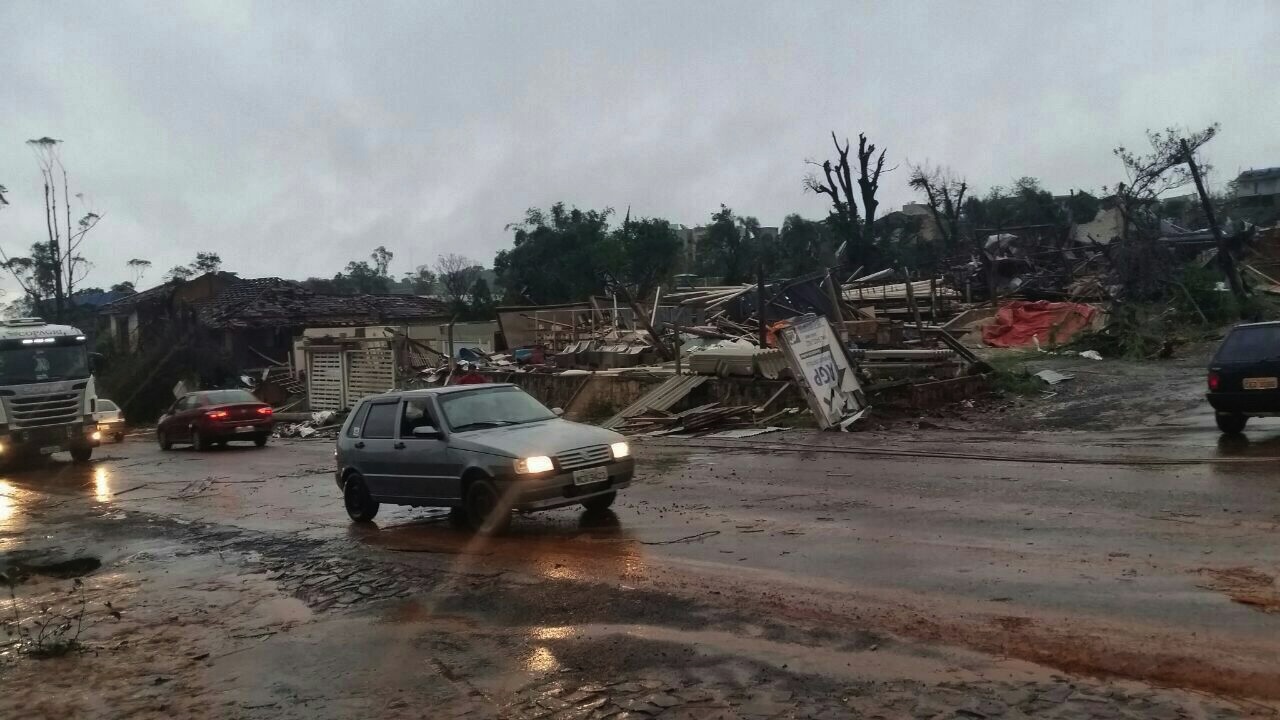
Two people died in Santa Catarina, in southern Brazil, as tornadoes and storms hit on Wednesday 4 November 2026. At least 20 municipalities have declared an emergency, and some counts reach 32.
The state Civil Defense, its emergency agency, confirmed two tornadoes, in Chapecó and Xanxerê, in the west of the state. Inmet, Brazil’s national weather institute, recorded gusts of 126 km/h (78 mph) in Chapecó.
Jonathan Oliveira da Cruz, 20, died in Rio Negrinho when the canopy of a fuel station collapsed. A woman in Xanxerê, whose name was not given, died after contact with a fallen high-voltage cable.
Damage is widespread, with Civil Defense counts ranging from at least 4,600 to 5,531 damaged homes, roughly 2,400 of them in Chapecó. The city’s airport has been closed since Wednesday and was expected to stay shut through at least Friday 6 November, with no reopening date announced.
Civil Defense has warned that new storms could arrive from Friday, 6 November, and continue into Saturday.
How a Brazil Rare Earth Project Secured a Solvay Contract
Viridis Mining and Minerals, an Australian-listed miner, announced a binding supply agreement with Solvay, a Belgian chemicals group, on 4 or 5 November 2026, depending on the time zone and the report. Viridis estimates minimum revenue of about US$915 million from 2029 to 2034.
The product is mixed rare earth carbonate from the Colossus project in Poços de Caldas, Minas Gerais, a powder that must still be split into single metals. Solvay plans to process it at its La Rochelle plant in France.
Solvay commits to buy minimum volumes of about 70% of forecast output during the initial term, and it gets a right of first offer on the rest. The revenue estimate counts only four metals with price floors, is not an upfront payment, and depends on delivering the agreed volumes.
The companies signed only a non-binding letter of intent in June 2026, which obliged neither side to trade. Viridis managing director Rafael Moreno called the deal an important milestone, and the company says it is in talks for debt financing.
The contract may also face Brazilian screening by CIMCE, the National Council for the Industrialization of Critical and Strategic Minerals, created in September. Under Law 15.506/2026, a national policy on critical minerals, and a decree of the same date, it can approve or reject international supply contracts that may affect economic or geopolitical security, but it is unclear whether this one needs its approval.
Why Brazil’s AI Bill Has Stalled Over News Copyright
Brazil’s artificial intelligence bill, PL 2338/2023, passed the Senate on 10 December 2024 but has no vote date in the Chamber of Deputies, the lower house. It awaits an opinion from Aguinaldo Ribeiro, the deputy chosen as rapporteur, the lawmaker who writes the committee report, on 20 May 2025, and none has been filed.
Chamber president Hugo Motta said in May that he wanted a vote in June, but in August Ribeiro said it would wait until after the October elections. Ribeiro wants more debate on the copyright chapter, including how it would work for independent artists.
The Senate text requires developers to publish a summary of the protected content they use and to pay rights holders. The text does not name news content, so how it applies to publishers is open to interpretation.
Courts and regulators have moved first. On 3 November 2026 a São Paulo judge suspended part of the commercial terms of Meta, the owner of Facebook and Instagram, due to take effect on 20 November, barring use of journalistic content without authorization, including to train AI systems.
The suit was brought by three media bodies, the national newspaper, broadcaster and magazine associations (ANJ, ABERT and ANER), and the judge cited signs of copyright infringement and contractual abuse. Two Brazilian newspapers have chosen licensing deals instead: Folha de S.Paulo, a São Paulo daily that had sued OpenAI, signed one with OpenAI, and O Estado de S. Paulo signed one with Google.
The reports behind this Big Read
What It Means for US Readers
Investors in rare earths should note that Colossus has no commercial output yet and still needs debt financing and construction. The contract offers a possible second source of magnet metals outside China, which processes most of the world’s supply.
Americans planning to travel to Chapecó should contact their airline, because the airport is closed and storms could return from Friday into Saturday. US technology companies should note that the Meta ruling applies to its commercial terms in Brazil, and the AI bill’s payment rules would reach them only if the Chamber passes it, and any change there would send the text back to the Senate.
What to Watch Next
Civil Defense warned of new storms from Friday, 6 November, into Saturday, and damage counts are expected to keep changing. No date has been given for the reopening of Chapecó airport.
Meta’s suspended terms were due to take effect on Friday 20 November, so the next steps in that case fall around that date. Watch also for Ribeiro’s opinion on the AI bill and for any word on whether CIMCE will review the Viridis contract.
What Is Not Known
Counts differ by report and by time: 20, 23 or 32 municipalities in emergency, and between 4,600 and 5,531 damaged homes. Reports differ on when the Xanxerê death was confirmed, and the woman’s name was not released.
Solvay’s minimum covers about 70% of forecast output overall and about 64% for the four magnet metals, and the deal is dated 4 or 5 November. Prices, tonnages and whether CIMCE will review the contract are undisclosed, and no figure for storm losses or the airport’s reopening date has been published.
Sources
The Rio Times: Santa Catarina tornadoes · The Rio Times: Viridis and Solvay deal · Chamber of Deputies: bill PL 2338/2023
Editorial responsibility: Matthias Camenzind, Editor-in-Chief · Editorial standards · Report an error
Brazil runoff, Sunday, October 25: Brazil runoff start time and results schedule. Latest: Brazil runoff polls, Flávio 51%, Lula 49%.
Frequently Asked Questions
How many people died in the Santa Catarina storms?
Two deaths are confirmed in Santa Catarina: a 20-year-old man in Rio Negrinho, killed when a fuel station canopy collapsed, and a woman in Xanxerê. The woman in Xanxerê died after contact with a fallen high-voltage cable.
What is the Viridis and Solvay deal worth?
Viridis estimates minimum revenue of about US$915 million for 2029 to 2034. It is not an upfront payment and depends on delivering the agreed volumes at contractual price floors.
Has Brazil passed an AI law?
Not yet. Bill PL 2338/2023 passed the Senate in December 2024 and awaits a rapporteur’s opinion in the Chamber of Deputies, with no vote date set.