
SOUTH AFRICA · ECONOMY
Key Facts
- The country South Africa is a leading African economy and a major gold and platinum producer.
- What happened S&P Global’s private-sector index, the PMI, held at 49.0 in October, below the 50 growth line.
- The detail Output fell for a second month, at the fastest pace since December 2025.
- The mood Firms’ outlook for the next 12 months fell to its lowest since August 2020.
- The rand The rand traded near 16.38 per US dollar on Thursday 5 November 2026.
South Africa’s private sector kept shrinking in October 2026, according to the monthly business survey that S&P Global, a US data company, published on Thursday 5 November 2026. The headline index stood at 49.0, unchanged from September and below the 50 mark that separates growth from contraction.
Companies have now reported shrinking output two months in a row. For US readers, that matters because it shows a leading African economy losing momentum while fuel costs and port delays squeeze firms.
What Happened
The survey is known as the Purchasing Managers’ Index, or PMI. It asks business managers whether output, orders, hiring and prices went up or down compared with the month before.
In October, output fell for a second straight month, and the drop was the fastest since December 2025. New orders also declined again, although the fall was clearly smaller than in September.
Exports fell for the first time since May, which may suggest that the weakness is no longer only a domestic story. Firms also reported that their costs kept rising.
Fuel and Port Pressures
Higher fuel prices pushed the cost of firms’ purchases to the highest pace since June, S&P Global said. Many companies passed those costs on, and prices charged to customers rose at a four-month high.
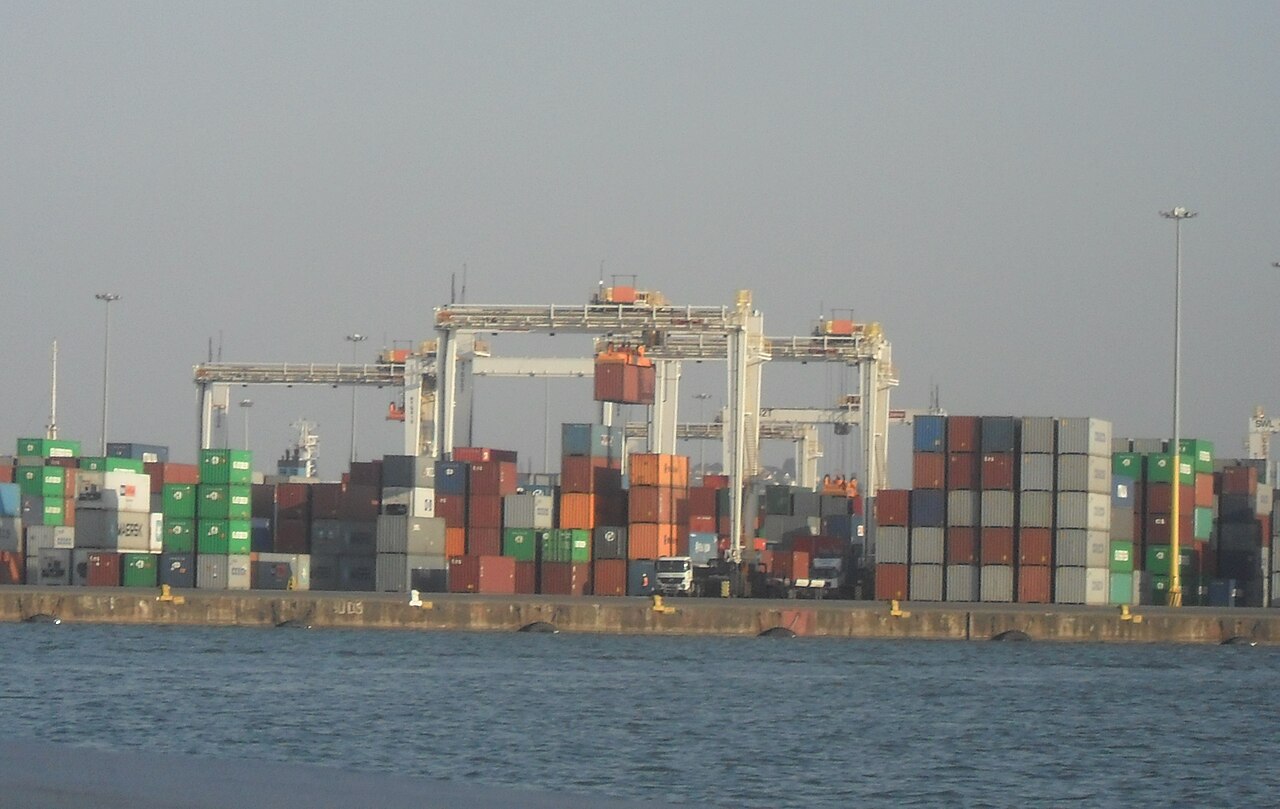
Delays at the Port of Durban, a major container gateway, kept suppliers late with deliveries. The Durban Gateway Terminal is run by ICTSI, a Philippines-based port operator, under a 25-year deal that began in January 2026, in which the state logistics company Transnet keeps the majority.
South Africa’s Transport Minister Barbara Creecy has pressed the operator to cut a backlog of ships waiting to unload. The PMI survey does not say when the delays will end.
A Sharp Drop in Confidence
David Owen, principal economist at S&P Global Market Intelligence, called the confidence reading the most worrying part of the survey. Firms’ expectations for activity over the next 12 months fell to their lowest since August 2020.
That was during the Covid-19 pandemic, so the comparison is a stark one. Even so, firms still expected output to grow on average over the coming year.
The weakness spread across sectors rather than sitting in one industry. S&P Global linked it to subdued demand, higher fuel prices and transport disruption.
What It Means for You
If you hold South African stocks or bonds through US funds, a second month of shrinking output is a reminder that earnings face a weak home market. The rand traded near 16.38 per US dollar on Thursday, so one US dollar buys about R16.38, and a weaker rand raises the cost of imported fuel.
Travellers face no direct change, although higher costs can lift prices for tours, transport and hotels. Importers and exporters who ship through Durban should expect longer waits and plan for late deliveries.
Official fuel prices changed on Wednesday 4 November 2026: diesel fell by about R1.10 to R1.20 a litre (about US$0.07) and petrol by one cent. That may ease costs for firms in the coming weeks, but it is too early to see in the data.
What Is Not Known
It is not known whether November will bring a recovery, because the survey for that month is not yet out. Nor is it clear how quickly the Durban backlog will clear.
It is also unclear whether lower diesel prices will be enough to lift activity. The next PMI reading will show whether the October slide was a one-off.
What to Watch Next
South Africa‘s statistics office, Stats SA, is due to publish its quarterly jobs survey on Tuesday 10 November 2026, according to the economic calendar we follow. Factory output data for September are listed for the same day.
Inflation figures for October are listed for Wednesday 18 November 2026. Together these releases will show whether weak business sentiment is reaching workers and prices.
More: South Africa news in English, every day from The Rio Times. Related: South Africa’s September trade surplus and South Africa’s September inflation.
Frequently Asked Questions
What Is South Africa’s PMI?
It is a monthly survey of private companies by S&P Global, a US data firm. A reading below 50 means activity is shrinking, and above 50 means it is growing.
What Did the October 2026 Reading Show?
The index held at 49.0 in October, the same as in September. Output fell for a second month and at the fastest pace since December.
Why Are South African Firms Struggling?
S&P Global points to weak demand, higher fuel costs and delays at the Port of Durban. Firms also say their confidence about the next 12 months has dropped sharply.
What Should Investors Watch Next?
South Africa’s statistics office publishes new jobs and factory data next week, and inflation data follows on 18 November. Those releases will show whether the slowdown is spreading.
Sources: S&P Global, South Africa PMI press release and survey data, 5 November 2026; South Africa’s Department of Mineral and Petroleum Resources, official fuel price adjustment, 4 November 2026; Stats SA, release calendar; RT, a financial data provider, USD/ZAR, 5 November 2026.
This article was produced by The Rio Times’ automated newsroom system. How we use AI · Report an error · Editorial responsibility: Matthias Camenzind, Editor-in-Chief