Serbia’s Socialists Miss Parliament Cutoff

Published Sunday, 25 October, 8:10 p.m. ET · Source: CeSID, Ipsos, Socialist Party of Serbia, Kalshi
Key Facts
- Projection: CeSID, a Belgrade election-monitoring group, and Ipsos, a polling firm, give the protest-backed Student List 52.9% and Vučić’s list 38.8%.
- Socialists: The Socialist Party of Serbia (SPS) fell below the 3% entry threshold, with about 2% in projections.
- Leader: Ivica Dačić, the SPS chief, said the party missed the threshold and congratulated the Student List.
- Prediction markets: Kalshi, a US prediction market, prices the Student List 96% to win, Vučić’s list 1%, 8:02 p.m. ET.
Serbia’s Socialist Party, a long-time coalition partner of the ruling camp led by Aleksandar Vučić, has missed the 3% threshold needed to enter parliament, projections showed on Sunday 25 October. Its leader, Ivica Dačić, accepted the outcome and congratulated the winning Student List, the list backed by the student protest movement.
The Socialists have been part of Serbian politics since the 1990s, when the party was led by Slobodan Milošević, Serbia’s strongman of that decade. For readers abroad, their exit shows how far the vote moved against the old governing coalition, as our earlier report on Vučić’s concession described.
Socialists Fall Below the Entry Line
CeSID, the Center for Free Elections and Democracy, and Ipsos project 52.9% for the Student List and 38.8% for the list headed by Vučić, “Aleksandar Vučić – United Serbia”. The Socialist list, called “Ivica Dačić – Factor of Stability”, stood at about 2%, below the 3% line a list needs to win seats.
The threshold does not apply to lists of ethnic minorities, which have separate rules. Lists that clear the line share the 250 seats in proportion to their votes.
Projections gave the Student List between 138 and 140 of the 250 seats in the National Assembly, Serbia’s parliament. A majority needs 126 seats, as our projection report explained.
Dačić Concedes but Vows to Fight On
Dačić told a press conference that the party had tried to claim political space in what he called a “referendum atmosphere”. He said that atmosphere “is unbeatable” and that “we did not manage to achieve the result we wanted”.
He thanked about 100,000 people who voted for the list and called it “one lost battle”. He congratulated the winners, including the Student List, and said the party would keep fighting for Serbia.
A Vote Shaped by Student Protests
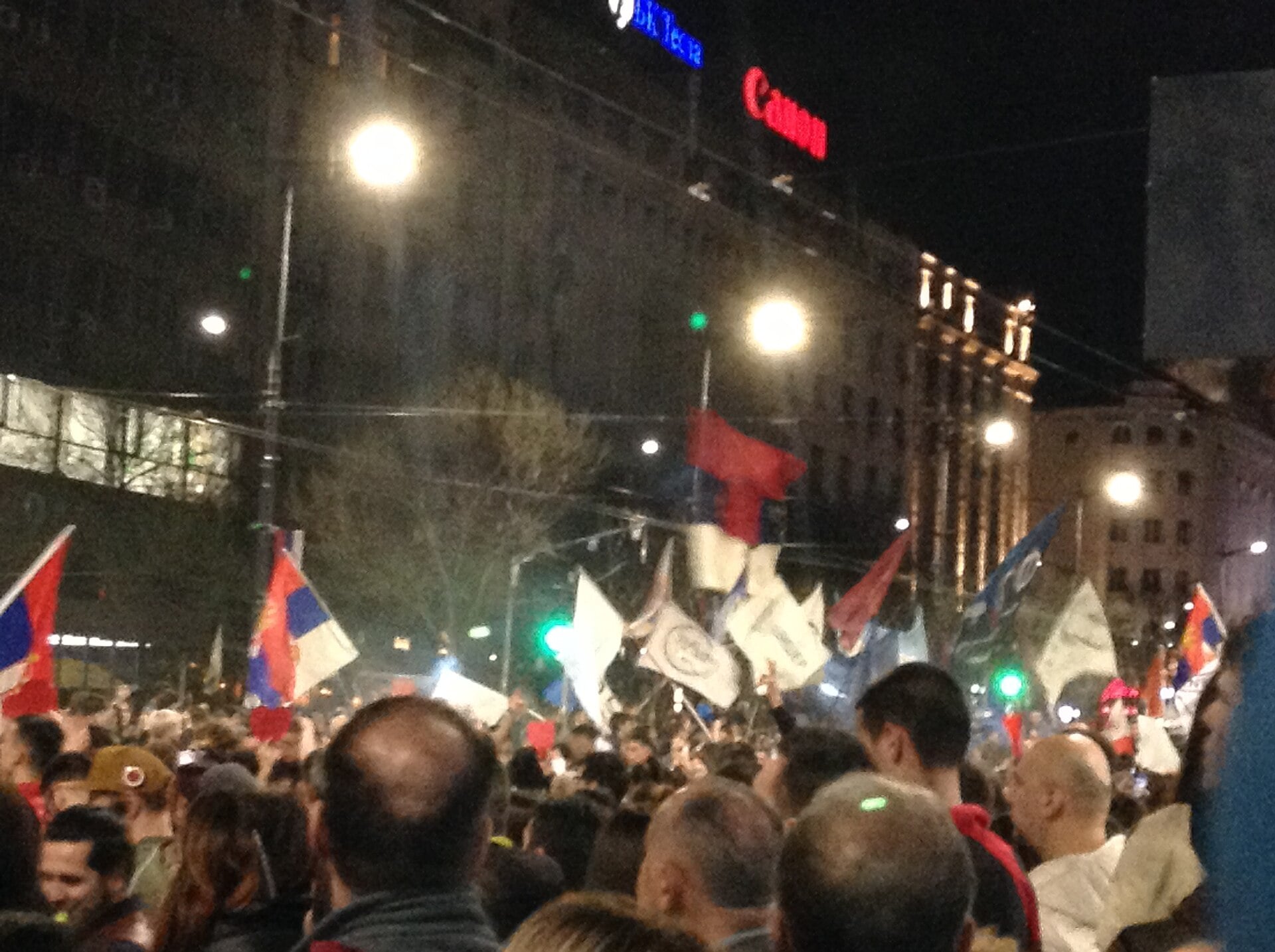
The early election, called on 9 September 2026, followed nearly two years of student-led protests against Vučić’s governing system. Many analysts treated the vote as a referendum on that system, which is the frame Dačić himself used.
The Student List, campaigning under the slogan “Students Win”, grew out of those protests. Its main rival, Vučić’s list, has said it lost, and our election-day report set out how the contest was framed.
What Prediction Markets Say
On Kalshi, the Student List was priced at 96% to win the Serbian parliamentary election and the Vučić-led list at 1%, at 8:02 p.m. ET on 25 October. The market had traded 143,637 contracts, and Polymarket, another prediction market, priced the Student List at 99.2% to win.
A separate Kalshi market priced the Student List at 96% to win at least 46% of the vote and 86% to win at least 50%. Kalshi is regulated in the US by the Commodity Futures Trading Commission (CFTC), and its prices are bets, not polls.
Why we show this: prediction markets turn real-money bets into a live probability that moves within minutes of the news, which is why investors, campaigns and newsrooms in the United States now follow them closely. We show them next to polls and official results, never instead of them.
What It Means for You
If the projections hold, Serbia’s next parliament will contain far fewer of the parties that ran the country for years. Investors, diplomats and travellers watching the Western Balkans should expect the Student List to lead coalition talks, with the pace set by the official count.
The Socialists’ fall also shows the cost of sharing power with a camp voters rejected. That pattern, a junior partner hit harder than the leader, is worth watching in other elections where voters turn on an incumbent.
What Is Not Known
The official result of the Republic Electoral Commission (RIK), the state body that runs the vote, is not yet published. It has up to 96 hours after polls close, so the exact Socialist share and the final seat split may still change.
It is also unknown whether Dačić will stay on as party leader, and which minority lists will win seats. We will update the Serbia coverage when RIK publishes figures.
Sources
CeSID · Ipsos · Ivica Dačić and the Socialist Party of Serbia · Republic Electoral Commission of Serbia · Kalshi · The Rio Times Serbia election updates
This article was produced by The Rio Times’ automated newsroom system. How we use AI · Report an error · Editorial responsibility: Matthias Camenzind, Editor-in-Chief
Frequently Asked Questions
Did Serbia’s Socialist Party win seats in parliament?
Not according to projections. The party stood at about 2%, below the 3% threshold, and its leader Ivica Dačić accepted that it missed it.
When will Serbia publish the official result?
The Republic Electoral Commission has up to 96 hours after polls close on 25 October. Until then, CeSID and Ipsos projections are estimates, not results.