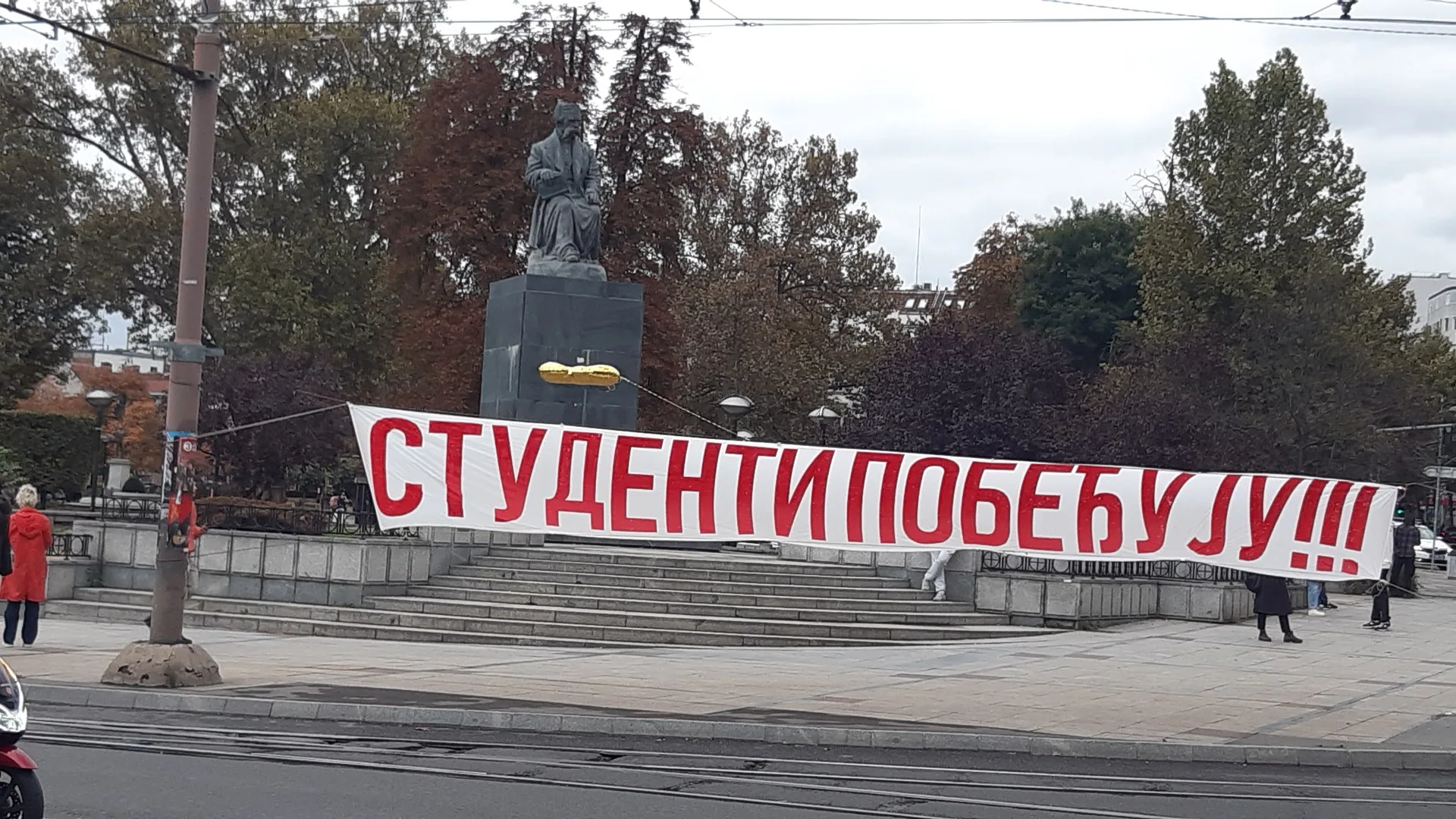
Updated 2 times · Latest: 4 November 2026
Key Facts
- Result: The Student List won 53.01% of ballots on 25 October 2026; United Serbia, the list of ex-president Vučić, took 38.98%.
- Turnout: 68.89% of registered voters took part, up from 58.77% in the December 2023 election.
- Seats: The election commission’s preliminary count gave the students 140 of 250 seats; 126 make a majority.
- Next: Parliament must meet within 30 days of the final result, and Serbia must elect a president by late December.
- Prediction markets: Polymarket, a crypto-based prediction market, gives economist Dejan Šoškić 57.2% to become prime minister (4 November 2026, 10:04 a.m. ET).
In plain English
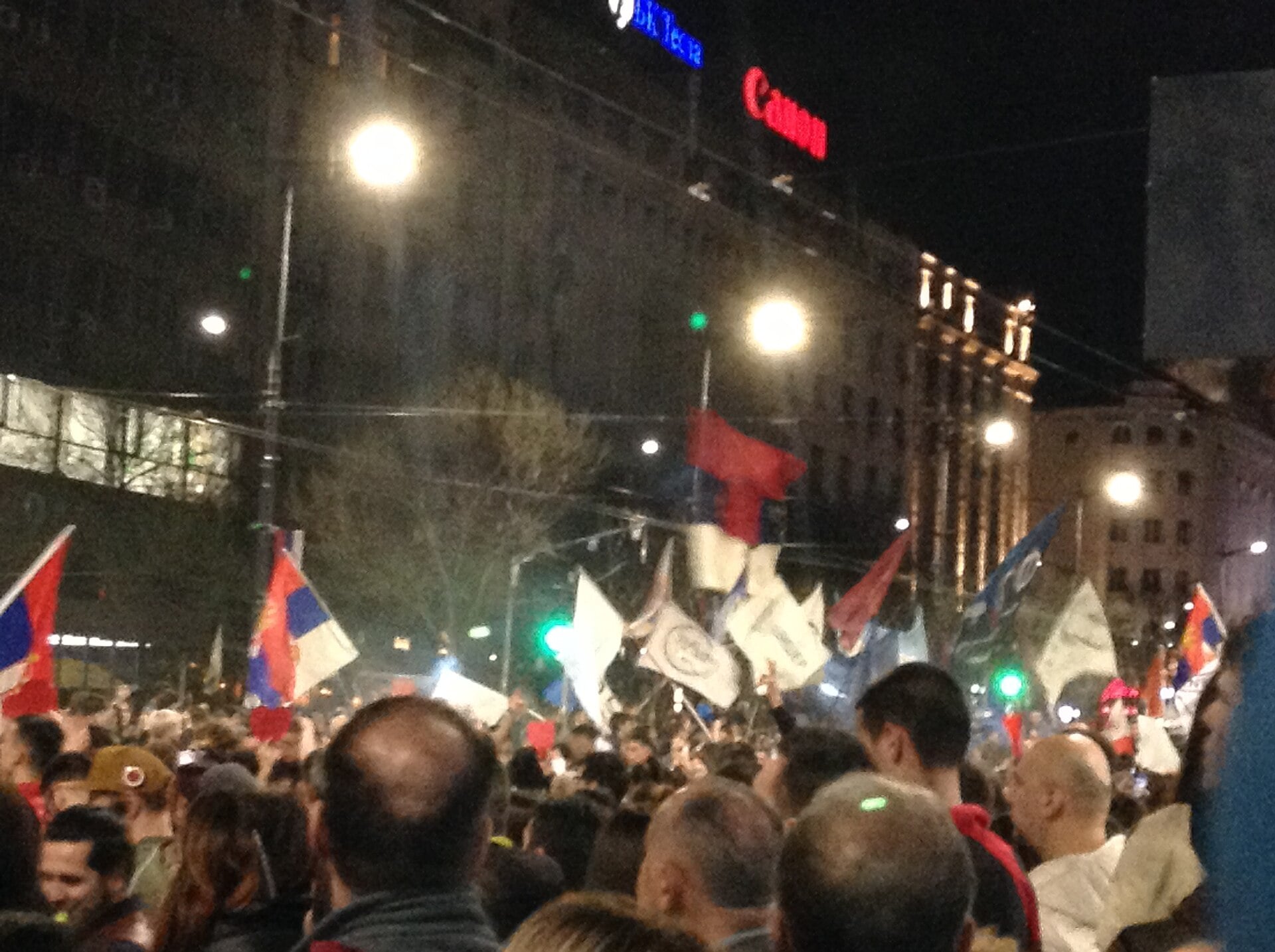
Serbia voted early on 25 October after two years of protests that began with a deadly station collapse. A list backed by students won more than half of the vote, and the party that had run the country since 2012 lost. The winners now have to pick a prime minister and form a government.
Serbia’s Student List, a movement born in street protests, won the 25 October 2026 parliamentary election with 53.01% of ballots cast and ended 14 years of rule by Vučić’s Serbian Progressive Party. United Serbia, the list of Vučić, the former president, took 38.98%, according to the Republic Electoral Commission (RIK), the state body that runs Serbian elections.
The count covers all 8,392 polling stations and came on a turnout of 68.89%, about ten points above 2023. Serbia is a candidate to join the European Union but has not joined Western sanctions on Russia, so the winners’ first choices will be watched abroad.
This analysis explains how the students won, where, and what changes next. It uses the commission’s own municipal results, which we summed into the 25 districts you can explore below.
Explore the Results Map
Tap any district on the interactive map to see both lists’ votes, the margin and turnout there. Every table behind it, with downloads, sits in the Serbia results data room.
Interactive Map
- EU Backs Serbia Students After 141 Seat Win
European Council President António Costa called Student List leader Ilija Srdanović after projections gave the protest-born movement 141 of 250 seats.
- Serbia’s Students Celebrate Win in Belgrade
Thousands celebrated in Belgrade and Novi Sad as Serbia’s Student List led Vučić’s ticket 52.73% to 39.15%; no final result is declared yet.
- Serbia’s Students Lead by 584,000 Votes
With 8,181 of 8,392 stations counted, Serbia’s Student List leads Vučić’s ruling list 52.73% to 39.15%; no final result yet.
- Serbia Vote Was Uneven, Observers Say
International observers praised Serbia’s high turnout and count but said state resources, media bias and pressure tilted the campaign.
- Serbia’s Student List Holds 52% in Count
RIK counted 7,926 polling stations: the protest-born Student List leads Vučić’s ruling list 52.19% to 39.52%, with the final result still to come.
- Serbia’s Students Lead. Now What?
Serbia’s students refused to be a party, and projections now give them 52%. Who they are, what they want and what they have not yet said.
Serbia's 2026 Election, District by District
Tap or hover a district for the result. Serbia has 25 districts outside Kosovo. Final count of all 8,392 polling stations, read 4 November 2026.
Source: Republic Electoral Commission (RIK), results at municipal level summed by district. Shares are RIK's: percent of all ballots cast, including invalid ones. Not drawn: Kosovo and Metohija (60 polling stations), prisons and voters abroad; see the data room. South Bačka's western edge is simplified.
Results as a table
| District | Winner | Margin | Turnout |
|---|---|---|---|
| Belgrade | Student List 62.94%, United Serbia 31.65% | Student List ahead by 31.3 points | 70.3% of registered voters |
| Bor | Student List 44.58%, United Serbia 49.38% | United Serbia ahead by 4.8 points | 62.8% of registered voters |
| Braničevo | Student List 42.99%, United Serbia 50.43% | United Serbia ahead by 7.4 points | 60.5% of registered voters |
| Central Banat | Student List 51.06%, United Serbia 41.69% | Student List ahead by 9.4 points | 70.5% of registered voters |
| Jablanica | Student List 41.32%, United Serbia 51.38% | United Serbia ahead by 10.1 points | 71.2% of registered voters |
| Kolubara | Student List 55.63%, United Serbia 38.90% | Student List ahead by 16.7 points | 74.8% of registered voters |
| Mačva | Student List 48.12%, United Serbia 45.54% | Student List ahead by 2.6 points | 68.2% of registered voters |
| Moravica | Student List 58.60%, United Serbia 36.31% | Student List ahead by 22.3 points | 76.4% of registered voters |
| Nišava | Student List 53.76%, United Serbia 40.70% | Student List ahead by 13.1 points | 72.2% of registered voters |
| North Banat | Student List 40.29%, United Serbia 38.09% | Student List ahead by 2.2 points | 63.3% of registered voters |
| North Bačka | Student List 47.37%, United Serbia 34.94% | Student List ahead by 12.4 points | 62.4% of registered voters |
| Pirot | Student List 44.79%, United Serbia 48.80% | United Serbia ahead by 4.0 points | 75.3% of registered voters |
| Podunavlje | Student List 49.84%, United Serbia 44.03% | Student List ahead by 5.8 points | 65.9% of registered voters |
| Pomoravlje | Student List 46.39%, United Serbia 44.57% | Student List ahead by 1.8 points | 62.3% of registered voters |
| Pčinja | Student List 26.57%, United Serbia 40.56% | United Serbia ahead by 14.0 points | 59.9% of registered voters |
| Rasina | Student List 47.85%, United Serbia 45.92% | Student List ahead by 1.9 points | 71.2% of registered voters |
| Raška | Student List 44.90%, United Serbia 33.00% | Student List ahead by 11.9 points | 62.3% of registered voters |
| South Banat | Student List 54.82%, United Serbia 39.49% | Student List ahead by 15.3 points | 69.6% of registered voters |
| South Bačka | Student List 57.50%, United Serbia 36.17% | Student List ahead by 21.3 points | 73.1% of registered voters |
| Syrmia | Student List 47.76%, United Serbia 46.62% | Student List ahead by 1.1 points | 72.9% of registered voters |
| Toplica | Student List 39.29%, United Serbia 54.46% | United Serbia ahead by 15.2 points | 70.1% of registered voters |
| West Bačka | Student List 49.49%, United Serbia 43.28% | Student List ahead by 6.2 points | 69.9% of registered voters |
| Zaječar | Student List 46.87%, United Serbia 46.34% | Student List ahead by 0.5 points | 69.4% of registered voters |
| Zlatibor | Student List 51.39%, United Serbia 37.97% | Student List ahead by 13.4 points | 69.2% of registered voters |
| Šumadija | Student List 55.30%, United Serbia 38.24% | Student List ahead by 17.1 points | 72.4% of registered voters |
How Serbia Voted on 25 October
The Student List won 2,354,417 votes, or 53.01% of the 4,441,636 ballots cast. United Serbia won 1,731,323 votes (38.98%), a gap of 14.03 percentage points.
RIK measures each list against all ballots, valid and invalid together. Against valid ballots alone, the Student List took 53.69% and United Serbia 39.48%, our own arithmetic from the commission’s totals.
Turnout reached 68.89% of 6,451,292 registered voters, against 58.77% in December 2023. Invalid ballots fell from 104,029 to 56,571.
Only two lists cleared the 3% line that decides who gets seats, which was about 133,000 votes this time. The list of the Socialist Party of Serbia and its leader Ivica Dačić, a long-time partner of Vučić’s party, took 94,766 votes (2.13%) and stays out, while minority lists, which are exempt from the threshold, keep a few seats.
Smaller lists with regional bases included the Hungarian Alliance of Vojvodina, a list of Serbia’s Hungarian minority, with 35,461 votes (0.80%), and the Albanian Coalition, a list of the Albanian minority, with 27,683 (0.62%).
RIK’s preliminary count of 26 October, with 8,187 polling stations processed, gave the Student List 140 of the 250 seats, United Serbia 104 and four minority lists 6. A government needs 126, so on that count the students can govern alone, and RIK has not yet published its final seat split. Reports after the 1 November repeat vote put the students at 140 or 141 seats and United Serbia at 103 or 104, so on either count the students hold a majority.
A repeat vote at 53 polling stations on 1 November did not change who won. Our report from election night shows how Vučić conceded on election night.
The Student List won 2.6 times as many votes as the biggest opposition list of 2023, while Vučić’s list lost only 2.9% of its 2023 vote.
Live Market IntelligenceCrypto — Live Market Board
Rio Times · Live Market Intelligence
Crypto — Live Market Board
-3.28%
| Instrument | Last | Change | YoY | Prev. | High | Low | Volume |
|---|---|---|---|---|---|---|---|
| BTC | 71,540 | -3.28% | -29.63% | 73,964 | 74,072 | 71,262 | 29,131,053,056 |
| ETH | 2,010 | -2.22% | -41.11% | 2,056 | 2,062 | 1,988 | 10,680,310,784 |
| SOL | 81.38 | -2.33% | -46.91% | 83.32 | 83.68 | 80.54 | 2,261,284,864 |
| XRP | 1.03 | -2.50% | -56.98% | 1.05 | 1.06 | 1.02 | 1,888,945,408 |
| BNB | 653.53 | -3.82% | -31.42% | 679.51 | 681.44 | 650.05 | 994,436,352 |
| ADA | 0.17 | -1.61% | -68.53% | 0.17 | 0.18 | 0.17 | 251,115,504 |
| DOGE | 0.07 | -2.36% | -61.25% | 0.07 | 0.07 | 0.06 | 705,312,576 |
| AVAX | 8.32 | -2.35% | -50.59% | 8.52 | 8.68 | 8.25 | 284,522,976 |
| LINK | 10.02 | -1.69% | -33.82% | 10.19 | 10.23 | 9.79 | 330,695,936 |
| DOT | 0.83 | -1.28% | -71.62% | 0.84 | 0.85 | 0.82 | 62,640,532 |
| LTC | 49.77 | -0.92% | -48.97% | 50.24 | 50.40 | 48.53 | 228,139,200 |
| BCH | 225.59 | -1.22% | -55.51% | 228.38 | 230.21 | 223.48 | 130,195,280 |
| TRX | 0.32 | -0.34% | +7.11% | 0.32 | 0.32 | 0.32 | 301,956,384 |
| XLM | 0.15 | -0.14% | -47.10% | 0.15 | 0.15 | 0.14 | 128,559,024 |
| HBAR | 0.06 | -2.93% | -63.47% | 0.07 | 0.07 | 0.06 | 60,034,908 |
| NEAR | 3.42 | -4.88% | +34.89% | 3.59 | 3.62 | 3.35 | 550,965,312 |
| ATOM | 1.41 | +1.09% | -51.27% | 1.39 | 1.42 | 1.38 | 24,686,808 |
| AAVE | 113.05 | -6.39% | -44.79% | 120.77 | 120.74 | 111.10 | 249,096,272 |
Why the Students Won
The first reason is who turned out. About 623,564 more people voted than in 2023, even though the voter register shrank by 49,374.
Vučić’s list held most of its base: it won 1,731,323 votes, against 1,783,701 for his 2023 list, a fall of 52,378 or 2.9%. Its share dropped from 46.75% to 38.98% mainly because far more people voted: ballots cast rose by 16%.
The Student List won 1,451,967 more votes than Serbia Against Violence, the largest opposition list of 2023, which took 902,450. The count alone cannot show who switched, but it shows that the new voters and the old opposition ended up in one place.
The second reason is that the opposition stopped splitting its vote. In 2023 the largest opposition list took 23.66% and three more lists took 5.02%, 4.69% and 2.76%.
In 2026 the Student List was the only challenger above 3%. Apart from the Socialists, no other list reached 1%.
The third reason is the movement behind the list. It began after a concrete canopy collapsed at the Novi Sad railway station on 1 November 2024 and killed 16 people, and protesters blamed corruption and demanded accountability.
Vučić, who led Serbia as president, called the early vote in September and resigned on 27 September to head his list and run for prime minister. Ana Brnabić, Speaker of the National Assembly, has been acting president since 28 September.
The vote itself was real but the contest was uneven. The Office for Democratic Institutions and Human Rights (ODIHR), the election-observation arm of the Organization for Security and Co-operation in Europe, said on 26 October that the vote saw high turnout and vigorous competition between two main contenders. It rated voting positively at 96% of the 1,485 stations its teams visited.
It also said the ruling party’s advantages seriously compromised equal campaign conditions, citing misuse of state resources and almost one billion euros (about US$1.1 billion) in benefits announced around the campaign. The students won anyway.
Where the Students Won, Region by Region
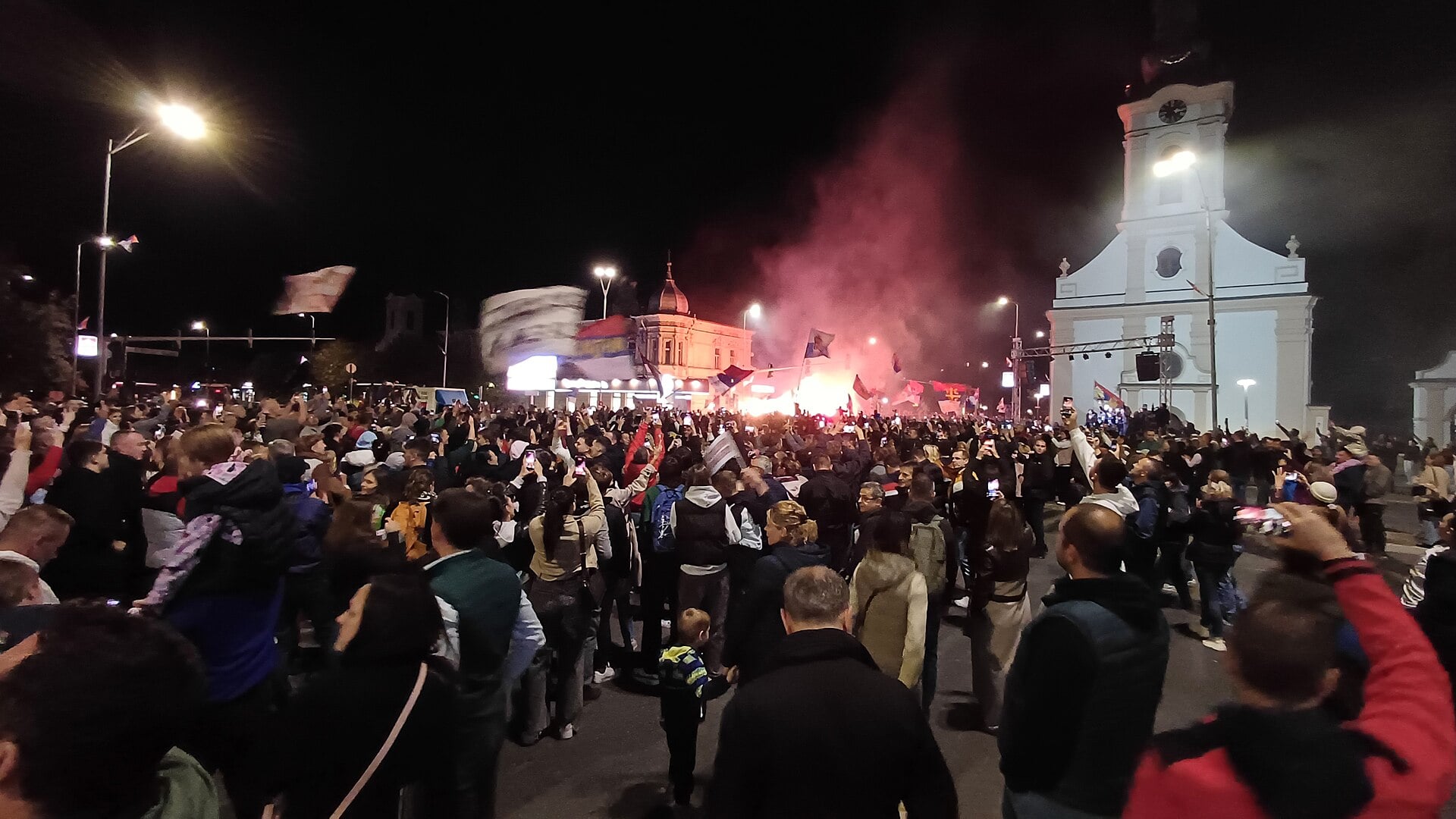
Belgrade gave the Student List its biggest margin: 62.94% against 31.65% for United Serbia, with 700,618 votes, 348,305 more than United Serbia. In 2023 the same region was close, with 37.48% for Vučić’s list and 34.38% for Serbia Against Violence.
Inside the capital, the students won 73.24% in central Stari Grad and 72.31% in Vračar. They won only 48.56% to 46.30% in outlying Surčin and 47.02% to 46.49% in Sopot.
Novi Sad, the city where the canopy fell, voted 63.05% to 31.74% for the students. Niš, the main city of the south, gave them 59.88% to 35.10%, and Kragujevac in central Serbia 58.00% to 35.41%.
Vojvodina, the northern plains region, went 52.21% to 39.54% for the students, and Šumadija and Western Serbia 50.78% to 39.94%. Southern and Eastern Serbia was the only one of the four main regions that United Serbia won, by 45.83% to 44.39%.
By district, the Student List came first in 19 of 25. United Serbia won six: Pirot, Bor, Braničevo, Jablanica, Pčinja and Toplica, all in the south and east.
The strongest district outside Belgrade was Moravica in the west, 58.60% to 36.31%, followed by South Bačka, around Novi Sad, at 57.50% to 36.17%. The closest was Zaječar, where the students led by 0.53 points.
United Serbia’s strongest municipalities in Serbia proper with more than 10,000 registered voters were Doljevac, at 68.2%, and Žitorađa, at 62.6%, both towns in the south.
Minority areas voted differently. In Preševo, a town with an Albanian majority, the two big lists together took only 12.5%, and the rest went to other lists, among them the Albanian Coalition, while in North Banat the two finished 40.29% to 38.09% with a Hungarian list also competing.
Voters outside the country proper went their own way. Abroad, the students won 72.57% (57,756 votes) against 24.83% for United Serbia, while in Kosovo, which Serbia still counts as its territory, 60 polling stations served 100,465 registered voters, and United Serbia took 71.97% and the students 20.62%.
The register abroad held 102,147 voters, against 39,270 in 2023. RIK’s results do not say why it grew so much, and we have not found an official explanation.
How It Compares With Earlier Votes
Serbia’s December 2023 vote gave Vučić’s list 1,783,701 votes (46.75%) on a turnout of 58.77%. In the south and east, his 2023 list won 53.01%, while United Serbia took 45.83% now, which shows how far the ruling camp slipped even in its stronghold.
Abroad, Vučić’s 2023 list had won 56.41%, against 72.57% for the students this time. In Belgrade, Vučić’s 2023 list led by 3 points; now the students lead by 31.
In Poland and Montenegro, comparable turnarounds needed coalitions. In Poland on 15 October 2023, turnout was 74.38% and Law and Justice (PiS), the conservative governing party, took 35.38%, the most of any party, yet it lost power to opposition parties that formed a coalition.
In Montenegro on 30 August 2020, turnout was 76.64%. Three opposition groupings together won 41 of 81 seats and ended three decades of rule by Montenegro’s Democratic Party of Socialists. In Serbia, by contrast, one list passes the majority line on the preliminary count, which gives the winners more room but also more responsibility for what follows.
What Changes in Belgrade
The road to a government
- RIK must publish its total report within 96 hours of receiving the last local report, then assign seats to candidates within 10 days.
- The outgoing Assembly’s Speaker must call the first session within 30 days of the final result. The Assembly is constituted once two thirds of deputies (167 of 250) confirm their mandates.
- The Assembly must elect a government within 90 days of being constituted, or it is dissolved and Serbia votes again.
- A new president must be elected within three months of Vučić’s resignation on 27 September, so by late December.
No government exists yet. The Student List named no prime-ministerial candidate during the campaign, and its lead candidate, Ilija Srdanović, is a cardiologist and professor at the University of Novi Sad.
Policy is the harder question. European Council President António Costa phoned Srdanović on 27 October and said Serbia’s place is in the EU, which he said means the rule of law, the fight against corruption and media freedom.
ODIHR notes that Russian President Vladimir Putin was quoted on 1 October as hoping Vučić would become prime minister. Our report on Moscow’s ties covers what the students have said about sanctions.
The Socialist Party of Serbia, Vučić’s long-time government partner, now have no seats of their own. What role Vučić himself will take after leaving the presidency is open.
What It Means for Markets, Investors and Readers
For investors, the first date is 12 November, when the National Bank of Serbia, the central bank, sets its key rate. It has held the rate at 5.75% since 12 September 2024, and inflation stood at 4.1% in September against a target of 3% give or take 1.5 points.
The second item is energy. Naftna Industrija Srbije (NIS), Serbia’s main oil company, is majority-owned by Russian shareholders led by Gazprom Neft, the oil arm of Russia’s Gazprom, and sits under US sanctions. MOL, Hungary’s largest oil and gas group, signed a binding heads of agreement in January 2026 to buy the Russian 56.15% stake, and the sale still needs US approval.
US Treasury licences have let NIS operate and let those talks continue, and regional reports say both were extended on 30 and 31 October until 11 December. The new government inherits that file, along with the question of whether to keep the billion-euro benefit promises of the campaign.
For travellers, the US State Department rates Serbia Level 2, Exercise Increased Caution, and can change that at any time. For expats and the Serbian diaspora, the abroad vote shows a large, engaged electorate that the winners will have to keep.
For Europe and the wider Western Balkans, the result is a test of whether a protest movement can hold power without a party machine. It also tells other long-ruling governments that a surge in turnout can erase a lead that polls showed intact.
What Prediction Markets Say
- Next prime minister of Serbia: Dejan Šoškić, an economist and former governor of the National Bank of Serbia, 57.2%; Ilija Srdanović 14.0%; Aleksandar Vučić 2.8% (Polymarket, a crypto-based prediction market, about US$4.16 million traded, 4 November 2026, 10:04 a.m. ET).
- Serbian presidential election called by 30 November: 96.5% (Polymarket, US$10,836 traded in this market and US$26,075 across all deadline markets, same time).
Why we show this: prediction markets turn real-money bets into a live probability that moves within minutes of the news, which is why investors, campaigns and newsrooms in the United States now follow them closely. We show them next to polls and official results, never instead of them.
Prices are bets, not polls. Kalshi, a prediction market regulated in the US by the Commodity Futures Trading Commission (CFTC), last traded Šoškić at 49% and Srdanović at 15% in its prime-minister market (4 November 2026, 10:05 a.m. ET). The 8-point gap between the two venues shows how thin trading is, so treat both as rough guides.
Prediction markets · live
Implied chances from traders’ prices. Prices are bets, not polls.
Kalshi: parliamentary election winner
Kalshi (regulated in the US by the CFTC): 143,896 contracts traded.
Kalshi: prime minister after the election
Kalshi (regulated in the US by the CFTC): 44,215 contracts traded.
Kalshi: Student List vote share
Kalshi (regulated in the US by the CFTC): 21,308 contracts traded.
Kalshi: voter turnout
Kalshi (regulated in the US by the CFTC): 12,816 contracts traded.
As of Sunday, 1 November, 6:47 p.m. ET, updated every 20 minutes.
Why we show this: prediction markets turn real-money bets into a live probability that moves within minutes of the news, which is why investors, campaigns and newsrooms in the United States now follow them closely. We show them next to polls and official results, never instead of them.
Three Scenarios to May 2027
A fast handover. This needs RIK to finish its report on time, the Assembly to meet inside its 30-day window and the students to agree on a prime minister. Signposts are a named candidate, a government elected well inside the 90 days and an early date for the presidential election.
A slow, contested handover. This happens if disputes over result protocols, which observers said did not always match, or over the timing of the presidential vote, stall the process. Signposts are missed legal deadlines, court challenges and a long run of acting-president decisions by Brnabić.
A split among the winners. The Student List has no party structure and no named prime-ministerial candidate, so a clash over the prime minister, Russia or prosecutions could stop it electing a government. If the Assembly fails to do so within 90 days of being constituted, it is dissolved and Serbia returns to the polls in the first half of 2027.
These are scenarios, not forecasts. The preliminary seat count makes the first the most consistent with the numbers, but the movement’s lack of a party machine is the main risk to it.
Before the Vote: What the Polls Said
Polls had pointed to a close race, and the last two pointed in different directions. NSPM, a Belgrade research group, had the students ahead by 1.8 points in its last poll before the vote, while Ipsos, another polling firm, had the ruling list ahead.
The result was a 14-point student win, so the polls missed the winner’s margin by a wide gap. We keep the poll tracker as a record of what was known before the vote, on our Serbia results and poll page, and our final-polls report shows how the picture looked in the last days.
What We Do Not Know
- The final seat split: RIK had not published its total report or the seat decision when we last checked on 4 November.
- Who will be prime minister, and when the Assembly will first meet.
- The date of the presidential election, which must fall by late December.
- Why the voter register abroad grew from 39,270 to 102,147 since 2023.
- Whether the US licences for NIS and the MOL sale talks are extended again after 11 December.
Read the Coverage Behind This Analysis
Our election-night guide and the count report follow the first results, and the observers’ verdict sets out how fair the vote was. See also the EU’s reaction, who holds power in Serbia and why the Socialists missed parliament.
For the wider picture, read the Serbia election hub and our series on Europe’s political crisis.
Frequently Asked Questions
Who won Serbia’s 2026 parliamentary election?
The Student List won on 25 October 2026 with 53.01% of ballots cast, against 38.98% for United Serbia, the list of former president Aleksandar Vučić. The Republic Electoral Commission counted all 8,392 polling stations.
How big was the Student List’s margin?
It won 2,354,417 votes to 1,731,323, a lead of 14.03 percentage points of all ballots cast. Against valid ballots alone, the shares were 53.69% and 39.48%.
How many seats did the Student List win?
The commission’s preliminary count of 26 October gave it 140 of 250 seats and United Serbia 104. A majority needed 126, and the final split will follow the commission’s total report.
What was turnout in the election?
Turnout was 68.89% of 6,451,292 registered voters, against 58.77% in December 2023. About 623,564 more people voted than two years earlier.
Why did the Socialist Party miss parliament?
Its list took 94,766 votes, or 2.13%, below the 3% line most lists need, which was about 133,000 votes. Minority lists are exempt from the threshold and won seats.
Did observers say the election was fair?
The Office for Democratic Institutions and Human Rights said the vote saw high turnout and vigorous competition between two main contenders. It rated voting positively at 96% of the 1,485 stations observed. It also said the ruling party’s advantages seriously compromised equal campaign conditions.
Where did United Serbia win?
It won six of 25 districts, all in the south and east: Pirot, Bor, Braničevo, Jablanica, Pčinja and Toplica. It also won the polling stations in Kosovo, with 71.97%.
Who was set to lead the next government?
No prime minister had been named when we last checked on 4 November 2026. The Student List had named no prime-ministerial candidate, and the Assembly still had to meet.
Sources: Republic Electoral Commission (RIK), results of the 2026 and 2023 parliamentary elections, read 4 November 2026, and its sessions of 26 October and 28 October 2026; ODIHR statement of preliminary findings, 26 October 2026; National Bank of Serbia, key policy rate decision of 8 October 2026, and the Statistical Office of Serbia, September inflation; European Council, statement of 27 October 2026; Constitution of Serbia, Articles 101, 109 and 120; Poland’s National Electoral Commission (PKW); Montenegro’s State Election Commission; Polymarket and Kalshi market data; US State Department Serbia advisory; Rio Times poll database.
This article was produced by The Rio Times’ automated AI newsroom. Editorial responsibility: Matthias Camenzind, Publisher and Editor-in-Chief. The Rio Times also runs Ask Rio Times, which answers from 100,000+ of our own articles, the daily Latin America Power Map, and prediction-market odds on elections and markets.. How we use AI · Report an error