Who Will Win France’s 2027 Election? Polls and Odds

FRANCE IN TURMOIL · 2027 ELECTION
Six months before France chooses Emmanuel Macron’s successor, Marine Le Pen leads both the polls and the betting markets.
France votes on 18 April and 2 May 2027, and Le Pen took 34% to 38% in the first poll taken after the riots of 17 October. Prediction markets give her roughly even odds of winning, far ahead of any rival.
This page gathers the latest polls, the live prediction-market prices and a guide to the candidates. It matters to American investors because the winner will shape French policy on the budget, the European Union and NATO.
Key Facts
- —The dates First round Sunday, 18 April 2027; runoff Sunday, 2 May. Macron cannot run again.
- —Latest poll Ifop, 17 to 19 October: Le Pen 36%, Mélenchon 16.5%, Glucksmann 13.5%.
- —Runoff tests Le Pen beats every rival Ifop tested, from 56% against Philippe to 68% against Mélenchon.
- —Her eligibility An appeal court lifted the immediate ban in July; her final appeal is still pending.
- —Prediction markets Marine Le Pen 47% on Polymarket, 54% on Kalshi to win in 2027 (21 October, 9:14 a.m. ET)
The Short Answer
Le Pen is the clear favourite in the polls and the markets, and the unrest has, if anything, widened her lead. In Ifop’s main scenario nobody else tops 16.5%, and Mélenchon reaches 20% in only one line-up, so the real contest is over who joins her in the runoff.
Two things could still upend the race: the courts, which have yet to settle her final appeal, and a consolidation of the centre or the left behind a single candidate. The full background to the unrest is in why France is protesting.
In Plain English
- RN (National Rally) Le Pen’s nationalist party, the largest group in the National Assembly.
- LFI (France Unbowed) Jean-Luc Mélenchon’s radical-left party.
- PS (Socialist Party) The traditional centre-left party, now backing Raphaël Glucksmann.
- LR (The Republicans) The traditional conservative party, led by Bruno Retailleau.
- Renaissance and Horizons The centrist parties of Macron and of Édouard Philippe.
- Constitutional Council The body that checks candidacies and declares the official result.
- Ifop and Elabe Two of France’s main polling firms.
- Polymarket and Kalshi Online prediction-market exchanges; Kalshi is regulated in the US by the CFTC.
Latest Polls
Ifop interviewed 1,928 registered voters online from the evening of 17 October to 19 October for the broadcaster LCI, the newspaper Le Figaro and Sud Radio, and released the results on 20 October. In its main scenario Le Pen scored 36%, Mélenchon 16.5% and Glucksmann 13.5%, while Philippe reached 12% with Attal also on the ballot, and Retailleau polled between 5% and 7.5% across the line-ups.
Ifop Runoff Tests, 17 to 19 October
- Le Pen v Philippe 56% to 44%
- Le Pen v Glucksmann 57% to 43%
- Le Pen v Attal 58% to 42%
- Le Pen v Hollande 59% to 41%
- Le Pen v Mélenchon 68% to 32%
Elabe’s survey, published on 17 October, put Le Pen at 31% to 33.5% depending on the line-up, with Philippe at 13.5% to 16.5%, Glucksmann at 15% to 16.5% and Mélenchon at 15% to 16%. In Elabe’s runoffs she beat Philippe by 52.5% to 47.5% and Glucksmann by 53.5% to 46.5%, closer than in Ifop’s poll, whose margin of error runs from 1 to 2.2 points.
What Prediction Markets Say
The market on the next French president at Polymarket, an online prediction-market exchange, has drawn more than US$154 million in bets, and it priced Le Pen at about 46% on 21 October, ahead of Philippe near 19%, Lisnard near 12% and Mélenchon near 11%. Kalshi, regulated in the US by the Commodity Futures Trading Commission (CFTC), had her at 53% to 54% after a climb from 44% at the close of 13 October.
Traders rate Lisnard far above his polls, at 11% to 12% against 5.5% to 7% in Ifop’s latest poll, so they are betting on a breakthrough the polls do not yet show. A brief jump in Glucksmann’s Kalshi price to 19% on 13 October, two days after his primary win, reversed within about an hour, a reminder to read single moves with care.
Prediction markets · France 2027 and the unrest
Implied chances from traders’ prices on Polymarket and Kalshi.
Who wins France's presidential election in 2027
Polymarket: US$154.5 million traded.
Kalshi (regulated in the US by the CFTC), next president: Marine Le Pen 54% · Édouard Philippe 15% · David Lisnard 11% (921,006 contracts traded).
Who reaches the runoff on 2 May 2027
Polymarket: US$403,000 traded. Two candidates go through, so these chances add up to about 200%.
France declares a state of emergency by...
Polymarket: US$208,000 traded. A state of emergency gives the government extra powers such as banning gatherings; it has not been declared.
Kalshi (regulated in the US by the CFTC), state of emergency: before 1 November 2026 11% · before 1 January 2027 24% (27,855 contracts traded).
France passes a national budget by 31 December 2026
Polymarket: US$19,000 traded. The 2027 budget needs a majority the government does not have.
As of 21 October, 9:14 a.m. ET (14:14 Lisbon), updated every 20 minutes. Prices are bets, not polls, and can move fast.
Why we show this: prediction markets turn real-money bets into a live probability that moves within minutes of the news, which is why investors, campaigns and newsrooms in the United States now follow them closely. We show them next to polls and official results, never instead of them.
The Candidates
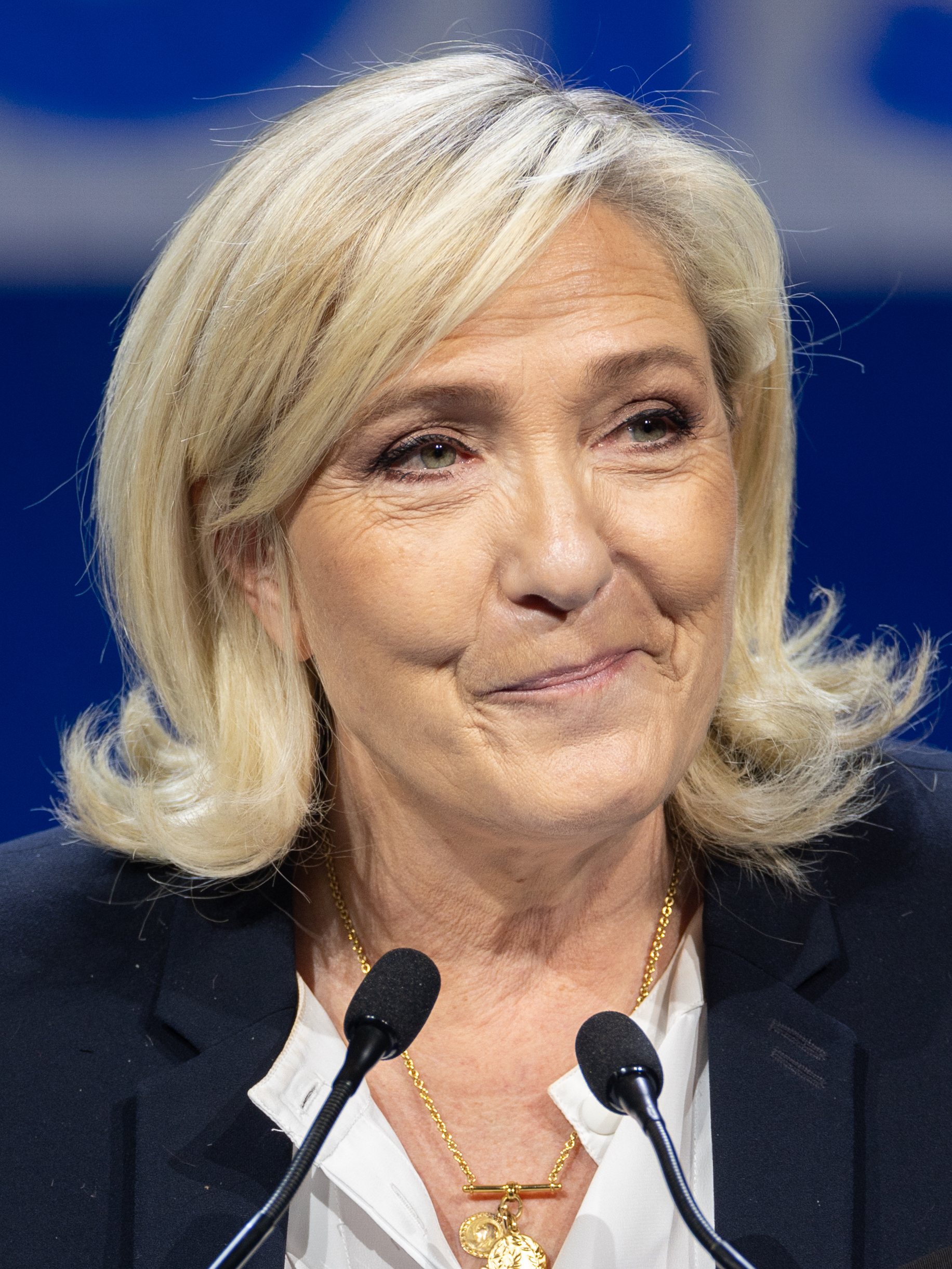
- Marine Le Pen, 58 Leads the National Rally (RN) group in the National Assembly and runs on curbing immigration and the cost of living; party president Jordan Bardella would replace her if she were barred.
- Jean-Luc Mélenchon, 75 Founder of the radical-left La France Insoumise (LFI, “France Unbowed”), running for the fourth time; he took 21.95% in the 2022 first round.
- Raphaël Glucksmann, 47 Member of the European Parliament and co-leader of the centre-left Place Publique; he won a primary held by the Socialist Party (PS) and Place Publique on 11 October with 66%, so the PS backs him.
- Édouard Philippe, 55 Prime minister from 2017 to 2020 and leader of the centre-right party Horizons, which he founded.
- Gabriel Attal, 37 Prime minister in 2024 and now leader of Macron’s party, Renaissance; he and Philippe split the centrist vote.
- Bruno Retailleau, 65 President of the conservative Republicans (LR) and a former interior minister, chosen by party members as their candidate.
- David Lisnard, 57 Conservative mayor of Cannes, who leads his own party, Nouvelle Énergie, and has risen in recent polls from a low base.
Can Le Pen Run?
A Paris criminal court convicted Le Pen in March 2025 of misusing European Parliament funds and barred her from office for five years with immediate effect. On 7 July 2026 the appeal court upheld the conviction but cut the ban to 45 months, 30 of them suspended, and removed its immediate effect, while sentencing her to three years in prison, one of them to be served with an electronic tag, and a fine of €100,000 (about US$112,000).
Le Pen said that evening that she would run, and she has appealed to the Court of Cassation, France’s top court for criminal and civil cases, which said it could rule by early April 2027, a timetable it said may change. Her lawyers argue that she is eligible, some jurists argue that her own appeal revives the original ban, and the Constitutional Council will have the last word when it validates the candidates.
How the Election Works
A candidate who wins more than half the votes cast in the first round is elected outright, which has never happened since the first direct presidential vote in 1965. Otherwise the top two meet two weeks later, and the winner takes office in May for five years.
To get on the ballot, a candidate needs 500 signatures from elected officials such as mayors and lawmakers, filed with the Constitutional Council by 12 March 2027. The government set the dates at its weekly cabinet meeting on 1 July 2026, and French territories in the Americas and Polynesia vote a day earlier.
How the Unrest Changes the Race
Ifop’s post-riot poll put Le Pen at 36% in its main scenario, and Sud Radio, which co-commissioned it, headlined that she was “soaring”. On 21 October she told franceinfo that the government had “lost control of everything”.
The incumbents were already weak before the riots: in Ifop’s monthly barometer taken from 14 to 16 October, favourable opinions of Macron fell eight points to 25% and of Prime Minister Sébastien Lecornu six points to 37%. Retailleau demanded a state of emergency and Attal asked the government to consider one, while Mélenchon blamed the government’s policing strategy, which leaves the left and the right fighting over who owns the issue of order.
What It Means for US Investors
Markets already charge France more to borrow: the 10-year bond yield closed at about 4.92% on 20 October, and its premium over German debt widened to 153 basis points, or 1.53 percentage points. A Le Pen lead that hardens into spring would keep that premium in focus, because investors fear higher spending from both the RN and the radical left.
The euro traded near US$1.12, and the CAC 40, the Paris stock index of 40 large companies, fell 1.5% from 16 to 20 October. Follow the budget fight that comes first in will France’s government collapse.
What Is Not Known
It is not yet known when the Court of Cassation will rule on Le Pen’s appeal, whether Philippe and Attal will both run, or whether former president François Hollande will enter the race. The polls are six months from the vote, and early leaders have faded in past French elections.
We update this page with every major poll and keep the market prices live. For travel and protest dates, see whether it is safe to travel to France.
Frequently Asked Questions
When is the next French presidential election?
The first round is on Sunday, 18 April 2027, and the runoff on Sunday, 2 May 2027. French territories in the Americas and Polynesia vote a day earlier.
Who is leading the 2027 French election polls?
Marine Le Pen of the National Rally leads every recent poll we have seen, with 34% to 38% in Ifop’s survey of 17 to 19 October. Jean-Luc Mélenchon, Raphaël Glucksmann and Édouard Philippe compete for second place.
Can Marine Le Pen run in 2027?
She says she will, after an appeal court in July cut her ban from office and removed its immediate effect. Her final appeal is pending at the Court of Cassation, and the Constitutional Council decides who is on the ballot.
Can Macron run again?
No, the constitution allows no more than two consecutive terms, and Macron was elected in 2017 and re-elected in 2022. His term ends in May 2027.
What are the odds in the French election?
On 21 October Polymarket priced Le Pen at about 46% and Kalshi at 53% to 54%, with Édouard Philippe second on both. These are bets, not polls, and they move with every news event.
Who is David Lisnard?
He is the conservative mayor of Cannes and the leader of his own party, Nouvelle Énergie. He polls 5.5% to 7% in Ifop’s latest survey, while betting markets give him a chance of about 11% to 12%.
Sources: Ifop-Fiducial poll for LCI, Le Figaro and Sud Radio (20 October; notice filed with the Commission des sondages) and Ifop-Fiducial barometer for Paris Match and Sud Radio (20 October); Elabe (17 October); Public Sénat on the Le Pen appeal ruling (8 July); Toute l’Europe on the election calendar (updated 7 October); Public Sénat and Politis on the 11 October primary; franceinfo interview with Marine Le Pen (21 October); BFM Bourse and EODHD market data (20 and 21 October); Polymarket and Kalshi public market data (21 October). As of 21 October 2026.
More: Why is France protesting? Our explainer on the riots, the curfews and the 2027 race.
This article was produced by The Rio Times’ automated newsroom system. How we use AI · Report an error · Editorial responsibility: Matthias Camenzind, Editor-in-Chief
France in Turmoil
- Why France Is in Crisis, and How Macron Lost His Grip
- Why Is France Protesting? Riots, Curfews and the 2027 Race
- Is It Safe to Travel to France Right Now? Curfews, Strikes
- Will France’s Government Collapse Over the 2027 Budget?