Brazil · Rio Grande do Sul
Key Facts
- 2,686 displaced — state Civil Defense morning update, Sunday 9 August.
- 117 municipalities — affected by the instability line, per Defesa Civil RS.
- 1 death, 5 injured — the death was a motorcyclist on RS-124 in Montenegro.
- Minas do Leão — 500 displaced, the hardest-hit town.
- Novo Hamburgo — 480 displaced; Sapiranga 360.
- Gusts of 120 km/h — recorded at several locations, reports say.
- Cold front, not cyclone — Defesa Civil attributes damage to an instability line.
- 2024 echoes — the disaster reignites concerns about flood-prone regions.
- Shelters active — more than 100 people are in public shelters.
- Residents advised — monitor alerts and avoid flooded areas as rains continue.
A cold front brings heavy rain and wind to Rio Grande do Sul, leaving one dead and hundreds without homes — and reviving memories of the 2024 floods.
If you live in or are invested in Rio Grande do Sul, keep this number in mind. The storms there have displaced 2,686 people.
That’s the state’s Civil Defense count. The storms hit from Friday through Sunday.
That was 9 August 2026.
The damage spread across 117 municipalities. One person died.
Five were injured. This update came from Defesa Civil RS.
O Povo reported it. The victim was a 33-year-old man.
He lost control of his motorcycle. This happened on the RS-124 highway in Montenegro.
It’s a painful reminder of the region’s vulnerability — and the shadow of the catastrophic 2024 floods still looms large. But this event, at least so far, is on a much smaller scale.
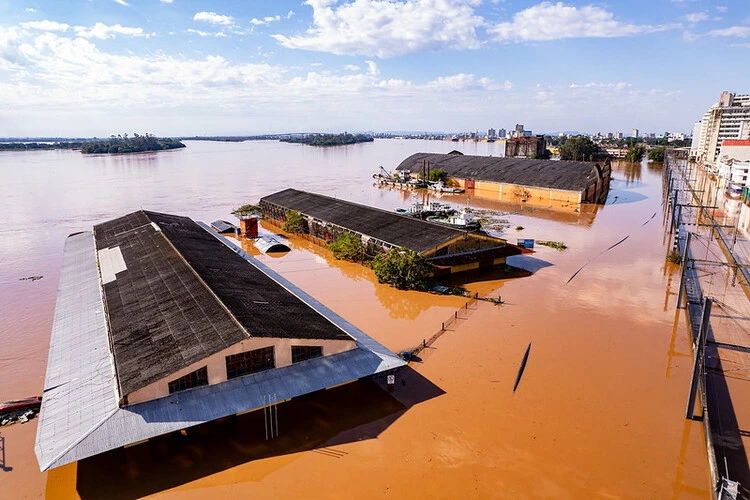
What the Rio Grande do Sul Storms Left Behind
The storms came from what the state Civil Defense calls a ‘linha de instabilidade’. That’s an instability line linked to a cold front.
That’s different from the ‘ciclone bomba’. That storm caused so much fear in past years.
Defesa Civil RS explicitly said the damage was from the front, not from a cyclone system passing offshore.
The numbers tell the story. As of Sunday morning, 2,686 people were displaced.
That means they left home. They may stay with family or friends.
Another broadcast later gave a different figure. It put the total above 2,300 displaced.
Over 100 were in public shelters. The slight difference reflects reporting times.
Winds hit 120 km/h in several places. Reuters and CNN Brasil reported this.
The wind and heavy rain caused damage. Trees and power lines fell.
Streets flooded in dozens of towns.
The hardest-hit municipality was Minas do Leão, with 500 displaced. Novo Hamburgo followed with 480, and Sapiranga with 360.
Montenegro, where the fatal accident happened, reported one person in a public shelter (desabrigado). Other towns like São Leopoldo were also among the most affected, though exact figures weren’t given in the results.
The Recurring Flood Risk – and the Shadow of 2024
Rio Grande do Sul has a long history of extreme weather. But the floods of May 2024 were in a league of their own.
It was an unprecedented disaster. More than 180 people died, according to official figures then.
Hundreds of thousands were displaced. That catastrophe reshaped how residents think about infrastructure.
Investors also changed their views on climate resilience.
The August 2026 storms are not comparable in scale. The total number of people affected this time is in the thousands, not the hundreds of thousands.
The event still highlights a pattern. A cold front pushes through the state.
Low-lying areas near rivers are especially vulnerable. These rivers include the Taquari, Caí, and Sinos.
Check flood-risk maps before buying or renting property. Have an emergency plan ready.
The takeaway is practical for foreign residents and investors. The state has improved its early-warning systems.
Nature remains unpredictable, though. This weekend’s storms remind us of that.
Even a ’smaller’ event can disrupt lives and businesses.
Defesa Civil has not released a full regional breakdown of rivers, rainfall totals, or evacuation counts beyond the numbers above. So we can’t yet map exactly which river basins were most affected.
But the names of the towns hit — Novo Hamburgo, Sapiranga, São Leopoldo. Are familiar from the 2024 floods, which suggests a similar geographic pattern.
What to Do if You’re in the Affected Area
If you’re in Rio Grande do Sul, follow Defesa Civil advice. Stay informed through official channels.
Avoid driving through flooded roads. Be ready to move to higher ground.
This applies if you live near rivers or hillsides. Those areas are prone to landslides.
The state’s warning systems are active. They are issuing alerts as the cold front moves.
For those watching from abroad, patience is key. Cleanup and recovery take time.
Brazil’s federal and state governments have mobilised emergency teams. According to officials, most areas are under control.
Check with local managers or partners about damage. This applies if you own property or investments there.
File insurance claims as soon as possible. Flood policies may have waiting periods or exclusions.
Many learned this lesson in 2024.
RS the storms displaced 2,686 people: Why It Matters to You
Rio Grande do Sul is a key hub in Latin America. It matters for residents and investors alike.
The state has major ports and food processing. It also has strong manufacturing industries.
When storms hit, supply chains feel the impact. Soybean exports can be affected.
Shoe production in the Sinos Valley suffers too. That’s Novo Hamburgo’s specialty.
The deeper lesson is about climate risk. Extreme weather events are becoming more frequent.
This is happening across the region. Whether you’re a retiree in Porto Alegre or a fund manager in São Paulo, understanding these risks is essential.
It matters for decisions about where to live. It also matters for decisions about where to put capital.
This was a tragic weekend. One person died, and dozens of families were displaced.
But compared to 2024, it’s a reminder. Not every storm becomes a catastrophe.
With good preparation, impacts can be managed.
More: Brazil news, every day from The Rio Times.
Frequently Asked Questions
How many people were displaced in the August 2026 RS storms?
The state Civil Defense reported 2,686 people displaced (desalojados) across 117 municipalities as of Sunday morning, 9 August 2026. A later update said more than 2,300 had left home and over 100 were in shelters — the difference reflects when the figures were compiled.
What was the cause of the damage?
Defesa Civil RS attributed the damage to a ’linha de instabilidade’ (instability line) associated with a cold front, not to the ’ciclone bomba’ system that passed offshore. Strong winds, up to 120 km/h at some locations, and heavy rain brought down trees and power lines.
How does this compare to the 2024 floods?
The 2024 floods were a catastrophic event that killed more than 180 people and displaced hundreds of thousands. This August 2026 event is far smaller in scale — one death, a few thousand displaced — but it highlights the same vulnerability in low-lying areas, especially river valleys.
Which municipalities were most affected?
Minas do Leão had 500 displaced, Novo Hamburgo 480, Sapiranga 360, and there were reports of heavy impacts in São Leopoldo and Montenegro, where the one death occurred. In Montenegro, one person was in a public shelter.
Connected Coverage
Sources: Defesa Civil do Rio Grande do Sul; O Tempo; CNN Brasil.
This article was produced by The Rio Times’ automated newsroom system. How we use AI · Report an error
Read More from The Rio Times