
PARAGUAY · BANKING ANALYSIS
Published Saturday, 7 November 2026, 7 a.m. ET · Source: Paraguayan Senate records, Banco Central del Paraguay statements and its reply to the Senate
Paraguay’s central bank says its own supervisors caught Ueno Bank breaking a lending limit on Friday 5 June 2026, almost five months before the state took the bank over on Monday 2 November. The question now is why that finding led to no sanction.
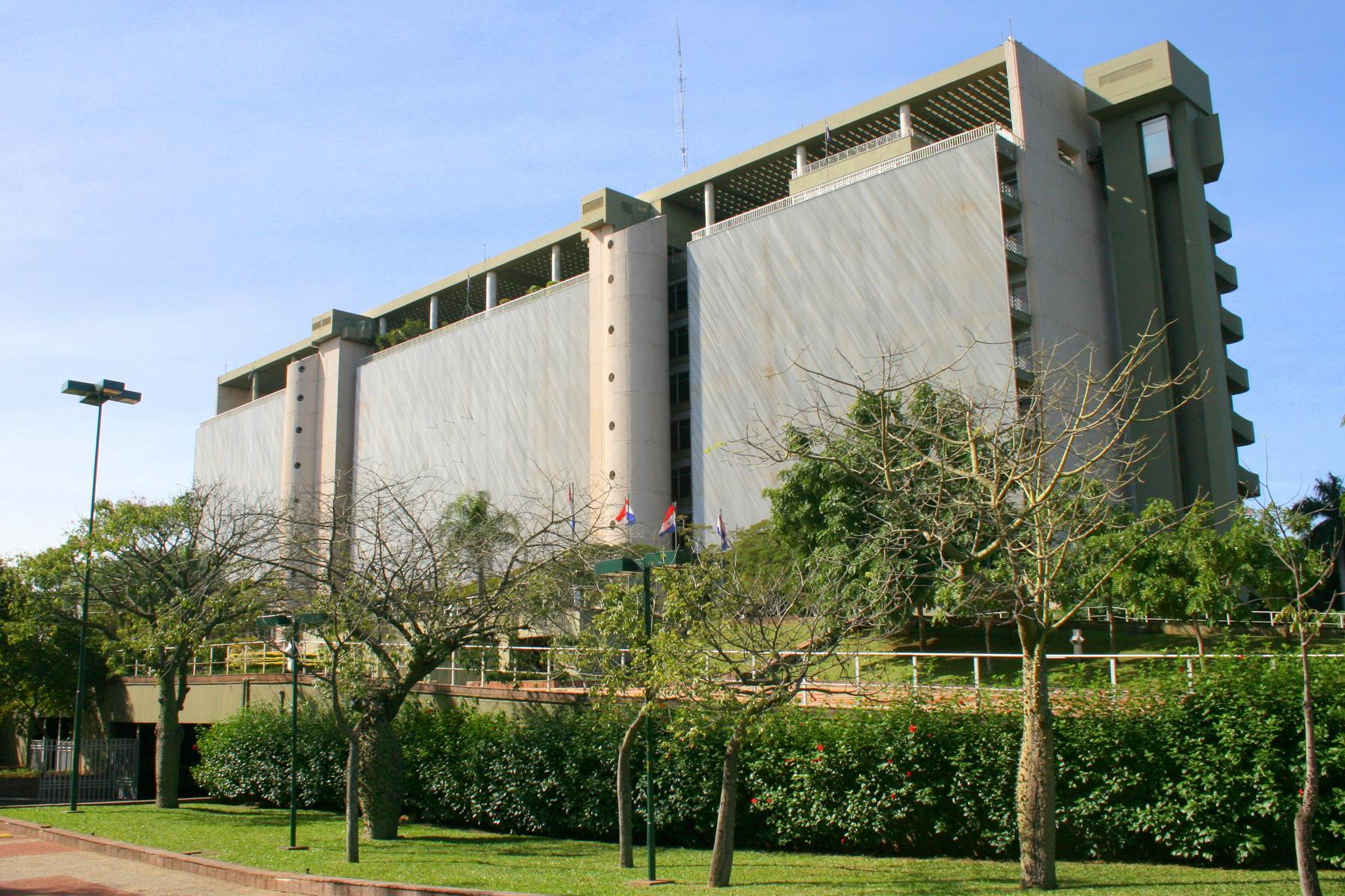
The Banco Central del Paraguay (BCP), led until 3 November by Carlos Carvallo, licenses and supervises the country’s banks through the Superintendencia de Bancos, its supervision arm. Ueno, a digital bank with about 2.9 million clients according to reports, now sits in a state “resolution”, a legal takeover to protect depositors.
Key Facts
- The warning The BCP says supervisors flagged excess related-party lending at Ueno on Friday 5 June 2026.
- The rule Reports of BCP rules put the cap on loans to insiders at 20% of effective capital.
- The outcome No sanction followed because Ueno cured the breach within ten days, the BCP says.
- The fallout Ex-BCP president Carlos Carvallo surrendered 6 November; an opposition complaint alleges breach of trust. No court ruling.
- Still open Whether supervisors acted in time, and why the loan-portfolio sale was accepted.
What the Central Bank Says It Knew, and When
In a reply to Paraguay’s Senate dated Wednesday 7 October and signed by BCP president Carlos Carvallo, the central bank said the Superintendency found the breach by cross-checking its own data. According to local press accounts of the reply, which has not been published in full, the bank had not reported the excess itself.
Supervisors notified Ueno on 5 June, and the bank was back within the limit by Monday 15 June, the reply says. On Friday 24 July the supervisor required more companies to be added to Ueno’s “related group”, the circle of firms tied to its owners, and the bank recalculated, per the same accounts.
At a press conference on Tuesday 3 November, Carvallo said months of technical work that began in June ended in the decision to resolve the bank. The board had voted unanimously the day before, citing a solvency ratio below half the required minimum; we could not confirm the 5.56% figure some reports give.
Why a Ten-Day Rule Decided the Outcome
Press accounts of BCP rules say loans to related parties may not exceed 20% of a bank’s effective capital, meaning the capital regulators count as truly loss-absorbing. Under Law 2334/03, the deposit-guarantee and bank-resolution statute, as cited in a supervision memo reported by local papers, a breach lasting more than ten consecutive days forces a regularisation plan, a formal repair schedule.
Because Ueno came back within the limit inside that window, the BCP told senators, no plan was required and no sanctions were applied. A supervision memo reported by local press says the loans stayed over the limit for ten consecutive days, so the exact day count is itself disputed.
The Loan Sale That Fixed the Numbers
One way Ueno came back within the limit was by selling a loan portfolio to Vinanzas SA, a company reported to be tied to the bank. The BCP has opened an administrative proceeding to test whether the sale amounted to prohibited “indirect financing”, according to the accounts of its reply.
The figures differ: Senate questions in September cited US$35 million plus 36,900 million guaraníes (Gs; about US$6.2 million, roughly US$41 million in all), while an opposition complaint puts the portfolio at US$74.4 million. We convert at Gs 5,976 per US$, the close of Friday 6 November.
A memo dated Friday 10 July from Fernando Rivarola, then the outgoing head of supervision, reportedly questioned whether the sale could count as a valid fix. Press accounts say the BCP argued the memo did not come through official channels.
The Case for the Regulator, and Why It Is Contested
The strongest defence is arithmetic: a breach of ten days or fewer is not “more than ten”, so the BCP says the law gave supervisors no automatic sanction. But 5 to 15 June is exactly ten days, right at the threshold the law sets.
Critics answer that rules are only as good as the data behind them, and opposition lawmakers allege the BCP knew of about Gs 743,784 million (about US$124 million) in linked-firm loans between May and November. Press reports differ on whether internal alerts date from April, and no plan was demanded.
The Carvallo Question
Reports say Carvallo had led Financiera Ueno, the bank’s predecessor, before Santiago Peña, the president the Senate removed on Friday 6 November, named him BCP president. He held the post from 1 September 2023 until he submitted his resignation on 3 November, and that history lies behind questions about the regulator’s independence.
Opposition senators and deputies expanded a criminal complaint, reported on Thursday 5 November, to name Carvallo, Superintendent of Banks Holger Insfrán, who runs the supervision arm, and three BCP board members for alleged breach of trust. The complaint asks whether supervisors failed to act in time; Carvallo surrendered to police with his lawyer on the night of Friday 6 November after prosecutors ordered his detention, and no court has ruled on the complaint.
What Is on the Table to Fix It
The only change in law so far is aimed at savers: by Wednesday 4 November the Senate had sanctioned, unanimously, an amendment to Law 2334/03 advancing up to 40 monthly minimum wages per depositor. Payments fall due within 24 hours, and at most five business days, after the law takes effect, the Senate said.
We found no bill to change how banks are supervised, though senators asked in September about departures from the BCP’s supervision management since January 2025, press accounts say. On 4 November the Senate approved Pedro Acosta for the BCP board and sent the nomination of Raúl Vera Bogado as BCP president to committee.
What It Means for You
For foreign lenders and investors, the issue is less Ueno’s losses than the credibility of the referee, since a country that sells itself as stable needs a supervisor that is trusted. Depositors can read our guide to Ueno payouts for what is covered now.
The next signals to watch are whether the BCP publishes the Senate reply and its supervision files, and whether prosecutors widen the case from Ueno’s owners to the regulator. Either would show how far the supervision question reaches.
What Is Not Known
We could not read the BCP reply, the 10 July memo or the complaint themselves, only press accounts of them, and the BCP website was not reachable for us. We also could not find a primary document showing whether Carvallo formally stepped aside from decisions on Ueno.
Open points are the true size and date of the excess, the amount of the Vinanzas transfer, the official solvency ratio, and who permanently leads the BCP once the Senate decides. Whether any supervisor will be charged is also unknown.
Frequently Asked Questions
When did the central bank first flag a problem at Ueno Bank?
The BCP says its supervisors notified Ueno on Friday 5 June 2026 of excess lending to related parties. The bank was back within the limit by Monday 15 June, ten days later, per the BCP’s reply to the Senate as reported.
Was Ueno Bank sanctioned before the takeover?
No, the BCP told senators. It said no regularisation plan or sanction was needed because Ueno corrected the breach within the ten days the law allows.
Why is Carlos Carvallo under scrutiny?
Reports say he led Financiera Ueno, the bank’s predecessor, before becoming BCP president in 2023. Opposition lawmakers named him in a complaint alleging breach of trust, and he surrendered on Friday 6 November; no court has ruled.
Is Paraguay changing how banks are supervised?
We found no supervision reform bill. The only legal change so far, passed by Wednesday 4 November, speeds up deposit-guarantee payouts to savers.
Part of the dossier: Paraguay Crisis, Peña Removal and Ueno Bank
Ueno Bank solvency and resolution · Banco Central del Paraguay report to the Senate · Santiago Peña removed · Paraguay banking system explained · Ueno Bank data room
Sources: Paraguayan Senate records of 4 November 2026 (law amending Law 2334/03; BCP board appointments); Banco Central del Paraguay statements of 3 November 2026 and its reply BCP/P No. 016 of 7 October 2026 as reported; Law 2334/03; BCP supervision rules as cited; complaint filings as reported on 5 and 6 November 2026; guaraní close of 6 November 2026 (Gs 5,976 per US$). Read on 7 November 2026.
This article was produced by The Rio Times’ automated newsroom system. How we use AI · Report an error · Editorial responsibility: Matthias Camenzind, Editor-in-Chief