Hundreds Flee Fighting in Nyabiondo, Congo
Nyabiondo is the main town of the Osso-Banyungu area in Masisi, and families who left are sheltering near its main health centre with no official count.
Conflict: DR Congo
Fighting between Congo’s army and an armed coalition sent hundreds of families fleeing Nyabiondo, a town in North Kivu province in eastern Congo, on Wednesday 18 November 2026. Local civil society groups said at least seven civilians were wounded, a figure we could not confirm independently.
The army, known as the FARDC, and allied local militias called Wazalendo (“patriots” in Swahili) are fighting the Front for the Refoundation of the Nation (FRN), an armed coalition led by former president Joseph Kabila. Two peace tracks meant to calm the region, one in Washington and one in Doha, have not stopped the fighting.
Key Facts
- Who. Congo’s army (FARDC) and allied Wazalendo militias against the FRN armed coalition.
- What. Fighting at Nyabiondo from the early hours of Wednesday 18 November; hundreds of households fled.
- Where. Nyabiondo, Masisi territory, North Kivu province, eastern Congo.
- Not known. Total displaced; no deaths reported; no army or FRN statement found.
- As of. 19 November 2026, 09:00 GMT.
Nyabiondo is the main town of the Osso-Banyungu area in Masisi, and families who left are sheltering near its main health centre with no official count.
What Happened in Nyabiondo
Local sources told Congolese media that the offensive began on Tuesday evening at Mahanga, on the border between Masisi and Walikale territories. By the early hours of Wednesday it had reached Nyabiondo, and exchanges of fire were still going on around midday.
Shops and schools stayed shut across the town centre, according to a second Congolese report. Many residents sheltered inside their homes, while hundreds of households left for the town’s main health centre and a base of Médecins Sans Frontières (MSF, the Doctors Without Borders aid group).
Local civil society groups said at least seven civilians were wounded, and they spoke of hundreds of households on the move. Both numbers come from those groups alone, and no deaths have been reported so far.
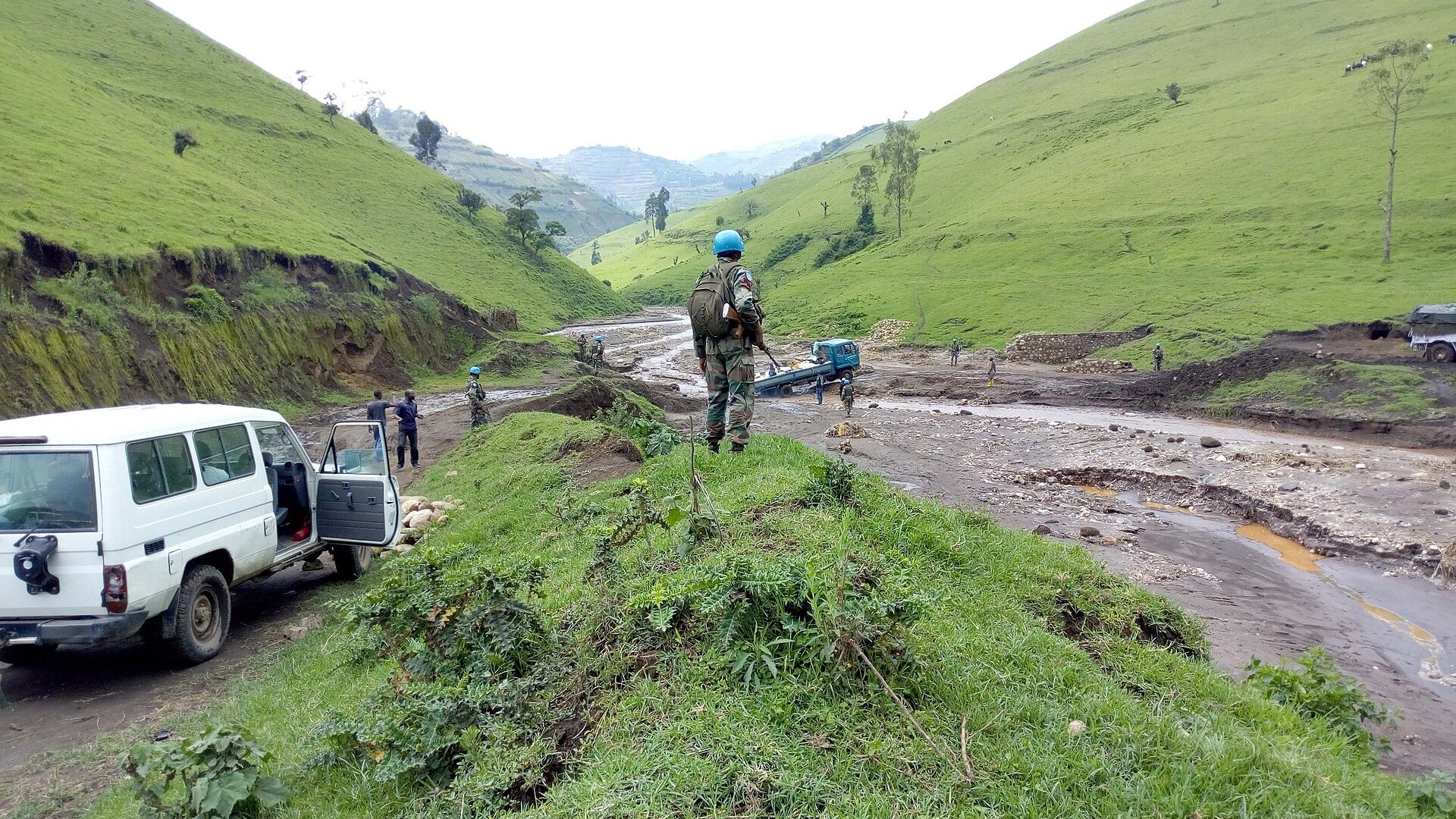
Congolese military sources say the FRN holds Mukikonda hill, which overlooks the town, and that the hill is a main target of the army and the Wazalendo. Only one local report we read mentions the hill, so we treat it as a claim by military sources, not as a confirmed front line.
On Thursday 19 November, a Congolese news site reported new FRN attacks on army positions at Mahanga and Kilongo, in the same area of Masisi. It described heavy weapons and machine-gun fire.
The Big Picture: Where This Fight Comes From
Former president Joseph Kabila, who led Congo from 2001 to 2019, introduced the FRN at a news conference in Goma on Monday 12 October 2026. Leaders of the M23 armed group serve as his deputies, among them Corneille Nangaa, who headed the Congo River Alliance (AFC), the political wing of M23.
A coalition adviser, Claude Ibalanky, said the group aims to end what he called “tyranny by any means necessary, including the use of force”. Congo’s government, the United States and UN experts accuse Rwanda of backing M23, and Rwanda denies it.
Masisi has seen repeated clashes this month. On Tuesday 3 November the army and the Wazalendo attacked FRN positions in the Nyamaboko area, and local civil and security sources counted at least four civilians killed and about ten wounded, a provisional figure.
In a report dated 6 November, military sources said the army and its allies had retaken at least five localities in Osso-Banyungu over the previous three days, in the same area as Nyabiondo. The Wazalendo launched the attack on Wednesday 18 November, and a Congolese report says the FRN struck back on Thursday 19 November.
Neither peace track has stopped the fighting. The Washington Accords, a December 2025 deal between Congo and Rwanda, and the Doha Framework, signed on 15 November 2025 by the Congolese government, the AFC and M23, were meant to end the conflict, yet fighting has continued under both.
Why It Matters Beyond the Kivus
North Kivu is where the war does most of its damage to civilians. The UN Joint Human Rights Office in Congo (BCNUDH), which documents abuses for the UN, counted 477 of its 694 violations across Congo in North Kivu in September 2026, in a note reported on 19 November.
Each new push forces farming families off their land and into crowded sites around clinics, which strains aid groups; MSF has temporarily reduced staff in the Bunyakiri health zone of South Kivu. For US readers, the stakes include a peace process Washington helped broker and a region that supplies minerals used in batteries and electronics.
What to Watch Next
We found no confirmed date for the next round of talks in Doha or the next review of the Washington Accords, so no scheduled checkpoint can be named. The UN office’s next monthly note will show whether North Kivu stays at this level.
Rwanda’s government has long denied backing armed groups in eastern Congo, and says the FDLR, a Rwandan Hutu armed group active in Congo, threatens its own security. Rwanda’s government has not commented on the FRN offensive in Masisi that we could find.
In Plain English
- FARDC: the Congolese national army.
- Wazalendo: local militias that fight alongside the army; the name means “patriots” in Swahili.
- FRN: the Front for the Refoundation of the Nation, launched on 12 October 2026 and led by Joseph Kabila.
- Masisi: a territory (district) of North Kivu province, north-west of the city of Goma.
What Is Not Known
Nobody has published a count of the people displaced, and the seven wounded come from civil society sources only. We found no statement from the army, the FRN or Rwanda about the fighting in Nyabiondo, and no independent confirmation of who holds Mukikonda hill.
Frequently Asked Questions
Where is Nyabiondo?
Nyabiondo is the main town of the Osso-Banyungu area in Masisi territory, North Kivu province, eastern Congo.
Who is fighting in Nyabiondo?
Congo’s army and allied Wazalendo militias are fighting the FRN, an armed coalition led by former president Joseph Kabila.
How many people have fled Nyabiondo?
Local civil society groups say hundreds of households fled on 18 November 2026. No official count has been published.
Related reading: Kabila’s armed front reportedly takes a hill in South Kivu, Congo’s army airstrikes on M23 at the Masisi-Walikale border, why Congo and Rwanda are at war and all our DR Congo coverage.
Sources: Local civil society and military sources in Masisi, 18–19 November 2026; UN Joint Human Rights Office (BCNUDH) monthly note for September 2026, reported 19 November 2026; Doha Framework for a Comprehensive Peace Agreement, 15 November 2025.
This article was produced by The Rio Times’ automated AI newsroom. Editorial responsibility: Matthias Camenzind, Publisher and Editor-in-Chief. The Rio Times also runs Ask Rio Times, which answers from 100,000+ of our own articles, the daily Latin America Power Map, and prediction-market odds on elections and markets.. How we use AI · Report an error