Nigeria Education Inflation Jumps to 10.72% as Last Year’s Dip Lifts the Rate
Nigeria · Economy
Key Facts
- —What happened Annual inflation for education services in Nigeria rose to 10.72% in August 2026, from 7.51% in July, statistics bureau data show.
- —The catch The education price index rose only 0.17% during August; a 2.7% fall in August 2025 flattered the annual comparison.
- —The bigger picture Headline inflation eased to 15.39% in August from 15.43% in July, a third straight monthly decline.
- —Why it matters Education services carry 6.2% of the consumer basket and added 0.95 percentage points to the headline rate.
- —What comes next The central bank’s rate-setting committee meets on 21 and 22 September 2026; its benchmark rate stands at 26.5%.
- —When schools reopened Lagos public and private schools resumed on 14 September 2026, after the August price survey.
Annual inflation for education services in Nigeria jumped in August, but mostly because prices fell a year earlier. New-term fees have yet to reach the data.
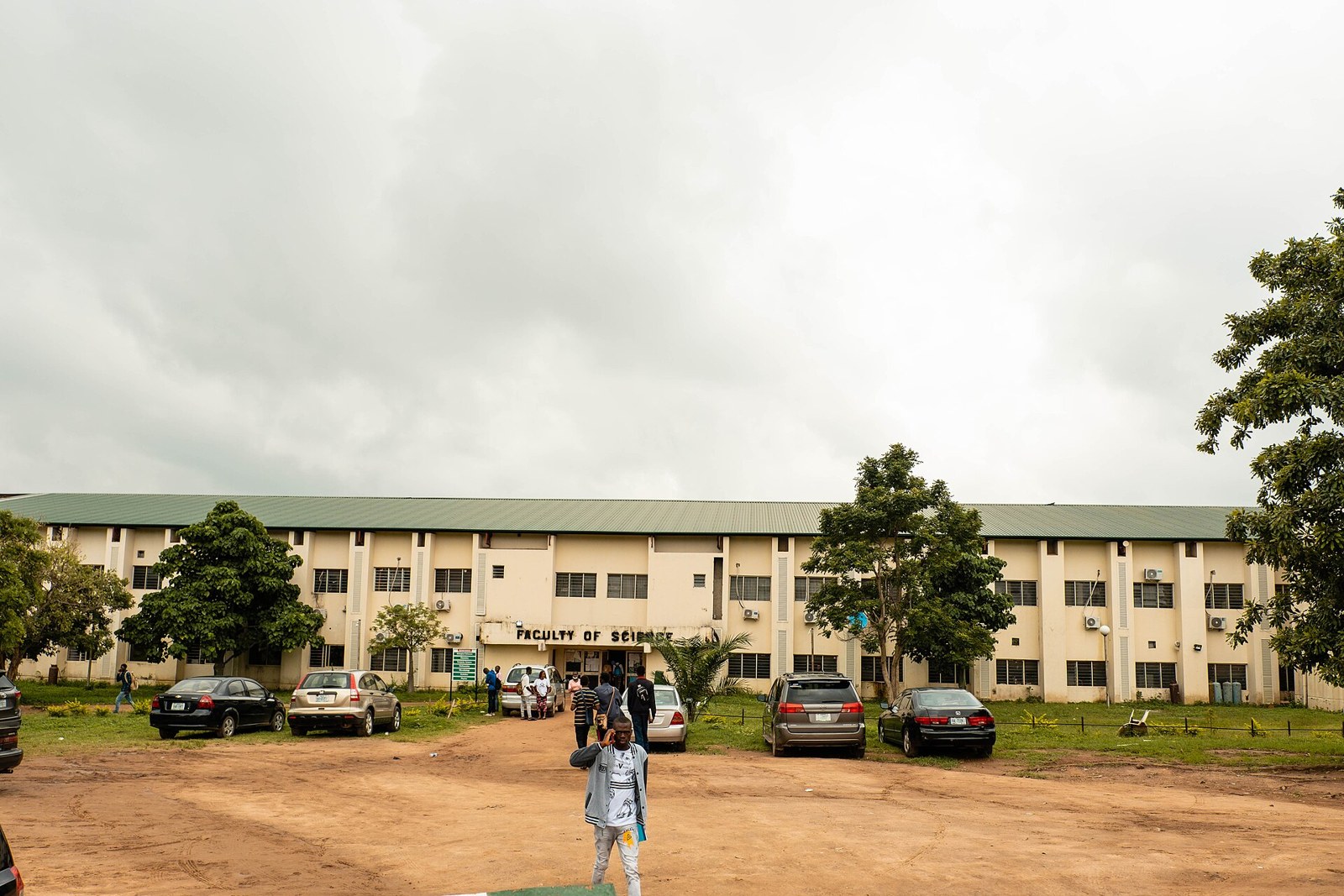
Nigeria education inflation jumped to 10.72% in August 2026, up from 7.51% in July. The annual rate covers school fees and other education services bought by households.
The figure comes from the National Bureau of Statistics (NBS), the federal agency that compiles Nigeria’s consumer price index. It published the August data on Tuesday 15 September 2026.
The jump looks like a back-to-school squeeze, and some Nigerian coverage framed it that way. The bureau’s own index tables tell a quieter story.
A rise built on last year’s fall
The education services index rose from 136.11 in July to 136.35 in August. That is a monthly increase of just 0.17%.
The bigger move happened a year earlier. In August 2025 the same index fell 2.7%, from 126.61 in July to 123.15.
An annual rate compares this month with the same month last year. When the earlier month was unusually low, the annual rate rises even if prices barely move.
Put simply, August’s index level of 136.35 is 10.72% above last August’s 123.15. It is only a fraction above July’s 136.11.
Economists call this a base effect. Calculations from the NBS tables show it accounts for nearly all of the 3.21-point jump in the annual rate.
How education fits the wider inflation picture
Headline inflation, the broadest measure of consumer prices, eased to 15.39% in August from 15.43% in July. It was the third monthly decline in a row, after 15.93% in May.
Prices across the whole basket rose 0.71% during August, down from 1.57% in July. Food inflation slowed to 19.57% a year, and core inflation fell to 13.29%.
Core inflation strips out farm produce and energy, whose prices swing with harvests and fuel costs. Its monthly reading was minus 0.06%, meaning those other prices dipped slightly.
Education services carry a weight of 6.2% in the NBS basket. The bureau says they contributed 0.95 percentage points of the 15.39% headline rate.
Services as a whole, from rent to transport fares, showed annual inflation of 15.38% in August. That was down from 16.00% in July, according to the NBS index tables.
Urban inflation stood at 15.88% and rural inflation at 14.23%. Among the states, Lagos recorded the highest annual rate at 23.68%, and Sokoto the lowest at 2.11%.
The bureau cautions against comparing states directly, because each state’s basket is weighted by its own spending patterns. Lagos is Nigeria’s commercial capital and largest city.
Where education inflation has been this year
The annual rate for education services started 2026 at 22.48% in January. It then fell steadily, to 13.74% in March and 7.21% in May.
It held between about 7% and 8% through June and July. August’s 10.72% is the highest reading since March.
The August index is based on prices collected across all 36 states and the Federal Capital Territory. The bureau uses the United Nations classification of household spending, known as COICOP.
New-term fees have not yet reached the data
Nigeria’s new school year begins in September. In Lagos, public and private primary and secondary schools resumed on Monday 14 September 2026.
That date was fixed in July by Jamiu Alli-Balogun, the Lagos State commissioner for basic and secondary education. It falls after the August survey period.
Any fee increases for the new term will therefore appear in September’s figures. The NBS calendar schedules that release for Thursday 15 October 2026.
Exam costs are also under watch. In July the Federal Ministry of Education put on hold a proposed 82% increase in fees for the 2027 school-leaving exams.
The exams are the West African Senior School Certificate Examination and the national equivalent run by NECO. The ministry said education minister Maruf Tunji Alausa had directed the pause.
What the central bank will make of it
The Central Bank of Nigeria sets interest rates through its Monetary Policy Committee (MPC). The committee meets on Monday 21 and Tuesday 22 September 2026, according to the bank’s published calendar.
The benchmark Monetary Policy Rate stands at 26.5%, after a half-point cut in February. The committee left it unchanged in May and again in July.
Announcing the decision after the committee’s 306th meeting in July, governor Olayemi Cardoso said “maintaining a cautious monetary policy stance remains appropriate”.
The committee pointed to renewed hostilities in the Middle East. It cited their likely impact on global energy prices and possible pass-through to Nigerian inflation.
Headline inflation has since eased by about half a point, from 15.91% for June.
For Nigeria education inflation, the next test is the September data. Those figures will show whether the new school year added real price pressure, or only the base effect.
More: Africa coverage, every day from The Rio Times.
Frequently Asked Questions
What was Nigeria’s education inflation rate in August 2026?
Annual inflation for education services was 10.72% in August 2026, up from 7.51% in July. The figure compares the August 2026 education price index with August 2025. It comes from the National Bureau of Statistics consumer price index, published on 15 September 2026.
Did school fees rise sharply in August 2026?
Not according to the monthly data. The education services index rose 0.17% between July and August 2026. Most of the jump in the annual rate reflects a 2.7% fall in the same index in August 2025, which lowered the base for comparison.
What was Nigeria’s headline inflation in August 2026?
Headline inflation was 15.39% in August 2026, down from 15.43% in July. It was the third consecutive monthly decline. Prices rose 0.71% during the month, food inflation was 19.57% and core inflation was 13.29%.
When will the effect of new-term school fees show up?
Lagos schools resumed on 14 September 2026, after the August price survey. Any new-term fee increases would appear in the September consumer price index. The National Bureau of Statistics has scheduled that release for 15 October 2026.
Sources: National Bureau of Statistics, CPI and Inflation Report August 2026 with index tables, National Bureau of Statistics release calendar, Nairametrics on education services inflation, ThisDay on the August inflation release, Premium Times on the August inflation release, The Telegraph (Nigeria) on the Lagos school calendar, Channels Television on the suspended exam fee increase, Central Bank of Nigeria MPC calendar, Central Bank of Nigeria policy decisions, Vanguard on the July MPC decision
This article was produced by The Rio Times’ automated newsroom system. How we use AI · Report an error
Read More from The Rio Times