Mozambique Faces US$47m Protest Rebuild Bill
Chapo says the state is rebuilding rather than repairing what the protests destroyed, and that parliament has already approved extra money. How much of it goes to this work is still open.

Budget: Mozambique
President Daniel Chapo said in Namacurra, a district of Zambézia province in central Mozambique, on Thursday 19 November 2026 that rebuilding public buildings destroyed in the 2024 post-election protests will cost more than 3 billion meticais, Mozambique’s currency (about US$47 million at 63.25 meticais per US$, the market rate of 20 November). He said the government already has an amended budget, passed by the Assembly of the Republic, Mozambique’s parliament, to pay for the work.
In the remarks reported, Chapo gave no breakdown by district and no timetable for the works. The figure is therefore an estimate by the head of state, not a tendered cost.
Key Facts
- Who. President Daniel Chapo, on a visit to Namacurra district, Zambézia province, central Mozambique.
- What. Chapo says rebuilding public buildings wrecked in the 2024 protests will cost over US$47 million.
- When. Remarks on Thursday 19 November 2026; the Assembly of the Republic passed a budget revision on 24 October.
- As of. 20 November 2026, 08:00 GMT.
Chapo says the state is rebuilding rather than repairing what the protests destroyed, and that parliament has already approved extra money. How much of it goes to this work is still open.
In Namacurra, the former office and official residence of the district administrator, the senior local government official, were burned down. Chapo said the attackers also meant to harm the administrator, who was inside the residence and escaped.
He called Zambézia the worst-hit province and named Morrumbala and Mocubela as other districts where administration offices, police stations, prosecutors’ offices and courts were wrecked. He compared the damage with the 16-year civil war, which ended with a peace accord in 1992, saying that after that war buildings needed rehabilitation while now the task is closer to rebuilding.
The bill hurts, he said, because the same money could have paid for new schools, health centres, roads and water and electricity networks. The state must instead replace what it already had.
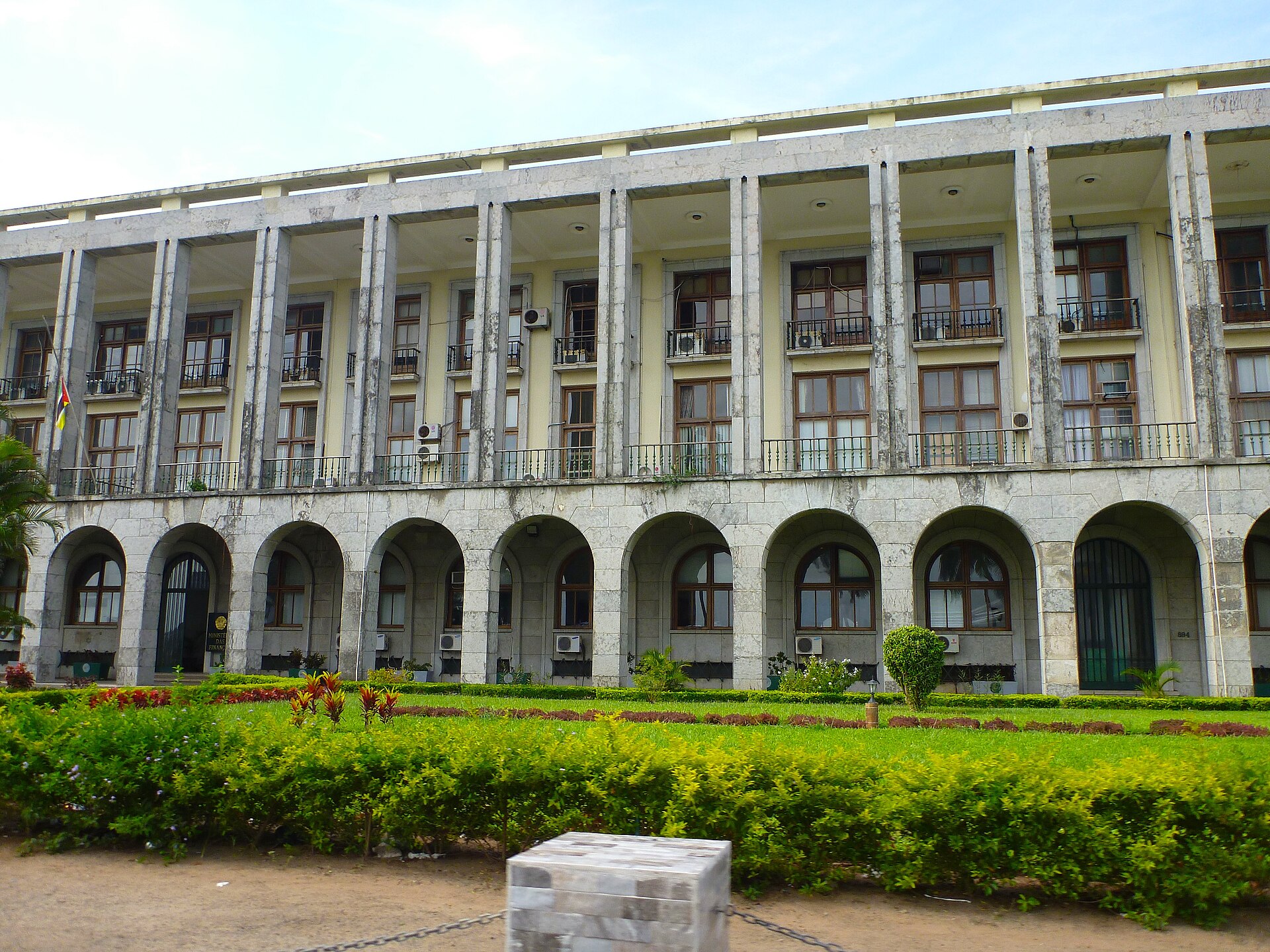
Chapo did not name the law, but his description matches a revision of the 2026 Economic and Social Plan and State Budget that the Assembly passed on Saturday 24 October 2026. Of the 226 deputies present, 164 voted in favour, all from Frelimo, the party that has governed since independence in 1975, and 62 against, from the three opposition parties.
Finance Minister Carla Louveira told the Assembly that flood recovery and repairs to public buildings wrecked in the 2024 and 2025 protests were the priority uses. She presented the proposal in a one-day extraordinary session.
The revision draws at least 3,574.6 million meticais (about US$56.5 million) from the transitional account of Mozambique’s sovereign wealth fund, which holds natural gas revenue. The Presidency, the president’s office, announced on 19 November 2026 that Chapo had signed it into law.
The government’s proposal to parliament split the money into four lines: 1,174.6 million meticais (about US$18.6 million) for flood recovery, 1,200 million (about US$19 million) for roads and bridges, 500 million (about US$7.9 million) for the Parliamentary Citadel, a new parliament complex in Mocuba district, and 700 million (about US$11 million) for public buildings damaged in post-election conflicts. The 700 million is under a quarter of Chapo’s estimate of more than 3 billion, though the final law may group the lines differently.
Opposition deputies were divided in tone. Opposition deputy Carlos Manuel of Renamo, the former rebel movement and second-largest opposition party, said it could not back the proposal in a country where people still go hungry, while Mangaze Manuel of Podemos, the largest opposition party, said it does not reject government initiatives automatically but wants transparent criteria.
Mozambique’s budget year ends on 31 December, which leaves about six weeks to sign contracts and spend whatever part of the money is meant for this work. The Presidency has given no date for the first contracts or for the first rebuilt office.
Frequently Asked Questions
Has Mozambique’s parliament approved money for the rebuilding?
Parliament passed a revision of the 2026 budget in October, and Chapo says it lets the work start. The government’s proposal earmarked 700 million meticais for buildings damaged in post-election conflicts, well below his estimate.
Why rebuild rather than repair?
Chapo said the buildings were destroyed rather than damaged. After the civil war, he noted, repairs were enough.
Where does the money come from?
The revision draws on a transitional account of the sovereign wealth fund, which holds natural gas revenue. The Presidency has not said which part pays for the protest damage.
Sources
Published Friday 20 November 2026 · Source: Presidency of Mozambique, 19 November 2026; Assembly of the Republic, budget revision of 24 October 2026 · Presidência da República · Assembleia da República
Connected Coverage
Mozambique news · Mozambique Budget Trims Spending 1.8% · IMF Says Fuel Costs Deepen Mozambique Risk · Mozambique gas money
This article was produced by The Rio Times’ automated AI newsroom. Editorial responsibility: Matthias Camenzind, Publisher and Editor-in-Chief. The Rio Times also runs Ask Rio Times, which answers from 100,000+ of our own articles, the daily Latin America Power Map, and prediction-market odds on elections and markets.. How we use AI · Report an error