Mexico City Fences Off Zócalo Ahead of October 2 March

SOCIETY · MEXICO
Key Facts
- —The country Mexico. The capital marks the 2 October 1968 killing of students at Tlatelolco, a massacre the national human rights commission (CNDH) puts at more than 300 dead.
- —What happened On 2 October 2026 the Comité 68 march is due to leave Plaza de las Tres Culturas at 4pm for the Zócalo. Metal fences went up around central buildings from 30 September.
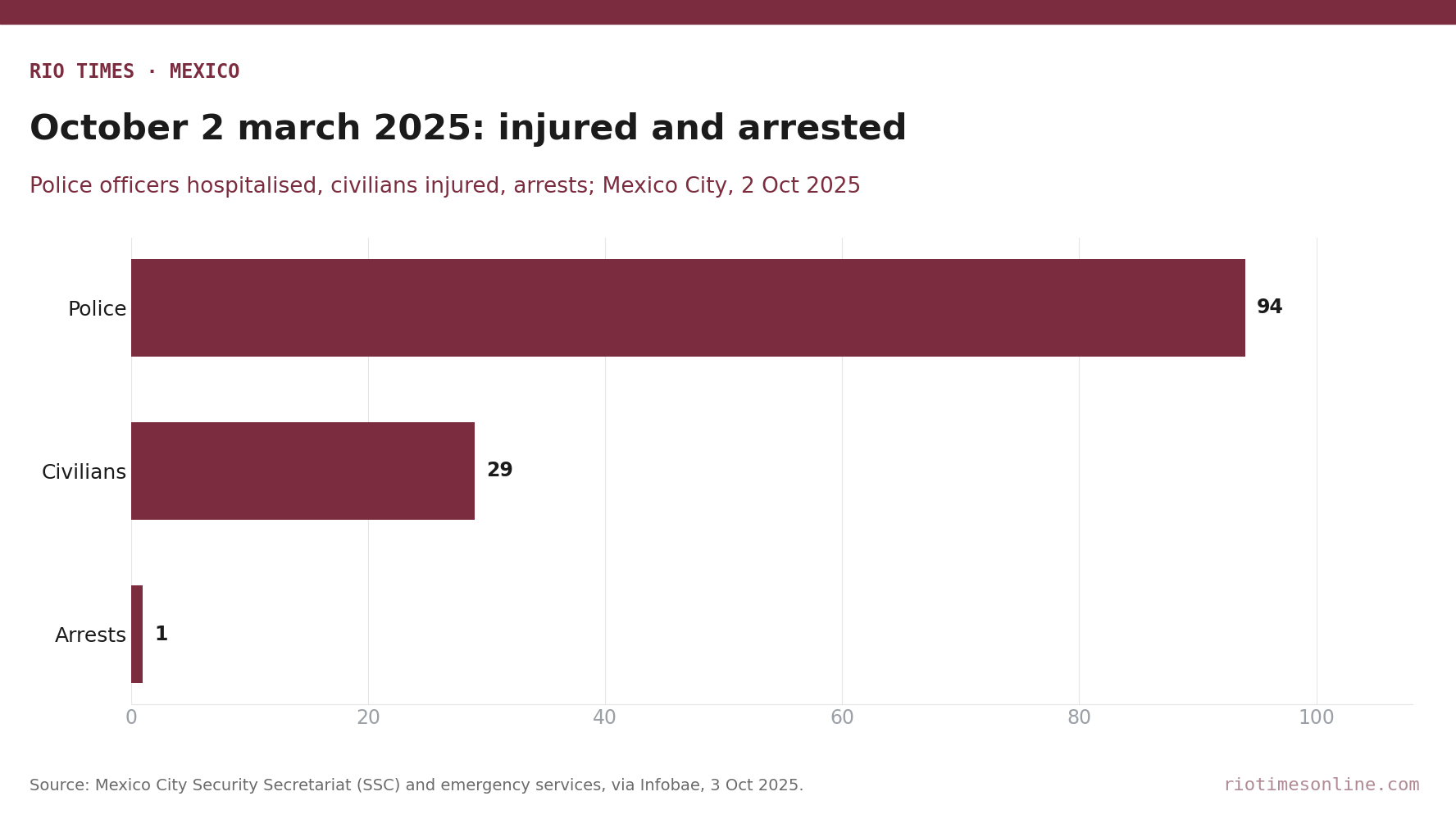
- —The numbers In the 2025 march, 94 police officers were hospitalised and 29 civilians hurt, the city said on 3 October 2025. One person was arrested.
- —What it means for you Expect closures on Eje Central, 5 de Mayo, Madero and around the Zócalo from mid-afternoon. Zócalo Metro station (Line 2) may shut temporarily.
- —Still open Whether the 2026 march stays peaceful, how many people attend and whether the city reports injuries or arrests tonight.
The October 2 march returns to Mexico City on Friday afternoon, 58 years after soldiers opened fire on students at Tlatelolco. Marchers are due to set off at 4pm from the Plaza de las Tres Culturas towards the Zócalo, the city’s main square.
This year the route ends among fenced buildings. Metal barriers over three metres high have ringed the National Palace, the cathedral and the Supreme Court since Wednesday, La Jornada reported.
Why the centre is behind fences
The barriers answer last year’s march, the most violent in recent memory. On 2 October 2025 a group of around 350 hooded protesters threw projectiles and incendiary devices at police, Infobae reported.
The Mexico City Security Secretariat (SSC) said 94 officers were taken to hospital, three in serious condition. Emergency services counted 29 injured civilians, and one person was arrested over a jewellery theft.
Merchants put their losses at around 15 million pesos, MVS Noticias reported (about US$820,000 at 18.28 pesos per dollar on 2 October 2026). It also said that later counts raised the number of injured officers to 98.
What the city has planned
The fences cover the National Palace, the Metropolitan Cathedral, the Supreme Court and the city government building. The Palacio Postal, the Palace of Fine Arts and the Bank of Mexico are also shielded. A private contractor began installing them on 30 September, according to La Jornada.
The city’s interior ministry plans 370 staff in orange vests along the route, plus ten mobile teams, La Silla Rota reported. The plan stresses prevention, dialogue and mediation rather than riot lines.
Small retailers are uneasy. “We hope this is not a repeat of last year’s violence,” said Gerardo Cleto López Becerra of ConComercio Pequeño, a shopkeepers’ group.
Getting around on Friday
Expansión and Infobae list closures on Ricardo Flores Magón, Eje Central Lázaro Cárdenas, 5 de Mayo, Madero and the streets around the Zócalo. Suggested detours include Insurgentes, Circuito Interior and Izazaga.
The Zócalo/Tenochtitlan Metro station on Line 2 may close temporarily, and Tlatelolco station on Line 3 is expected to be crowded. No general suspension of Metro or Metrobús service had been announced by Friday morning.
Last year’s clashes involved a small group within a crowd of about 10,000, by Infobae’s count. Earlier disruption in the capital, such as the teachers’ protests covered in Will Mexico City’s Teacher Protests Hit Your World Cup Trip?, mostly meant traffic delays.
Why 1968 still draws crowds
On 2 October 1968 the army fired on a student rally in Tlatelolco, ten days before the Olympic Games. The government then admitted to about 30 deaths; the CNDH documents more than 300 victims.
The anniversary has become a wider day of protest over state violence. The unresolved case of 43 missing Ayotzinapa students, examined in Mexico’s New Ayotzinapa Report Points to Funeral Home in 43 Students Case, is a recurring banner.
What Is Not Yet Known
Turnout for this year’s march is not yet known. It is also unclear whether hooded groups will return, and how police would respond if they do.
The city has not said when it will remove the fences or publish a final account of injuries and arrests.
Sources: La Jornada (1 Oct 2026); Expansión (1 Oct 2026); Infobae (2 Oct 2026); La Silla Rota (2 Oct 2026); MVS Noticias (30 Sep 2026); Infobae (3 Oct 2025).
This article was produced by The Rio Times’ automated newsroom system. How we use AI · Report an error · Editorial responsibility: Matthias Camenzind, Editor-in-Chief