Libya’s Power Struggle: The Arrests That Exposed a Nation’s Reality
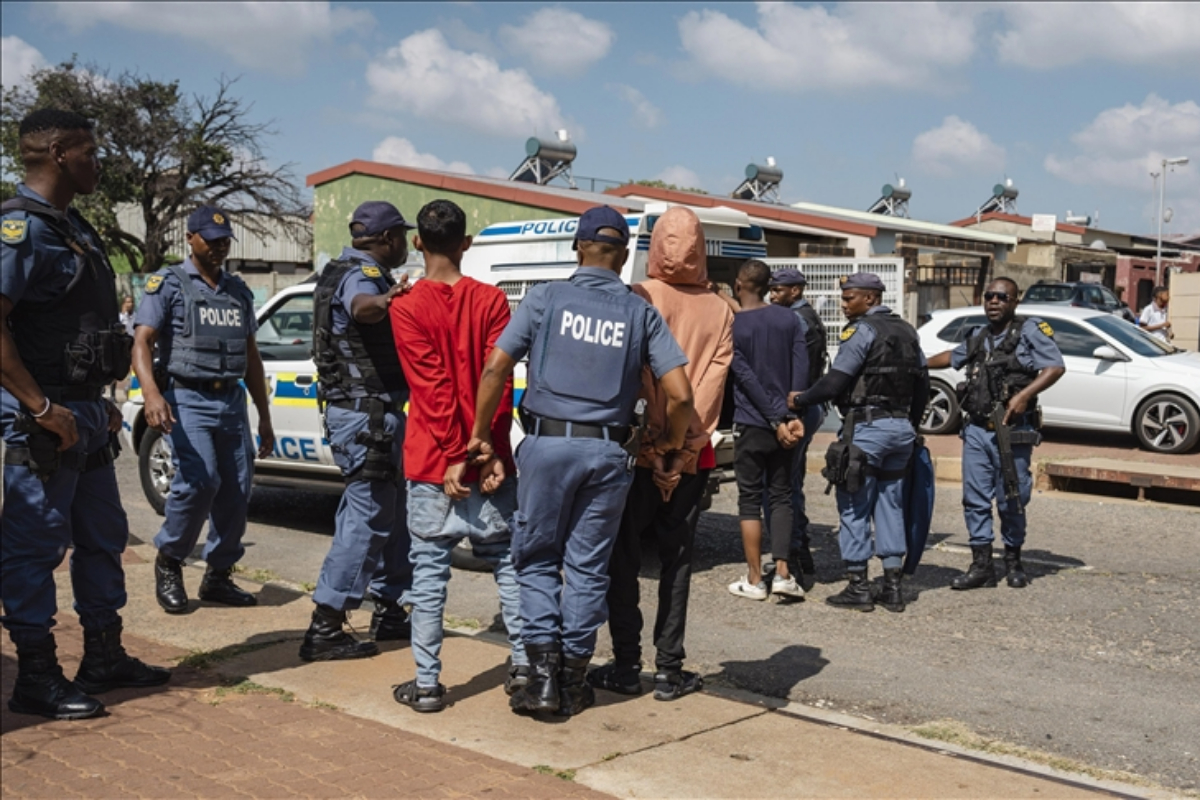
On July 26, 2024, South African police arrested 95 Libyan nationals at a farm in Mpumalanga province. These men claimed they were in South Africa to train as private security guards.
However, police investigations revealed they were undergoing military training. Authorities charged them with misrepresenting their visa applications.
Most analysts believe these men were sent by Field Marshal Khalifa Haftar, the leader of the Libyan National Army (LNA).
Haftar’s forces, based in Benghazi, have long been in conflict with the United Nations-backed Government of National Unity (GNU) in Tripoli.
Jalel Harchaoui, a Libya expert, suggests the men were likely being trained as special forces for another potential offensive against the western government.
Libya’s political landscape remains deeply influenced by military power. Armed groups use force to control territory, secure state jobs, and deter rivals.
However, this militarization has perpetuated the division between the eastern and western governments.
Since the end of open warfare in 2020, armed groups have continued to amass military power, hindering political negotiations.
The political deadlock in Libya is exacerbated by the self-serving interests of its political elite. The east and west disagree on the sequencing of elections.
The east wants immediate presidential elections, while the west advocates for constitutional reforms first.
This impasse benefits the political elite, who exploit the country’s resources. The so-called “Big Five” political figures, spanning both east and west, are accused of living off the chaos.
International Involvement
International involvement in Libya is complex. Turkey and the United Arab Emirates (UAE) are the primary foreign powers.
Turkey supports the Tripoli-based government, while the UAE backs Haftar. Russia has expanded its military presence in eastern Libya, leveraging its alliance with Haftar.
This international meddling further complicates Libya’s path to stability. Human rights violations remain rampant in Libya. Armed groups commit abuses, and the judicial system is weak.
Additionally, arbitrary detentions, torture, and forced evictions are common. The criminal justice system struggles with due process issues.
The lack of a permanent constitution and the establishment of a constitutional court in Benghazi without broad consensus have further complicated the legal landscape.
Libya’s path to stability is fraught with challenges. The entrenched military power of armed groups, the corruption of political elites, and the complex web of international involvement make it difficult to envision a clear solution.
Significant external pressure, particularly from the United States, might be necessary to leverage a resolution.
However, the international community’s current resignation to the status quo suggests that Libya’s turmoil is far from over.
Why It Matters
Libya’s instability has far-reaching implications. The country’s strategic location and vast oil reserves make it a focal point for international interests.
In addition, the prolonged conflict has led to a humanitarian crisis, with thousands displaced and many living in dire conditions.
The lack of a unified government hinders development and exacerbates corruption. Stabilizing Libya is crucial for regional stability and global security.
Libya’s political and social order is deeply intertwined with military might. The recent arrest of Libyan nationals in South Africa underscores the ongoing militarization in the country.
These complex dynamics continue to hinder Libya’s progress toward stability and unity. The international community must recognize the importance of a unified and stable Libya and take decisive action to support a political resolution.
More: South Africa news in English, every day from The Rio Times.
This article was produced by The Rio Times’ automated newsroom system. How we use AI · Report an error
Part of our ongoing coverage
Africa: The New Scramble — the great-power contest over the continent.
Read More from The Rio Times