Lesotho Explained: Politics, Economy and Life in 2026
LESOTHO · COUNTRY GUIDE
Key Facts
- What it is A mountain kingdom entirely inside South Africa, led by King Letsie III and Prime Minister Sam Matekane.
- People About 2.4 million people; the last census, in 2016, counted 2,007,201.
- Money Average income is US$1,280 a year, and the economy grew 2.8% in early 2026.
- US trade Duty-free access to the US market under AGOA now runs to 31 December 2028.
- For visitors US citizens need no visa for 30 days; a general election is due in 2027.
Lesotho is a mountain kingdom of about 2.4 million people that sits entirely inside South Africa. It marked 60 years of independence on Sunday 4 October 2026.
For a US reader, three things matter: clothing exports, water and travel. Lesotho sells garments to the US duty-free under AGOA, the African Growth and Opportunity Act, which now runs to 31 December 2028.

Lesotho at a Glance
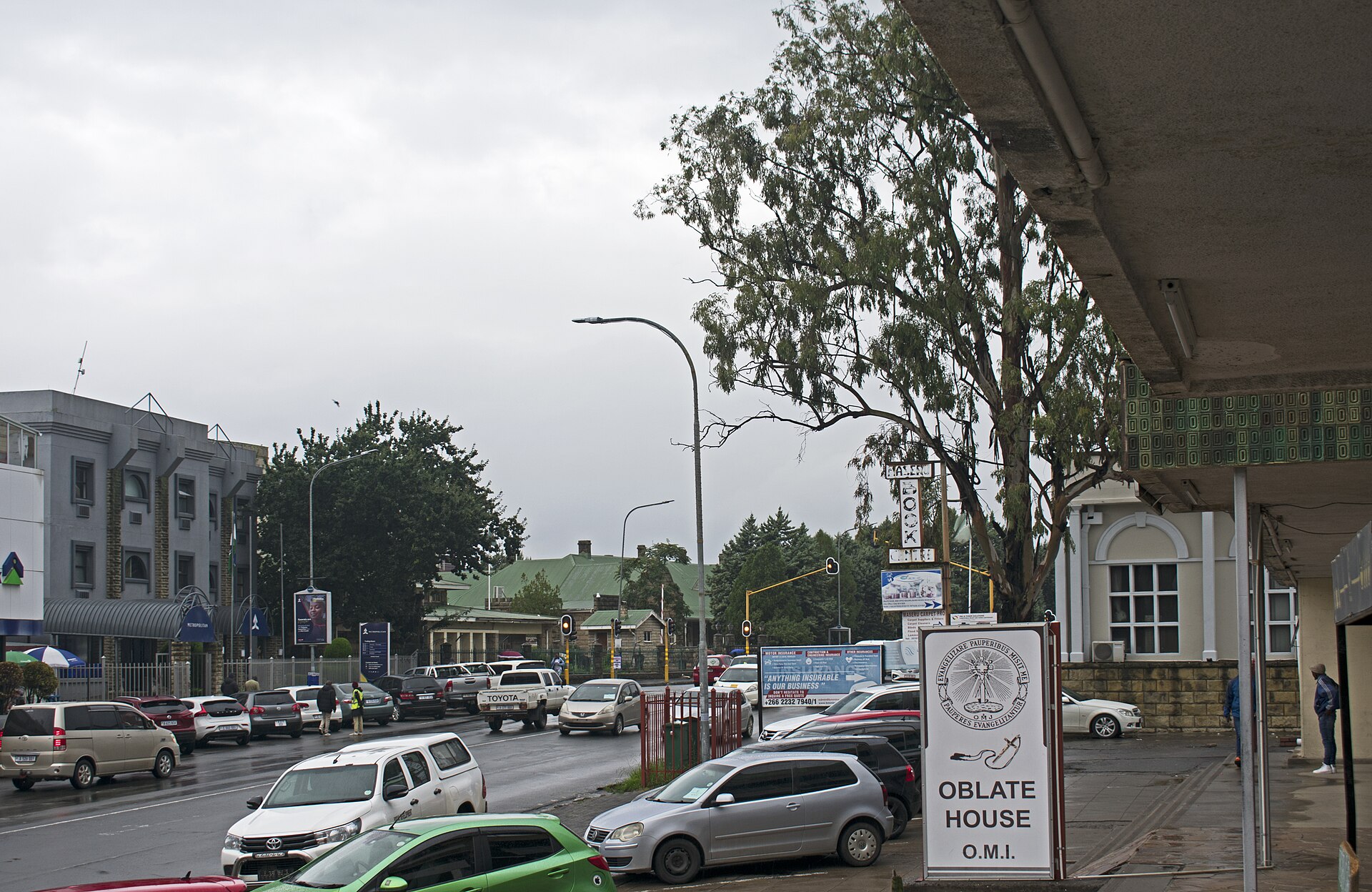
Lesotho is a landlocked kingdom with Maseru as its capital, and all travel in or out passes through South Africa. The government says the country gained independence on 4 October 1966.
The World Bank, the global development lender, puts the population at about 2.4 million. Its 2025 series shows 2,363,325 people.
The last census, run by the Bureau of Statistics in 2016, counted 2,007,201 residents. A new census took place with 11 April 2026 as its reference night, and the results are not yet published.
The country is small, poor and heavily tied to its neighbour. The World Bank classes it as lower-middle-income, with income of US$1,280 per person in 2025.
How Lesotho Is Governed
Lesotho is a constitutional monarchy. King Letsie III is head of state, with ceremonial functions, while executive power rests with the government.
Sam Matekane has been Prime Minister since 2022. His party, the Revolution for Prosperity, governs in coalition with the Movement for Economic Change, the Alliance of Democrats and the Basotho Action Party.
Parliament has two chambers, set out in the Constitution of Lesotho. The National Assembly has 120 members, of whom 80 are elected in constituencies and 40 are allocated by proportional representation.
The Senate has 33 members, made up of 22 Principal Chiefs and 11 people nominated by the King. Principal Chiefs are the country’s senior traditional leaders, and the King acts on the advice of the Council of State.
The next general election is due in 2027, and no date has been announced. The Independent Electoral Commission, which runs elections, said in August 2025 that constituency boundaries and the voter register were on track.
The same commission warned that formal rules for redrawing constituency boundaries still needed urgent attention. That gap is one of the legal questions to watch before the vote.
Lesotho’s Economy in Numbers
The economy grew 2.82% in the first quarter of 2026 compared with a year earlier, according to the Bureau of Statistics. Business services grew 10.3%, finance 10.1% and hotels and restaurants 9.7%.
Manufacturing, which includes the clothing factories, shrank 2.3% in the same quarter. Mining grew 2.0%. The World Bank expects growth to slow to 1.2% in both 2026 and 2027, then reach 1.4% in 2028.
Over the past decade growth averaged only 0.5% a year. Jobs are the deeper problem.
The Bureau of Statistics’ 2024 Labour Force Survey puts unemployment at 30.1%, and the World Bank says poverty remains widespread in rural areas. Public debt was 53.1% of GDP in 2025, and the World Bank expects a small budget deficit of 0.4% of GDP in 2026.
GDP, or gross domestic product, is the value of everything the economy produces in a year. Inflation is low.
Prices rose 2.6% in the year to August 2026, with transport costs up 12.2%, and the monthly price index did not change from July.
The Loti, the Rand and the Central Bank
Lesotho’s currency is the loti, whose plural is maloti, and it is tied to the South African rand. On 2 November 2026, US$1 bought about 16.67 maloti, the same as the rand rate.
The Central Bank of Lesotho says it will act to safeguard that peg. Its Monetary Policy Committee held the policy rate at 6.75% on Friday 24 July 2026.
South Africa’s central bank kept its own rate at 7.00% a day earlier, on Thursday 23 July 2026. Lesotho’s rate therefore sits 0.25 percentage points below it.
Foreign reserves were US$1,353 million on 16 July 2026, enough to pay for 5.4 months of imports. The central bank projects they will fall to US$1,217 million by March 2027.
The committee said domestic activity has weakened and that the earlier moderate rebound was not sustained. It also nudged its medium-term inflation outlook up slightly, with risks tilted to the upside.
Garments, Diamonds and the US Trade Deal
Textiles are the largest private employer in Lesotho, according to the World Bank. American trade rules therefore matter enormously for jobs in the factories.
AGOA is a US law that gives eligible African countries duty-free access to the American market. It lapsed on 30 September 2025 and was restored in February 2026 only to the end of that year.
A new US law extended it from Wednesday 2 September 2026. Lesotho’s Ministry of Trade, Industry and Business Development says exporters now have duty-free access for two years, to 31 December 2028.
The extension covers 32 African countries. The programme has lapsed before, so a future gap cannot be ruled out.
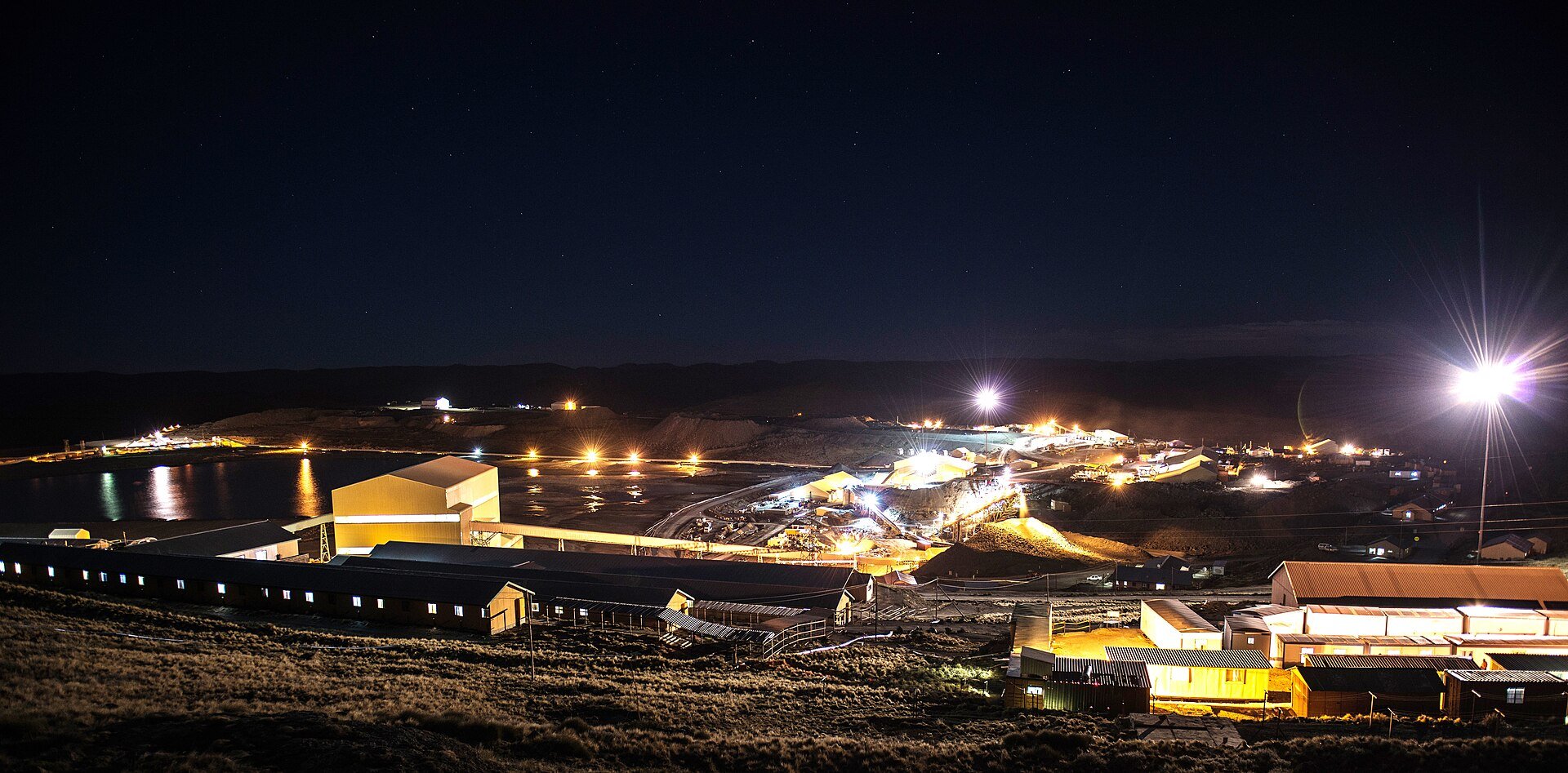
Diamonds are the second pillar. Gem Diamonds, a diamond miner, owns 70% of the Letšeng mine in the highlands.
In the first half of 2026, Letšeng sold 42,624 carats at an average of US$1,395 per carat, worth US$59.5 million. Eight stones sold for more than US$1 million each, together US$16.1 million.
In June the mine recovered a 346.99-carat white diamond and named it the Lesotho Jubilee. The company said it would be sold after the half-year ended on 30 June.
Water: The Highlands Project
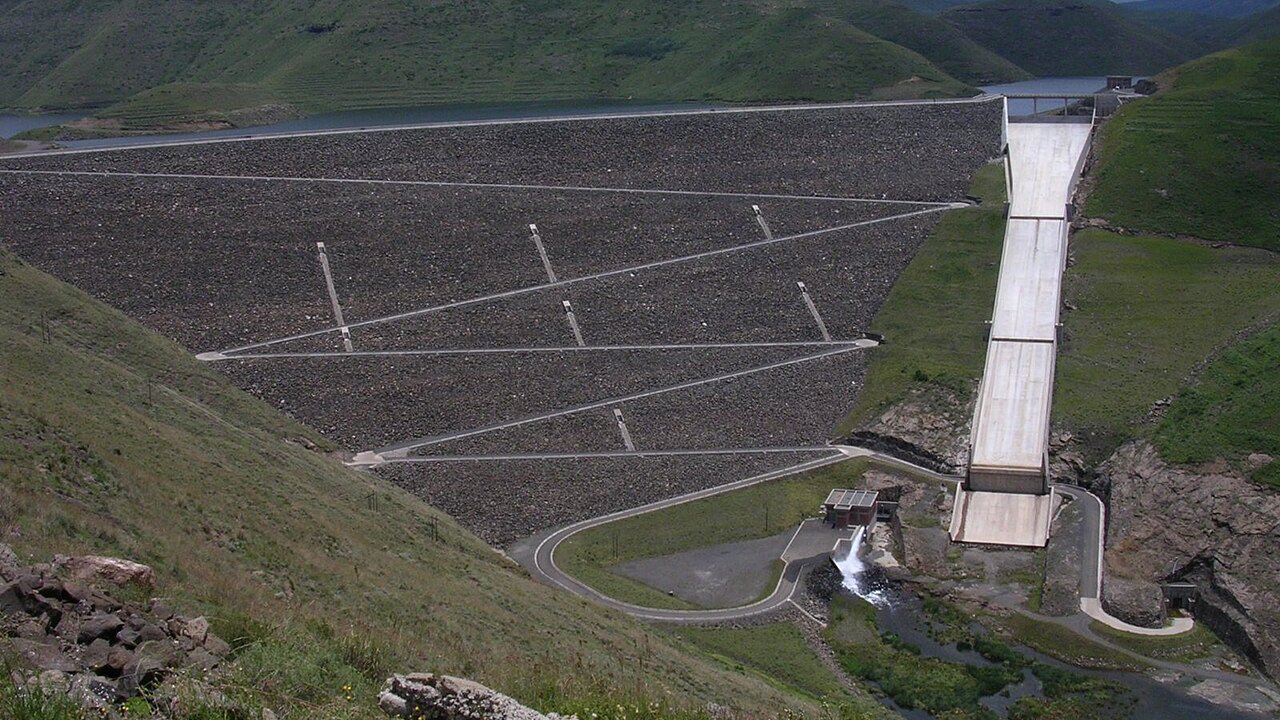
Lesotho sells water to South Africa. The Lesotho Highlands Water Project was built under a 1986 treaty between the two governments.
It sends water to the Gauteng region around Johannesburg and generates hydropower for Lesotho. Phase I was completed in 2003 and inaugurated in 2004.
Phase II is under way, with dam and tunnel construction having started in late 2022. On 1 October 2026 the Lesotho Highlands Development Authority, which runs the project, reported the Polihali Dam 56% complete.
The transfer tunnel was 60% complete on the same date. The dam wall will stand 166 metres high, and the tunnel will run about 38 kilometres.
Once Phase II is finished, supply to Gauteng will rise from 780 million to 1,270 million cubic metres a year. Polihali accounts for about 490 million of that increase.
The authority also reports the Katse Dam at 85.47% of capacity and the Mohale Dam at 100.40% on 1 November 2026. Our report on the Polihali Dam court case covers the dispute with affected villagers.
Visiting Lesotho: Entry, Safety and Health
The US State Department says US citizens need no visa for stays of 30 days or less. They can request up to five 30-day extensions from the Office of Immigration, for 180 days in total.
After 180 days a visa must be applied for online. That page was last updated on 7 July 2023, so check it before you book.
Passports must be valid on entry, and the State Department suggests three months of remaining validity. Yellow fever vaccination proof is needed for travellers arriving from or through a yellow fever country.
The British government says its citizens need no visa for up to 90 days. Their passport must be valid for 90 days after arrival and have four blank pages.
Neither government page lists an entry fee. Because all travel to Lesotho passes through South Africa, you must also meet South Africa’s entry rules.
The State Department rates Lesotho Level 2, “Exercise Increased Caution”, in an advisory reissued on 17 September 2024 because of crime. It cites armed robberies and carjackings and warns that police may be slow to respond.
The British government advises against walking alone after dark and against local minibus taxis. It also says roads are poor and animals are a hazard, so it suggests driving in daylight.
What It Means for You
Investors and exporters: Lesotho is a small, concentrated economy that rests on one trade law, one diamond mine and a water treaty. A change in US trade rules or a swing in rough-diamond prices moves the whole country.
Travellers and expats: entry is easy for short stays, but crime and road safety need planning. For tax, ownership and company rules, read our guide to doing business in Lesotho.
Readers following the story: the AGOA extension to 2028 and the Letšeng diamond royalty question are the two threads with the most money attached. Our Africa coverage has the wider region.
What Is Not Known
The 2026 census results, the election date and the Polihali completion and filling dates have not been published. The central bank has not stated when its Monetary Policy Committee meets next.
The government pages we reviewed give no visa or permit fees, and no residence, tax or healthcare costs for newcomers. Those details should be confirmed with the Ministry of Home Affairs and Revenue Services Lesotho before any move.
More: Latin America news in English, every day from The Rio Times.
Frequently Asked Questions
Where is Lesotho?
Lesotho is a landlocked mountain kingdom entirely surrounded by South Africa. Its capital is Maseru, and it marked 60 years of independence on 4 October 2026.
Who runs Lesotho?
King Letsie III is head of state with ceremonial duties. Prime Minister Sam Matekane leads a four-party coalition government and has held office since 2022.
Does Lesotho have duty-free access to the US?
Yes, under AGOA, which now runs to 31 December 2028. The law lapsed once, on 30 September 2025, so gaps remain possible.
Do US citizens need a visa for Lesotho?
No visa is needed for stays of 30 days or less, according to the State Department. Extensions of up to 180 days in total are possible through the Office of Immigration.
When is the next election in Lesotho?
A general election is due in 2027, and no date has been announced. The Independent Electoral Commission is preparing constituency boundaries and the voter register.
Sources: World Bank, Lesotho country overview (accessed 2 November 2026), 2 November 2026; Lesotho Bureau of Statistics, key indicators, CPI August 2026 and first-quarter 2026 GDP report, 2 November 2026; Central Bank of Lesotho, 120th Monetary Policy Committee Statement, 24 July 2026, 24 July 2026; Gem Diamonds, H1 2026 trading update, 28 July 2026, 28 July 2026; Lesotho Highlands Development Authority, Phase II progress, 1 November 2026; Government of Lesotho, 2 November 2026; US State Department, Lesotho travel advisory and country information, 2 November 2026; UK Foreign, Commonwealth and Development Office, Lesotho travel advice, 2 November 2026.
This article was produced by The Rio Times’ automated newsroom system. How we use AI · Report an error · Editorial responsibility: Matthias Camenzind, Editor-in-Chief