Lesotho Economy Gets a Reprieve as AGOA Runs to 2028
LESOTHO · TRADE & ECONOMY
Key Facts
- —The reprieve The United States Congress voted on 1 September 2026 to extend the African Growth and Opportunity Act to 31 December 2028, by 370 votes to 48.
- —The gap before it The act had expired on 30 September 2025 and was restored retroactively in February 2026, but only through the end of 2026.
- —What it protects Around 34,000 garment jobs, roughly three quarters held by women. Apparel is about 35% of Lesotho’s exports, mostly to the United States.
- —The forecast The World Bank puts growth at about 2% in 2025 and projects an average near 1.5% across 2026 to 2028. It has not raised that outlook.
- —The transfers Customs union receipts reached 26% of GDP in the last fiscal year, against a ten-year average near 19.5%. Remittances add close to 20% of GDP.
- —The build The Polihali dam and its 38.5 kilometre transfer tunnel are the second phase of the highlands water scheme, projected at about 53 billion rand.
Lesotho spent a year not knowing whether its largest export industry had a market. It now has one until the end of 2028. That is a reprieve rather than a recovery.
A Reprieve, Not a Recovery
The African Growth and Opportunity Act gives qualifying African exporters duty free access to the United States market. For Lesotho it is not one trade preference among many. It is the reason the garment industry exists.
The act expired on 30 September 2025. In the months that followed, factory orders were cancelled, production slowed and some facilities shut. The government declared a national disaster. A 15% United States tariff on Lesotho took effect on 7 August 2025, after an initially announced rate of 50% in April.
Congress restored the act retroactively on 3 February 2026, but only through 31 December 2026. A further extension passed the House on 1 September 2026 by 370 votes to 48, carrying it to 31 December 2028. Reporting places the signature in early September, attached to the continuing resolution funding the United States government.
The extension covers 32 of roughly 45 sub-Saharan countries and, importantly for Lesotho, extends the third country fabric provision. That clause lets producers use imported fabric and still qualify, which is what makes a landlocked country with no textile mills able to export garments at all.
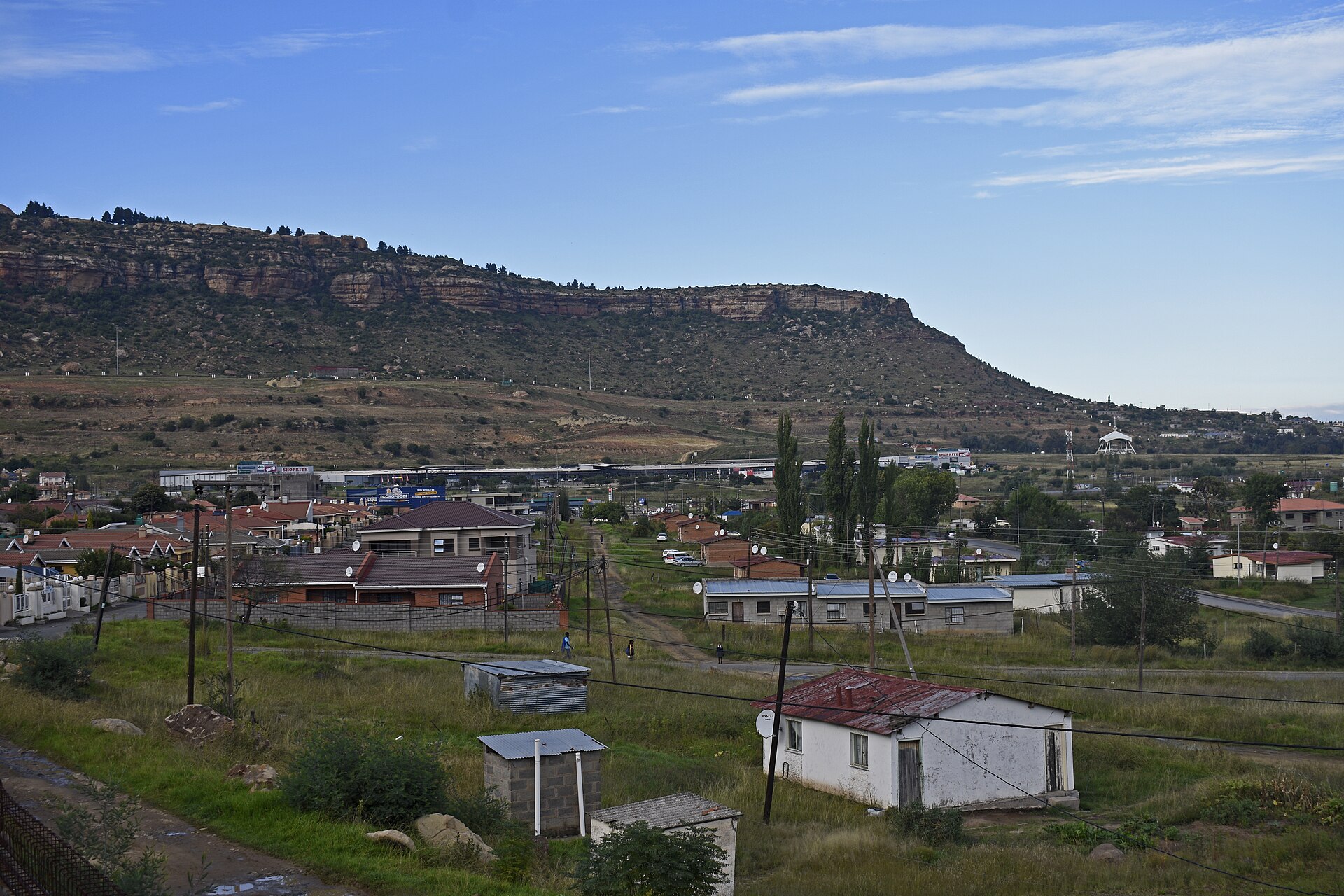
Thirty-Four Thousand Jobs
The industry employs around 34,000 garment workers, roughly three quarters of them women. Apparel is about 35% of Lesotho’s exports, and the great majority goes to the United States.
Development researchers estimate each worker supports about four dependants. National unemployment runs above 30%. Those two figures together explain why a trade preference in Washington is treated as domestic policy in Maseru.
No verified count of jobs lost during the lapse has been published. The qualitative account is consistent across sources: cancelled orders, slowed lines, closures.
Two years of certainty is better than one. It is still two years. Apparel buyers plan seasons ahead, and site decisions further ahead than that. A preference expiring at the end of 2028 does not support the kind of investment that would deepen the industry.
Why the World Bank Still Forecasts 1.5%
It is worth being precise here, because the picture is often reported more optimistically than the institutions describe it.
The World Bank’s published position, last updated in May 2026, puts growth at about 2% in 2025 and projects an average of about 1.5% across 2026 to 2028. It names weakness in the textile and diamond sectors and a weaker external environment. Among its listed downside risks is continued uncertainty over the trade preference beyond 2026, which the September extension has since addressed.
The IMF works on fiscal years running April to March, so its figures are not directly comparable. It recorded growth of 2.2% in the 2024 fiscal year and expected a fall to 1.4% in the following one. Its 2025 assessment described a government led growth model that has struggled to deliver, and it explicitly assumed renewal of the trade preference was unlikely. That assumption has been overtaken.
So the honest summary is that the forecasts were made before the reprieve, and the reprieve removes one named risk rather than changing the growth model.
An Economy of Transfers
Lesotho’s public finances rest on money that arrives from elsewhere, and that is the structural fact behind everything else.
Customs union receipts from the Southern African Customs Union reached 26% of GDP in the 2024 fiscal year, against a ten-year average near 19.5%. That was unusually high, and the World Bank records a sharp decline afterwards. The budget surplus fell from 9.5% of GDP in 2024 to about 3% in 2025 as those receipts dropped, partly offset by higher water royalties.
Remittances, overwhelmingly from South Africa, ran at 19.8% of GDP in the 2024 fiscal year and are projected near 19.6% thereafter. Historically they have been 20% to 22%.
Water royalties are the third leg. Public debt was 56.8% of GDP as at March 2025 on the IMF’s measure, with 80% of it owed externally. The World Bank records debt falling to about 51% of GDP in calendar 2025, using different definitions and periods. Inflation eased to 4.4% in 2025 from 6.1%, helped by the currency’s peg to the South African rand, and the policy rate stood at 6.5% in January 2026.
Lesotho also recorded a current account surplus of 2.2% of GDP in the 2024 fiscal year, its first since 2007.
The Water Beneath the Mountains
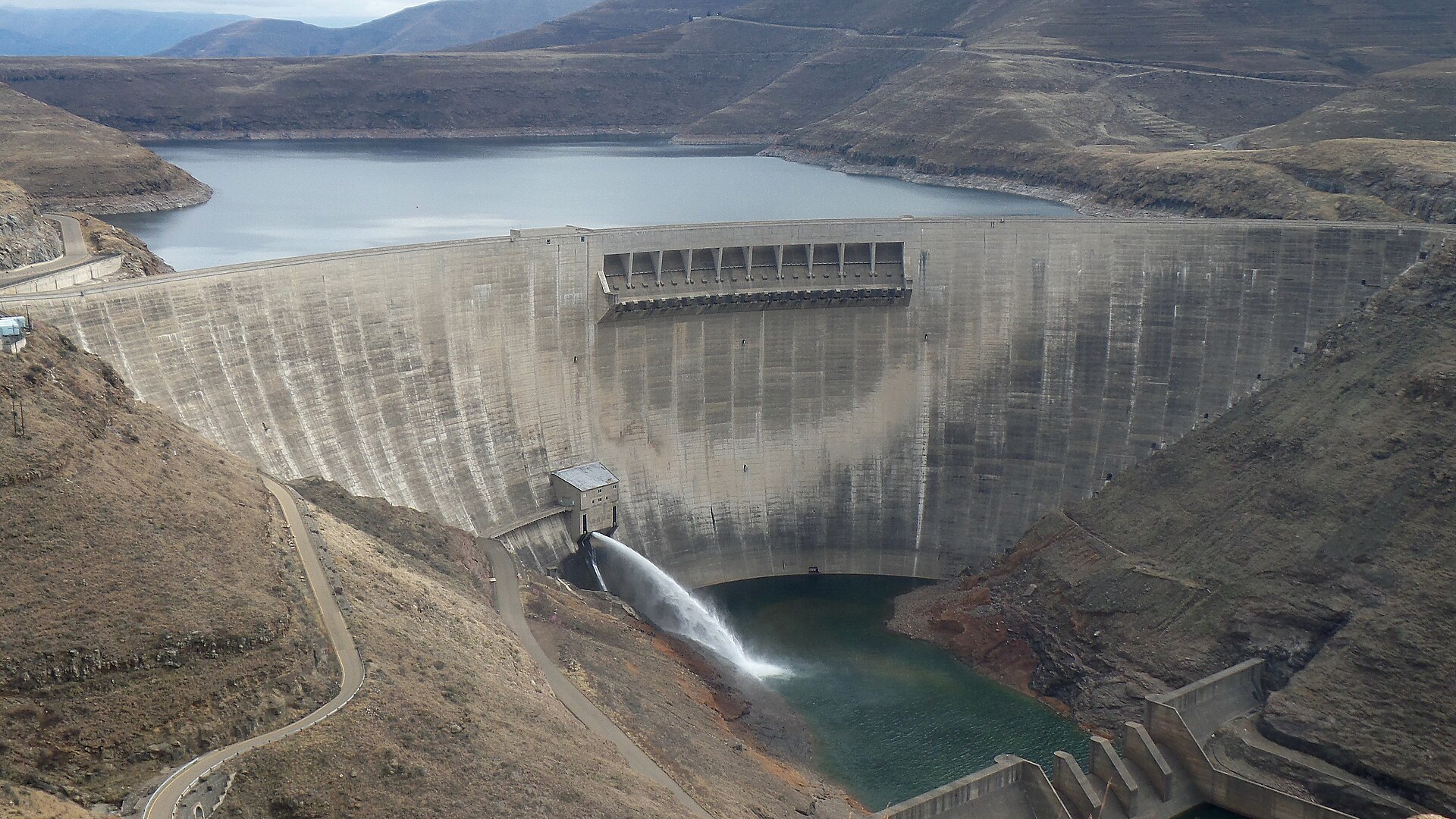
The second phase of the Lesotho Highlands Water Project is the largest thing being built in the country, and it is the main reason construction has offset weakness elsewhere.
The components are the Polihali dam, a 38.5 kilometre transfer tunnel to the existing Katse dam, the Oxbow hydropower scheme and three major bridges, in the Mokhotlong highlands. As of a briefing in September 2025, the Polihali dam was about 36% complete and reported on schedule. It is a 165 metre concrete faced rockfill structure creating a reservoir of 5,053 hectares.
Water delivery is expected in the 2028 to 2029 window. The Oxbow hydropower scheme, at 80.3 megawatts installed and about 180 gigawatt hours a year, is expected to commission around 2030 to 2031. The Senqu bridge, 825 metres long and 90 metres high, has slipped to February 2027 from November 2026.
The cost tells its own story. The 2008 feasibility estimate was 8 billion rand. The current long term projection is about 53 billion rand, with 18.9 billion spent to date. Water transfer to South Africa rises from 780 million cubic metres a year under the first phase to over 1,270 million.
Around 2,384 households are affected and 270 require resettlement. Compensation of 154 million rand has been paid. Peak employment on the Senqu bridge alone reached 1,300.
What This Means If You Work or Invest Here
For anyone in or supplying the garment sector, the planning horizon is now the end of 2028. That is long enough to commit to orders and to keep lines running. It is not long enough to justify new plant, and buyers will price that in.
For investors more broadly, the water scheme is the reliable demand in the economy. Construction, logistics, accommodation and services around the highlands programme have a defined runway to the end of the decade.
The currency peg to the rand means Lesotho imports South African monetary policy and much of its inflation. That is a stabiliser and a constraint at once, and it makes South African conditions the single most useful leading indicator for anyone operating here.
The transfer dependence is the risk to understand. An economy where customs receipts, remittances and water royalties dominate is exposed to decisions taken in Pretoria and Washington rather than in Maseru. The last twelve months were a demonstration of exactly that.
What Is Not Known
The exact date of signature on the trade preference extension could not be confirmed against a primary United States government record. Congress passed it on 1 September 2026; reporting places the signature in the days that followed.
Whether the 15% United States tariff on Lesotho remains in force alongside restored duty free treatment is unresolved, and no source we found addresses how the two interact. This is the most consequential open question for the garment sector.
No verified count of garment jobs lost during the lapse has been published.
The water royalty amount is not published in either the IMF or World Bank documents we reviewed; both describe royalties as higher without giving a figure.
And the current completion percentage of the water scheme is not published. The most recent verified figure is about 36%, from September 2025.
Connected Coverage
- Taxes in Morocco for Expats 2026: The 37% Band Starts Early
- Kenya Residency Visa Requirements 2026: Class K Starts at 35
- Is Tanzania Safe for Expats in 2026: A Level 3 With One Hotspot
Sources
- World Bank — Lesotho country overview, updated May 2026
- IMF — Lesotho 2025 Article IV consultation, September 2025
- ODI — what the 2026 trade preference renewal means for Lesotho’s garment sector
- Engineering News — Lesotho Highlands Water Project phase II progress briefing
Frequently Asked Questions
Has the World Bank raised its growth forecast for Lesotho?
No. The World Bank’s published position, last updated in May 2026, puts growth at about 2% in 2025 and projects an average near 1.5% across 2026 to 2028. The genuine good news is the trade preference extension, which post-dates that assessment.
How long does AGOA now run for Lesotho?
To 31 December 2028. Congress passed the extension on 1 September 2026 by 370 votes to 48, after an earlier retroactive restoration in February 2026 that ran only to the end of 2026.
How important are garments to Lesotho?
Apparel is about 35% of exports, overwhelmingly to the United States, and employs around 34,000 people, roughly three quarters of them women. National unemployment runs above 30%.
What else supports the economy?
Customs union receipts, which reached 26% of GDP in the 2024 fiscal year, remittances from South Africa at close to 20% of GDP, and water royalties from the highlands scheme that supplies South Africa.
This article was produced by The Rio Times’ automated newsroom system. How we use AI · Report an error
Read More from The Rio Times