Lesotho’s Garment Industry Wins a Reprieve as AGOA Runs to 2028
Economy · Lesotho
South africa latest: South africa news — latest coverage · eThekwini Shisanyama Festival in Durban, South Africa, Returns 26 September
—The stakes. Lesotho’s economy remains a South African satellite dependent on SACU transfers, labour remittances, water royalties, diamonds and one dominant export sector: garments for the US market.
—The date. AGOA was extended to 31 December 2028 on 2 September 2026, lifting the tariff cliff the garment industry had been bracing for.
—The relief. Washington set the rate at 15 percent in July 2025 rather than the 50 percent announced in April, and the replacement duties lapsed on 29 July 2026, restoring duty-free access.
—The response. Prime Minister Sam Matekane declared a two-year national state of disaster in July 2025 as the government warned that up to 40,000 garment jobs were at risk.
—The buffer. The Highlands Water Project Phase II and Letseng diamond royalties provide non-US dollar revenues, but neither is large enough to replace lost garment wages or SACU volatility.
Maseru is learning that tariff reprieves do not rebuild cancelled order books. The duties are gone and AGOA now runs to 2028, but the buyers who left in 2025 have not come back.
A Satellite Economy With Few Shock Absorbers
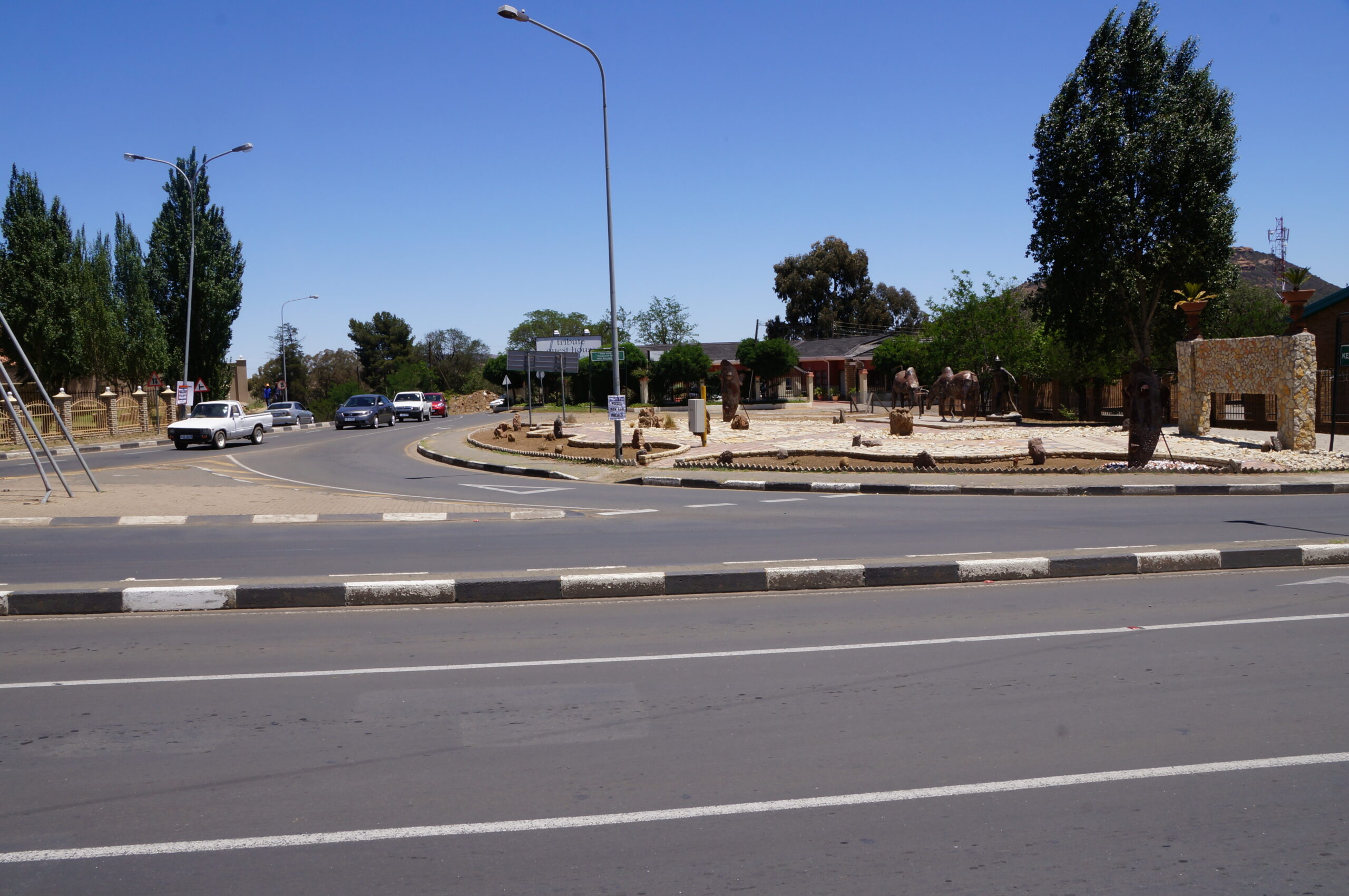
Lesotho is a landlocked enclave entirely surrounded by South Africa, with no direct sea access and little room for independent monetary or trade policy.
The IMF describes the kingdom as closely integrated with South Africa through trade, finance and labour migration, making Pretoria’s cycle Maseru’s cycle.
The Southern African Customs Union, or SACU, pools import duties collected by member states and redistributes them through a revenue-sharing formula.
Those SACU transfers have ranged from 14.0 percent to 26.1 percent of GDP in the IMF’s 2025 Article IV table, a sequence that shows both their scale and their volatility.
Remittances from Basotho workers in South African mines and homes form a second current-account lifeline, one that transmits every South African wage shock directly into Lesotho’s villages.
SACU Receipts Remain the Fiscal Anchor
The IMF warns that Lesotho’s fiscal position remains vulnerable to volatility in SACU transfers, a vulnerability that has repeatedly derailed budget plans.
Recent data in the IMF table show SACU transfers normalising around 19.7 to 20.4 percent of GDP after earlier sharp drops, but the series has no guaranteed floor.
Because SACU revenues are collected at the customs union level, Lesotho cannot unilaterally raise its share or alter the formula when South African imports slow.
This dependence means that any reform effort must build non-SACU tax capacity, a task made harder when layoffs shrink the formal wage base.
The Garment Industry Before the Shock
Lesotho’s textile and garment sector was built around duty-free access to the United States under the African Growth and Opportunity Act, known as AGOA.
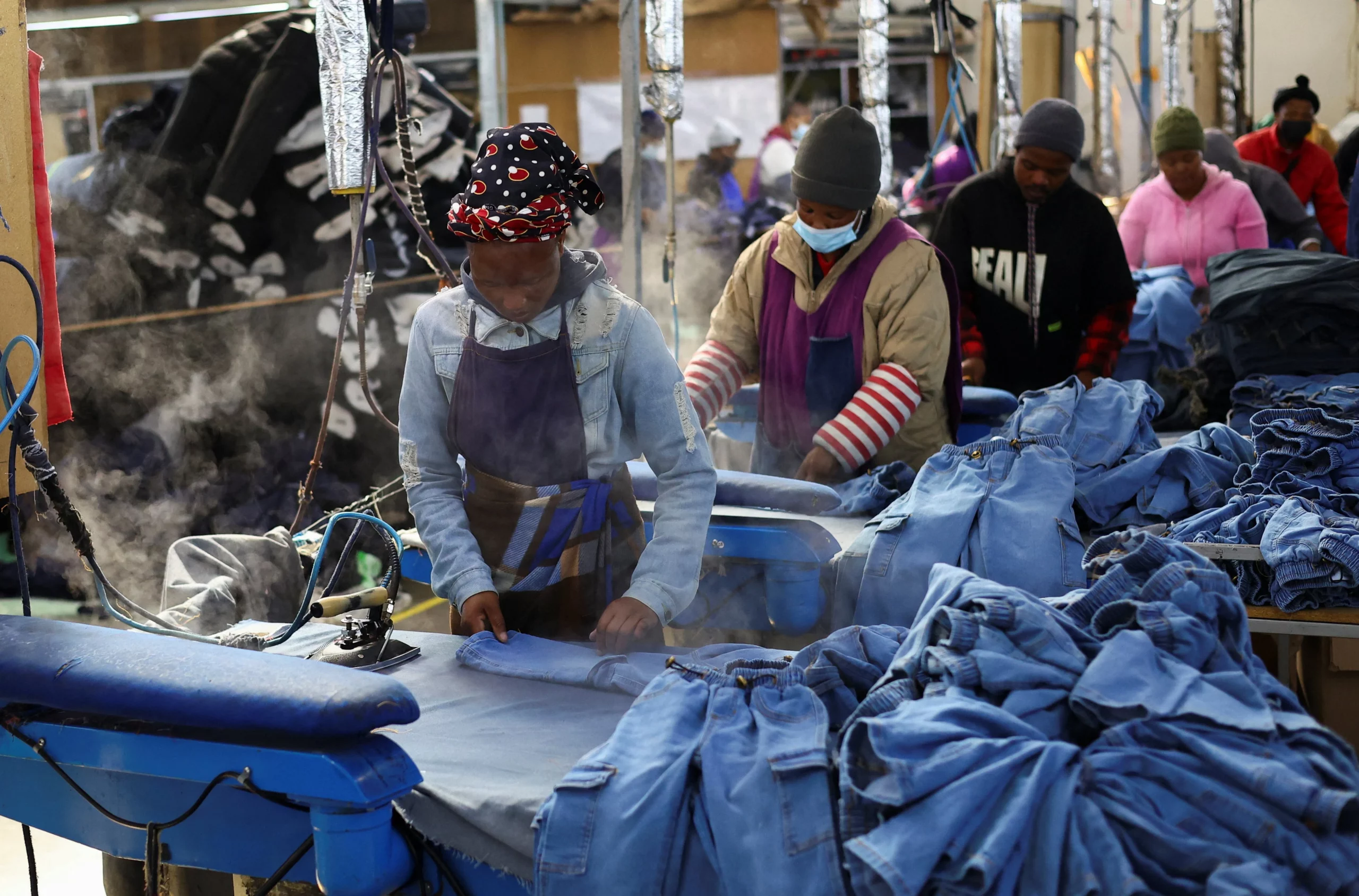
Reuters reported in April 2025, citing Oxford Economics, that the industry supported around 40,000 jobs and approximately 90 percent of Lesotho’s manufacturing employment and exports.
Oxford Economics estimated the sector at about 10 percent of Lesotho’s roughly US$2 billion GDP, while IndustriALL placed its contribution as high as 20 percent.
At peak, the industry employed 50,000 workers, with 80 to 95 percent of them women, producing denim that earned the country the nickname the Denim Capital of Africa.
US exports from the sector had exceeded US$230 million a year before the shock, but fell to US$170.2 million in 2025, down 28.2 percent, with Lesotho shipping US$237 million in goods to the US in the year before the tariff shock.
April 2025: The 50 Percent Tariff Bombshell
On 2 April 2025, President Donald Trump announced a 50 percent tariff on Lesotho’s exports, the highest rate levied on any nation in that round.
The announcement alone spooked US buyers, leading to immediate order cancellations and factory closures even before the tariff took full effect.
Reuters reported that the move created what the government called a national disaster, with layoffs spreading through the sector.
NPR and OPB reports noted that the government declared a two-year national state of disaster in early July 2025 to respond to the jobs crisis.
Trade Minister Mokhethi Shelile warned that 12,000 garment workers could lose their jobs in a country already facing 49 percent youth unemployment.
July 2025: Tariff Cut to 15 Percent, Damage Already Done
Washington set Lesotho’s rate at 15 percent by executive order on 31 July 2025, effective 7 August, the threatened 50 percent having been suspended since 9 April, but the reprieve could not restore cancelled orders.
Bilaterals.org reported that by the time the lower rate arrived, the damage was already done, with massive layoffs and order cancellations across the industry.
Unions documented at least 12,000 garment workers laid off or placed on unpaid leave, while the government warned that up to 40,000 jobs were at risk.
The 15 percent reciprocal tariff stayed in place until February 2026, when the US Supreme Court struck down the emergency powers behind it.
Worker organisations reported knock-on effects on transport, housing, retail and the informal economy as lost wages rippled beyond the factory gates.
The Cliff That Did Not Arrive
AGOA expired at the end of September 2025 and was reauthorised retroactively to 31 December 2026, signed on 3 February 2026.
Congress then extended it again to 31 December 2028, in a continuing appropriations act signed on 2 September 2026.
Washington is still consulting on modernising AGOA and shifting toward more reciprocal trade, so the reprieve is a delay rather than a settlement.
Trade Minister Shelile had told Parliament that a lapse would leave cotton garments facing a 16.5 percent most-favoured-nation tariff, the arithmetic that made the deadline so dangerous.
That rate would have made Lesotho’s denim uncompetitive against Asian suppliers and accelerated permanent factory closures.
Highlands Water Phase II: Royalties Above the Clouds
The Lesotho Highlands Water Project Phase II is the kingdom’s other major dollar earner, moving water from the Maloti Mountains to South Africa‘s industrial heartland.
Infrastructure News reported on 9 July 2026 and Engineering News on 24 July 2026 that Polihali Dam had reached 50 percent completion, with tunnel and dam works progressing on the Polihali component.
Infrastructure News confirmed the milestones in the same month, signalling that construction is advancing toward the planned transfer schedule.
Water royalties are paid by South Africa to the Government of Lesotho and flow into the central budget, providing a counterweight to garment volatility.
However, these royalties arrive on a fixed long-term schedule and cannot absorb the short-term shock of layoffs in the lowlands garment belt.
Letseng Diamonds: High Value, Small Volume
Letseng is a high-altitude diamond mine known for producing exceptionally large, high-value stones rather than high volumes of carats.
Mining royalties from Letseng provide a niche source of hard currency, but the mine’s output is too small to anchor the entire economy.
The diamond sector remains sensitive to global luxury demand cycles, which are themselves correlated with US and Asian consumer confidence.
Even strong diamond prices cannot replace the wages paid to tens of thousands of Basotho women sewing jeans for American retailers.
Letseng matters as a fiscal stabiliser at the margin, not as an alternative to the labour-intensive garment industry.
Matekane’s Reform Effort: Fiscal Consolidation Meets Political Friction
Prime Minister Sam Matekane, a businessman who took office promising to run government like an enterprise, now faces the hardest test of that model.
The IMF is urging fiscal consolidation and structural reforms to reduce dependence on SACU transfers and build a broader tax base.
The July 2025 state of disaster declaration gave the government emergency powers to respond to the unemployment crisis triggered by the US tariff shock.
Reform efforts must proceed against a backdrop of frequent worker protests and factory-level disputes over no work, no pay policies.
Industrial relations tension complicates Matekane’s reform agenda because a prolonged garment slump erodes the very tax revenues needed to fund transition programmes.
Remittances and the South African Transmission Channel
Remittances from Basotho migrants working in South African mines and homes constitute a major source of household income outside the formal wage sector.
When South African mining wages stagnate or retrenchments rise, Lesotho’s rural economy absorbs the shock through reduced transfers from migrant workers.
The IMF’s emphasis on labour migration as a core integration channel underlines how movement restrictions or mining automation in South Africa directly affect Lesotho.
This channel makes Lesotho’s household consumption a near-perfect mirror of South Africa’s labour market, even when US garment orders recover.
Diversification away from this satellite structure would require developing domestic service industries that can compete for Basotho labour at home.
What Investors and Donors Should Watch by Year-End
The most important date is now 31 December 2028, the new AGOA expiry, and the modernisation review that runs before it.
A lapse at that point would push cotton garment tariffs back to 16.5 percent, and man-made fibre garments to 32 percent, forcing buyers to shift sourcing again.
Garment employment levels are the fastest monthly indicator of whether the sector can survive the post-tariff adjustment period.
SACU revenue distributions announced in the next budget will reveal whether fiscal consolidation can proceed without deeper spending cuts.
Highlands Water Phase II milestone payments and Letseng royalty flows provide secondary signals of non-US dollar resilience, but neither is a substitute for jobs.
The Big Picture
This article was produced by The Rio Times’ automated newsroom system. How we use AI · Report an error · Editorial responsibility: Matthias Camenzind, Editor-in-Chief