Doing Business in Lesotho 2026: Taxes, Ownership Limits and AGOA

LESOTHO · DOING BUSINESS · GUIDE
Key Facts
- —What it is A mountain kingdom of about 2.4 million people, entirely surrounded by South Africa. The capital is Maseru; King Letsie III is head of state and Prime Minister Samuel Matekane runs the government.
- —Who can own what Foreign investors are welcome in most sectors, but 47 small-business activities are reserved for Basotho, and foreign ownership in them is capped at 49%.
- —Taxes Corporate income tax is 25%, cut to 10% for manufacturing and commercial farming. Standard VAT is 15%, and manufacturers pay no withholding tax on dividends.
- —The money The loti is pegged one to one to the South African rand. One US dollar bought 16.54 maloti at the close on Tuesday, 6 October 2026.
- —For Americans Duty-free access to the US market under AGOA now runs to 31 December 2028. There is no US-Lesotho tax treaty, and US citizens can stay up to 180 days without a visa, though the border usually grants 30 days at first.
- —The catch Foreign owners must renew their business identification card every year, against every three years for locals, and work permits last at most one year.
Lesotho, a small kingdom inside South Africa, is open to foreign investors at the top of the economy and closed to them at the bottom: factories, mines and energy projects are welcome, while 47 kinds of small business are reserved for its own citizens. It matters to Americans because its garment factories sell to US retailers, and because Washington extended their duty-free access on 2 September 2026 until the end of 2028.
This guide explains, in plain terms, who may own what, how to register a company, what taxes apply, how money moves in and out, and what US exporters and investors should check first. Every rule below comes from the US State Department’s 2025 Investment Climate Statement on Lesotho, published in April 2026, from Lesotho’s investment agency and news agency, or from the World Bank.
What Kind of Market Lesotho Is
Lesotho covers about 30,360 square kilometres, according to the World Bank, a little smaller than Maryland, and every border it has is with South Africa. It became independent from Britain in 1966 and is a constitutional monarchy: King Letsie III is head of state with ceremonial functions, and executive power lies with the government.
Prime Minister Samuel Ntsokoane Matekane has led the country since late 2022 at the head of his Revolution for Prosperity (RFP) party, in coalition with three smaller parties, the Movement for Economic Change, the Alliance of Democrats and the Basotho Action Party, the World Bank says.
The economy is small. World Bank data put 2025 output at about US$2.6 billion, roughly US$1,090 per person, and the bank classes Lesotho as lower-middle-income. Growth has averaged 0.5% a year over the past decade. The bank expects 1.2% in 2026 and 2027, held back by weak textile and diamond sectors and supported by water royalties from the Lesotho Highlands Water Project, which sells water to South Africa, and by payments from the Southern African Customs Union (SACU), the customs club Lesotho shares with South Africa and its neighbours.

Who Can Own What
The State Department says no economy-wide limit applies to foreign ownership. But Lesotho’s rules aim to keep foreign capital in “large scale businesses in complex sectors including the mining and the energy sectors”, and they reserve small-scale businesses in 47 designated activities for Basotho, the citizens of Lesotho.
The legal basis is the Trading Enterprises Regulations of 1999, amended in 2011, and the Business Licensing and Registration Regulations of 2020, which cap foreign investment at 49% in the reserved areas. The State Department lists examples of reserved activities:
- Acting as the local agent of a foreign firm, or as a broker.
- Barbers, hair and beauty salons, and butchers.
- Snack bars, general cafés, dairy shops and greengrocers.
- Domestic fuel dealers.
- Mini supermarkets smaller than 250 square metres (2,691 square feet).
Most firms affected are micro or small businesses, but some mid-sized foreign-owned firms are caught too, and the rules also limit foreign investment in agriculture. Small-scale mining permits are reserved for Basotho under the Mines and Minerals Act of 2005.
Land works differently from the United States. Under the Land Act of 2010, foreigners may buy and hold land only with a local partner owning at least 20%. Leases can run for up to 90 years for residential, farming and similar uses, 60 years for industry and hotels, and 30 years for petroleum storage or sales.
How Registration Works
The Business Licensing and Registration Act of 2019 sets the basic rules. Foreign investors must renew their business identification card every year, while citizens renew every three years. The act also asks foreign investors to transfer technology and know-how to local partners, a requirement the State Department says foreign entrepreneurs find poorly defined and arbitrarily enforced.
Lesotho launched a One Stop Business Facilitation Centre (OBFC) in 2016 to put licences, permits and import and export clearances under one roof, except resident visas. Since 2020 it has run eRegulations, a step-by-step online guide to registering a business with costs and timelines, and eLicensing, which lets investors apply online.
Tax registration is automatic. The Lesotho National Development Corporation (LNDC), the state investment agency, says company details filed with the Registrar of Companies go to Revenue Services Lesotho (RSL), the tax authority, which issues a taxpayer identification number together with the incorporation certificate. A company with non-resident directors must appoint a “Public Officer” who lives in Lesotho to deal with the tax authority.
Staff are the slow part. Work permits for foreigners last at most one year and are “generally issued and renewed after significant delay”, the State Department says. Manufacturing firms apply through the OBFC; all others go to the Office of the Labour Commissioner, and technical posts need a justification based on local skill shortages. Opening a bank account also requires a residence permit.
Taxes in Plain Terms
The standard corporate income tax rate is 25%. Manufacturing and commercial farming pay 10%, the clearest incentive for anyone who builds or grows things in Lesotho, according to the LNDC, which cites Revenue Services Lesotho. Dividends paid by manufacturing firms to local or foreign shareholders carry no withholding tax.
The tax year runs from April to March, and companies must file and pay by 30 June, unless they have permission to use a different accounting period. Value-added tax (VAT) is charged at 15% on most goods and services, 10% on electricity and 0% on exports and basic commodities. Registration is compulsory once turnover reaches M2 million (about US$121,000) a year.
Training costs are deductible at 125%, the State Department notes. One point matters especially to Americans: Lesotho has no double taxation treaty with the United States, so US investors should plan with a tax adviser for withholding on payments abroad. It has investment treaties only with the United Kingdom, Germany and Switzerland.
The Loti, the Rand and Moving Money
Lesotho belongs to the Common Monetary Area with South Africa, and its currency, the loti (plural maloti, written M), is pegged to the rand at one to one. That means it moves with the rand against the US dollar: one dollar bought 16.54 maloti at the close on Tuesday, 6 October 2026.
The Central Bank of Lesotho raised its policy rate to 6.75% in May 2026 to protect the peg, the World Bank reports. Inflation averaged 4.3% in 2025 and fell to 2.9% in July 2026.
Day-to-day payments are free, but large ones are not. The State Department says transfers above M4 million (about US$242,000) for individuals and M500 million (about US$30.2 million) for businesses need central bank approval. Royalty payments need approval too, and export proceeds must come back into the country within 180 days. The central bank converts into widely used currencies such as the US dollar, pound and euro.
Selling to the United States Under AGOA
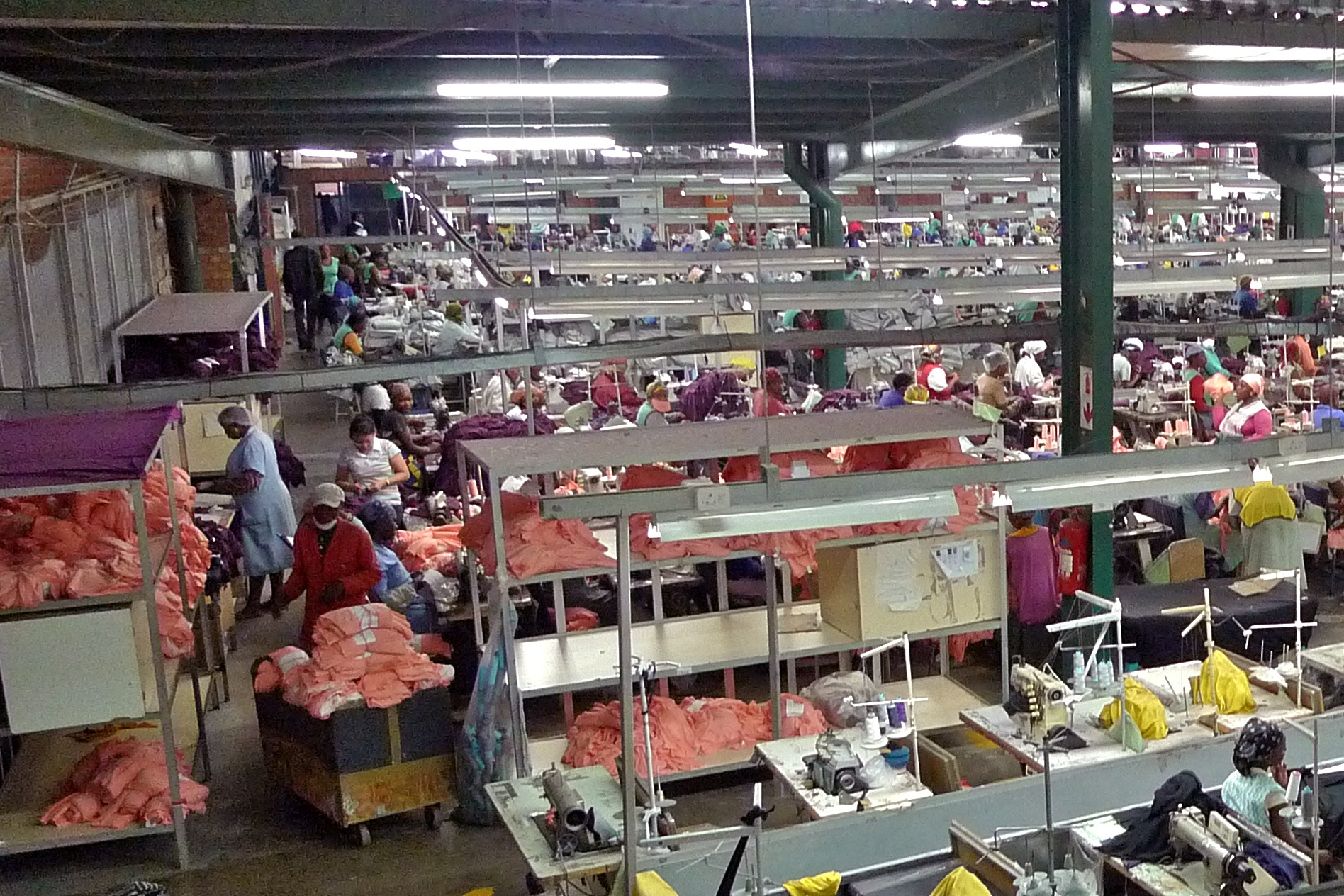
For most foreign manufacturers, Lesotho’s main selling point is access to American shoppers. The African Growth and Opportunity Act (AGOA), a US law that lets eligible African countries export many goods duty-free, lapsed on 30 September 2025. On Tuesday, 3 February 2026, President Donald Trump signed a one-year renewal through 31 December 2026, with retroactive effect to 30 September 2025, the Office of the US Trade Representative said. On Wednesday, 2 September 2026, he signed H.R. 6500, which extends AGOA for 32 eligible countries through 31 December 2028, Lesotho’s trade ministry said in a statement carried by the state news agency LENA on Thursday, 10 September.
The ministry said the extension secures duty-free entry for its key exports, particularly textiles, apparel and fisheries products, for more than two years, and it noted that the temporary US tariff under Section 122 of the Trade Act had expired on Friday, 24 July 2026. Because the February law applied retroactively, importers could seek refunds of duties paid during the lapse; the House version of the bill, as described by LENA in January, set a 180-day window after enactment for such requests.
Buyers should look closely at labour conditions. The State Department notes that labour rights violations have been documented in the largely foreign-owned textile factories, which matters for US brands with supplier codes of conduct.
Incentives, Courts and Corruption
The LNDC offers ready-built factory shells on serviced land, long-term loans, credit guarantees on bank loans and a de-risking equity fund that can co-invest in projects that look too risky alone. These apply equally to local and foreign investors. Lesotho has no formal free trade or export processing zones; a Special Economic Zones Policy has been drafted but not implemented.
Disputes can be costly in time. A Commercial Court set up in 2010 with US support still suffers from backlogs. Lesotho is a member of the ICSID Convention and the New York Convention, so international arbitration awards can be enforced. Transparency International’s latest Corruption Perceptions Index ranks Lesotho 99th of 182 countries, with a score of 37 out of 100, unchanged from the year before.
What It Means for You
If you want to open a shop, salon or small trading business, check the 47 reserved activities first: in those, you can own at most 49%, and that decides the whole plan. If you want to manufacture, the 10% tax rate, the LNDC factory shells and duty-free AGOA access to 2028 make the numbers worth running, but price in annual card renewals, slow work permits and rand swings.
If you are a US importer or brand, the AGOA extension gives you a little over two years of duty-free sourcing; if you paid duties during the 2025 to 2026 lapse, ask your customs broker whether a refund claim is still possible. If you are visiting, US citizens need no visa for stays of up to 180 days, but they are usually granted 30 days at the border and must apply to extend. The State Department’s advisory, updated on Wednesday, 17 June 2026, rates Lesotho at Level 2 for crime and health risks, warns that foreigners are frequently targeted and robbed and have been carjacked and killed, and urges extra caution in downtown Maseru by day and at night.
What Is Not Known
- The fee for a foreign business identification card and the real processing times for foreign applicants are not published in the sources we checked.
- Current withholding tax rates for payments to non-residents, including Americans, were not confirmed against Revenue Services Lesotho and should be checked before signing contracts.
- Whether the Special Economic Zones Policy will be adopted, and when.
- Whether the 180-day refund window described for the House bill survived unchanged in the law signed in February 2026, and how many refund claims US customs has paid.
- Whether AGOA will be renewed again after 31 December 2028, and on what terms.
- How fast the Central Bank of Lesotho will move rates next; its decisions follow the need to keep the peg with the rand.
Frequently Asked Questions
Can foreigners own a business in Lesotho?
Yes, in most sectors. Small businesses in 47 designated activities, such as salons, butcheries, snack bars and small supermarkets, are reserved for Basotho, and foreign ownership in them is capped at 49%.
What is the corporate tax rate in Lesotho?
The standard rate is 25%. Manufacturing and commercial farming pay 10%, and dividends from manufacturing firms carry no withholding tax.
Does Lesotho still have duty-free access to the United States?
Yes. AGOA was extended on 2 September 2026 for 32 eligible countries, including Lesotho, through 31 December 2028, according to Lesotho’s trade ministry.
What currency does Lesotho use?
The loti, written M, which is pegged one to one to the South African rand. On 6 October 2026, one US dollar bought about 16.54 maloti.
Do Americans need a visa for Lesotho?
No, not for visits of up to 180 days, but the border usually grants 30 days at first and stays must be extended after that, according to the State Department, which rates Lesotho at Level 2, exercise increased caution.
Sources: US State Department, 2025 Investment Climate Statement: Lesotho (April 2026), Lesotho National Development Corporation, taxation, Office of the US Trade Representative, AGOA reauthorization, 3 February 2026, Lesotho News Agency (LENA), AGOA extension to 2028, 10 September 2026, Lesotho News Agency (LENA), House approves AGOA extension, 13 January 2026, World Bank, Lesotho overview, World Bank, Lesotho data, US State Department, Lesotho country information, Transparency International, Lesotho. All retrieved 7 October 2026. Exchange rate: house data, close of Tuesday, 6 October 2026, 16.5352 maloti (and rand) per US dollar.
This article was produced by The Rio Times’ automated newsroom system. How we use AI · Report an error · Editorial responsibility: Matthias Camenzind, Editor-in-Chief