Expedition to seek contact from the world’s most remote island fails
Early last month, 13 amateur radio operators set sail from the Falklands Islands (Islas Malvinas) aboard a 31-meter-long sailboat.
The goal was as audacious as it was curious: to sail to the most remote uninhabited island on the planet, only to make contact with other radio amateurs from there.
What, at first, might seem like a rather meaningless goal – to cross one of the worst seas in the world and sail to the most remote island on the planet just to receive and send messages from there – was just the opposite for the amateur radio people, who are always in search of new and unusual contacts.

For them, this journey had an almost historical character because the destination chosen for this trip (“DXpedition”, an agglutination of the acronym “DX”, used in radio amateurism to designate long-distance contacts, with the word “expedition”) was forgotten Bouvet Island, the most distant uninhabited island on the Earth’s map – and this was worth any and all efforts.
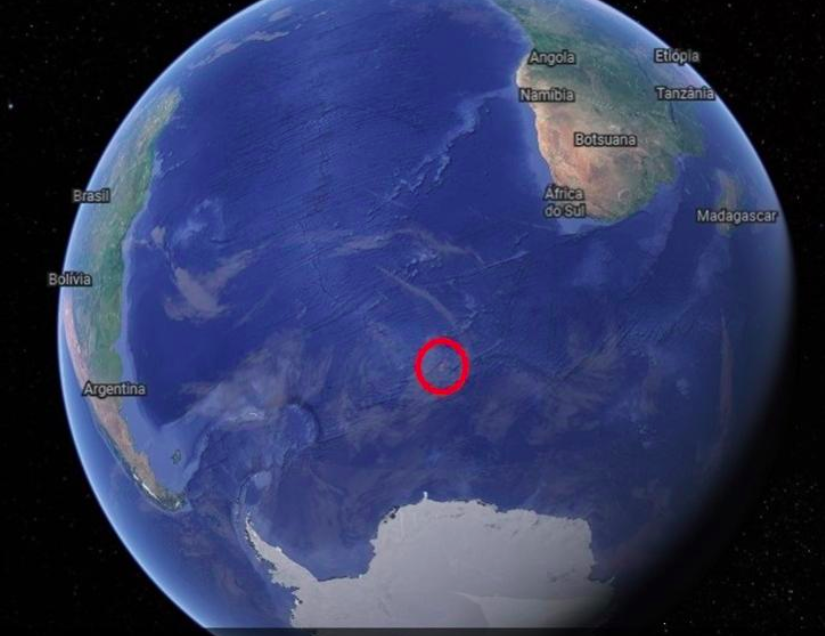
AN ISLAND FAR AWAY FROM EVERYTHING
Bouvet Island, a permanently frozen piece of volcanic lava twice the size of Fernando de Noronha, lying in the far south of the Atlantic, almost halfway between South Africa and Antarctica, is a territory of Norway but as uninhabited as the moon.
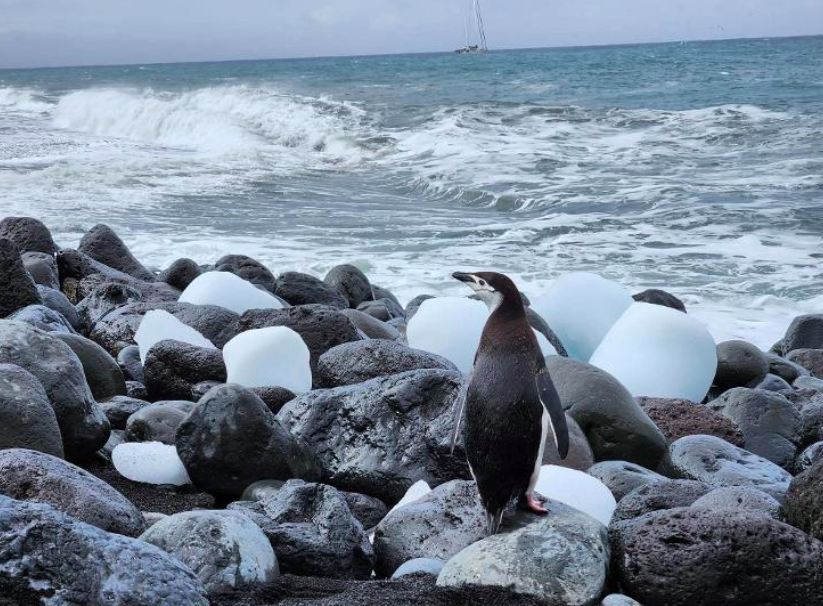
Its only inhabitants are penguins, a few birds, and sea lions – beings that don’t mind living on an island surrounded by a freezing sea with 90% of its surface formed by glaciers.
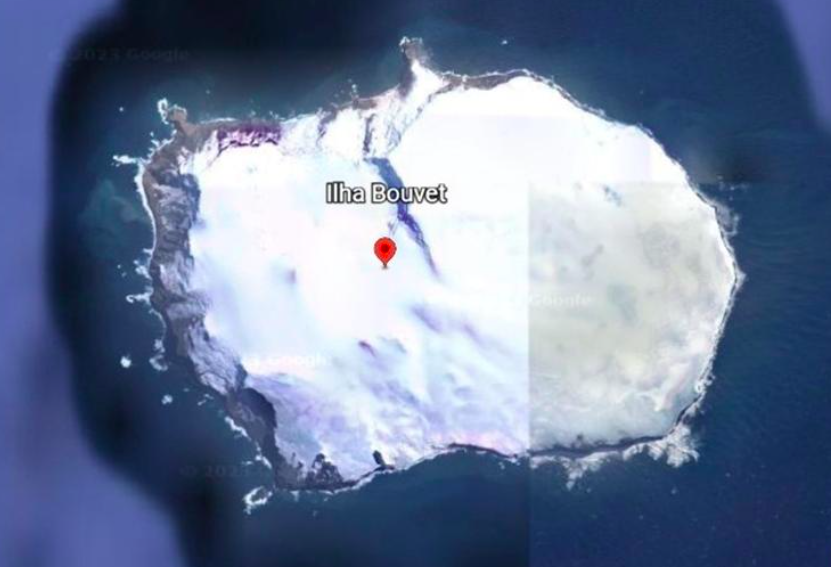
All in all, not more than one hundred human beings have visited since it was discovered by French polar explorer Jean-Baptiste Bouvet (whose last name was used to baptize it) on the first day of the year 1739, in almost three centuries.
The reason for this is that Bouvet is far away from everything. There is nothing around. Not even sea routes used by ships.
TRUE “END OF THE WORLD”
About 2,500 kilometers of sea separate Bouvet Island from the South African coast and 1,700 from one of the Antarctic peninsulas.
A person who lands on Bouvet will be as isolated from the planet’s other inhabitants as the astronauts on the space stations.
For all these reasons – and also because it is the second most inaccessible point on the planet for amateur radio, after North Korea – Bouvet Island has always been a kind of Holy Grail of the world amateur radio.
A place from where every amateur radio operator on the planet would love to receive messages and make contact.
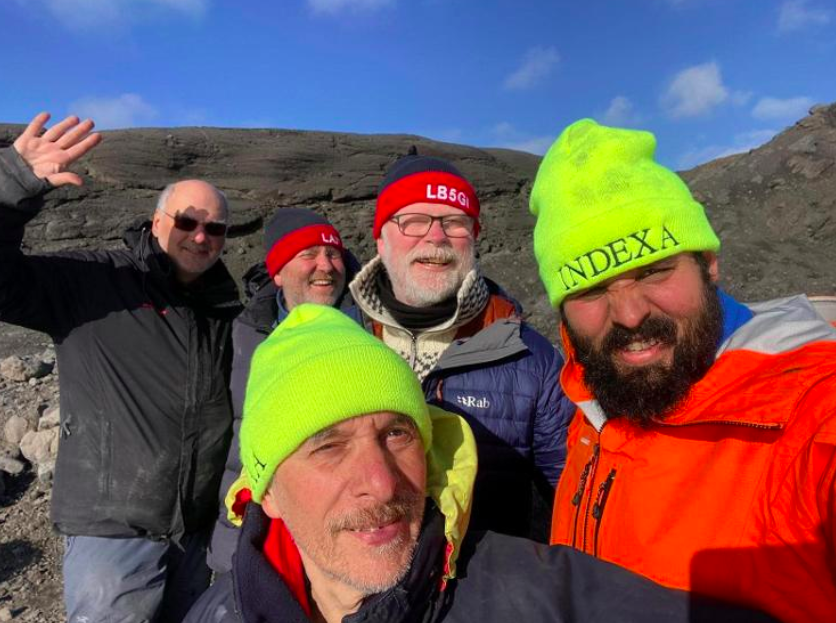
Hence the reason for those 13 adventurers, of different nationalities, but mostly Norwegian, to set out on the tough endeavor to reach Bouvet Island, and install there, for a few days, a mobile amateur radio station to interact with the rest of the planet – for the simple pleasure of allowing other radio amateurs to send greetings and messages to the nearest thing to the end of the world.
THE OPERATION HAD TO BE ABORTED
After 15 days of uninterrupted navigation, they finally reached Bouvet Island and landed, with great difficulty, on a kind of beach made of small blocks of volcanic lava, bathed by a sea as cold as it was violent.

But due to bad weather and violent waves, the operation soon had to be aborted, leaving four team members stranded on the island, out in the open, for three days, until weather conditions allowed the rest of the group and equipment to disembark.
Even so, not for long.
300 DAYS A YEAR WITH STORMS
Soon, the usual climatic hostility of Bouvet – which spends an average of 300 days a year being battered by storms and blizzards – prevailed, and the group, who had barely installed their equipment and antennas in tents secured to the ice, decided, in the name of safety, to retreat.
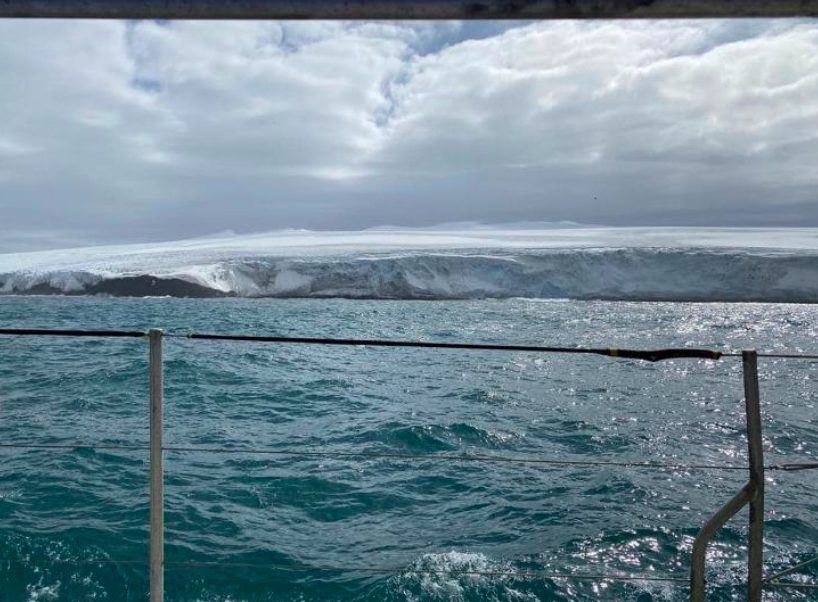
“We are leaving Bouvet today, February 16, with mixed feelings of success and failure,” wrote one of the team members on the page that the group, dubbed 3Y0J, the radio prefix through which they attempted to operate on the island, maintained on Facebook as they lifted anchor and departed last Thursday.
“Success that we arrived and landed on Bouvet, which few have managed to do. And failure that we could not communicate with the other radio amateurs as we would have liked,” the statement lamented.
WHAT MADE THEM GIVE UP
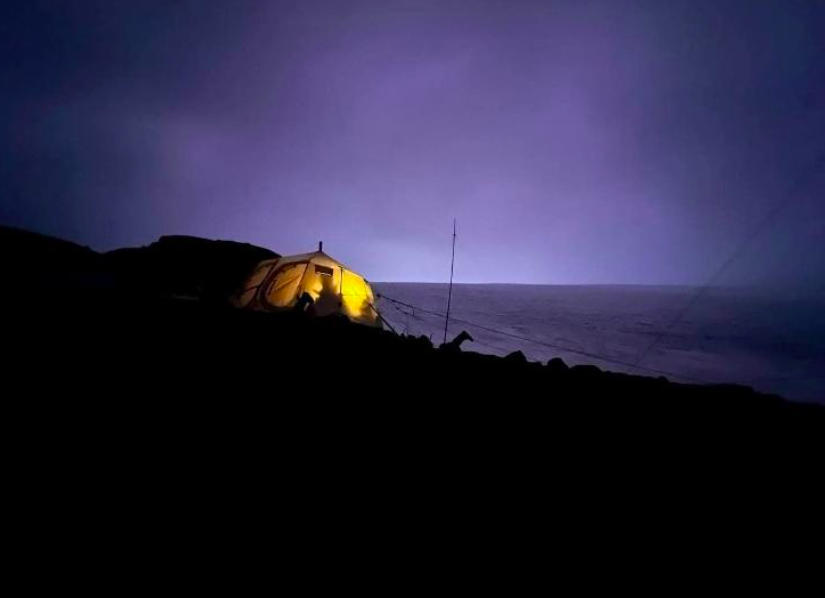
Victims of furious gale force winds that threatened to rip off their antennas all the time, biting cold, and a general lack of conditions and comfort (the only two radio communication devices that managed to land on the island were operated on makeshift buckets, with the operators sitting on the floor, as it was impossible to land all the equipment they needed), the team gave up on the operation and decided to return to the boat – and from there to South Africa, where they are now headed after ten days on the inhospitable island.
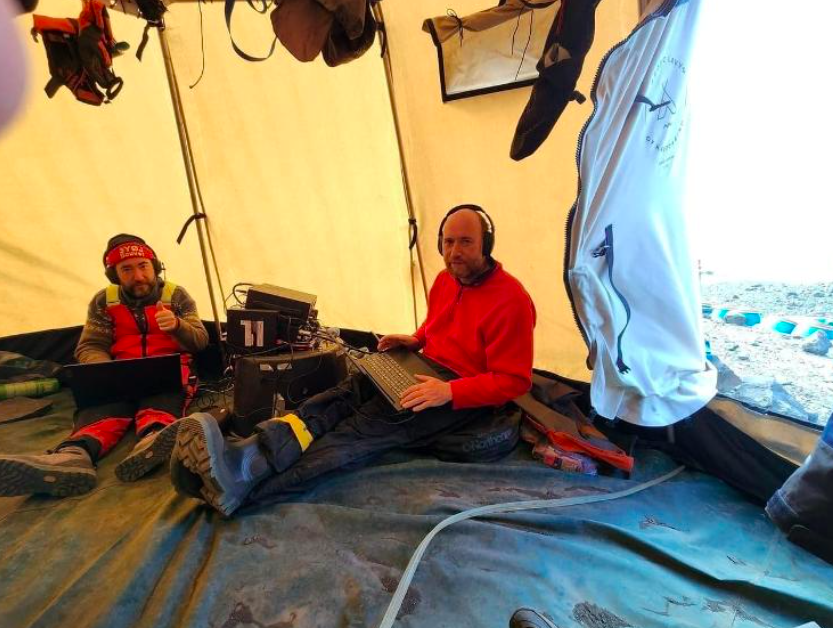
Even so, they managed about 19,000 amateur radio contacts from around the globe, although always under unfavorable conditions – sometimes only listening or transmitting, but not both simultaneously.
The result frustrated the members of the expedition, which cost two years of planning and about US$680,000 – US$97,000 just in renting the sailboat that took them there.
But it earned a shower of praise from radio amateurs worldwide, including Brazil, for the group’s efforts.
NATURE WON
Despite the poor result, the 3Y0J expedition generated the first contacts (“QSO”, in amateur radio jargon) from Bouvet since NASA astronaut Charles Brady Jr. spent three months on the island between the end of 2000 and the beginning of 2001, also with the sole purpose of sending and receiving signals from other amateur radio amateurs around the world, which he did with some success.
On that occasion, Brady was successful.
But this time, nature won.
“The unpredictable weather, the logistical complexity, and the serious risks of remaining on the island have made it unfeasible to execute the operation fully,” explained the group’s spokesman in announcing the premature departure from the island.
TIME CAPSULE LEFT ON THE ISLAND
In addition to having spent almost two centuries wrongly marked on maps, a consequence of its complete isolation, and being the only internet suffix (.bv) with no users on the planet, Bouvet has other curiosities.
One of them is that one of its many glaciers houses a kind of time capsule, deposited there by four climbers in 2012, who recorded their opinions on how the climate issue will be on the planet 50 years later – in 2062, when, hopefully, the capsule will be recovered and compared with reality.
Another is that Bouvet’s past harbors an intriguing mystery connected to its conquest, which has never been proven clear, despite some theories.
A MYSTERIOUS BOAT
In 1964, a group of workers landed on the island to set up a meteorological station and came across a lifeboat lying on the beach, its two oars slung forward, but nobody around.
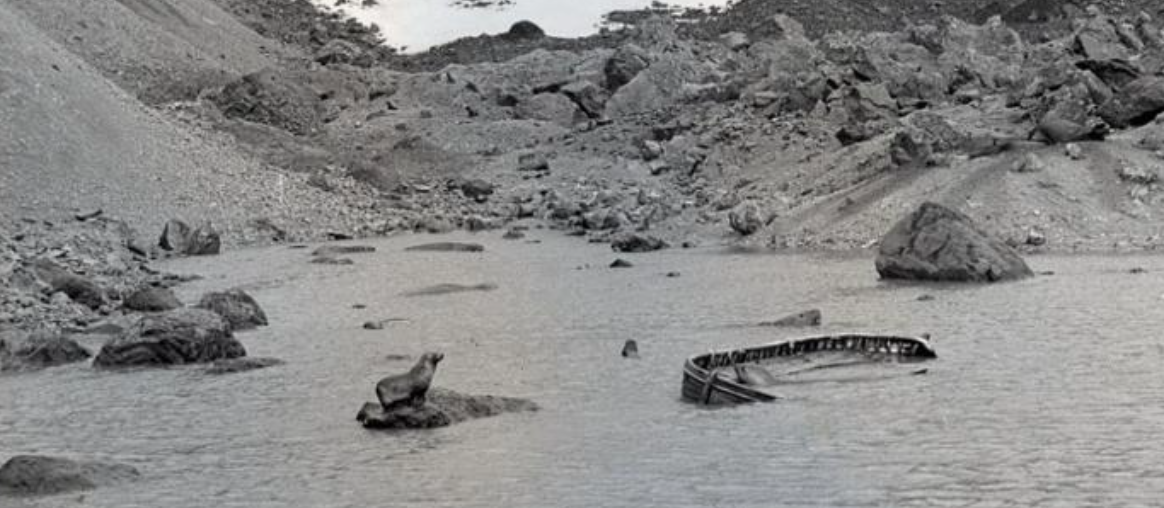
Since the island was always uninhabited – and no human remains were found at the time – the question remains: who would have taken that boat to that island far away from everything, and what would have happened to its occupant? This intriguing case, despite some theories, has never had a conclusive explanation.
With information from UOL
More: South Africa news in English, every day from The Rio Times.
This article was produced by The Rio Times’ automated newsroom system. How we use AI · Report an error
Read More from The Rio Times