Expat Communities in Costa Rica: Where They Are and How to Join
Guides · Costa Rica
Key Facts
- The country — Costa Rica had 5,044,197 people in the national statistics institute’s 2022 estimate. Foreigners are not spread evenly across it. They concentrate in perhaps twenty towns, and in several of those they are a visible share of the population.
- The background — there is no current official count of United States, Canadian or European residents. The 2022 census was replaced by a population estimate that carries no country-of-birth breakdown, so the last full nativity data is the 2011 census.
- What matters now — the national conversation about foreigners is contested. Delfino reported in January 2025 that nearly nine in ten Costa Ricans believe foreigners are gentrifying the coastal zones, and the coverage since has been sharper still.
- What happened — this guide records the clusters, the organised groups and their published fees as they stood in September 2026.
- The numbers — ARCR, the residents’ association, charges US$75 a year plus 13 percent value-added tax. AmCham, the American chamber of commerce, charges individuals ¢274,215 (about US$609) a year plus a one-off ¢88,375 (about US$196) joining fee.
- What it means for you — the organised foreign circuit will solve your first month and will not give you Costa Rican friends. Those come from Spanish, from where you choose to live, and from paying local people properly.
- Still open — no Facebook group member count could be verified, several clubs are known only from a listing published in 2018, and the Women’s Club publishes neither a fee nor a meeting schedule.
Nobody can tell you how many Americans live in Costa Rica. Everybody can tell you which towns they live in.
Expat communities in Costa Rica are far easier to join than to measure. No official body knows how many Americans, Canadians or Europeans live here, because the last usable count is fifteen years old. What does exist is a reliable map of the towns where foreigners gather. There is also a short list of clubs with published fees, and an honest account of what none of it buys you.
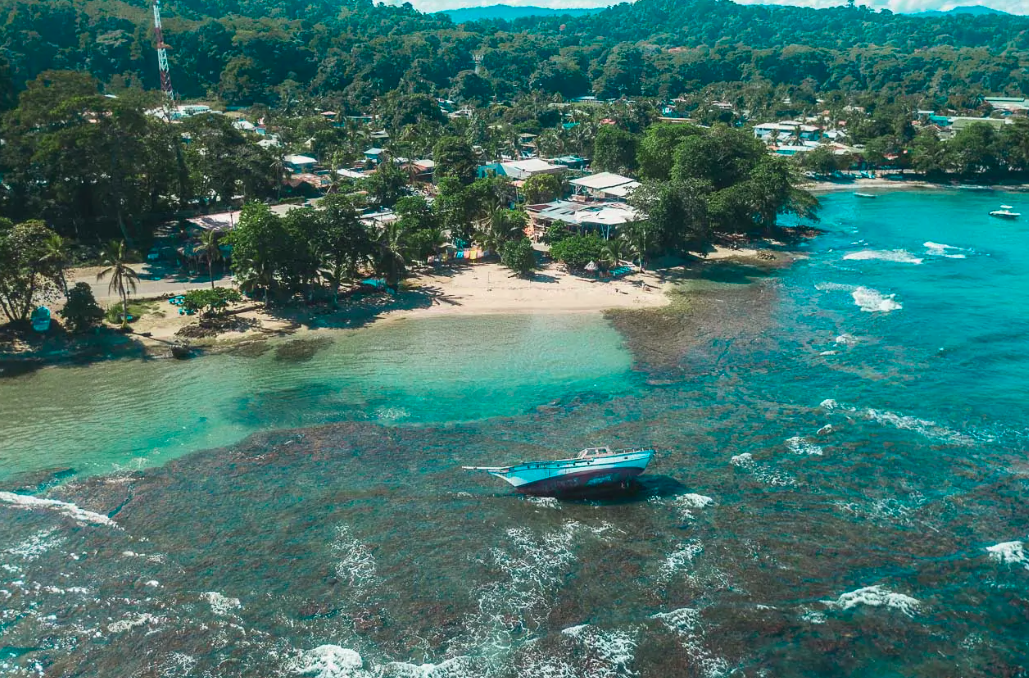
Nobody knows how many foreigners live here
Start with what is not known, because every other guide skips it. The 2022 census was never completed as a conventional census. The statistics institute published a population estimate instead, giving 5,044,197 people, and that document contains no country-of-birth breakdown at all. The last full nativity data for Costa Rica is from 2011.
The 2011 census counted roughly 385,000 foreign-born residents, about 9 percent of the population. Nicaragua accounted for 287,766 of them, Colombia 28,015 and the United States 26,780. Canada and Spain were near 10,000 each. Those are the last hard figures anyone has.
The widely quoted figure of 120,000 Americans is not official. It traces to a magazine article from 2024, and a different publication gave 70,000 in 2025. Neither is a Costa Rican or United States government count. The one countable modern number is the digital nomad visa. It drew 1,225 applications and 949 approvals from its launch in 2022 to 30 September 2024. Americans took 455 of those approvals and Canadians 105.
Where expat communities in Costa Rica actually cluster
The most reliable practical map is the volunteer roster of Democrats Abroad Costa Rica, which lists the places where it can staff a local contact. Those are Atenas, Cartago, Escazú, Santa Ana, Grecia, Heredia, Manuel Antonio, Quepos, Monteverde, Nosara, Puerto Viejo, Cahuita, Puriscal, San Isidro, Pérez Zeledón, San Ramón, Uvita and Ojochal.
That sorts into five zones. The Central Valley holds Escazú and Santa Ana, the wealthiest and most English-speaking, plus Heredia, Atenas, Grecia, San Ramón, Cartago and Puriscal. Then the Guanacaste coast, the central and south Pacific, the southern zone around San Isidro, and the Caribbean. Monteverde and Lake Arenal stand alone.
Nosara is the only community with published hard numbers. Housing units there rose from 970 in 2000 to 6,270 in 2024. The permanent population is 8,716, rising to about 26,650 in high season, and the mix is described as roughly four Nosareños to two Costa Ricans from elsewhere to three foreigners.
The organised groups, and what they charge
ARCR, the Association of Residents of Costa Rica, is the long-established practical-help body. Membership is US$75 a year plus 13 percent value-added tax, which is about US$84.75 all in, and US$10 a year for each spouse or dependant. It runs a monthly seminar on moving to and living in the country, and positions itself as scam protection for newcomers.
Democrats Abroad Costa Rica meets monthly, usually the last Saturday, and is by a distance the most demonstrably active organised American group. AmCham is a business chamber rather than a social club and is priced like one: individuals pay ¢274,215 (about US$609) a year plus a one-off ¢88,375 (about US$196) joining fee. Colón figures here convert at ¢450 (about US$1), the Banco Central reference rate on 22 September 2026.
The Women’s Club of Costa Rica, founded in 1940, has given more than US$1.8 million in scholarships and school books over five decades, but publishes no fee or meeting schedule. Other groups are known only from a listing published in 2018. Those include the American Legion posts in Escazú and Heredia, the writers’ group, the Little Theatre Group and the Birding Club. Phone before you turn up.
Online groups, sport and volunteering
Seven Facebook groups come up by name. Expats in Costa Rica, Meet Expats in Costa Rica and Expatriates in Costa Rica are the general ones. Then Gringo Expats in Costa Rica, Expat Pet Owners in Costa Rica, Nosara Rant And Rave and Lake Arenal Community. Expatriates is described as the kindest to newcomers, and Gringo Expats carries a heavy real-estate presence.
No member count for any of them could be verified, because Facebook hides counts from logged-out visitors. Treat any number you see quoted as unchecked. Regional WhatsApp groups are invite-only, usually seeded through a local business, an agent or the school gate, and cannot be found from outside at all.
For sport, the Hash House Harriers is the oldest fixture, running Mondays around Santa Ana and Escazú and Thursdays in San José. Pickleball is growing fastest, though no authoritative club count exists. For volunteering, be warned that most search results are paid voluntourism from about US$25 a day. Language schools bundle it more cheaply: Academia Tica asks US$100 placement plus a US$50 project donation, and WAYRA asks US$150 plus US$277 a week full board.
Making Costa Rican friends is a separate project
Three things decide whether you end up with Costa Rican friends or only foreign ones. The first is Spanish, and specifically the right register. This is an ustedeo country. Arriving with textbook tú and no usted reflex marks you permanently as a visitor.
The second is where you land. Escazú, Santa Ana, Tamarindo and Nosara have foreign populations dense enough that you never have to speak Spanish, and most people who settle there never do. Atenas, Grecia, San Ramón, Cartago, Pérez Zeledón and the Heredia suburbs put foreign residents inside Costa Rican neighbourhoods instead.
The third is that you are arriving into an argument. Semanario Universidad has run a sustained series describing El Coco, Nosara and Tamarindo as tourist enclaves that hollow out the towns around them. Acknowledging that, and behaving accordingly on rents, wages and Spanish, is the actual precondition for local friendship.
The routes that work are ordinary. The neighbourhood pulpería and the school gate. Church, if you are inclined. The local mejenga, the pick-up football game most foreigners skip. The Saturday feria, where the same vendors see you every week. And hiring local people and paying them properly.
Frequently Asked Questions
How many Americans live in Costa Rica?
Nobody knows, and any precise figure you see is an estimate. The last official count was the 2011 census, which found 26,780 United States-born residents. The 2022 census was replaced by a population estimate with no country-of-birth data.
Which town should I move to if I want an expat community?
Escazú and Santa Ana have the densest and most English-speaking foreign population, followed by Tamarindo, Nosara, Atenas and Grecia. Democrats Abroad staffs local contacts in eighteen communities, which is the best available map. Nosara is roughly 30 percent foreign.
What does it cost to join an expat organisation?
ARCR charges US$75 a year plus 13 percent value-added tax, with dependants at US$10 each. AmCham charges individuals ¢274,215 (about US$609) a year plus a one-off ¢88,375 (about US$196) joining fee. Democrats Abroad publishes no membership figure.
Can I volunteer while on a tourist entry?
A tourist entry does not permit paid work, and unpaid volunteering is a grey area that most people operate in anyway. The formal fix is the provisional visa for students, researchers, teachers and volunteers, issued by a consulate.
Connected Coverage
- Moving to Costa Rica: A Full Relocation Guide
- Cost of Living in Costa Rica: Budgets and Rent
- Costa Rica Residency: A Guide for Expats
This article was produced by The Rio Times’ automated newsroom system. How we use AI · Report an error
Read More from The Rio Times
Rotate for Best Experience
This report is optimized for landscape viewing. Rotate your phone for the full experience.
You've reached your free article limit
Subscribe to The Rio Times for unlimited access to expert analysis, market intelligence, and daily briefings on Latin America.