Elections: El Salvador
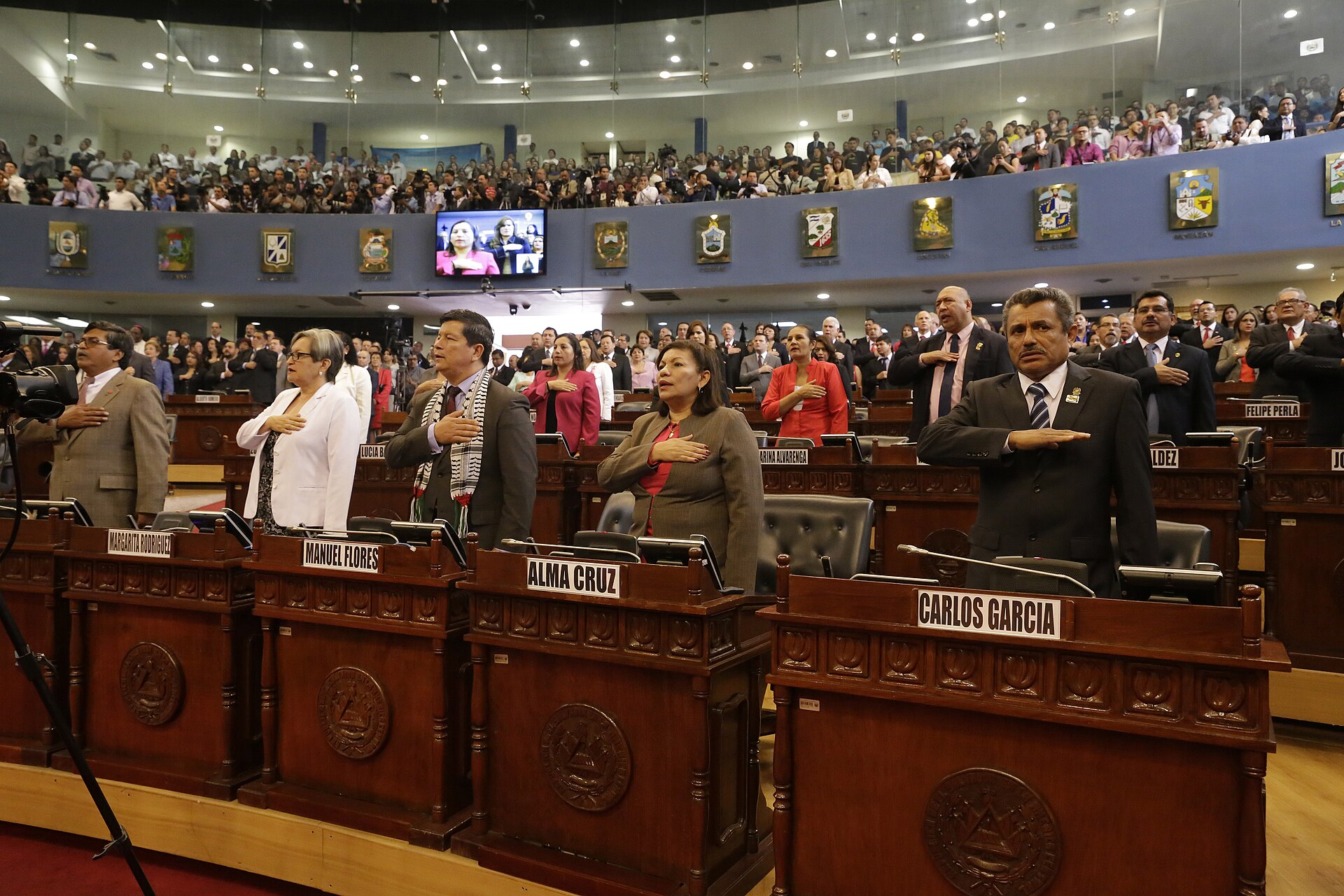
For the first time, Salvadorans living abroad will elect six of the 60 members of El Salvador’s Legislative Assembly, in national elections on Sunday 28 February 2027. A total of 982,682 of the country’s 6.5 million registered voters live abroad, according to the electoral authority, the Supreme Electoral Tribunal (TSE).
Almost all of them are in the United States: the Assembly put the number of ID-card holders with a US address at about 919,000 of 960,928 registered abroad in May. Candidate registration for the new seats closes on Thursday 19 November.
The six seats come out of the existing 60, not on top of them. San Salvador, the capital’s department, falls from 16 seats to 11, and neighbouring La Libertad from seven to six.
Key Facts
- What. Six of the Assembly’s 60 seats go to a new district for voters abroad.
- Who loses. San Salvador drops from 16 seats to 11; La Libertad from seven to six.
- When. Election on Sunday 28 February 2027; remote online voting abroad runs 30 January to 28 February.
- Deadline. Candidate registration closes on Thursday 19 November 2026.
- As of. As of 17 November 2026, 18:30 GMT.
Emigrants gain a direct voice for the first time. Government deputies call it a political right, while some opposition deputies question whether it is meant to protect the ruling party.
The Big Picture: Why the Electoral Map Is Changing
El Salvador is already voting for everything at once. A 2025 constitutional change ended the current presidential term early, on 1 June 2027, so the president, the Assembly and city councils are elected together (Assembly, 2 December 2025).
The TSE called that vote on 30 September and says 582 posts are at stake (TSE announcement). The Assembly approved US$125.4 million for the 2027 elections, plus US$46.7 million for voting from abroad.
Opposition deputies question the timing of the change. Claudia Ortiz, a deputy of the small opposition party Vamos, said in May that the ruling party changed the rules months before a vote without credible explanations.
Government deputies frame the reform as a right. Raúl Chamagua, a deputy of Nuevas Ideas, President Nayib Bukele’s party, said the constitution does not strip citizens of rights for living abroad (Assembly, 14 May).
How the New Seats Work
Lawmakers ratified the constitutional change on 7 May with 57 votes, and approved the electoral laws on 14 May (Assembly, 7 May and 14 May). The new district, called circumscription 15, gets six deputies, allocated by the D’Hondt method, a formula that shares seats in proportion to votes.
A voter abroad whose national ID card, the Documento Único de Identidad (DUI), lists a foreign address casts the Assembly vote for the overseas district. A voter whose card lists an address in El Salvador votes for the deputies of that home department.
Emigrants can also run for office. Salvadorans abroad may stand for president, vice president, deputy and municipal posts if they meet the legal requirements.
Party lists must keep at least 30% women, a rule that also applies to overseas candidates. Parties may also hold internal elections among members living abroad.
What It Means for US Readers
The United States is where almost all voters abroad live. The Assembly counted about 919,000 ID-card holders with a US address in May, out of 960,928 registered abroad, and the TSE’s later count for 15 September is 982,682.
The TSE’s calendar for voting abroad lists 29 November 2026 for the suspension of address changes on the ID card (TSE calendar abroad). Under the new rules, that address decides which district an emigrant’s Assembly vote counts for.
What the Opposition Says
Marcela Villatoro, a deputy of ARENA (the Nationalist Republican Alliance, a right-wing opposition party), questioned in May why San Salvador and La Libertad lost seats and not other departments. She said the government had not explained the choice.
What to Watch
Candidate lists must be filed by Thursday 19 November 2026 for president, vice president, deputies and municipal councils. The TSE calendar requires its ruling by Tuesday 24 November on the presidential and deputy applications (TSE national calendar).
Remote voting for eligible Salvadorans abroad then opens on 30 January 2027. The election itself is on Sunday 28 February.
What Is Not Known
Turnout abroad is unknown, and so is which parties will win the six seats. The TSE has not yet published the final list of registered candidates, and its calendar abroad is marked as subject to modification, so the 29 November date could still change.
Frequently Asked Questions
How many seats will Salvadorans abroad get?
Six of the 60 seats in the Legislative Assembly. They sit in a new overseas district created by the constitutional change ratified on 7 May 2026 and the electoral laws approved on 14 May.
Can emigrants vote online?
Eligible Salvadorans abroad can vote remotely over the internet from 30 January to 28 February 2027. The TSE said so when it called the election on 30 September 2026.
Which seats were cut?
San Salvador goes from 16 deputies to 11. La Libertad goes from seven to six, according to the Assembly’s announcement of 14 May 2026.
Can emigrants run for office?
Yes. Salvadorans living abroad may stand for president, vice president, deputy and municipal posts if they meet the legal requirements, under the May reform of the voting-abroad law.
Sources
Legislative Assembly, 7 May 2026 · Legislative Assembly, 14 May 2026 · Legislative Assembly, 2 December 2025 · TSE, 30 September 2026 · TSE calendar abroad · TSE national calendar
Connected Coverage
More on El Salvador’s 2027 election and economy.
This article was produced by The Rio Times’ automated AI newsroom. Editorial responsibility: Matthias Camenzind, Publisher and Editor-in-Chief. The Rio Times also runs Ask Rio Times, which answers from 100,000+ of our own articles, the daily Latin America Power Map, and prediction-market odds on elections and markets.. How we use AI · Report an error