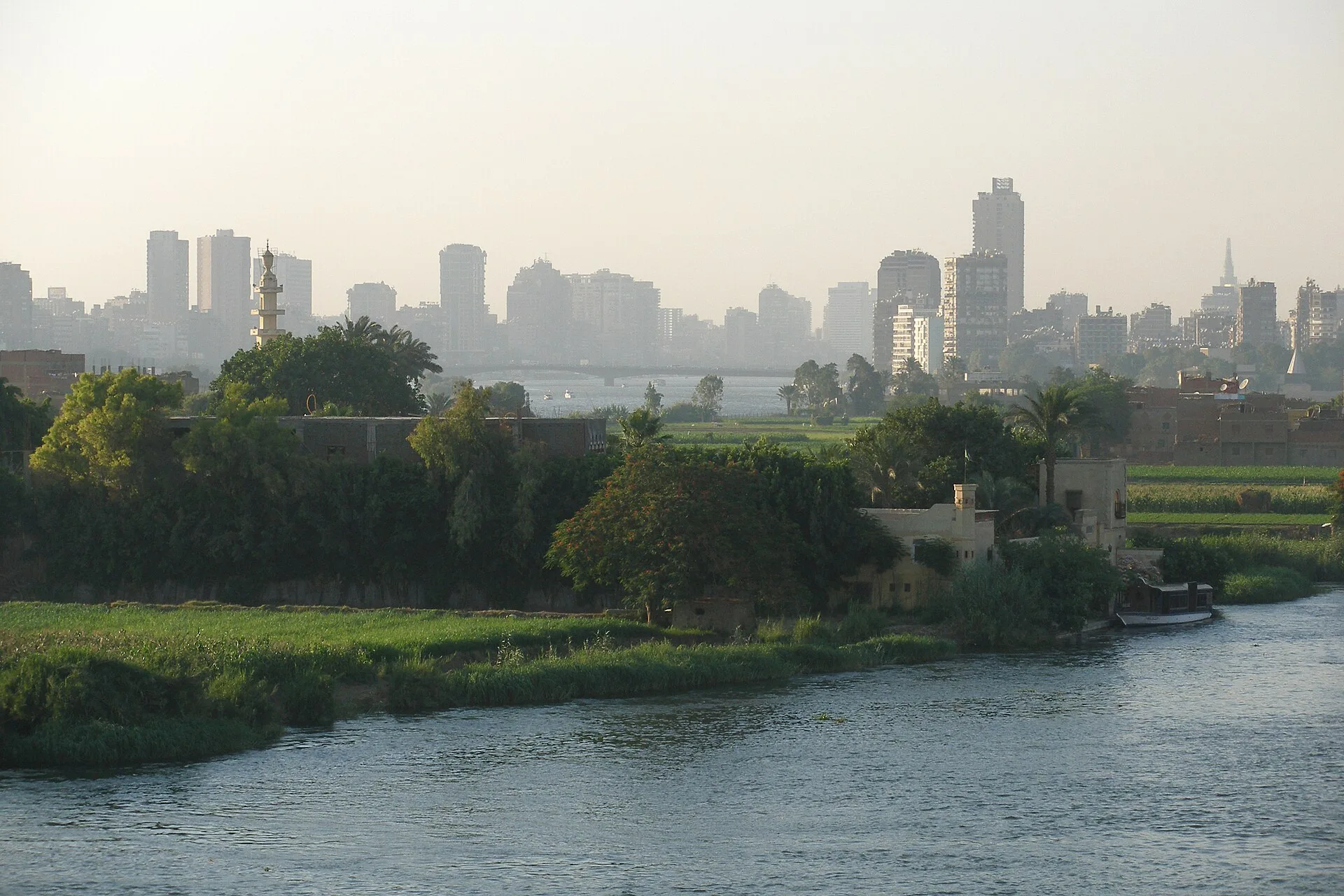
EGYPT · AFRICA
Egypt matters to Africa because it holds the Suez Canal, shares the Nile with Ethiopia and Sudan, borders Sudan and has the Rafah crossing into Gaza on its frontier. It has about 118 million people and an economy worth US$365 billion in 2025, according to the World Bank, the global development lender.
For readers in the United States, the practical links are the cost of shipping through Suez, refugee flows out of Sudan, and Gulf money moving into the Egyptian coast. The Nile dispute with Ethiopia has stayed unresolved since Ethiopia opened its giant dam on the river in September 2025.
Key Facts
- People and economy About 118 million people; an economy of US$365 billion in 2025, down from US$389 billion in 2024.
- Suez Canal Canal revenue rose 23% to about US$4.67 billion in the year to June 2026.
- Sudan Egypt hosts 843,387 Sudanese refugees registered with UNHCR, the UN refugee agency: 78% of all registered refugees (31 October 2026).
- The Nile Egypt calls the Nile an existential issue and rejects unilateral Ethiopian steps on the river.
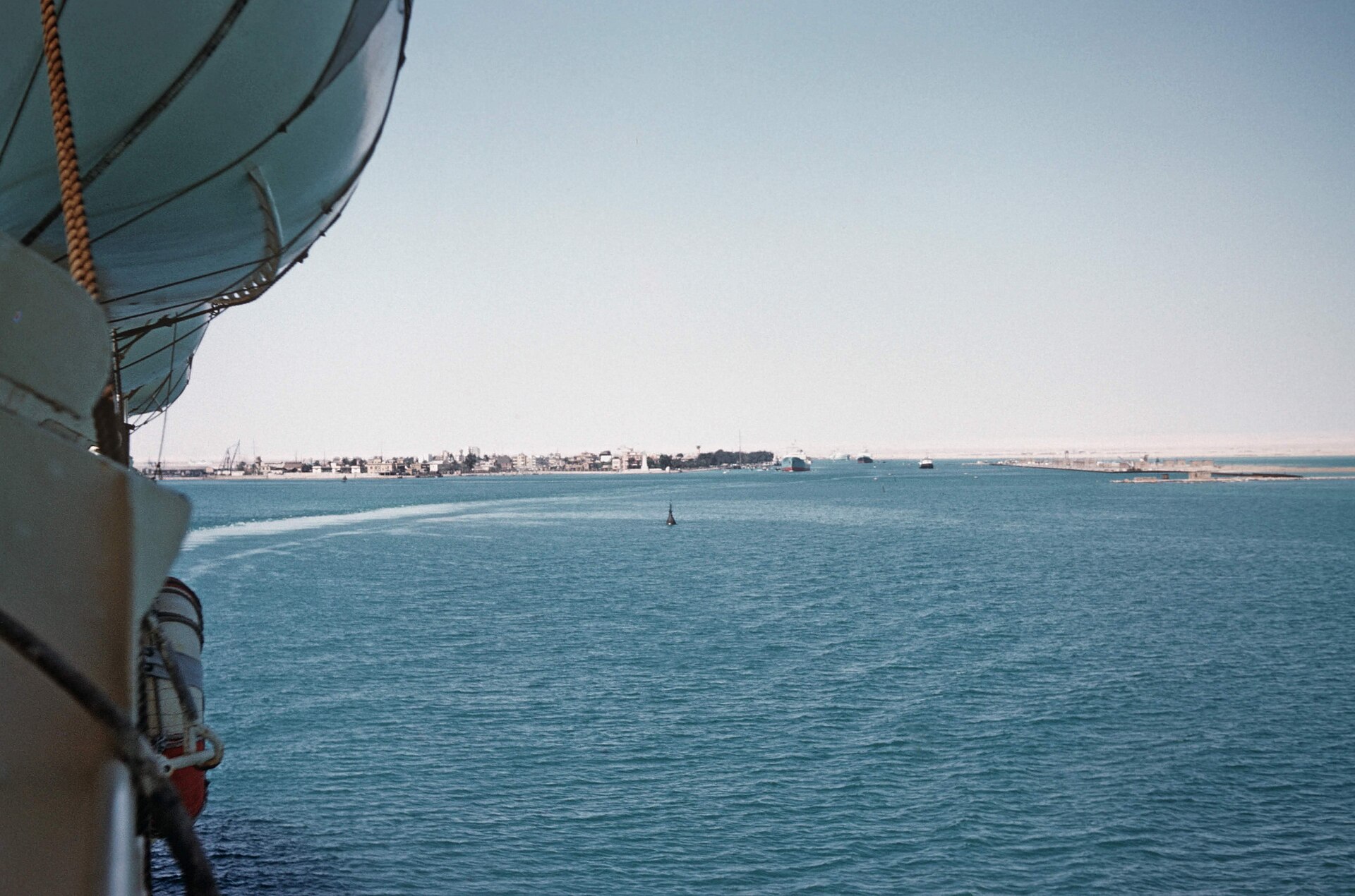
Why Egypt Counts in Africa
Egypt joined the Organisation of African Unity, the African Union’s predecessor, on 25 May 1963, according to the African Union’s own member list. The union now has 55 member states, and Egypt has belonged since the organisation began.
Egypt also belongs to COMESA, the Common Market for Eastern and Southern Africa, which its secretariat says has 21 member states. Its members work to cut trade barriers between them.
The World Bank’s 2025 estimate is 118.4 million people, while the country page of the IMF (the International Monetary Fund, a global lender) lists 110.058 million. The two counts differ, so treat any single figure as approximate; our fuller profile is in Egypt Explained.
The World Bank puts Egypt’s 2025 output at US$365.25 billion, down from US$389.06 billion in 2024. The IMF’s July 2026 update projects real growth of 4.6% for 2026.
In Plain English
The Suez Canal is the shipping shortcut between Asia and Europe, owned and run by Egypt. The Nile dam is Ethiopia’s giant power plant on the river Egypt depends on for water. UNHCR counts refugees; COMESA is a 21-country trade club; the African Union is the continent’s political body.
The Suez Canal: Egypt’s Biggest Lever
Admiral Ossama Rabiee, chairman of the Suez Canal Authority, the state body that runs the canal, said the canal earned about US$4.67 billion in fiscal year 2025/26, up 23% on the year before. Ships returned in larger numbers after months of Red Sea disruption had pushed many carriers onto the longer route around the Cape of Good Hope.
That is still below the record US$9.4 billion the canal earned in fiscal year 2022/23, according to the same chairman. On 21 October 2026 the authority discussed cooperation and the return of Hapag-Lloyd’s services with the German container line, which we cover in our report on the talks.
Its US$4.67 billion is about 1.3% of Egypt’s 2025 output. The alternative route runs around the whole African coast.
The Nile and Ethiopia’s Dam
Ethiopia formally opened the Grand Ethiopian Renaissance Dam, Africa’s biggest hydropower project, on the Blue Nile, the Nile’s main tributary, on Tuesday 9 September 2025. Egypt condemned the opening in a letter to the United Nations Security Council.
In October 2025 President Abdel Fattah el-Sisi told Cairo Water Week, an annual water conference in Egypt, that Egypt “will not stand idly by” over what he called unilateral management of the river. Ethiopia’s government calls the dam a national triumph and has accused Egypt of obstruction.
Egypt’s foreign ministry repeated its line on 9 November 2026: the Nile is an existential issue and Egypt rejects unilateral measures in the Eastern Nile Basin, the part of the river system shared by Egypt, Sudan and Ethiopia. On 2 November 2026 Egypt and Sudan held the third round of a joint “2+2” format, bringing together their foreign and irrigation ministers in Cairo.
It produced a joint declaration and a memorandum of cooperation between the two irrigation ministries that includes Egypt’s contribution to rehabilitating Jebel Aulia, a Nile reservoir in Sudan. The background is in our explainer on the dam dispute.
Sudan: Refugees and Borders
UNHCR, the United Nations refugee agency, counted 1,080,336 refugees and asylum seekers registered in Egypt at 31 October 2026. Of those, 843,387 were Sudanese (78.1%) and 81,491 were Syrians (7.5%).
Egypt’s foreign minister, Badr Abdelatty, told France’s foreign minister, Jean-Noël Barrot, in Paris on 10 November 2026 that Egypt backs Sudan’s unity, territorial integrity and national institutions, condemns drone attacks on civilians and wants a Sudanese-led political process. On 9 November Egypt’s foreign ministry also said it rejects any attempt to divide the country.
Gulf Money on the Mediterranean Coast
Abu Dhabi’s state investment fund ADQ announced a US$35 billion deal for Ras El-Hekma, a stretch of Egyptian Mediterranean coast, on 23 February 2024. About US$24 billion of that buys the development rights, and the other US$11 billion converts deposits held with Egypt’s central bank into investments.
Qatari Diar, Qatar’s state property developer, puts its Alam El-Roum project at about US$29.7 billion in total, of which about US$3.5 billion is cash. It launched the first phase in August 2026.
In both deals part of the headline figure is not new cash: the Qatari total is mostly in kind, and ADQ’s US$11 billion converts existing deposits. We set them in the wider picture of foreign influence in Egypt Geopolitics Explained.
The Gaza Border and Egypt’s Diplomacy
The Rafah crossing between Gaza and Egypt reopened on Monday 2 February 2026 for limited passage of people, under the EU’s border assistance mission, after the ceasefire. Egyptian officials have said the crossing must stay open for Palestinians to leave and return, and it opposes any plan that would push them permanently into Egypt.
Our guide to Egypt’s neighbours, including Libya, is Egypt and Its Neighbours. It adds the border detail this article leaves out.
What It Means for US Readers
If more ships take the Suez route, Asia to Europe voyages are shorter than via the Cape, which can ease freight costs, though carriers decide route by route. At about 1.3% of output, the canal is significant for Egypt but far from the whole economy.
Sudanese are the largest refugee group in Egypt, at 843,387 registered people. The Rafah crossing is the only land link between Gaza and Egypt, so its status matters to any US-backed ceasefire.
What Is Not Known
It is not known whether Suez revenue will return to its earlier level, because that depends partly on whether shipping lines judge the Red Sea route safe. We could not open the IMF’s October 2026 database, so we use the July update for growth and the World Bank for output.
We have found no agreement between Egypt, Sudan and Ethiopia on how the dam is run. We have not confirmed how the Rafah crossing has operated since February 2026, or whether it is open today.
Frequently Asked Questions
What Is Egypt’s Role in Africa?
Egypt has belonged to the African Union and its predecessor since 1963. It matters through the Suez Canal, the Nile, its border with Sudan and its Gulf and trade ties.
How Big Is Egypt Compared With the Rest of Africa?
Egypt has about 118 million people and a 2025 economy of US$365 billion, according to the World Bank. We have not ranked it against other countries because the sources use different years.
How Much Does the Suez Canal Earn?
The Suez Canal Authority’s chairman said revenue rose 23% to about US$4.67 billion in fiscal year 2025/26. That is still below the record US$9.4 billion of fiscal year 2022/23.
What Is the Nile Dam Dispute?
Ethiopia opened its Grand Ethiopian Renaissance Dam on 9 September 2025 over the objections of Egypt and Sudan. Egypt calls the Nile an existential issue and rejects unilateral steps.
How Many Sudanese Refugees Are in Egypt?
UNHCR counted 843,387 registered Sudanese refugees in Egypt at 31 October 2026, 78% of all registered refugees. Syrians are the second-largest group, at 81,491.
Sources: International Monetary Fund, Egypt country page (imf.org/en/Countries/EGY), July 2026 update; World Bank, GDP and population indicators for Egypt, updated 8 October 2026 (data.worldbank.org); UNHCR Egypt data portal, 31 October 2026 (data.unhcr.org/en/country/egy); African Union, member states list (au.int); COMESA secretariat, member states (comesa.int); Suez Canal Authority, news page and statements by its chairman, fiscal year 2025/26 revenue, June 2026, and the fiscal year 2022/23 record, June 2023 (suezcanal.gov.eg); Egypt Ministry of Foreign Affairs, statements of 3, 9 and 10 November 2026 (mfa.gov.eg); ADQ announcement, 23 February 2024; Qatari Diar announcements, August 2026; Ethiopian and Egyptian government statements on the dam opening, 9 September 2025.
This article was produced by The Rio Times’ automated AI newsroom. Editorial responsibility: Matthias Camenzind, Publisher and Editor-in-Chief. The Rio Times also runs Ask Rio Times, which answers from 100,000+ of our own articles, the daily Latin America Power Map, and prediction-market odds on elections and markets.. How we use AI · Report an error
Part of our ongoing coverage
Africa: The New Scramble — the great-power contest over the continent.
Expat Guide to Egypt
What The Rio Times publishes for foreigners who live in or move to Egypt.
Start here
- Moving to Egypt in 2026, Step by Step for Expats
- Egypt Security and Crime Explained 2026
- Retire in Egypt: No Retirement Visa, Ministry Lists US$100,000 Property for One-Year Permit
- How Foreigners Open a Bank Account in Egypt in 2026
City guides
Coming up in Egypt
- Cairo International Film Festival 2026: 11 to 20 November 11 Nov
- Max Amini Sells Out Five Cairo Shows, Sixth Added for 12 November 12 Nov
- Zamna Festival Returns to Sharm El Sheikh on 20 November 20 Nov
- What to Do in Hurghada in November 2026 21 Nov
Understand Egypt