
GUIDES · EGYPT
Key Facts
- —The country Egypt counted about 109 million residents in May 2026. Islam is the state religion, and Christians and Jews follow their own personal status rules.
- —The faith mix Estimates put Sunni Muslims at about 90 percent and Christians at about 10 percent. No recent official count of religion is public.
- —The law Article 2 of the constitution makes Islam the state religion. Article 64 declares freedom of belief absolute, but only for Islam, Christianity and Judaism in practice.
- —The leaders Ahmed el-Tayeb is Grand Imam of Al-Azhar, founded in 970. Pope Tawadros II has led the Coptic Orthodox Church since 18 November 2012.
- —The churches A cabinet committee had legalised 3,804 churches and service buildings by 16 April 2026. About 2,000 requests were still pending in March 2026.
- —The next step The cabinet approved a draft personal status law for Christians in April 2026, and parliament received it in May 2026.
Egypt religion explained for US readers. It covers who believes what, how the state manages Islam and Christianity, and where the law meets daily life.
Egypt religion is shaped by a state that names Islam its religion, funds the main institutions and licenses their preachers. Roughly nine in ten Egyptians are Sunni Muslims and about one in ten is Christian, mostly Coptic Orthodox.
For US readers the topic matters because faith law touches travel, marriage, tourism investment and the stability of a key regional partner. This guide sets out the facts as of October 2026, with every figure dated.
Who Lives in Egypt, by Faith
Egypt’s statistics office, CAPMAS, put the domestic population at 109 million on 9 May 2026. Egypt does not publish a current official count by religion, so every faith figure is an estimate.
The US State Department’s 2023 religious freedom report puts Sunni Muslims at about 90 percent and Christians at about 10 percent. It puts Shia Muslims at about 1 percent.
More than 90 percent of Christians belong to the Coptic Orthodox Church, the largest church in the country. Other Christian groups, including Catholics, Greek Orthodox and Evangelicals, together make up less than 2 percent of the population.
The number of Copts is disputed. Pope Tawadros II estimated 15 million in April 2023, while the 10 percent share cited by the State Department would be about 11 million of the 109 million population.
What the Constitution Says About Religion
Article 2 says Islam is the religion of the state and that the principles of Islamic Sharia are the principal source of legislation. Article 3 makes the principles of the laws of Egyptian Christians and Jews the main source for their personal status, religious affairs and choice of spiritual leaders.
Article 64 states that freedom of belief is absolute. It adds that practising rituals and building places of worship is a right of followers of revealed religions, organised by law.
In practice that phrase covers Islam, Christianity and Judaism only, which leaves other groups with legal gaps. Article 53 bans discrimination on grounds of religion or belief, and Article 74 bars political parties founded on religion.
Al-Azhar, Dar Al-Ifta and the State’s Islam
Al-Azhar in Cairo was founded in 970, and UNESCO describes it as a leading theological and academic centre for the Islamic world. Article 7 of the constitution makes it an independent institution whose Grand Imam cannot be dismissed.
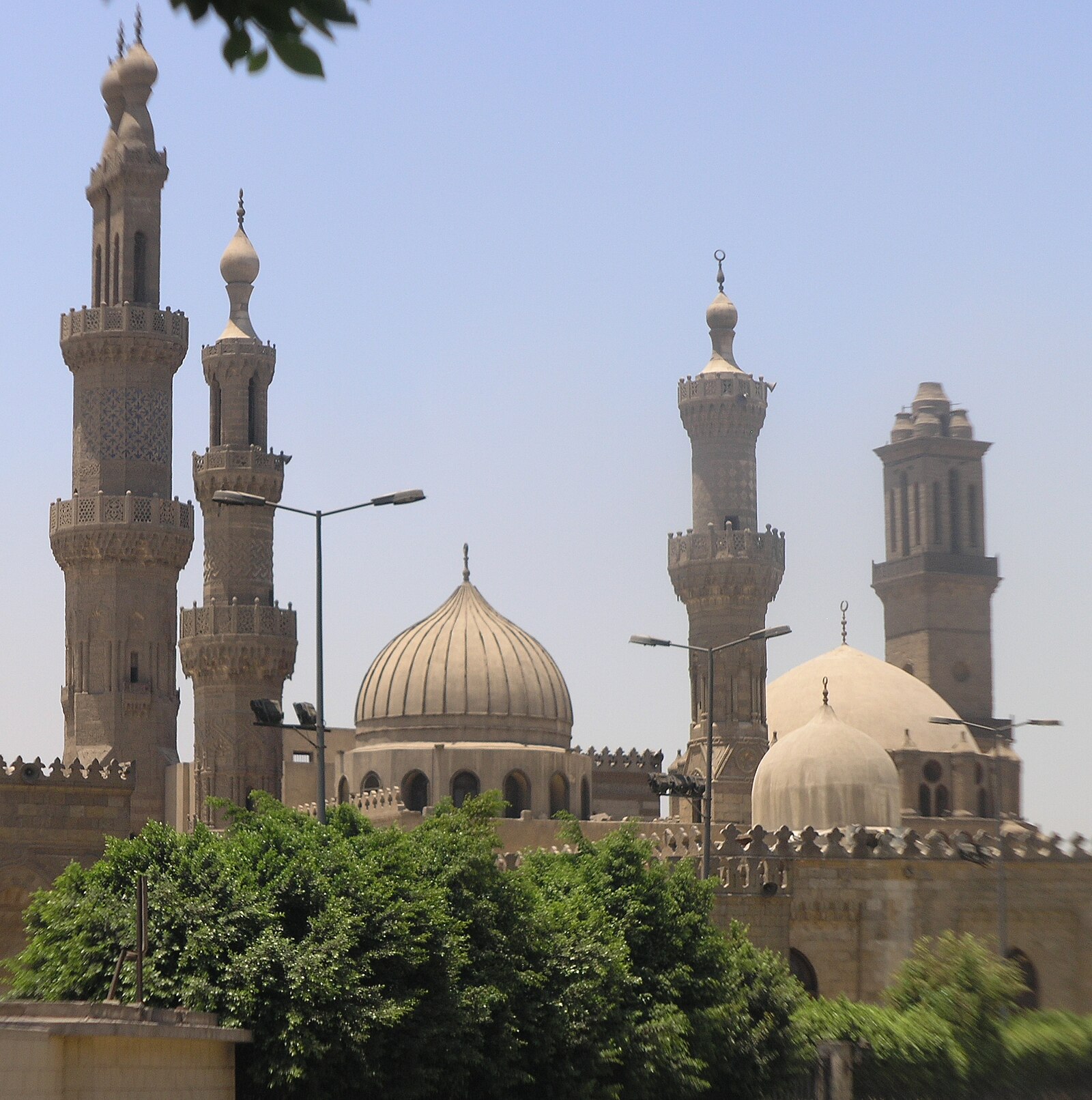
On 5 January 2026 Grand Imam Ahmed el-Tayeb led a delegation to Pope Tawadros II’s residence to offer Christmas greetings. The group included Grand Mufti Nazir Ayyad and Awqaf Minister Osama al-Azhari, and the Grand Imam said Egypt has no place for the term “minorities”.
Dar al-Ifta, the office of the Grand Mufti, is one of four entities the State Department lists as authorised to issue fatwas, or religious rulings. It sits formally under the Justice Ministry but has operated independently since 2007.
The Ministry of Awqaf, which manages religious endowments, appoints, pays and monitors imams in licensed mosques. Preaching without a licence can bring up to one year in prison, the State Department’s 2023 report says.
The ministry also sends monthly sermon guidelines, and imams who stray from them can lose bonuses or licences. The Awqaf minister said the state had built, developed or restored more than 11,200 Sunni mosques since 2014, the same report notes.
Al-Azhar runs its own school system, which the State Department puts at about 2 million students. Pupils in the national curriculum take Islamic or Christian religion classes matched to the faith on their identity cards.
The Coptic Orthodox Church
The Coptic Orthodox Church is led by Pope Tawadros II, the 118th Patriarch, who was enthroned on 18 November 2012. The church calls Saint Mark the first Patriarch of the See of Alexandria and dates its mission to about two thousand years ago.
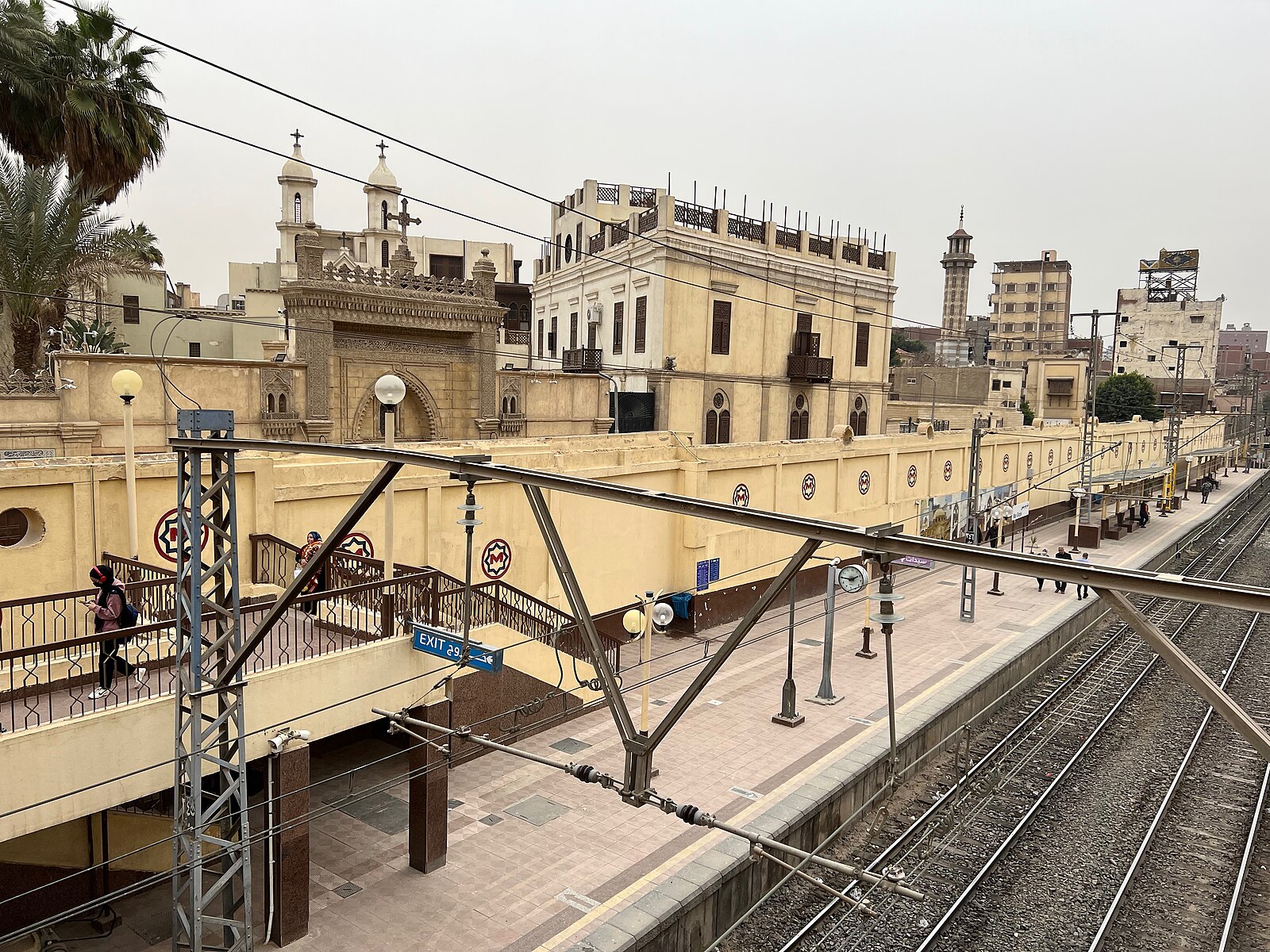
Copts celebrate Christmas on 7 January. President Abdel Fattah el-Sisi spoke on live television at the 7 January service at the National Cathedral, the State Department’s 2023 report notes.
Under Article 3 the churches choose their own spiritual leaders and apply their own principles to marriage and family matters. Overseas, the church says it has more than 32 dioceses outside Egypt, served by nearly 40 bishops.
Churches, Permits and the 2016 Law
Parliament approved Law 80 of 2016 on building and restoring churches on 30 August 2016. The rights group CSW says it moved approval to provincial governors, a power that had been limited to security agencies.
A cabinet committee chaired by Prime Minister Mostafa Madbouly reviews existing churches and service buildings that lack a licence. On 16 April 2026 it approved 191 more, bringing the total legalised since the committee began to 3,804.
Church leaders and rights groups say the process is slow. The US Commission on International Religious Freedom said in March 2026 that about 2,000 requests were still pending.
Local tension can flare when villagers suspect a house is being used as an unlicensed church. In April 2024 in Al-Fawakhir, Minya, three Christian homes were burned and three others looted after such a rumour, according to the Egyptian Initiative for Personal Rights.
Family Law and the Personal Status Bills
Egyptian law offers no civil marriage for citizens, and the state recognises only Muslim, Christian and Jewish marriages documented by a cleric. Muslim women may not marry non-Muslim men, while non-Muslim men who wish to marry Muslim women must convert to Islam.
National identity cards list only Muslim, Christian or Jewish. Baha’is and other unrecognised groups receive a dash instead, following a 2009 court order.
The government recognises conversion to Islam but generally not conversion from Islam. Returning to Christianity requires a church document and an official review, and children of converts stay classified as Muslim until 18.
In April 2026 the cabinet approved a draft personal status law for Christians covering marriage, divorce, custody and inheritance. It applies to Coptic Orthodox, Greek Orthodox, Catholic and Evangelical communities, and the justice minister said the main denominations broadly agreed.
Two bills, one for Christians and one for Muslims, were introduced in parliament in May 2026. The UK Home Office says the Christian bill went to a joint parliamentary committee, and no vote had been reported by its August 2026 note.
Smaller Faiths and Sects
Shia Muslims cannot open public places of worship, and Egypt has no Shia congregational halls, the State Department said in 2023. Small private worship is largely allowed, but public gatherings by unregistered groups are not.
Baha’is number an estimated 1,000 to 2,000, according to community representatives. The state has not recognised the faith since the 1960s, and its followers cannot legally marry in Egypt, the US Commission on International Religious Freedom said in 2025.
Egypt’s Jewish community has shrunk from tens of thousands in the 1940s to between six and ten people in Alexandria and Cairo, a local Jewish group told the State Department. Cairo’s Ben Ezra Synagogue was reinaugurated on 31 August 2023, though community leaders said they were not consulted.
Sufi orders, which follow mystical traditions within Sunni Islam, are organised under a Supreme Council of Sufi Orders. The State Department’s 2023 report recorded an October celebration in Tanta of the birth of Sayyid al-Badawi that drew an estimated 10,000 or more people.
Holy Places and Pilgrimage
Saint Catherine’s Monastery stands at the foot of Mount Sinai. UNESCO inscribed the area in 2002, saying the 6th-century monastery is the oldest Christian monastery still used for its original function.
UNESCO also says the area is sacred to Christianity, Islam and Judaism, and Muslims know the mountain as Jebel Musa. The monastery holds notable collections of early Christian manuscripts and icons.
On 28 May 2025 an Egyptian court ruled on land around the monastery, and Archbishop Ieronymos of Athens called the decision a violent violation of religious freedoms. The Egyptian presidency replied that nothing changes the monastery’s religious status.
The foreign ministry said the ruling covered remote, uninhabited reserve land without ownership papers, which therefore counts as state land. It said the court had approved continued use of the monastery and its sites.
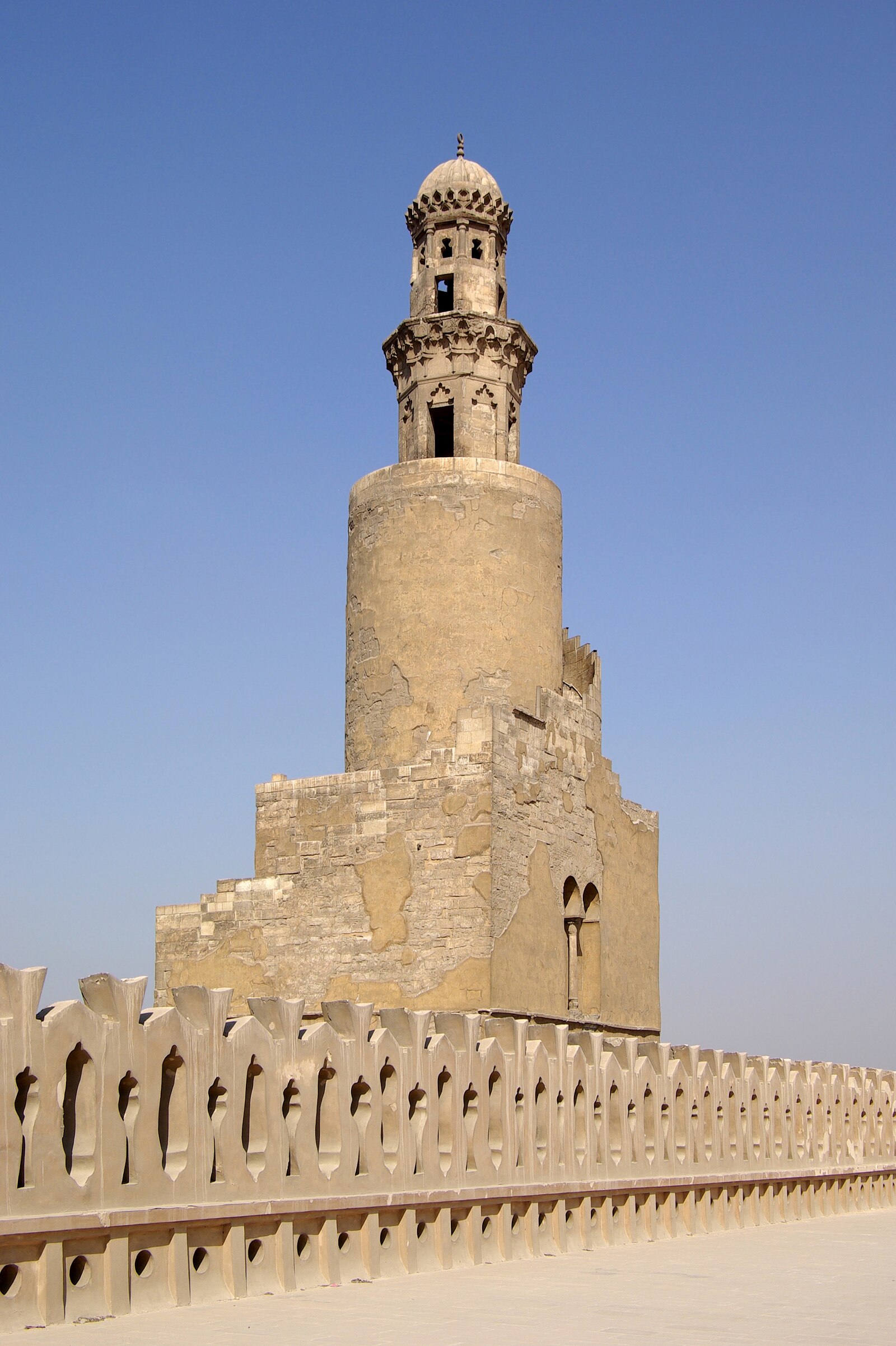
Historic Cairo, inscribed by UNESCO in 1979, holds famous mosques, madrasas, hammams and fountains. UNESCO dates the city’s founding as a Fatimid headquarters to 969.
Blasphemy Law, Tension and Security
Penal Code Article 98(f) punishes disdain for the three revealed religions with six months to five years in prison. A UK Home Office note of August 2026 says courts have used the article less often since 2019.
Rights groups still report prosecutions, often over social media posts. Amnesty International said in January 2026 that security forces had arbitrarily arrested at least 29 people over six months for online religious content.
On 3 February 2026 police in Cairo’s 15 May City arrested 58 Christians after dispersing a protest over a wall near a church plot. The UK note cites a rights group for the arrests and says it could not corroborate them independently.
Egypt has banned the Muslim Brotherhood and treats it as a terrorist organisation. On 13 January 2026 the US government designated the Egyptian chapter a Specially Designated Global Terrorist for material support to Hamas.
Customary reconciliation sessions, run by local notables, often settle sectarian disputes outside the courts. Rights groups say they can pressure victims to drop charges, while the UK note says their use appears to be declining.
What It Means for US Readers
Travellers will find Saint Catherine’s Monastery and Historic Cairo on UNESCO’s World Heritage List. Visitors should check current US travel advice and local opening hours before planning religious sites.
Investors in tourism and property should note that church building, family law and mosque management are all state-run files. Changes arrive through cabinet decisions and parliament, so the personal status bills and the church committee are worth following.
Americans who plan to marry in Egypt or marry an Egyptian should take legal advice early. Marriage and family rules depend on the religion listed on a citizen’s identity card.
The US designation of the Egyptian Muslim Brotherhood on 13 January 2026 carries sanctions consequences for anyone who deals with it. Companies and charities should screen partners against the Treasury list.
Connected Coverage
What Is Not Known
No one knows exactly how many Copts live in Egypt, because no current official count by religion is public. Estimates run from about 11 million, a 10 percent share, to the church’s 15 million.
It is not yet clear when parliament will vote on the two personal status bills or what the final text will say. The number of church requests still pending is also disputed, with USCIRF citing about 2,300 in December 2024 and about 2,000 in March 2026.
Several incidents described here rest on accounts from rights groups, and independent confirmation of every detail was not available. The lasting effect of the 2025 Sinai land ruling on the monastery remains disputed between the Greek Orthodox Church and Cairo.
Frequently Asked Questions
What is the main religion in Egypt?
Islam is the main religion, and Sunni Muslims make up about 90 percent of the population, according to the US State Department’s 2023 report. Islam is also the state religion under Article 2 of the constitution.
How many Christians live in Egypt?
Christians are about 10 percent of the population, and more than 90 percent of them are Coptic Orthodox. The church estimates 15 million Copts, while a 10 percent share of the population would be about 11 million.
Is Egypt a secular country?
No, because Article 2 makes Islam the state religion and the principles of Islamic Sharia the principal source of legislation. Article 64 still calls freedom of belief absolute, though worship rights apply to Islam, Christianity and Judaism.
Can Christians build churches in Egypt?
Yes, under Law 80 of 2016, which requires approval from provincial governors. A cabinet committee had legalised 3,804 churches and service buildings by 16 April 2026, with about 2,000 requests pending in March 2026.
What is Al-Azhar?
Al-Azhar is a mosque and university complex in Cairo founded in 970, and its Grand Imam leads Egypt’s main Sunni institution. Article 7 of the constitution makes it independent and bars the dismissal of the Grand Imam.
Can Egyptians change religion or marry across faiths?
Conversion to Islam is recognised, but conversion from Islam is generally not. Muslim women may not marry non-Muslim men, and Egypt offers no civil marriage for citizens.
Is the Muslim Brotherhood legal in Egypt?
No, because the government has banned it and treats it as a terrorist organisation. On 13 January 2026 the US government designated the Egyptian chapter a Specially Designated Global Terrorist.
Sources: US State Department, 2023 Report on International Religious Freedom: Egypt; USCIRF, Egypt Country Update, 2025; UK Home Office, Country Policy and Information Note: Christians, Egypt, August 2026; Constitution of Egypt, Constitute Project; UNESCO, Saint Catherine Area; UNESCO, Historic Cairo; US State Department, Terrorist Designations of Muslim Brotherhood Chapters, 13 January 2026; Coptic Orthodox Church, Nativity greetings, 5 January 2026; Coptic Orthodox Church, Pope Tawadros II; Ahram Online, CAPMAS population, 9 May 2026; Egypt Today, 191 churches legalised, 16 April 2026; Ahram Online, draft family law for Christians, April 2026; Library of Congress, Global Legal Monitor, 20 May 2026; CSW, 26 May 2026; Orthodox Times, Egyptian presidency and foreign ministry on Sinai Monastery, 30 May 2025. All accessed 19 October 2026.
This article was produced by The Rio Times’ automated newsroom system. How we use AI · Report an error · Editorial responsibility: Matthias Camenzind, Editor-in-Chief
Part of our ongoing coverage
Africa: The New Scramble — the great-power contest over the continent.
Expat Guide to Egypt
What The Rio Times publishes for foreigners who live in or move to Egypt.
Start here
- Egypt Security and Crime Explained 2026
- Retire in Egypt: No Retirement Visa, Ministry Lists US$100,000 Property for One-Year Permit
- How Foreigners Open a Bank Account in Egypt in 2026
- Taxes in Egypt for Expats 2026 — Residence, Income and Property
City guides
Coming up in Egypt
- Arab Music Festival Honours Hany Shaker in Egypt From 20 to 30 October 20 Oct
- Abu Simbel Sun Festival on 22 October: Sunrise Hits the Sanctuary 63 Metres Inside the Temple 22 Oct
- Cairo Clocks Go Back One Hour on 29 October 29 Oct
- Argy Pyramids of Giza: NEWORLD Live Show in Egypt on Friday 6 November 6 Nov
Understand Egypt