
Africa: Egypt
Egypt’s schools, universities and hospitals are changing at the same time, and the changes reach families, students and visitors. Reported Ministry of Education figures for 2024/25 count 62,056 schools in the country.
For a US reader, the stakes are practical. Human Rights Watch (HRW), an international rights group, said on 7 January 2026 that Egypt’s education and health spending sits far below its constitutional minimums, and we found no official price list for private hospitals.
This explainer covers schools, Al-Azhar (Egypt’s Sunni religious institution, which runs its own schools), universities, health insurance, hospitals and visitor health. It sits inside our wider coverage of Egypt, and every conversion uses about EGP 53.8 per US$, the market rate on 15 November 2026.
Key Facts
- Schools. 62,056 schools in 2024/25, as reported; 81.4% are public; average class size 38.4 pupils.
- Universities. About 3.9 million students in higher education in 2024/25, a count by the state statistics agency.
- Health insurance. A phased national scheme under Law 2 of 2018; the first phase covers six governorates (provinces).
- Visitors. Hepatitis A and typhoid vaccines are recommended for travellers; ambulances answer on 123.
- Costs. We found no official tariff for private hospitals; prices are quoted case by case.
Egypt is reshaping how pupils graduate and how citizens pay for care, while spending, evaluation and expatriate coverage remain open questions for families and visitors.
In Plain English
—Thanaweya Amma. The general secondary certificate earned after three years of secondary school.
—Al-Azhar. A constitutionally independent Sunni Muslim institution that runs its own schools and a university.
—UHIA. The Universal Health Insurance Authority, which runs the phased national insurance scheme.
—EMIS and CAPMAS. EMIS is the Ministry of Education’s statistics system, and CAPMAS is the state statistics agency.
The Big Picture
The current changes build on two laws. Law 23 of 1999 made basic education compulsory for nine years, according to the country profile of the UN education agency UNESCO, and Law 2 of 2018 created a phased national health insurance scheme.
The government’s stated aim is wider coverage: the second phase of health insurance targets about 70 hospitals, though reports differ. Funding includes a loan from AFD, the French development agency, reported as signed in June 2026.
One criticism concerns money. HRW said on 7 January 2026 that the 2025/26 budget gave education EGP 315 billion (about US$5.9 billion at our rate), about 1.5% of GDP, against a constitutional minimum of 6%.
For health, HRW put the figure at EGP 245 billion (about US$4.6 billion at our rate), or 1.1% of GDP against a constitutional minimum of 3%. Amr Magdi, HRW’s senior Middle East and North Africa researcher, said the government “has failed for years to adequately ensure the rights of education and health for everyone.”
The cabinet approved FY2026/27 spending of EGP 5.1 trillion (about US$95 billion) on 26 March 2026. We could not confirm regional comparisons, so we make no ranking claim.
How the School System Works
Basic education in Egypt is compulsory for nine years, from age 6 to 15, according to the country profile of the UN education agency UNESCO citing Law 23 of 1999. It consists of six years of primary school and three years of preparatory school.
Secondary school then lasts three years and is either general, ending in the Thanaweya Amma certificate, or technical. The Ministry of Education’s statistics system, known as EMIS, counts 62,056 schools in 2024/25, as reported.
Of these, 50,500 are public (81.4%) and 11,556 are private (18.6%), as reported. The count of 672,852 classes and an average class size of 38.4 pupils in 2024/25, down from 46.1, are also reported figures.
The 2026-27 school year opened for public and private schools on 12 September 2026, and for international schools on 6 September 2026, with 183 school days. International schools, which teach British IGCSE exams, the American high-school diploma or the International Baccalaureate (an international school programme), set their own fees, and we found no official fee figure.
Al-Azhar and the Egyptian Baccalaureate
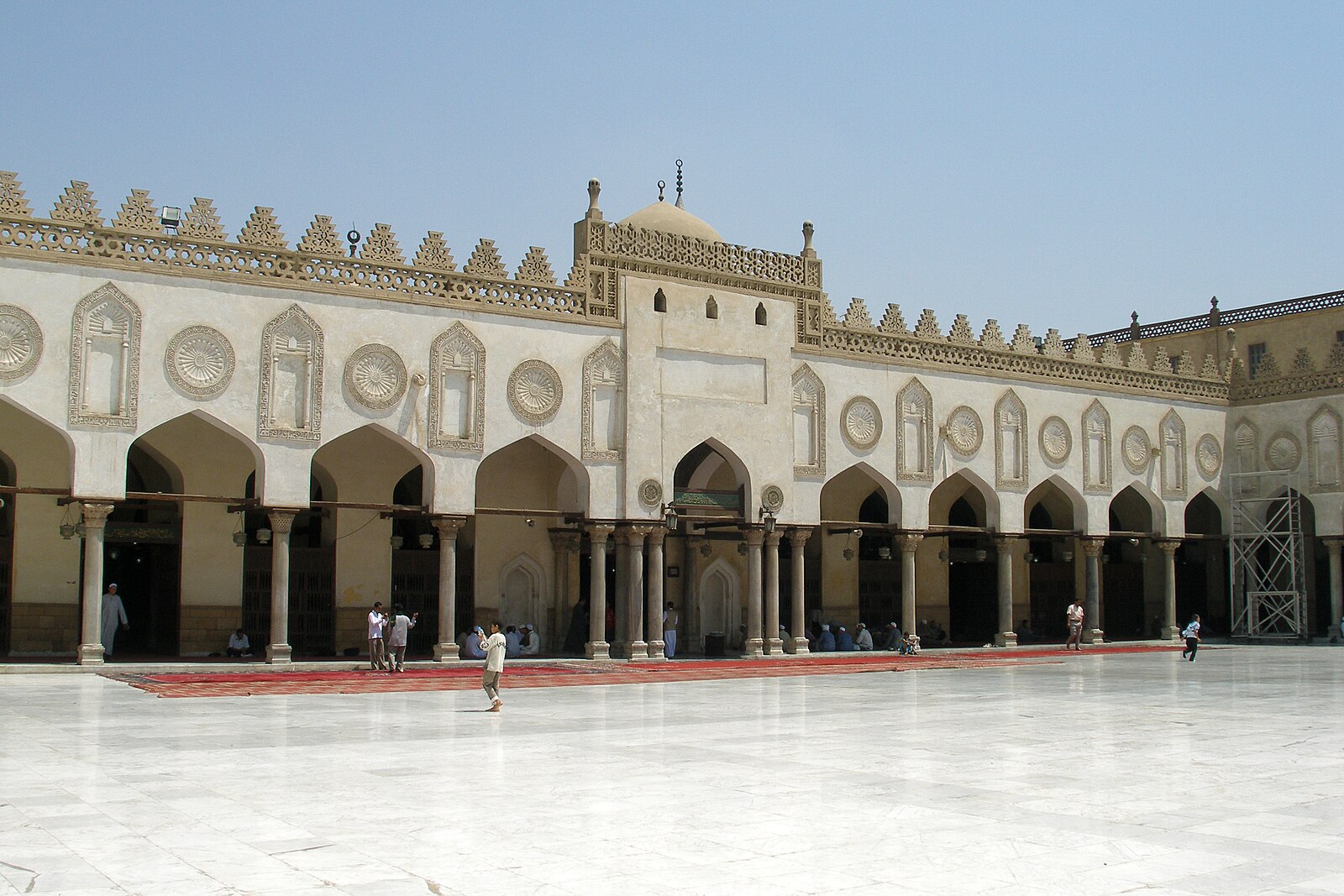
Al-Azhar is a constitutionally independent Sunni Muslim institution that runs its own pre-university institutes beside the state schools. It also runs Al-Azhar University.
Al-Azhar’s school network sits outside the Ministry of Education. We could not confirm how many institutes or pupils it has.
The Education Law was amended in July 2025 to create the Egyptian Baccalaureate, reported as Law 169 of 2025. It is a new optional secondary route that runs alongside Thanaweya Amma.
It was reported on 3 August 2026 that about 99% of students, roughly 832,000, opted in for 2026-27, attributed to an unnamed ministry official, with no ministry release found. We could not confirm the exam format or the fees.
Universities and Foreign Students
Egypt’s higher-education sector had about 3.9 million students in 2024/25, according to CAPMAS, Egypt’s state statistics agency. The sector mixes public universities, private universities, national universities and Al-Azhar University.
Counts of universities differ by roster, so we give no total. Al-Azhar University belongs to the Al-Azhar institution, and we could not confirm its student numbers.
Tuition for foreign students varies by university and faculty, and we could not confirm a reliable national range. Each university publishes its own fee table.
In the QS World University Rankings 2026, a ranking by the British firm Quacquarelli Symonds, Cairo University is joint 347th and the American University in Cairo joint 381st. Egypt also agreed a pay rise for university faculty, which we covered in our earlier report.
How Universal Health Insurance Is Rolling Out
Law 2 of 2018 sets a phased national health insurance scheme run by the Universal Health Insurance Authority, known as UHIA. Coverage began in Port Said in 2019, and the Aswan launch followed in July 2025, which is reported.
The first phase covers six governorates, the Egyptian equivalent of provinces: Port Said, Ismailia, Suez, South Sinai, Luxor and Aswan. AFD, the French development agency, puts coverage at about 6 million people, while a cabinet statement of November 2025 said 5.2 million.
The average registration rate in Phase 1 is 81.7%, and private providers make up 31% of the contracted network, as reported from November 2025 data. See also our guide to Egypt’s regions and provinces.
The second phase is planned for Minya, Matrouh, Damietta, Kafr El Sheikh and North Sinai, though sources differ and Alexandria is under consideration. A pilot in Minya has been reported.
We found no published evaluation of the first phase, though a WHO-led impact evaluation is reported to be in design. The scheme also draws on earmarked levies on tolls, vehicle licences and tobacco.
Hospitals and Costs for Expats
Private hospitals quote prices case by case, and we found no official tariff or published price list. That means we cannot give typical costs.
Reports differ on whether foreign residents can join the state scheme, with one saying they are eligible subject to reciprocal agreements. Our September explainer on healthcare for expats in Egypt says they remain outside it, and the authority has not confirmed either.
Staying Healthy as a Visitor
The US Centers for Disease Control and Prevention (CDC) recommends hepatitis A vaccination for unvaccinated travellers aged one year or older, and hepatitis B for unvaccinated travellers younger than 60. Its Egypt page, last reviewed on 25 August 2026, also says typhoid vaccination is recommended for most travellers.
CDC says all international travellers should be fully vaccinated against measles (MMR, the measles, mumps and rubella vaccine) and keep routine vaccines up to date before every trip. It lists a Level 1 Global Measles notice, with the advice to practise usual precautions.
For rabies, CDC advises travellers to talk to a doctor about pre-exposure vaccination. It also advises avoiding swimming in fresh, unchlorinated water such as lakes, ponds or rivers because of schistosomiasis, a parasitic disease.
CDC does not recommend yellow fever vaccination for Egypt and does not require it for direct travel from the US. It is required for travellers aged nine months and older arriving from at-risk countries, including after transits longer than 12 hours.
The UK Foreign Office, the British foreign ministry, lists 123 as the ambulance number in its health advice for Egypt. Cancer care is covered in our report on falling cancer mortality.
What It Means for You
For a US family weighing a degree in Egypt, we could not confirm a national tuition range. Each university publishes its own fee table, and public and private universities differ.
For expat families, international schools set their own fees and we found no official figure. Whether foreign residents can join the state insurance scheme is unconfirmed, so we do not state it as fact.
Two dates are worth watching, reported by Egyptian media, with the ministry timetable not seen and dates to be confirmed. University exams are reported for Saturday 2 to Thursday 21 January 2027, and the second semester for Saturday 6 February 2027.
What Is Not Known
Total pre-university enrolment is not confirmed because sources conflict, and the total number of Al-Azhar institutes and students is not confirmed either. We could not confirm the number of government hospitals and beds in the CAPMAS 2024 bulletin.
No official start date is confirmed for the second phase of health insurance, and we found no published evaluation of Phase 1. How the scheme will collect contributions from informal workers is unresolved.
We could not confirm typical private hospital prices, and we could not confirm any extra Ministry of Health and Population requirement for visitors. The government’s response to the Human Rights Watch figures is not confirmed, and Finance Ministry figures for 2026/27 health allocations conflict.
Frequently Asked Questions
How long is compulsory schooling in Egypt?
Basic education is compulsory for nine years, from age 6 to 15, covering six years of primary and three of preparatory school. Secondary school then lasts three years, general or technical.
What is the Egyptian Baccalaureate?
It is a new optional secondary route reported as created by Law 169 of 2025, running alongside Thanaweya Amma. We could not confirm the exam format or the fees.
How much do foreign students pay at Egyptian universities?
We could not confirm a reliable national range. Each university publishes its own fee table for foreign students.
Can foreign residents use Egypt’s public health insurance?
Reports differ: one report says foreign residents are eligible subject to reciprocal agreements, while our September explainer says they remain outside it. The Universal Health Insurance Authority has not confirmed either.
Which vaccines does the CDC recommend for Egypt?
CDC recommends hepatitis A for unvaccinated travellers aged one or older, hepatitis B for unvaccinated travellers under 60, and typhoid for most travellers. All travellers should be fully vaccinated against measles and up to date on routine vaccines.
What is the emergency number in Egypt?
The UK Foreign Office, the British foreign ministry, lists 123 as the ambulance number in Egypt. We found no official private-hospital tariff or published price list.
Sources
CDC Travelers’ Health: Egypt · Human Rights Watch · UNESCO International Bureau of Education · UK Foreign Office · Ministry of Education · CAPMAS · AFD
Connected Coverage
Egypt healthcare for expats and insurance phase two
Egypt agrees pay rise for university faculty
This article was produced by The Rio Times’ automated AI newsroom. Editorial responsibility: Matthias Camenzind, Publisher and Editor-in-Chief. The Rio Times also runs Ask Rio Times, which answers from 100,000+ of our own articles, the daily Latin America Power Map, and prediction-market odds on elections and markets.. How we use AI · Report an error