Dominican Map Shows Gangs in Haiti’s Capital

DOMINICAN REPUBLIC · SECURITY
Key Facts
- The country The Dominican Republic shares the island of Hispaniola with Haiti, where armed gangs now hold most of the capital, Port-au-Prince.
- Why it matters Gangs on the roads into Port-au-Prince charge tolls on goods and aid, and the US has designated two Haitian gang groups as terrorist organizations.
- Why now The Dominican defense minister briefed on gang control and toll figures on Monday 26 October 2026, days after four Salvadoran military personnel went missing in Haiti.
- What happened Lieutenant General Carlos Antonio Fernández Onofre put gang control of Port-au-Prince at between 70% and 90%, depending on the account, and listed tolls of up to US$1,150 for a 40-foot container.
- The numbers A 20-foot container pays US$576, the road from Jimaní to the capital has about seven toll points, and the nearest gang is beyond Ganthier, which lies 26 kilometers from the Malpasse crossing.
- What it means for you Cargo bound for Haiti passes gang toll points, and US law generally bars US persons from transactions with the two groups the State Department designated.
- Still open Which gang runs each toll, how the 80% to 90% share was measured, and whether the gangs will move toward the border.
In Plain English
The Gang Suppression Force, known as the GSF, is the multinational force backed by the UN Security Council that is deployed in Haiti to take on armed gangs. Viv Ansanm and Gran Grif are Haitian gang groups that the US State Department designated as Foreign Terrorist Organizations in May 2025.
La Agenda Semanal is the weekly press program held on Mondays at the National Palace in Santo Domingo. UNODC is the United Nations Office on Drugs and Crime.
The Dominican Republic’s defense minister told the government’s Monday 26 October 2026 press program that Haitian gangs control between 80% and 90% of Port-au-Prince, according to El Nacional, Diario Libre and Hoy, while the Presidency’s own summary of the briefing says at least 70%. Lieutenant General Carlos Antonio Fernández Onofre said the gangs charge up to US$1,150 to let a 40-foot container reach the capital and US$576 for a 20-foot one, and El Nacional reported that he showed a map as evidence.
The estimate is the Dominican government’s own, and the UN has put gang control at up to 90% of the capital. For US readers the tolls matter because Washington designated two Haitian gang groups as terrorist organizations in May 2025, and US persons are generally barred from transactions with them.
What the Defense Minister Presented
Fernández Onofre said the main gangs operate in the Port-au-Prince metropolitan area, covering between 80% and 90% of the capital, and hold every land access route into it. He said the groups also extend into outlying areas such as Kenscoff, Ganthier, Mirebalais and the Artibonite.
The gangs finance themselves through tolls on transport routes, kidnappings and extortion, he said. A 40-foot container pays US$1,150 and a 20-foot one US$576, with rates that vary by size and cargo.
On National Route 8, which links Port-au-Prince with Jimaní, he counted about seven toll points and gave distances of 13 kilometers from Malpasse to Fond-Parisien, 26 to Ganthier, 44.6 to Croix-des-Bouquets and 64.5 to the capital. He said the gang closest to the Dominican border sits beyond Ganthier, which he placed 26 kilometers from the Malpasse crossing.
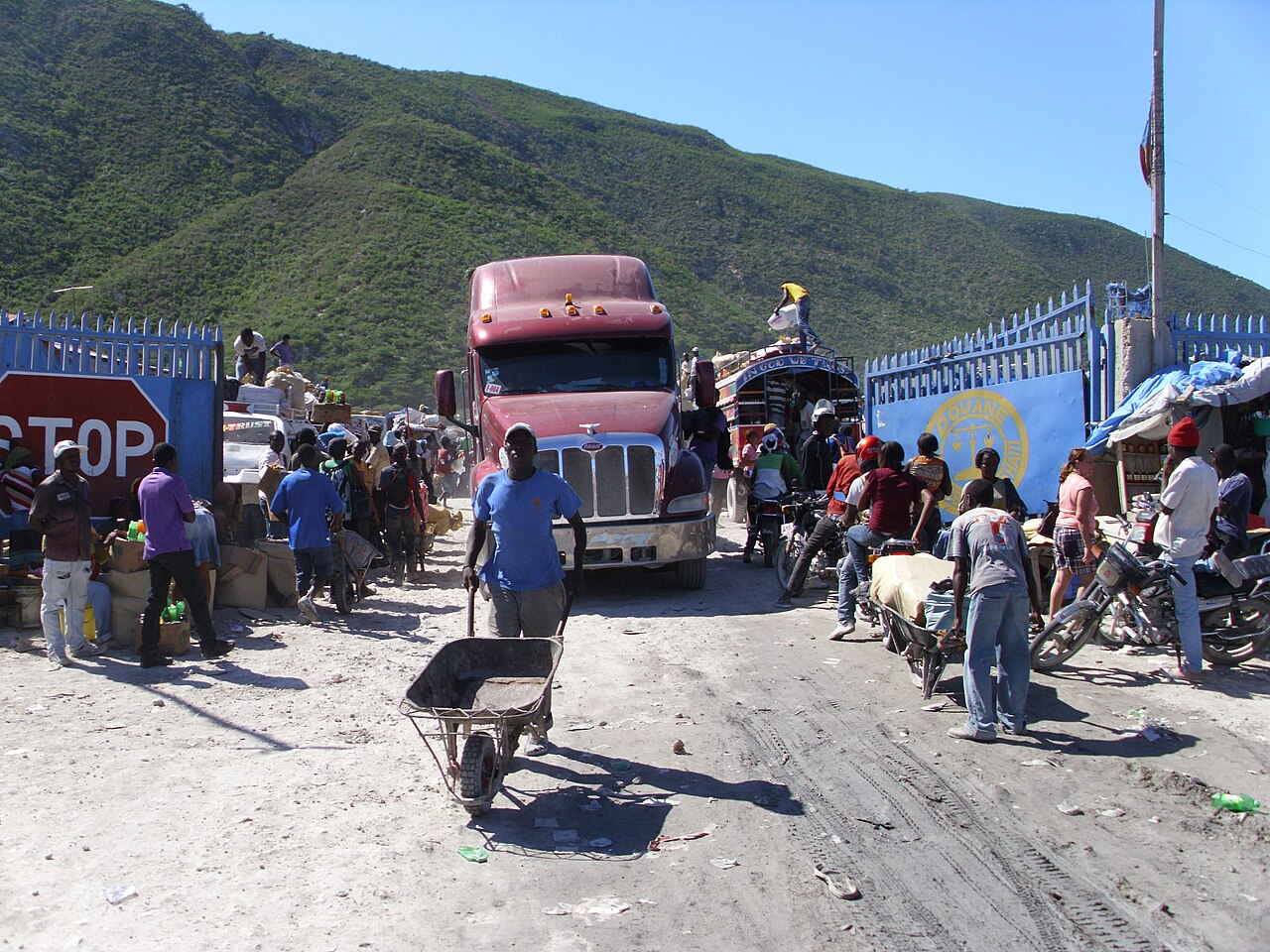
The minister said Dominican intelligence shows the gangs have stayed in place and have not moved toward Elías Piña or Jimaní. The Presidency’s summary adds that displacement is heading west, away from the border.
How the Gang Control Figures Compare
The Presidency’s own summary of the same briefing says the gangs control at least 70% of Port-au-Prince and key logistics corridors, while El Nacional, Diario Libre and Hoy reported the minister’s figure as 80% to 90%. The published summaries do not settle which share the map showed.
UN News wrote in March and again in June 2026 that at least 26 gangs control up to 90% of Port-au-Prince and surrounding areas. The UN Office on Drugs and Crime estimated in January 2026 that gangs hold 80% to 90% of the capital, and it says they extort commerce and humanitarian transport routes.
UN News added in June that gang violence had left more than 2,300 people dead and more than 1,100 injured since the start of 2026. The same report put the number of Haitians forced from their homes by gang violence at about 1.5 million.
Border Security and the Gang Force
President Luis Abinader said the border is at its highest level of protection and that the government will not allow gangs within 20 kilometers of it. The defense minister said 11,000 soldiers are deployed on the border line, with 54.5 kilometers of smart fence ready and 38 kilometers of wall from Manzanillo to Capotillo due to open in December.
Foreign Minister Víctor Bisonó said the Dominican Republic takes no part in direct military operations against the gangs because of UN peacekeeping principles, but it gives the Gang Suppression Force logistical support such as transit for contingents and medical evacuations. About 2,181 international personnel are deployed in Haiti, he said, with a target of 5,500 over the next three months.
The briefing came after an ambush on 18 October in which four Salvadoran military personnel went missing, and Abinader said Haitian authorities do not know their situation. The case is covered in Salvadoran Soldiers Missing in Haiti.
Why Washington Watches the Tolls
The State Department designated Viv Ansanm and Gran Grif as Foreign Terrorist Organizations in May 2025, which blocks their property under US jurisdiction and generally bars US persons from transactions with them. In March 2026 its Rewards for Justice program sought information on the groups’ revenue sources, including extortion and kidnapping for ransom.
The Dominican briefing did not say which gang collects which toll, so the published accounts do not show how many toll points fall under the designated groups. An explainer on the Haiti gang crisis covers the groups and the UN force in more detail.
What It Means for You
For US readers, the briefing shows that Haitian gangs tax the roads that carry goods and aid into Port-au-Prince, and Dominican officials count about seven toll points on the road from Jimaní. Companies and charities moving cargo through the Dominican Republic into Haiti face legal questions, because US persons are generally barred from dealing with the two designated groups.
The Dominican government says gangs stay far from its border, and that claim is its own and has not been independently verified. More reporting is collected in the Dominican Republic coverage, including the deployment of two battalions to the Haiti border.
What Is Not Known
Which gangs collect each toll, and how much of the money reaches the two groups designated by the United States, is not stated in the published accounts. The control figures also differ, with the Presidency citing at least 70% and the press reporting 80% to 90%.
How the Dominican government measured control of the capital, and whether independent monitors agree, has not been explained. Whether the gangs will move toward the border is also unknown, though the minister says intelligence shows they have stayed in place.
Frequently Asked Questions
Do Haitian gangs control Port-au-Prince?
The Dominican defense minister put gang control at 80% to 90% of the capital on 26 October, and UN News has cited up to 90%. The Dominican Presidency’s own summary said at least 70%.
How much do Haitian gangs charge in tolls?
The Dominican defense minister said gangs charge up to US$1,150 for a 40-foot container and US$576 for a 20-foot one. He counted about seven toll points on the road from Jimaní to Port-au-Prince.
Are Haitian gangs near the Dominican border?
The Dominican defense minister said the nearest gang is beyond Ganthier, which lies 26 kilometers from the Malpasse crossing. President Luis Abinader said the government will not allow gangs within 20 kilometers of the border.
Has the US labeled Haitian gangs terrorists?
Yes, the State Department designated Viv Ansanm and Gran Grif as Foreign Terrorist Organizations in May 2025. US persons are generally prohibited from transactions with them.
What is the Gang Suppression Force?
It is a UN-backed multinational force deployed in Haiti against armed gangs. Dominican Foreign Minister Víctor Bisonó said about 2,181 personnel were deployed, with a target of 5,500 in three months.
Sources: Dominican Presidency, 26 October 2026; Dominican Presidency on the defense minister, 26 October 2026; Dominican Presidency on the foreign minister, 26 October 2026; El Nacional, 26 October 2026; El Nacional on the border, 26 October 2026; Diario Libre, 26 October 2026; Diario Libre on the missing Salvadorans, 26 October 2026; Hoy, 26 October 2026; UN News, 16 June 2026; UN News, March 2026; UN Office on Drugs and Crime, 21 January 2026; US Embassy in Haiti, State Department rewards notice, 25 March 2026.
Editorial responsibility: Matthias Camenzind, Editor-in-Chief · Editorial standards · Report an error
Haiti
- What Is Happening in Haiti?
- What Is Happening in Haiti?
- Haiti Gang Crisis Explained 2026 Gangs and the UN Force
- Haiti’s 13 December Vote, What US Travellers Need to Know