Colombia Foreign Policy Turns: ICC Judge Bid Dropped, New Envoys for Israel and Peru
Colombia · Foreign Policy
Key Facts
- —What happened Colombia withdrew Carolina Olarte Bácares from December’s election of six International Criminal Court judges; she was told on 17 September 2026.
- —Why it matters An evaluation panel had rated her “highly qualified”, and she was the only Latin American candidate in the race.
- —The new envoys Tania Gilinski, sister of banker Jaime Gilinski, is headed for Israel; former senator Thania Vega for Peru.
- —The wider pattern The same week, Colombia quit the Equal Rights Coalition, an LGBTI rights group it co-chaired with Spain.
- —The catch Neither ambassador has a decree yet; Israel and Peru have reportedly given consent, and Gilinski’s CV is posted for comment.
- —What comes next Foreign Minister Omar Bula is presenting the new foreign policy at the UN General Assembly in New York this week.
In one week, President Abelardo de la Espriella’s government dropped a top-rated candidate for the world’s war crimes court and chose a banker’s sister and a former senator for two sensitive embassies.
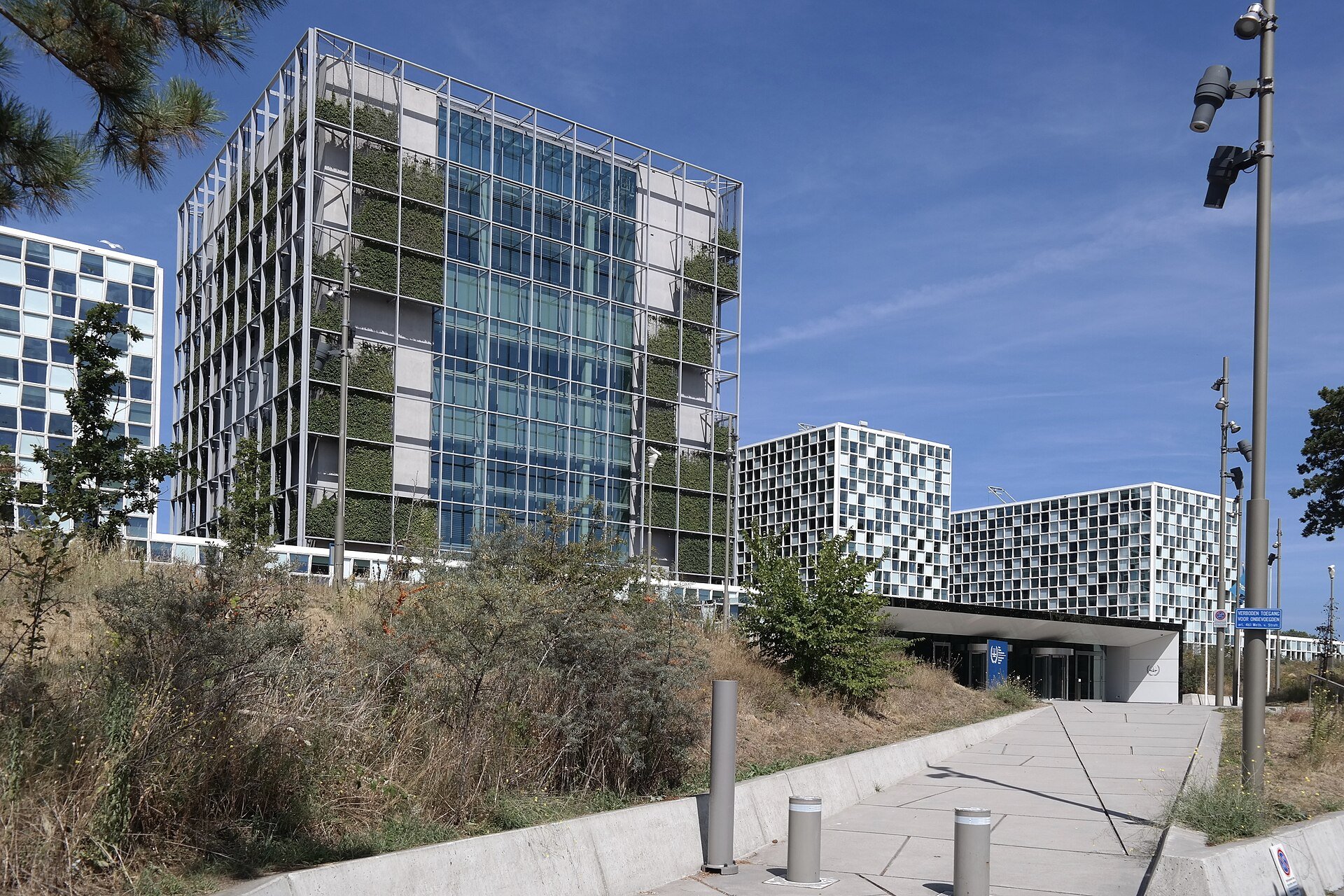
Colombia foreign policy is changing fast under President Abelardo de la Espriella, a right-wing lawyer who took office on 7 August 2026. In a single week his government dropped a judge candidate for the International Criminal Court and chose envoys for two key embassies.
The moves came just before the high-level week of the United Nations General Assembly in New York. There, Colombia says it will present “new guidelines” for its diplomacy.
A top-rated candidate, withdrawn without notice
The International Criminal Court, or ICC, is the permanent tribunal in The Hague that tries genocide, war crimes and crimes against humanity. Its 18 judges are elected by the countries that have joined its founding treaty, the Rome Statute.
Six seats are up for election at the Assembly of States Parties, meeting in New York from 7 to 17 December 2026. Colombia’s candidate was Carolina Olarte Bácares, an international lawyer.
Olarte holds a doctorate in international law from Paris and was dean of law at Bogotá’s Pontificia Universidad Javeriana. She also helped defend Colombia in its maritime case against Nicaragua at the International Court of Justice.
She served as Colombia’s ambassador to the Netherlands until the new government accepted her resignation on 18 August 2026. She stayed on as the ICC candidate.
On Thursday 17 September 2026, she learned the candidacy had been withdrawn, she told La Silla Vacía, a Colombian news site. The call came from another country’s permanent representative, not from her own government.
“I found out through a call from a permanent representative of a state,” she told El Espectador, a Bogotá newspaper. The Foreign Ministry told the paper it had no comment.
An evaluation document dated 5 August 2026 had rated her “highly qualified”, El Colombiano reported. El Espectador said she was in the top four of 14 candidates, alongside those of Spain, Switzerland and Gambia.
She was the only Latin American in the field. Colombia has never had a judge on the court, Blu Radio noted.
“A matter of state, not of government”
Ricardo Abello, a law professor at Universidad del Rosario, said the nomination did not come from Gustavo Petro’s previous government. It came from Colombia’s jurists at the Permanent Court of Arbitration, a Hague dispute-settlement body, and he was one of them.
Petro’s government did back the choice, and it was formalised early in 2026, El Espectador noted.
Fabián Cárdenas, who teaches at the Javeriana, told El Espectador the move sends a message of “institutional weakness”. In his words, the candidacy “was not a matter of government but of state”.
Olarte called the decision “abrupt and surprising”. She said it raises questions about Colombia’s future stance toward the court.
In mid-August, US Defense Secretary Pete Hegseth urged 19 countries to leave the ICC, El Colombiano reported. They belong to the Shield of the Americas, a US-backed regional security coalition.
Colombian media have also reported that Bogotá is studying an exit from the court. Yet the ministry told El Espectador in writing that no order to quit the Rome Statute had been issued.
New envoys for Israel and Peru
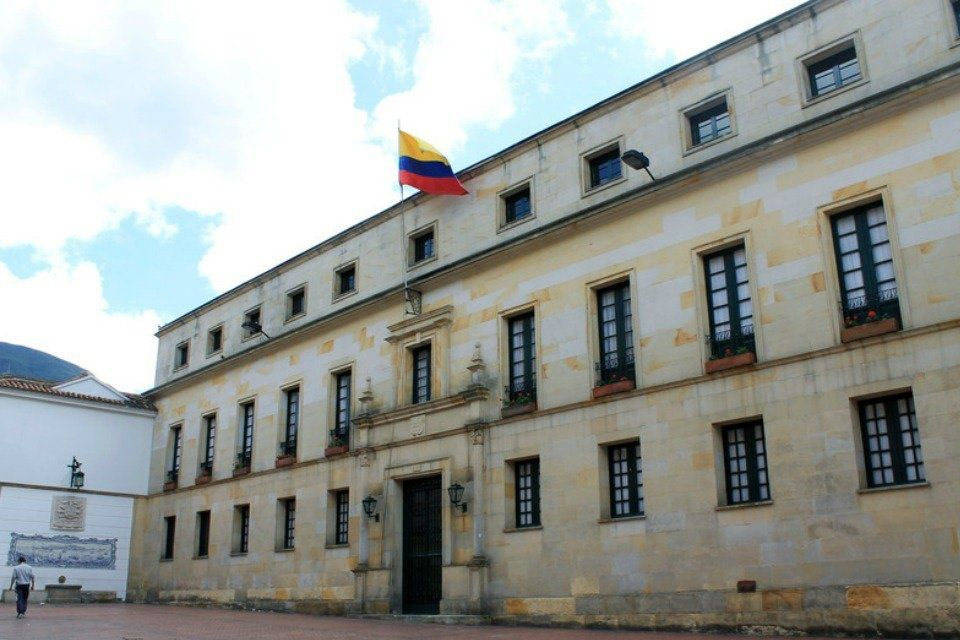
The second shift is in who represents Colombia abroad. By 21 September 2026, the presidency had published the CV of Tania Gilinski as its choice for ambassador to Israel.
Publishing a CV for public comment is a standard step before an appointment decree. Israel has given its consent, El Espectador reported, but no decree has followed.
Gilinski is the sister of Jaime Gilinski, a banker and one of Colombia’s best-known businessmen. Her father, Isaac Gilinski Sragowicz, was ambassador to Israel from 2010 to 2013.
The posting follows a sharp reversal. Petro broke off relations with Israel in May 2024 over the war in Gaza.
The new government decided on 11 August 2026 to restore ties, according to the Foreign Ministry cited by La FM. Foreign Minister Omar Bula told Congress the relationship “must be recovered”, citing intelligence and security cooperation.
Peru has granted its agrément, a host country’s formal consent, to Thania Vega de Plazas, El Espectador reported. Peru is now governed by President Keiko Fujimori.
Vega was a senator for the Centro Democrático, the party of former president Álvaro Uribe, from 2014 to 2018. She is the daughter of a late defence minister, Miguel Vega Uribe.
She is married to Alfonso Plazas Vega, a retired army colonel. He was convicted in 2010 over disappearances during the army’s 1985 assault on the Palace of Justice.
M-19 guerrillas had seized the building, then home to the Supreme Court.
The Supreme Court acquitted him on 16 December 2015. On 17 September 2026, a US federal jury in Miami also cleared him of civil liability in a separate case.
That suit concerned the killing of Carlos Horacio Urán, an assistant judge at the Council of State, Colombia’s top administrative court. De la Espriella had backed Plazas Vega and hailed the verdict: “Justice was done for a hero of the fatherland.”
The same week, an LGBTI coalition left behind
The third move came on 17 September 2026. Colombia quit the Equal Rights Coalition, a group of governments that promotes LGBTI rights, which it had been co-chairing with Spain.
Pedro Agustín Roa, deputy minister for migration and consular affairs, said participation was “not a priority”. He added that Colombian law and Constitutional Court rulings still protect sexual minorities.
Bula and Vice-President José Manuel Restrepo are representing Colombia at the UN from 22 to 28 September. The ministry describes the new Colombia foreign policy as “pragmatic” and focused on national interests.
More: Colombia coverage, every day from The Rio Times.
Frequently Asked Questions
Why did Colombia withdraw its ICC judge candidate?
The government has given no public reason. The Foreign Ministry told El Espectador it had no comment. Carolina Olarte Bácares, the candidate, said she learned of the withdrawal from another country’s diplomat on 17 September 2026. Legal scholars quoted by Colombian media linked the move to US pressure on countries to abandon the court.
Is Colombia leaving the International Criminal Court?
Not so far. In a written reply to El Espectador, the Foreign Ministry said that as of 21 September 2026 no instruction had been given to withdraw from the Rome Statute. Under the treaty, any exit would take effect one year after notice reaches the UN Secretary-General.
Have the ambassadors to Israel and Peru been appointed?
Not formally. The presidency has published Tania Gilinski’s CV for the Israel post, a step before an appointment decree. Israel and Peru have given their consent to Gilinski and Thania Vega de Plazas, according to El Espectador. No decree for either has been reported.
What does this say about Colombia foreign policy?
President Abelardo de la Espriella is reversing much of his predecessor Gustavo Petro’s agenda abroad. His government has restored ties with Israel, left an LGBTI rights coalition and chosen new envoys for friendly countries, including a former senator from Uribe’s party.
Sources: La Silla Vacía on the withdrawn ICC candidacy, El Espectador on the ICC candidacy and the Rome Statute, El Colombiano on the candidate evaluation, Blu Radio on how the candidate learned of the decision, ICC Assembly of States Parties on the 2026 judicial election, El Espectador on Thania Vega and the Peru agrément, El Heraldo on Tania Gilinski, La FM on restored ties with Israel, Colombian Foreign Ministry on Israel, Colombian Foreign Ministry on the Equal Rights Coalition, Colombian Foreign Ministry on UN week, El Tiempo on the Miami verdict, Wikipedia on Alfonso Plazas Vega
This article was produced by The Rio Times’ automated newsroom system. How we use AI · Report an error
Read More from The Rio Times