Colombia Puts the Earthquake Bill at Roughly US$9.6 Billion
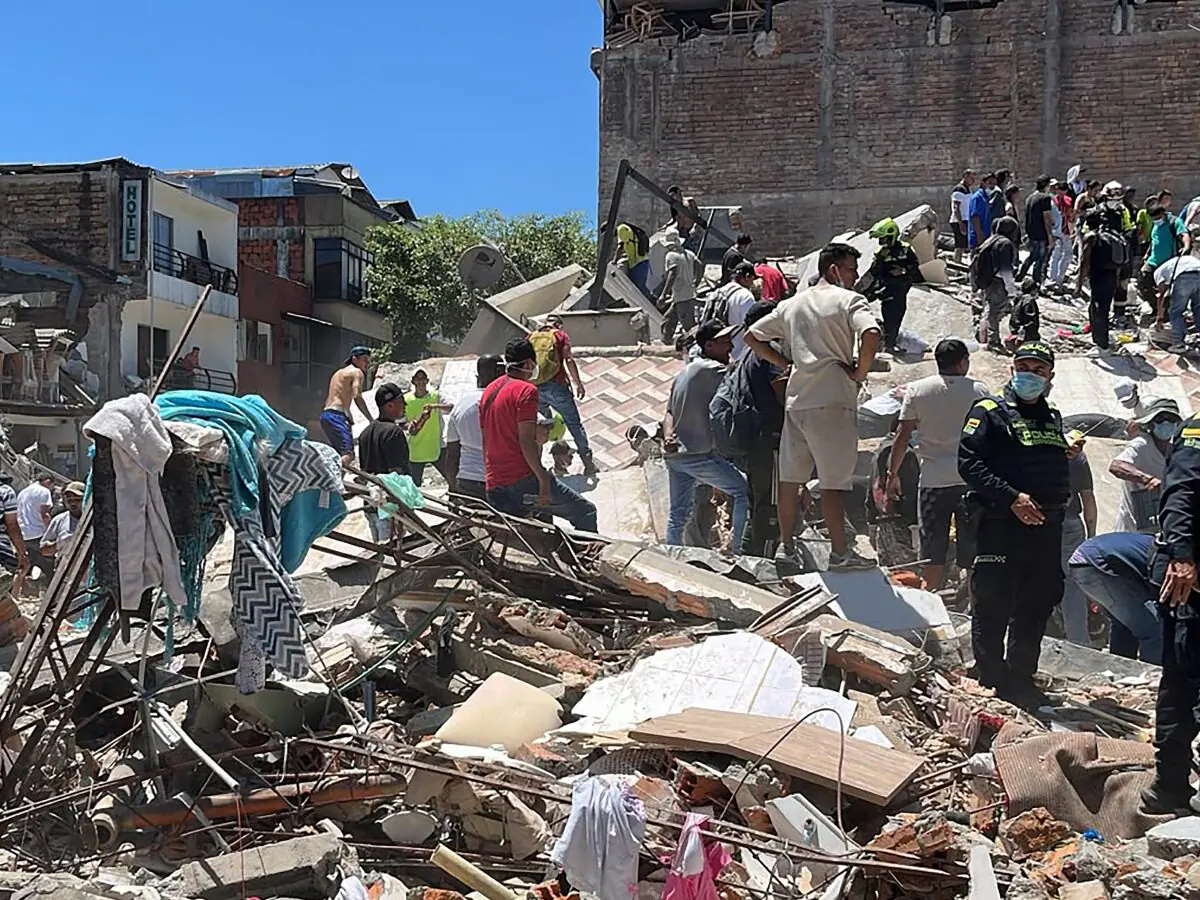
President De la Espriella says the quake caused direct losses of about US$9.6 billion and promises a ‘Plan Marshall’ to rebuild.
Colombia’s president says the 10 August earthquake caused direct losses of about COP 30 trillion. That is roughly US$9.6 billion, at the official rate of COP 3,128.65 per US dollar on 18 August. The figure is preliminary and comes from a private modeling firm that has not been named.
Key Facts
- Dead toll 289 people died, according to the latest UNGRD balance reported on 17 August 2026.
- Injured 4,187 people were injured, and 143 remain missing.
- Buildings lost 26,945 homes were completely destroyed and 127,557 more were damaged.
- Affected 120,328 families were affected across 450 municipalities in 15 departments.
- Damage cost Direct losses in buildings are about COP 24.5 trillion (US$7.8 billion), plus COP 5.5 trillion (US$1.8 billion) in infrastructure.
- Help pledged The UK gave £680,000, about COP 3 billion (US$960,000), for shelter, health, water, and sanitation.
- The two counts do not match The government works from the disaster agency’s toll of 289 dead and 143 missing. The forensic institute has received 304 bodies and lists 348 people missing. The gap became a story in itself on 18 August.
The quake and its human toll
Key Facts
- —What happened Colombia’s president put direct quake losses at roughly US$9.6 billion (COP 30 trillion).
- —How big a jump The initial estimate was US$7.5 billion, corrected after using the official exchange rate.
- —The catch The loss figure is preliminary and comes from an unnamed private modeling firm.
- —Who it touches The 10 August earthquake left 312 dead, 4,611 injured and 290 missing.
- —What comes next President De la Espriella promised a ‘Plan Marshall’ to rebuild, but no details are set.
The Colombia earthquake struck at 7:34 a.m. local time on Monday, 10 August 2026. It had a magnitude of 7.4, with its epicenter in San José del Palmar, in the department of Chocó.
As of the 18 August report from the National Unit for Disaster Risk Management (UNGRD), 289 people have died. That same count lists 4,187 injured and 143 missing.
The disaster affected 120,328 families. It destroyed 26,945 homes and damaged another 127,557.
The Colombia earthquake damage spanned 450 municipalities in 15 departments.
Separately, the Institute of Legal Medicine reported receiving 304 bodies as of 17 August. It had identified 300 of them, including 22 minors, and returned 293 to their families.
These numbers are separate from the UNGRD’s official toll, which is the one the government uses for planning.
The COP 30 trillion estimate
President Abelardo De la Espriella gave the damage figure in a national address on Monday, 17 August 2026. He said a private firm had modeled the direct physical losses from the quake.
The estimate covers five departments: Chocó, Valle del Cauca, Risaralda, Quindío, and Caldas. Direct losses in buildings are about COP 24.5 trillion, and infrastructure losses are about COP 5.5 trillion.
That adds to close to COP 30 trillion, which is roughly US$9.6 billion. The president stressed the number is preliminary and may change, as it is not yet the final official calculation.
The government has not named the private firm that made the model. No formal document from the National Planning Department (DNP) has yet confirmed these figures as official.
So treat the number as a working estimate, not the final word.
The ‘Plan Marshall’ promise
President De la Espriella first used the term ‘Plan Marshall’ during a visit to Quibdó, Chocó, on Friday, 14 August 2026. He proposed the plan as a way to transform a region he said had long been abandoned.
Since then, his government has widened the term. It now describes a national reconstruction package, with the ‘Fondo Milagro’ named as a financing vehicle.
As of 18 August, there is no formal decree or CONPES document with the legal name ‘Plan Marshall’. The plan remains a political promise rather than an approved program.
That means the details, including funding and timelines, are still up in the air.
Finance Minister Miguel Gómez Martínez has ruled out new taxes to pay for reconstruction. The government has declared a state of economic emergency to support the effort.
International aid and next steps
The United Kingdom has pledged £680,000 — about COP 3 billion, or roughly US$960,000. The funds will support the Colombian Red Cross and the UN humanitarian team.
The aid will pay for shelter, medical care, clean water, and sanitation. Colombia’s Foreign Ministry reports that 222.5 tonnes of bilateral aid have arrived from four countries.
Those four are El Salvador with 100 tonnes, Mexico with 58.5, Chile with 50 and Peru with 14. Seven more countries are expected to send additional help, including Luxembourg, Germany, Sweden, India, Paraguay, China, and Guatemala.
That list is from a 17 August statement from the Foreign Ministry.
The government says the reconstruction effort will be large and long. The full cost and timeline remain unclear until official documents are published.
Watch for a detailed assessment from the DNP, which will be the trigger for real spending.
Why this matters to you
If you live or invest in Colombia, this quake has already moved markets and public finances. The COP 30 trillion damage estimate, even as a preliminary number, will shape government budgets for years to come.
The ‘Plan Marshall’ promise could mean major contracts for construction, housing, and infrastructure in the affected regions. But because the plan is not yet formal, none of those contracts are secure.
So don’t bet on them until the paperwork is done.
The government’s decision to rule out new taxes may lead to higher public debt. That could pressure interest rates and the Colombian peso.
If you hold peso assets, keep an eye on fiscal policy announcements.
For anyone in Latin America, this is a reminder that natural disasters can hit hard and fast. The region’s governments often rely on private estimates and emergency decrees, so you need to separate promises from concrete plans.
This story is still developing.
More: Colombia news in English, every day from The Rio Times.
Sources: caracol.com.co; dw.com; elcolombiano.com; infobae.com; alerta.com.co
Frequently Asked Questions
How many people died in the Colombia earthquake?
As of 18 August 2026, the UNGRD reports 289 dead, 4,187 injured, and 143 missing. Earlier counts were lower because they only included partial data.
What is the total cost of the Colombia earthquake damage?
The president says direct physical losses are about COP 30 trillion, which is roughly US$9.6 billion. That includes COP 24.5 trillion in buildings and COP 5.5 trillion in infrastructure, but the figure is preliminary.
What is the ’Plan Marshall’ in Colombia?
It is a name the president used for a large reconstruction plan. He first mentioned it for Chocó on 14 August, then expanded it to a national program. No formal decree with that name exists yet.
How is the reconstruction being funded?
The government has declared an economic emergency and named a ’Fondo Milagro’ as a financing vehicle. The finance minister has ruled out new taxes. No detailed budget has been published.
Correction, 19 August 2026: An earlier version of this article converted COP 30 trillion at about 4,000 pesos to the dollar and gave the total as US$7.5 billion. The official rate certified by the Superintendencia Financiera for 18 August was 3,128.65 pesos. The correct figure is about US$9.6 billion, and the building and infrastructure sub-totals have been corrected with it.
This article was produced by The Rio Times’ automated newsroom system. How we use AI · Report an error · Editorial responsibility: Matthias Camenzind, Editor-in-Chief