IBOV 185,566.32 ▼ 0.88% IPSA 11,290.46 ▲ 0.62% IPC MEX 63,924.77 ▼ 0.28% MERVAL 3,088,970 ▼ 0.32% COLCAP 2,597.12 ▲ 0.29% BVL PERÚ 59,184.75 ▼ 0.78% USD/BRL5.15▲ 0.54% USD/MXN17.14▲ 1.12% USD/CLP957.35▲ 1.58% USD/COP3,107▲ 0.89% USD/PEN3.36▲ 0.29% USD/ARS1,508▼ 0.08% USD/UYU40.20▼ 0.15% USD/PYG5,985▲ 1.38% USD/BOB11.45▼ 4.42% USD/DOP58.98▲ 0.22% USD/CRC444.07▼ 0.78% USD/GTQ7.62▼ 0.07% USD/HNL26.85— 0.00% USD/NIO36.62— 0.00% USD/VES840.10▼ 0.13% USD/PAB1.00— 0.00% USD/BZD2.00— 0.00% USD/JMD 157.28 — 0.00% USD/TTD6.74▼ 0.08% EUR/BRL5.94▼ 0.12% BRENT 88.88 ▼ 0.03% WTI 83.11 ▼ 0.11% IRON ORE 161.91 — — COPPER 6.61 ▲ 0.03% GOLD 4,461 ▲ 1.78% SILVER 65.59 ▲ 1.26% SOY 1,184 ▲ 3.20% CORN 480.50 ▲ 10.02% WHEAT 655.00 ▲ 3.93% COFFEE 317.25 ▼ 5.51% SUGAR 16.43 ▼ 1.79% ORANGE JUICE 138.55 ▼ 0.47% COTTON 85.03 ▲ 2.33% COCOA 5,719 ▲ 3.18% BEEF 223.60 ▼ 3.93% CATTLE 339.10 ▼ 3.16% LITHIUM 75.20 ▲ 1.47% PETR4 41.64 ▼ 0.05% VALE3 72.97 ▲ 0.83% ITUB4 38.60 ▼ 1.03% BBDC4 16.85 ▲ 0.36% ABEV3 14.89 ▼ 0.80% BBAS3 19.37 ▲ 0.47% B3SA3 14.26 ▼ 0.21% WEGE3 47.59 ▲ 0.49% PRIO3 59.14 ▼ 0.19% SUZB3 41.33 ▲ 2.35% RENT3 34.68 ▼ 0.09% AZZA3 15.89 ▼ 2.63% CSAN3 3.22 ▼ 1.83% RAIZ4 0.25 — 0.00% PCAR3 2.75 ▼ 0.36% GMAT3 3.65 ▼ 1.08% PSSA3 48.13 ▼ 0.54% CVCB3 1.33 ▼ 2.92% POSI3 3.36 ▲ 2.44% SLCE3 13.34 ▲ 0.30% NATU3 8.14 ▼ 0.73% IBOV 185,566.32 ▼ 0.88% IPSA 11,290.46 ▲ 0.62% IPC MEX 63,924.77 ▼ 0.28% MERVAL 3,088,970 ▼ 0.32% COLCAP 2,597.12 ▲ 0.29% BVL PERÚ 59,184.75 ▼ 0.78% USD/BRL 5.16 ▲ 0.01% USD/MXN 17.06 ▼ 0.24% USD/CLP 913.98 ▲ 0.04% USD/COP 3,140 ▲ 0.03% USD/PEN 3.36 ▼ 0.66% USD/ARS 1,493 ▲ 0.10% USD/UYU 40.27 ▲ 1.24% USD/PYG 5,939 ▲ 1.68% USD/BOB 11.64 ▼ 0.76% USD/DOP 58.34 ▲ 1.25% USD/CRC 445.92 ▲ 0.89% USD/GTQ 7.62 ▲ 2.21% USD/HNL 26.79 ▲ 1.57% USD/NIO 36.62 ▲ 0.69% USD/VES 762.44 ▼ 0.13% USD/PAB 1.00 — 0.00% USD/BZD 2.00 — 0.00% USD/JMD 157.28 — 0.00% USD/TTD 6.70 ▲ 0.61% EUR/BRL 5.95 ▲ 1.01% BRENT 88.88 ▼ 0.03% WTI 83.11 ▼ 0.11% IRON ORE 161.91 — — COPPER 6.61 ▲ 0.03% GOLD 4,461 ▲ 1.78% SILVER 65.59 ▲ 1.26% SOY 1,184 ▲ 3.20% CORN 480.50 ▲ 10.02% WHEAT 655.00 ▲ 3.93% COFFEE 317.25 ▼ 5.51% SUGAR 16.43 ▼ 1.79% ORANGE JUICE 138.55 ▼ 0.47% COTTON 85.03 ▲ 2.33% COCOA 5,719 ▲ 3.18% BEEF 223.60 ▼ 3.93% CATTLE 339.10 ▼ 3.16% LITHIUM 75.20 ▲ 1.47% PETR4 41.64 ▼ 0.05% VALE3 72.97 ▲ 0.83% ITUB4 38.60 ▼ 1.03% BBDC4 16.85 ▲ 0.36% ABEV3 14.89 ▼ 0.80% BBAS3 19.37 ▲ 0.47% B3SA3 14.26 ▼ 0.21% WEGE3 47.59 ▲ 0.49% PRIO3 59.14 ▼ 0.19% SUZB3 41.33 ▲ 2.35% RENT3 34.68 ▼ 0.09% AZZA3 15.89 ▼ 2.63% CSAN3 3.22 ▼ 1.83% RAIZ4 0.25 — 0.00% PCAR3 2.75 ▼ 0.36% GMAT3 3.65 ▼ 1.08% PSSA3 48.13 ▼ 0.54% CVCB3 1.33 ▼ 2.92% POSI3 3.36 ▲ 2.44% SLCE3 13.34 ▲ 0.30% NATU3 8.14 ▼ 0.73%
since 2009
Monday, September 14, 2026

Chile Decides: Will Voters Choose Continuity or a Radical Reset on November 16?

By · November 4, 2025 · 3 min read

The LatAm Brief

One email, every weekday morning. What moved in Latin American markets, politics and expat life.

Yesterday’s subject line: “Brazil's Supreme Court judges one of its own”

Free. We send a confirmation link first — nothing arrives until you click it. Unsubscribe with one click in any edition. If you stop opening us for 30 days we stop sending by ourselves, as we assume the interest is no longer there. See our privacy policy. We never share your email.

Chile’s presidential election on November 16 is more than a routine change of power—it’s a moment of reckoning.

Once celebrated as Latin America’s model of stability and growth, the country now faces rising crime, tighter migration controls after years of irregular entries, and economic unease.

As voters prepare to head to the polls, the campaign has become a clash over how to restore confidence in a nation that feels increasingly off track.

José Antonio Kast, a conservative candidate known for his direct approach to security and public spending, is among the frontrunners.

His promises—deporting undocumented migrants, strengthening law enforcement, and cutting government waste—have struck a chord with Chileans frustrated by years of growing violence and fiscal uncertainty.

Polls show Kast and leftist Jeannette Jara running neck-and-neck in the first round, with Kast slightly favored in most potential runoff scenarios—reflecting a broad desire for decisive action.
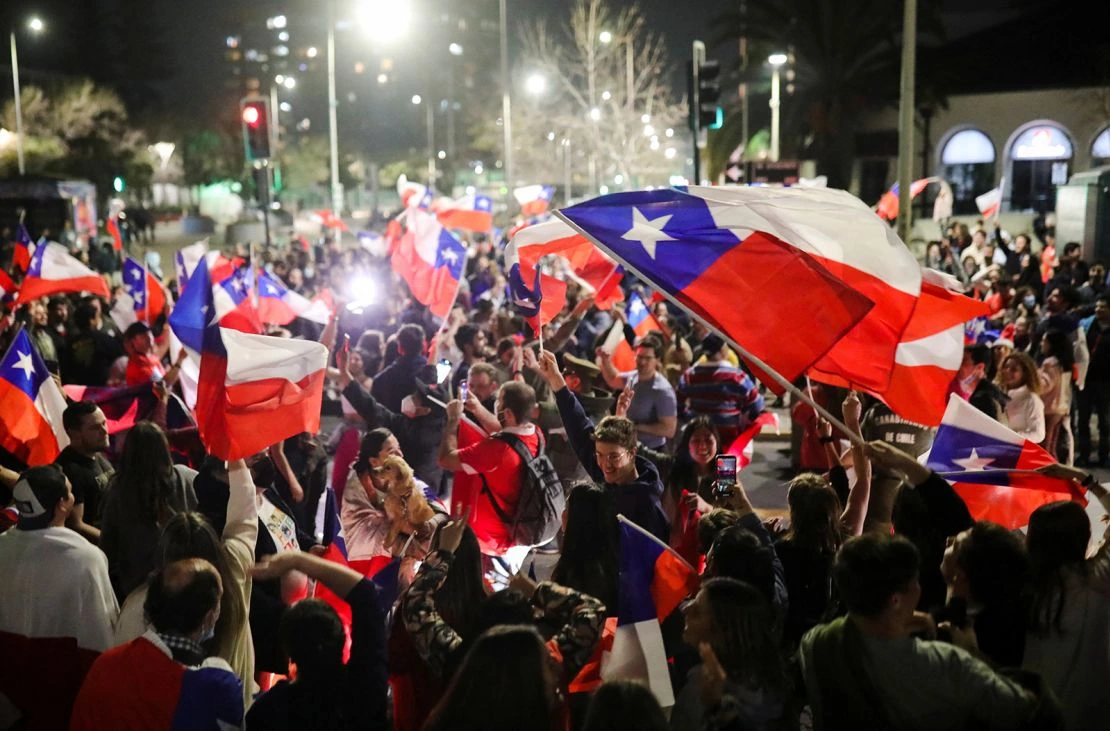
Chile Decides: Will Voters Choose Continuity or a Radical Reset on November 16?
Chile Decides: Will Voters Choose Continuity or a Radical Reset on November 16?.
One-stop reference
Company Intelligence
Every listed company in Latin America — financials, ownership and structure for 1,450+ companies across 26 exchanges, in one place.
Browse the directory →
RT
Ask Rio Times
17 years of Latin America reporting, on demand.
Open the full Ask Rio Times →

Jara, a former labor minister and the left’s standard-bearer, has sought to distance herself from aspects of President Gabriel Boric’s administration while defending key labor and social reforms.

Her platform, centered on higher wages and expanded social programs, faces skepticism about the left’s ability to deliver. With crime rates climbing and public finances under scrutiny, her bid to balance reform and continuity has proved difficult.

The campaign’s biggest surprise has been the rise of Johannes Kaiser, a libertarian whose bold proposals—closing borders, tougher penalties for criminals, and ending long-standing reparations—have energized a segment of the electorate hungry for radical solutions.

His surge has added volatility to the race but has not yet surpassed Evelyn Matthei, the traditional right’s candidate, whose campaign has struggled to build momentum in a field dominated by outsider narratives.

Security and migration dominate the debate. Chile, long one of the region’s safest countries, now faces rising violence linked to organized crime and migration pressures from its northern border.

Kast and Kaiser have made these issues central, offering clear, if controversial, plans to address them. Jara, in contrast, emphasizes dialogue and social investment, an approach that some voters see as insufficient for the challenges ahead.

Economically, the choices are stark. Kast’s pledge to reduce state spending without cutting essential benefits appeals to fiscally conscious Chileans, while Jara’s proposals raise questions about affordability in a slowing economy.

With trust in institutions waning, the election feels like a turning point. As Chileans head to the polls, the question isn’t just who will lead, but what kind of country Chile wants to be.

Will it double down on its recent path, or opt for a sharper break with the past? The answer will shape not only Chile’s future but also its place in a region grappling with similar struggles. The world is watching—and the outcome will reveal much about where Chile stands today.

This article was produced by The Rio Times’ automated newsroom system. How we use AI · Report an error

Read More from The Rio Times

The Rio Times · Power Map
See who really holds power in Latin America
Click to open the Power Map

Rotate for Best Experience

This report is optimized for landscape viewing. Rotate your phone for the full experience.