
CHILE · GEOPOLITICS
Key Facts
- —What it is Chile’s strategy of economic diversification without strategic alignment among the United States, China, Europe and emerging powers.
- —Why it matters China took 33.3% of Chile’s goods trade in 2025, while the United States remains the main strategic and investment counterpart.
- —The numbers Mining was 60.5% of exports in 2025; copper alone was 53.1%; lithium export revenue hit US$4.332 billion in January–August 2026.
- —The catch Chile’s export basket is heavily concentrated in copper and lithium, making it vulnerable to price swings and great-power pressure.
- —What it means for you Foreigners and investors should watch Chile as a rare country that keeps trade open with both China and the United States without choosing a bloc.
Chile geopolitics in 2026 is a balancing act between China, its largest trading partner, and the United States, its main strategic ally, without formal alignment with either. The country’s copper and lithium reserves make it a quiet but essential player in the global contest over critical minerals.
Chile is a small, open economy that has built one of the world’s most extensive networks of trade agreements. This guide explains how Santiago manages relations with Washington, Beijing, Brussels, Moscow, the Gulf, Ankara, New Delhi and the BRICS group, and what each power wants from Chile.
The Core Logic: Diversification Without Alignment
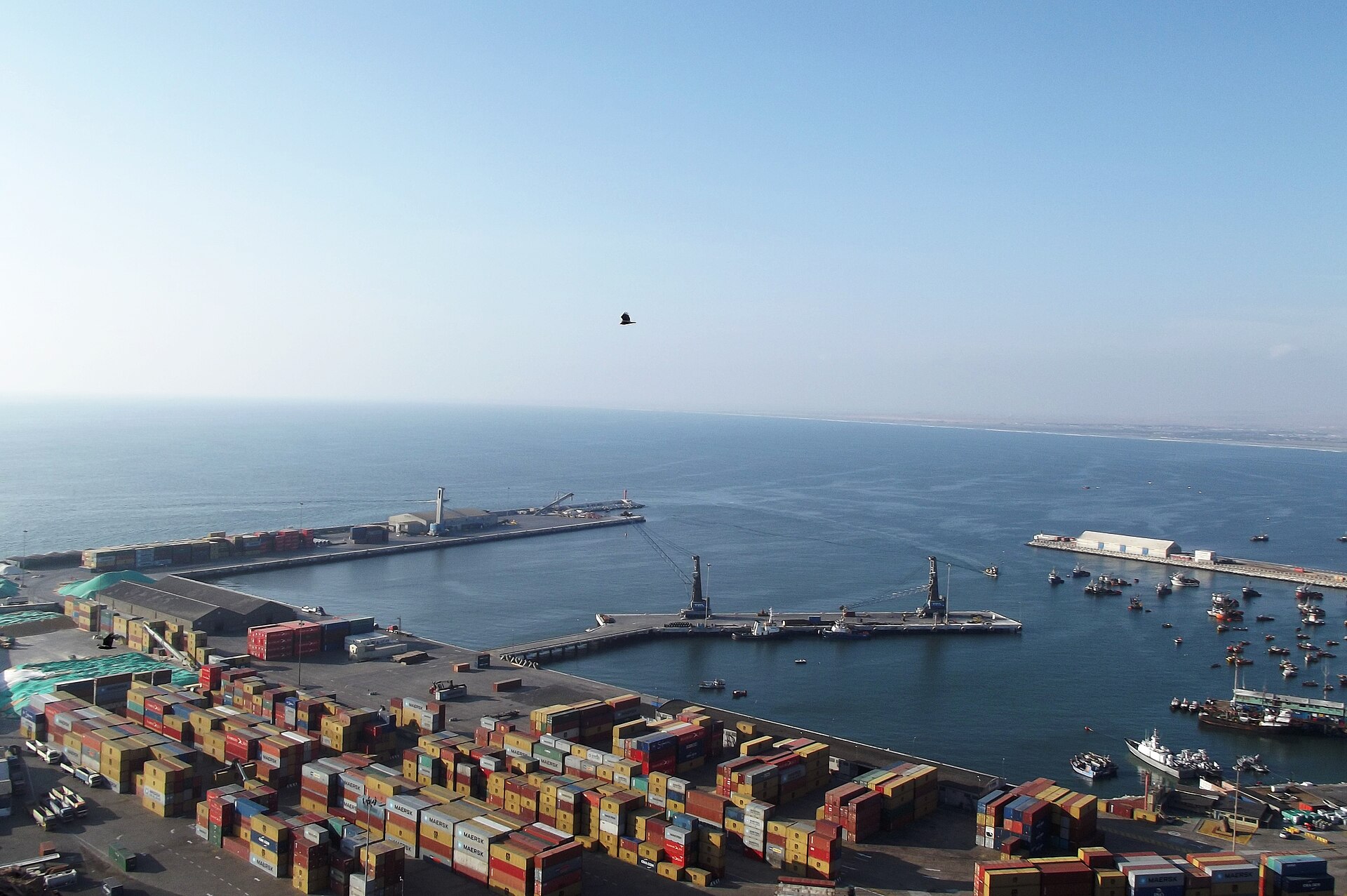
Chile’s foreign policy rests on a simple premise: keep every major market open, avoid formal dependence on any single power, and use trade agreements as a shield against geopolitical pressure. In 2025, 96.5% of Chile’s goods trade was conducted with economies covered by trade agreements, according to Chile’s Subsecretariat of International Economic Relations (SUBREI). That coverage gives Santiago more diplomatic room than most Latin American governments enjoy.
The structural constraint is equally clear. China is Chile’s largest trading partner, while the United States remains its most important strategic and investment counterpart. Chilean Foreign Minister Francisco Pérez Mackenna told Congress in September 2026 that the government sought “the best relations” with both China and the United States, while emphasising sovereignty, international law, peaceful dispute settlement, democracy and multilateralism.
The vulnerability lies in commodities. Mining represented 60.5% of total exports in 2025, and copper alone accounted for 53.1%, according to SUBREI. In the first eight months of 2026, mining exports reached a record US$52.13 billion, up 27.6% year on year; copper exports reached US$43.275 billion, up 19.3%. Those figures make Chile a strategic supplier in any global transition toward electrification and renewable energy.
United States: Strategic Partner and Pressure Point
The United States is Chile’s principal strategic counterweight to China. The two countries have a free-trade agreement, extensive military and law-enforcement cooperation, and overlapping interests in supply-chain resilience, critical minerals, cybersecurity, maritime security and democratic governance. Washington wants reliable access to Chilean copper and lithium, reduced Chinese dominance in critical-mineral supply chains, and a stable, rules-based partner in Latin America.
In 2025, the United States represented approximately 17% of Chile’s total goods trade, equivalent to roughly US$33.9 billion, according to figures cited from SUBREI. For January–August 2026, Chilean exports to the United States were US$13.971 billion, or 16.8% of total exports, compared with China’s US$27.997 billion, or 33.6%. The gap between the two powers is wide but not absolute: Washington remains the main source of investment, technology and security cooperation.
Chile’s response has generally been to cooperate selectively rather than accept an anti-China alignment. A 2026 Chile–U.S. discussion on critical minerals reportedly focused on supply-chain projects, rare earths, recycling and potential public or private financing. The policy objective is diversification, not exclusion of China. For foreigners, this means Chile is unlikely to become a formal U.S. ally against Beijing, but it will continue to welcome American investment and security cooperation.
Bases and Military Access
Chile hosts military facilities and exercises involving its own armed forces and foreign partners, but the material reviewed does not establish the existence of a permanent United States military base in Chile. This distinction matters for investors and expatriates: cooperation, exercises, logistics and access arrangements should not automatically be described as foreign basing. Any article asserting a U.S., Chinese or Russian base in Chile should be checked against Chile’s Ministry of National Defense, the armed forces, congressional records and official defense agreements.

China: The Dominant Commercial Relationship
China is Chile’s largest trading partner by a wide margin. In 2025, China accounted for 33.3% of Chile’s total goods trade and 36.8% of exports, according to SUBREI. The relationship follows a clear pattern: Chile supplies minerals and agricultural products, while China supplies manufactured goods, capital equipment, vehicles, electronics and technology. Beijing’s main interests are long-term supplies of copper and lithium, access to Chilean food exports, participation in energy and infrastructure projects, and a stable political relationship with a country that maintains close links with the United States.
Chile’s interests are equally clear: continued Chinese demand for minerals, Chinese investment and industrial partnerships, competitive imports of machinery and consumer goods, and avoiding disruption to the market that absorbs roughly one-third of its exports. The relationship is commercially powerful but not politically exclusive. Chile has retained links with the United States, Japan, South Korea and Europe, which gives Santiago room to require local processing, environmental standards, state participation and diversified ownership rather than simply choosing a Chinese or U.S. model.
Lithium: The Geopolitical Flashpoint
Lithium is the clearest arena for geopolitical competition in Chile. China remained the principal destination for Chilean lithium in 2025, taking 67% of exports, although its share declined from 70% in 2024. Chile exported 321,695 tonnes of lithium carbonate equivalent in 2025, up 2.6%, but export value fell 7.3% to US$2.397 billion because of lower prices. For January–August 2026, lithium export revenue reached US$4.332 billion, almost three times the comparable 2025 figure and 81% above the full-year 2025 total.
Chile was the world’s third-largest lithium producer in 2025, with 19.3% of global production, and held approximately 25% of global lithium reserves, according to data cited by Chile’s trade authority from the U.S. Geological Survey. Those numbers explain why Washington, Brussels, Tokyo and Seoul all watch Chile’s lithium policy closely, and why Beijing’s commercial dominance in this sector is a source of strategic anxiety in Western capitals.
European Union: Rules, Investment and Green Transition
The European Union is a major trade and regulatory partner for Chile, particularly in clean energy, sustainable mining, food exports, services and investment. Chile and the EU have modernised their bilateral framework through the Advanced Framework Agreement, which deepens political, trade and investment cooperation. According to SUBREI, bilateral goods trade with the EU grew 16.1% in 2025, driven by a 21.0% increase in Chilean exports and a 12.2% increase in imports.
The EU’s interests are secure access to copper, lithium and other minerals needed for decarbonisation, reliable suppliers outside excessive Chinese concentration, high environmental and labour standards, and expanded markets for European machinery, pharmaceuticals, transport equipment and services. Chile’s interests are European investment and technology, preferential access for minerals and food, support for higher-value processing, and a geopolitical counterweight that is less confrontational than the U.S.–China rivalry.
The EU is particularly relevant to Chile’s effort to move from exporting raw materials toward processing, renewable-energy production and green industrial supply chains. For foreign investors, the EU–Chile framework signals that Santiago wants to attract capital that comes with high standards rather than simply the highest bid.
Russia, the Gulf, Turkey and BRICS: Secondary but Real
Russia is not comparable with China, the United States or the EU in Chilean trade or investment. Its principal relevance is diplomatic and strategic rather than commercial. Moscow’s interests in Chile and the wider region include maintaining diplomatic visibility in Latin America, challenging U.S. influence, expanding political relationships with governments that defend strategic autonomy, and securing support, or at least avoiding opposition, in multilateral forums. Chile’s position has traditionally emphasised the UN Charter, territorial integrity, sovereignty and peaceful settlement of disputes, which has generally placed Santiago closer to Western and European positions on Russia’s invasion of Ukraine, while Chile has continued to maintain formal diplomatic relations and channels of communication.
The Gulf states, especially Saudi Arabia, the United Arab Emirates and Qatar, are increasingly relevant to Chile as sources of investment, sovereign capital, logistics expertise, food-sector partnerships and renewable-energy finance. Their likely interests include renewable hydrogen and ammonia, mining and mineral supply, ports and infrastructure, food security, tourism and financial services. Chile’s interests include attracting capital without geopolitical conditions attached, broadening the investor base beyond China, the United States and Europe, and using Gulf financing for infrastructure and energy projects.
Turkey’s importance to Chile is smaller than that of China, the United States or the EU, but Ankara can function as a commercial and diplomatic bridge linking Europe, the Middle East and Central Asia. Turkey’s interests are likely to include expanding exports of manufactured goods, construction services and transport equipment, gaining access to Chilean food and mineral markets, and building a broader Latin American diplomatic presence. Chile’s interests are mainly commercial diversification and access to Turkish construction, transport and industrial capabilities.
BRICS: Engagement Without Membership
Chile is not a full BRICS member. Its relationship with BRICS is best described as diplomatic and economic engagement rather than bloc membership. The issue matters because BRICS has expanded its membership and outreach, while Chile seeks access to emerging-market capital without abandoning its trade agreements with the United States, Europe and Asia-Pacific partners. Chile’s incentives for engagement include dialogue with China, India, Brazil and other emerging economies, access to alternative development-finance institutions, and participation in discussions on trade, energy, food security and reform of global governance.
India: The Fastest-Growing Diversification Opportunity
India is strategically important because it offers Chile a large alternative market outside the U.S.–China rivalry. Chile already has a preferential trade agreement with India, and Santiago has sought to deepen economic ties. Chile’s exports to India increased sharply in early 2026. Between January and May, exports reached US$2.335 billion, up 118% from US$1.072 billion in the same period of 2025. India represented 5.2% of Chilean exports during that period, behind China, the United States and Japan.
The increase was driven mainly by copper, gold, iodine, apples and lithium. India’s interests are reliable copper and lithium supplies, food and agricultural imports, access to Chile as a Pacific Alliance and Asia-Pacific platform, and partnerships in pharmaceuticals, information technology, renewable energy and infrastructure. Chile’s interests are reducing dependence on China, capturing rising Indian demand, expanding the trade agreement, and attracting Indian technology and industrial investment. India is therefore less a military partner than a strategic economic diversifier.
What This Means for Foreigners and Investors
For foreigners living in or considering Chile, the geopolitical picture is reassuring in one sense and cautionary in another. Chile’s trade-agreement coverage and its refusal to choose a bloc mean the country is unlikely to face the kind of sudden rupture that can disrupt supply chains, investment flows or daily life. The economy remains open, the legal framework is stable, and the government’s rhetoric is consistently multilateral.
The cautionary note is concentration. Mining is 60.5% of exports, copper is 53.1%, and China takes more than a third of all goods trade. A sharp slowdown in Chinese demand, a collapse in copper prices, or a geopolitical shock that forces Santiago to choose sides would have immediate effects on the Chilean peso, employment and public finances. Investors should watch lithium policy especially closely, because that is where the interests of Washington, Beijing, Brussels and New Delhi intersect most directly.
For expatriates, the practical implications are limited but real. Chile’s openness to trade and investment means goods, services and capital move relatively freely. Its strategic autonomy means the country is unlikely to become a frontline in any great-power confrontation. But its dependence on commodity exports means economic cycles can be sharp, and anyone with long-term exposure to Chile should understand the copper and lithium markets as well as the political calendar.
What to Watch
Several indicators will shape Chile geopolitics over the next few years. First, watch the share of Chilean exports going to China versus the United States. In January–August 2026, China took 33.6% and the United States 16.8%. If the gap widens further, expect more pressure from Washington for Chile to diversify. If it narrows, expect Beijing to offer new investment or trade incentives.
Second, watch lithium policy. Chile’s decisions on local processing requirements, state participation, environmental standards and ownership structures will determine whether the country remains a raw-material supplier or moves up the value chain. Those decisions will also signal whether Santiago leans toward Chinese, Western or diversified models of development.
Third, watch India. The 118% increase in Chilean exports to India between January and May 2026 is the clearest sign that Santiago is serious about diversification. If that trend continues, India could become a genuine counterweight to both China and the United States in Chilean trade.
Finally, watch the BRICS question. Chile is not a member, but its engagement with the group will be a useful barometer of how far Santiago is willing to go in building ties with emerging powers without alienating its Western partners. Any move toward formal BRICS membership would be a major geopolitical signal; continued engagement without membership would confirm the diversification-without-alignment strategy.
Related reading: Chile Politics Explained, Who Holds Power in 2026; Chile and Its Neighbours Explained for 2026; Who Is Gabriel Boric? Chile's Ex-President, His Record and What He Does Now; more from Chile.
Frequently Asked Questions
Is Chile aligned with China or the United States?
Chile is not formally aligned with either power. China is its largest trading partner, taking 33.3% of goods trade in 2025, while the United States remains its main strategic and investment counterpart. Chilean Foreign Minister Francisco Pérez Mackenna said in September 2026 that the government sought “the best relations” with both countries.
Does Chile have a United States military base?
The material reviewed does not establish the existence of a permanent United States military base in Chile. Chile hosts military exercises and cooperation with foreign partners, but any claim of a foreign base should be verified against Chile’s Ministry of National Defense and official defense agreements.
Why is Chile important in geopolitics?
Chile is the world’s third-largest lithium producer and a major copper exporter. Mining was 60.5% of total exports in 2025, and copper alone was 53.1%. Those minerals are essential for electrification, renewable energy and defence technologies, which makes Chile a strategic supplier for the United States, China, the EU and India.
Is Chile a member of BRICS?
No, Chile is not a full BRICS member. Its relationship with BRICS is diplomatic and economic engagement rather than bloc membership. Chile seeks access to emerging-market capital without abandoning its trade agreements with the United States, Europe and Asia-Pacific partners.
How fast is Chile’s trade with India growing?
Chile’s exports to India reached US$2.335 billion between January and May 2026, up 118% from US$1.072 billion in the same period of 2025. India represented 5.2% of Chilean exports during that period, behind China, the United States and Japan.
What does China want from Chile?
China wants long-term supplies of copper and lithium, access to Chilean food and agricultural exports, participation in energy and infrastructure projects, and a stable political relationship with a country that maintains close links with the United States. China took 67% of Chilean lithium exports in 2025.
Sources: subrei.gob.cl, subrei.gob.cl, subrei.gob.cl, subrei.gob.cl, subrei.gob.cl, subrei.gob.cl. Retrieved 3 October 2026.
This article was produced by The Rio Times’ automated newsroom system. How we use AI · Report an error · Editorial responsibility: Matthias Camenzind, Editor-in-Chief