Chinese Undersea Cable to Chile Still Under Review Despite US Objections
CHILE · TECHNOLOGY
Key Facts
- —The country Chile did 32.7% of its 2025 goods trade with China and 17% with the US, official data show.
- —Why it matters No undersea cable links South America directly to Asia yet, so most traffic to Asia runs via North America.
- —The dispute In February Washington revoked the visas of three Chilean officials over a China Mobile cable from Valparaíso to Hong Kong.
- —What happened On 28 September Louis de Grange, minister for transport and telecoms, said the cable review “follows its natural course”.
- —What it means for you Nothing changes yet for internet users or investors, because no permit has been granted.
- —Still open When Chile will decide, and how Washington would react to an approval, is not known.
Chile’s government says a Chinese undersea cable from the Valparaíso coast to Hong Kong is still under review. Minister Louis de Grange told CNN Chile on Monday 28 September that “the process follows its natural course”.
His words contradict Brandon Judd, the US ambassador in Santiago, who said on 11 March he believed the cable was finished. Washington had already revoked the visas of three Chilean officials in February over the same project.
What the minister said
De Grange runs two ministries at once: public works, and transport and telecommunications, which handles cable licences. President José Antonio Kast, a conservative in office since 11 March, gave him the double role in May.
“We are in the process of gathering information,” he said on Tolerancia Cero, a CNN Chile interview programme. He called the open questions “the normal doubts” raised with every company that applies for a concession.
La Tercera, a centre-right daily, reported that he had not heard Judd make the remark about the cable. “China and the United States are two strategic partners for Chile,” De Grange said, pledging good relations with both.
Asked whether he feared losing his own US visa, as his predecessor did, he said there was no more reason for concern. “We, of course, maintain our sovereignty,” he added.
The cable and the company behind it
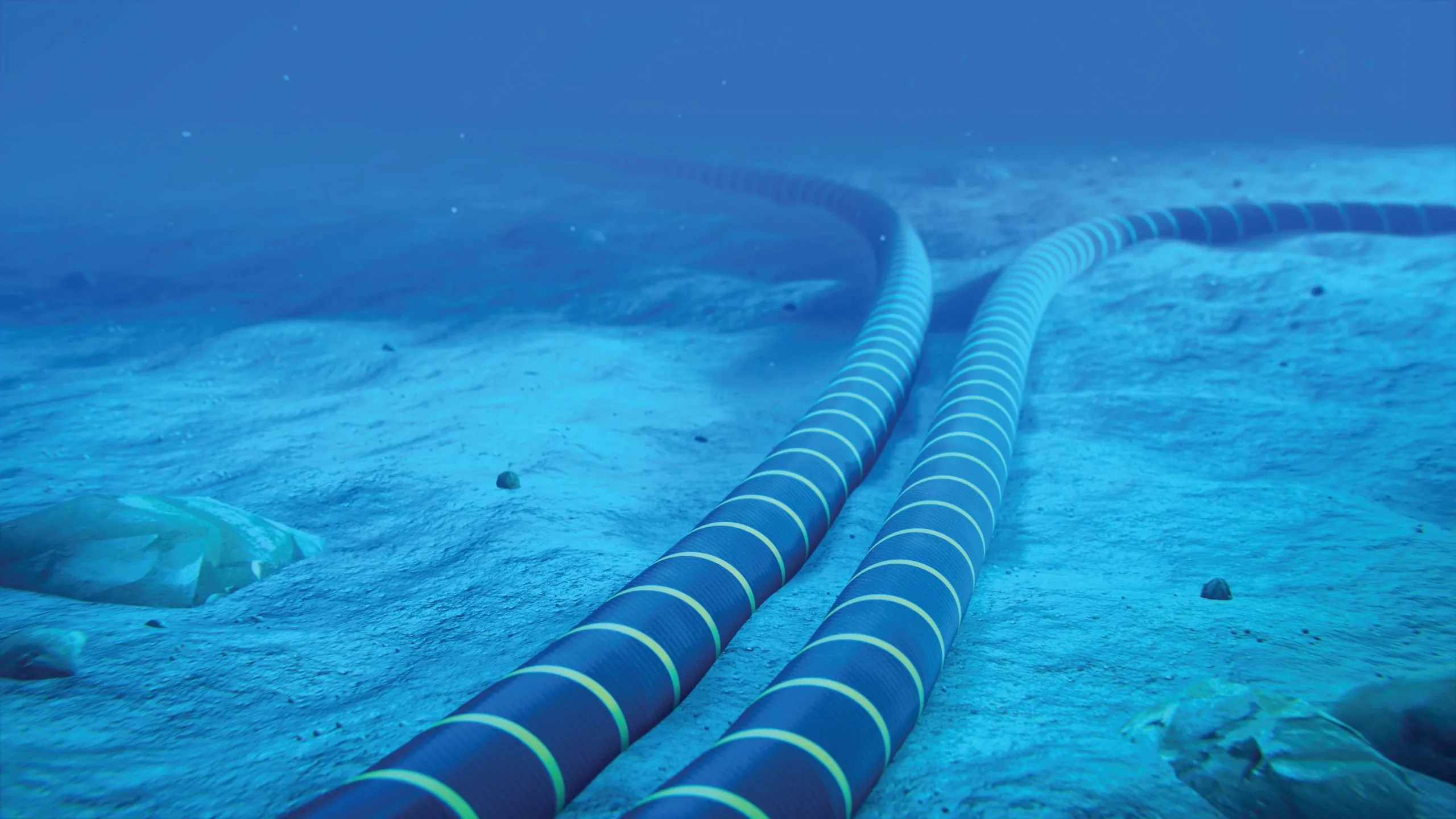
The Chile-China Express would run 19,873 kilometres from Concón, just north of Valparaíso, to Hong Kong, DatacenterDynamics reported. That is about half the distance around the Earth at the equator.
Its operator would be China Mobile International, part of the state-owned Chinese telecoms group, through a local company called CMI Chile SpA. Rest of World, a technology news site, valued the proposal at US$500 million in June.
Chile’s telecoms ministry signed a concession decree on 27 January and annulled it two days later, citing technical errors. The leftist government of Gabriel Boric then said no formal approval existed, MercoPress reported.
Ex-Ante, a right-leaning Santiago outlet, reported that the file took 63 days from application to the minister’s signature. Similar concessions take about 400 days on average, according to a state productivity commission it cited.
Why Washington objects
On 20 February Secretary of State Marco Rubio announced visa restrictions on three unnamed Chilean officials. He said they had “compromised critical telecommunications infrastructure and undermined regional security in our hemisphere”.
MercoPress named them as transport minister Juan Carlos Muñoz, telecoms undersecretary Claudio Araya and Araya’s chief of staff, Guillermo Petersen. Boric’s foreign minister, Alberto van Klaveren, called the accusation “absolutely false”.
Judd’s main argument is about intelligence. In March he said shared data must stay protected, which this cable would not allow, CNN Chile reported.
John Griffiths of AthenaLab, a Santiago security think tank, put the point more bluntly to DatacenterDynamics. “Whoever controls the cables has a substantial advantage,” he said.
The case for a second route to Asia
Supporters say Chile relies too heavily on cable routes through the United States. “Today Chile is totally dependent on the United States,” said Víctor Oelckers of Inchcape Shipping Services, a promoter, BioBioChile reported.
The idea is older than the dispute. Jorge Heine, a former Chilean ambassador to China, said he presented it to the Chinese government in January 2016.
Economist Roberto Pizarro, a former minister, told the left-leaning El Desconcierto that the sanctions were an undue intrusion on sovereignty. China’s embassy in Santiago accused Washington of acting in a “hegemonic” way, MercoPress reported.
Critics on the right were uneasy long before the sanctions. Senator Alejandro Kusanovic, formerly of Kast’s Republican Party, wrote in 2025 that advancing without broad political consensus was imprudent, BioBioChile reported.
Humboldt, the cable Chile already backs
Chile also backs a separate Pacific cable with Google, called Humboldt, through the state investment company Desarrollo País. It is planned to run about 14,800 kilometres from the Valparaíso region to Sydney, via French Polynesia.
In June a regional commission approved its landing site at Santo Domingo, and laying at sea should start in late 2026. Chile’s telecoms undersecretariat projected commercial service for 2027, Ex-Ante reported, while Telecom Review Asia, a trade publication, gave 2028.
Ex-Ante wrote in June that the Chinese project sat “in the freezer” while Humboldt moved ahead. “Let us bring the Humboldt cable,” Kast said around the time he took office in March.
Judd has also cited Humboldt against a second link. On 12 February he wrote on X that he saw risks in “redundant” Chinese cables when Chile already has Humboldt, BioBioChile reported.
A new US-led declaration raises the stakes
On 22 September Chile and 14 other governments issued a joint statement on the Shield of the Americas, a US-led regional initiative. They declared an intention to explore investment screening and to promote “trusted supplier regulations for digital infrastructure”.
De Grange said the screening idea was “not binding at this moment in any case”. Foreign minister Francisco Pérez Mackenna told deputies the same day there had been “no signature, simply a declaration”.
A Socialist deputy, Nelson Venegas, questioned him in that formal hearing over the declaration and over Judd’s conduct. On the outcome, see Chile Foreign Minister Survives Interpellation as Deputies Give Kast 30 Days on US Pact.
Why a data cable is more than a cable
Undersea cables carry more than 95% of the world’s data traffic, Pauta, a Chilean news site, noted in February. Video calls, bank transfers and cloud services between continents travel mostly through them.
That is why a cable is both trade infrastructure and a security question. Other right-leaning governments have kept their China ties too, as shown in Latin America China Ties Survived the Region’s Right Turn.
What comes next
No decision date has been announced, and it is not known whether China Mobile has changed its application since January. It is also unclear how Washington would respond if Chile approved the Chinese undersea cable.
The minister’s words do not mean the cable has been approved or that Chile is turning away from Washington. They mean only that the file stays open, and the decision will take time.
Frequently Asked Questions
What is the Chile-China Express?
A proposed fibre-optic cable of about 19,900 kilometres from Concón, near Valparaíso, to Hong Kong. It would be operated by China Mobile International and has no permit.
Why does the United States object to the Chinese undersea cable?
Washington says Chinese control of such infrastructure puts shared intelligence and regional security at risk. In February it restricted visas for three Chilean officials over the project.
Has Chile approved the cable?
No. A concession decree signed on 27 January was annulled two days later, and the minister says the review is still going on.
Does this affect internet service in Chile?
No. Chile’s existing cables keep working, and the separate Humboldt cable with Google is due to start service in 2027 or 2028.
This article was produced by The Rio Times’ automated newsroom system. How we use AI · Report an error
Read More from The Rio Times