EU Charges Mexican Giant Cemex with Price-Fixing Cartel

Latin America · Companies
Key Facts
—Charges filed. The European Commission issued formal cartel charges against Cemex on July 20, 2026, for alleged price-fixing of construction chemicals.
—Product in focus. The investigation targets additives for cement, concrete, and mortar, not cement itself.
—Markets affected. The alleged collusion took place in France, Germany, and Spain between 2021 and 2022.
—Potential penalty. If found guilty, Cemex could face fines of up to 10% of its global annual revenue.
—Prior probe closed. A separate seven-year EU investigation into the cement sector involving Cemex was dropped in July 2019 due to insufficient evidence.
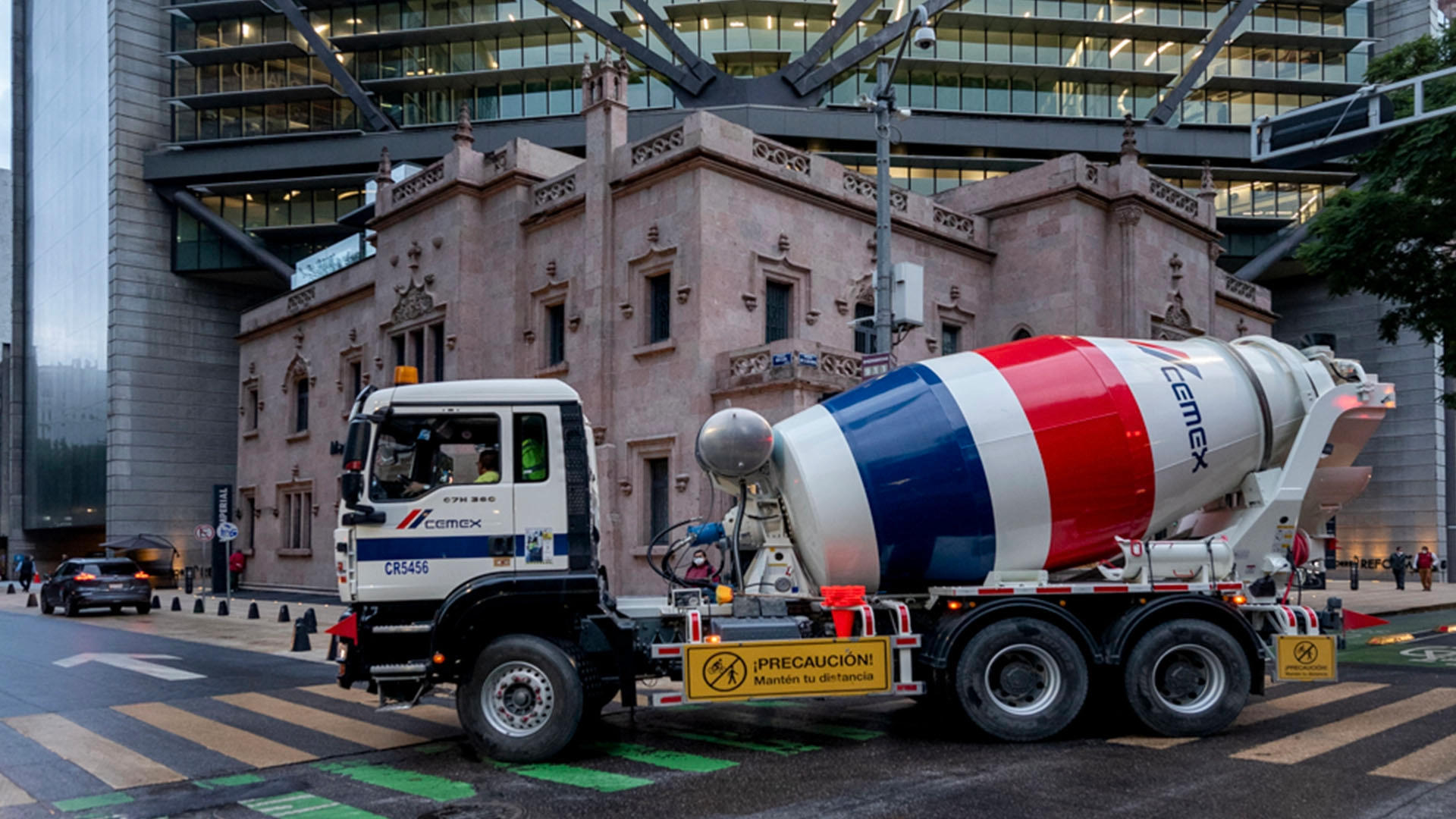
The European Commission has formally charged Mexican cement giant Cemex in a Cemex EU cartel charges case, alleging the company conspired with rivals to fix prices of construction chemicals across three major European economies. The charges, announced July 20, 2026, follow dawn raids conducted in October 2023 and mark a significant escalation in Brussels’ scrutiny of the building-materials supply chain.
What the EU is Alleging
The European Commission’s statement of objections accuses Cemex and several other companies of colluding between 2021 and 2022 to artificially raise prices of chemical additives used in cement, concrete, and mortar. The alleged coordination took place in France, Germany, and Spain, three of the European Union’s largest construction markets.
According to the Commission, the firms exploited cost spikes triggered by the Covid-19 pandemic and Russia’s full-scale invasion of Ukraine. Investigators claim the companies used press releases distributed through trade associations to signal and coordinate price increases, rather than competing fairly during a period of genuine supply-chain disruption.
The charges target construction chemicals specifically, not cement. This is an important distinction: Cemex, the world’s third-largest cement producer, is not accused of fixing cement prices in this case.
Other companies charged include Swiss specialty-chemicals group Sika, Germany’s MC Bauchemie, Italy’s Mapei, France’s Chryso, and Master Builders Solutions, along with several trade bodies.
Potential Fines and Next Steps
If the Commission ultimately finds Cemex and its co-accused guilty of breaching EU antitrust rules, each company could be fined up to 10% of its global annual turnover. For Cemex, a multinational with operations spanning the Americas, Europe, Africa, and Asia, that represents a potentially substantial financial hit.
Cemex has confirmed it is cooperating with authorities and providing requested information and testimonies. The company now has the right to examine the Commission’s evidence and submit a formal reply to the statement of objections.
There is no fixed deadline for the EU to conclude its investigation, and companies can challenge any final decision before European courts.
The charges stem from dawn raids – surprise inspections – conducted by Commission officials in October 2023. Such raids are a common preliminary step in EU cartel probes, allowing investigators to gather documents and digital evidence before companies have time to alter or destroy them.
Live Company IntelligenceCemex SAB de CV ADR — the full investor dossier
Wall Street view
Valuation & profitability
Price & risk
$9.3052-wk high
$13.60
Revenue trend · 6y
Ownership
Dividend
A Look Back: The Closed Cement Probe
For international readers following Cemex‘s regulatory history in Europe, the new charges may sound familiar. The company was previously caught up in a much broader EU investigation into alleged price-fixing and import-export restrictions in the cement sector itself. That probe, which also involved France’s Lafarge, Germany’s HeidelbergCement, and Switzerland’s Holcim, lasted seven years.
In July 2019, the Commission scrapped the entire cement-sector case, concluding there was insufficient evidence to substantiate the claims. The investigation had begun with dawn raids back in November 2007, underscoring how long such antitrust inquiries can drag on without yielding penalties.
The contrast between the two cases highlights the EU’s shifting focus. While cement-price collusion proved difficult to prove, regulators are now targeting adjacent markets like construction chemicals, particularly where they suspect companies exploited pandemic and war-related cost volatility to coordinate price hikes.
Why This Matters for Latin America’s Multinationals
Cemex is one of Latin America’s most internationally exposed industrial companies, with a deep footprint across Europe. The case serves as a reminder that Brussels remains one of the world’s most aggressive antitrust enforcers, willing to pursue complex, cross-border cartel investigations that can take years to resolve.
The EU has a long track record of scrutinizing the cement and construction-materials sector. Previous merger reviews include the 2014 approval of Cemex’s acquisition of Holcim’s Spanish operations and the 2015 decision to block HeidelbergCement and Schwenk’s attempt to buy Cemex’s Croatian assets, citing concerns the deal would control 45% to 50% of the market and push prices higher.
For investors and expats watching Latin American companies navigate European regulations, the July 2026 charges signal that even when one probe closes – as the cement case did in 2019 – regulatory risk can resurface in related markets. The construction-chemicals case is now one of the most significant antitrust actions facing a major Latin American multinational in Europe.
More: Latin America news in English, every day from The Rio Times.
Frequently Asked Questions
Is Cemex being charged for fixing cement prices?
No. The July 2026 charges relate to construction chemicals – additives for cement, concrete, and mortar – not cement itself. A previous EU cement-sector probe involving Cemex was closed in 2019 without charges.
What is the maximum fine Cemex could face?
Under EU cartel rules, the Commission can impose fines of up to 10% of a company’s global annual turnover if it finds a breach. The final amount depends on the gravity and duration of the infringement.
Which countries are involved in the alleged cartel?
The European Commission says the alleged price-fixing took place in France, Germany, and Spain between 2021 and 2022.
Connected Coverage
This article was produced by The Rio Times’ automated newsroom system. How we use AI · Report an error · Editorial responsibility: Matthias Camenzind, Editor-in-Chief