Mexican Peso Outlook Hinges on Banxico 6.50% and USMCA
Markets · Mexico
Mexico latest: Mexico news — latest coverage · Mexico's Sheinbaum Meets Chihuahua Governor After Row Over US Agents
—The stakes. Mexico’s peso near 16.89 per dollar faces a policy pause that caps its carry trade appeal while external political risks build.
—The rate. Banco de México held its benchmark overnight interbank rate at 6.50% on August 6, 2026, extending a pause begun in June.
—The peso. The mid-market USD/MXN rate stood at 16.88695182 pesos per dollar on September 5, 2026 at 02:33 UTC.
—The carry shift. A 475-basis-point easing cycle from a peak of 11.25% has narrowed the peso’s yield advantage for global investors.
—The trigger. The 2026 USMCA review and US political manoeuvring now matter more than rate differentials for the peso’s path into 2027.
The peso is no longer the high-yield standout of 2023. Banxico has signalled a long pause at 6.50%, leaving carry traders to weigh a thinner premium against a looming review of North American trade rules.
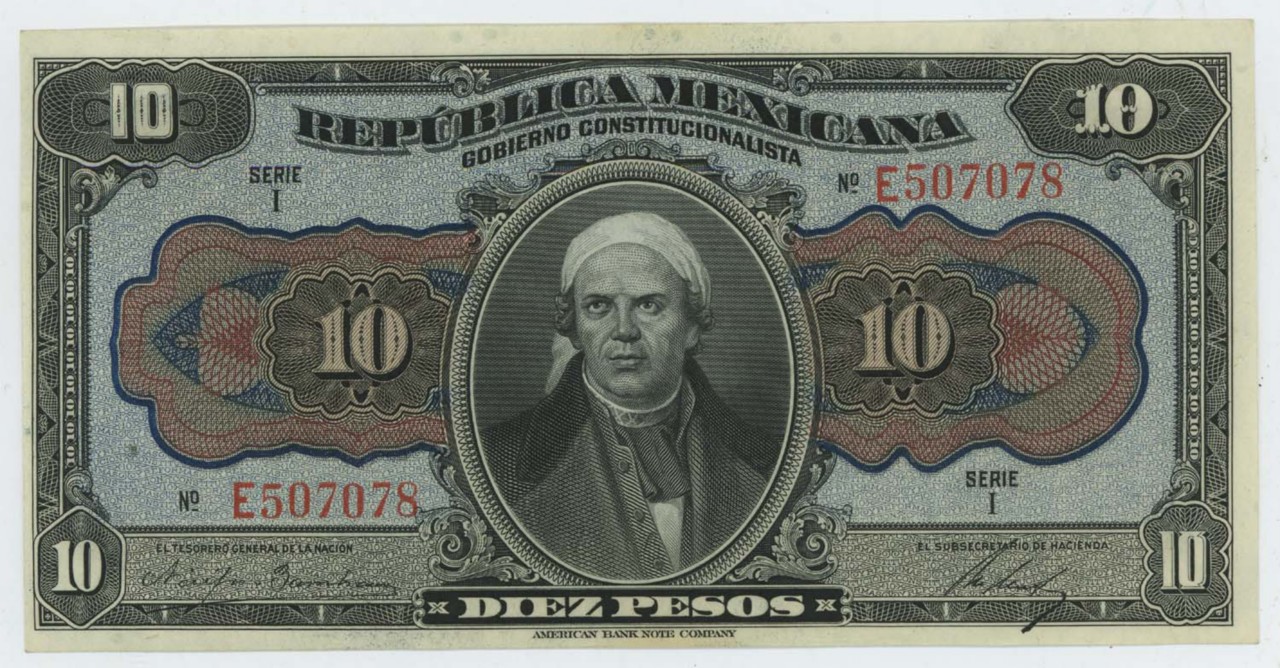
Banxico Parks the Cycle at 6.50%
Banco de México, Mexico’s central bank, decided unanimously to keep its overnight interbank target rate at 6.50% on August 6, 2026.
That extended a pause that began at the June 25, 2026 meeting, when all board members also voted to hold.
The bank’s forward guidance is unusually explicit: it estimates it will be appropriate to maintain the reference rate at its current level.
Goldman Sachs analysts cited by Reuters said Banxico appears likely to keep borrowing costs unchanged for the rest of 2026.
The current setting is the lowest nominal policy rate since May 2022, reflecting a long disinflation campaign now giving way to caution.
From 11.25% to 6.50%: The End of an Era
Banxico’s May 7, 2026 decision to cut by 25 basis points to 6.50% formally closed an easing cycle that began in March 2024.
That cycle delivered 14 consecutive reductions, lowering the policy rate by 475 basis points from a peak of 11.25%.
The May vote was a split 3-2, and the bank’s statement explicitly said it considers it appropriate to maintain the rate at its current level going forward.
Bank of America projects a 6.50% terminal rate through the end of 2026, matching the central bank’s own pause signal.
A Citi analyst survey points to a median rate of 6.50% both by the end of 2026 and by the end of 2027, with a range from 5.75% to 7.00%.
The Fed Differential and Carry Trade Appeal
A 6.50% Banxico rate against a lower US federal funds rate leaves a positive but smaller nominal spread.
That is a sharp change from 2024 and 2025, when Mexican policy rates were substantially above 10% and attracted heavy carry demand.
Carry trades involve borrowing in low-yield currencies and investing in higher-yield ones, but the shrinking premium reduces the cushion against currency moves.
The peso remains attractive relative to Japan and the euro area, but the margin for error is tighter than it was.
For foreign investors, the signal is clear: rate support for the peso is no longer a one-way trade into 2027.
Remittance Flows Still Underpin Hard Currency Supply
Remittances from Mexican workers abroad, mainly in the United States, have historically provided a steady inflow of dollars.
These transfers support domestic consumption and help stabilise the peso during periods of external stress.
Banxico regularly publishes monthly remittance data, and by 2023 Mexico’s annual inflows had exceeded US$60 billion.
That structural dollar supply remains a key stabiliser for the balance of payments even as portfolio capital becomes more selective.
For investors, remittances act as a shock absorber that policy rates alone cannot replicate.
Nearshoring and Foreign Direct Investment
Nearshoring, the relocation of supply chains closer to the US market, continues to channel foreign direct investment into Mexico.
Manufacturing and logistics investments linked to North American trade underpin longer-term peso demand.
The USMCA, the United States-Mexico-Canada Agreement, provides the institutional framework for that investment flow.
However, the upcoming USMCA review in 2026 introduces uncertainty for companies weighing new capital commitments.
If the review proceeds smoothly, nearshoring momentum could offset slower portfolio inflows during the Banxico pause.
US Politics and the 2026 USMCA Review
The 2026 review of the USMCA is the largest external risk to the Mexican peso outlook into 2027.
US political pressure on rules of origin, labour standards and automotive content could resurface during the review.
Any threat to Mexico’s preferential access to the US market would weaken investor confidence in Mexican assets.
The peso is highly sensitive to trade policy headlines because Mexico sends the vast majority of its exports north.
The review thus has the potential to move the exchange rate more than any single Banxico decision this year.
Inflation Convergence Slipping to Late 2027
Banxico left its end-2026 forecasts for headline and core inflation at 3.5% in its August decision.
But the bank now sees headline inflation converging to its 3% target only in the fourth quarter of 2027.
That is a delay from the previous forecast of the second quarter of 2027, reflecting stickier price pressures.
The later convergence date justifies the board’s decision to hold rates steady despite a slowing economy.
A delayed return to target means a longer period of restrictive real rates, which could support the peso but weighs on growth.
Current USD/MXN Levels in Context
On September 5, 2026 at 02:33 UTC, the mid-market rate was 1 US dollar to 16.88695182 Mexican pesos.
A retail average for the same day showed 1 dollar at 16.8955 pesos, up 0.006 pesos or 0.04% from the prior close.
On September 4, the spot price closed at 16.8855, down 0.21% from the open, with an intraday high of 16.9435 and low of 16.8555.
Earlier in the week, on September 1, the rate had been 16.9916 pesos per dollar, showing mild peso strength since then.
These levels place the peso well below the severe depreciation ranges seen in past regional stress episodes but above the strongest 2023 readings.
Analyst Forecasts for the Peso Into 2027
Economist surveys point to a stable Banxico policy rate of 6.50% through the end of 2027, with a range of 5.75% to 7.00%.
Bank of America aligns with that terminal rate expectation through the end of 2026.
The peso’s path into 2027 will therefore depend less on monetary policy surprises and more on trade and external events.
A smooth USMCA review paired with steady remittances could keep the peso trading near current levels.
A contentious review or a hawkish turn by the Federal Reserve would test the currency’s resilience, with some risk of a move back above 17.5 per dollar.
The big picture: Mexico explained — economy, politics, society and daily life in one read.
What Foreign Investors Should Monitor Next
The next Banxico monetary policy meetings will show whether the pause at 6.50% holds through the fourth quarter of 2026.
USMCA consultations and any US tariff announcements should be treated as high-impact events for the peso.
Monthly remittance data from Banxico will reveal whether dollar inflows remain strong as the US labour market softens.
Nearshoring investment announcements and industrial production data will signal whether the structural current account support is building.
Finally, any change in Federal Reserve policy expectations would alter the carry trade calculus even if Banxico stays on hold.
Connected Coverage
Mexico Extradition Halted Again for a Senior CJNG Figure
Mexico Judicial Reform: Norma Piña Reappears With a Pointed Joke
The Big Picture
This article was produced by The Rio Times’ automated newsroom system. How we use AI · Report an error · Editorial responsibility: Matthias Camenzind, Editor-in-Chief
LatAm Markets: Live Signals → — real-time movers, turnover leaders and FX across Latin America.
Expat Guide to Mexico
What The Rio Times publishes for foreigners who live in or move to Mexico.
Start here
- Mexican Peso Falls Past 18.40 on Central Bank Minutes
- Crocodiles in Puerto Vallarta Safety Guide
- Mexico Security and Crime Explained 2026
- Mexico Visa Options 2026 Explained
City guides
Mexico City, Playa del Carmen, Tulum, Puerto Vallarta, Mérida, Oaxaca, Guadalajara, Monterrey, Cancún
Coming up in Mexico
- Expo Cerveza México 2026 Mexico City: Over 150 Breweries, 23–25 October 25 Oct
- Xcaret Festival Opens in Playa del Carmen on 30 October 30 Oct
- Mexico City Grand Prix 2026: Schedule, Tickets and TV 30 Oct
- Day of the Dead 2026 in Mexico City: Dates and Parade 31 Oct
Understand Mexico