Copper Overtakes Iron Ore at BHP, and Most of It Comes From Chile
Chile · Mining
Key Facts
- —What happened Copper overtook iron ore as BHP’s top profit source in FY2026, mostly from Chile.
- —How big a jump Copper underlying EBITDA hit US$18.2 billion (70% margin), as total revenue rose 15% to US$58.8 billion.
- —The real story Soaring copper prices and strong margins, not volumes, drove the shift; output fell 3% to 1.953 million tonnes (US$…).
- —The catch The company’s global payments to governments total US$12.4 billion, so Chile’s exact tax take isn’t disclosed.
- —Who it touches Chile’s treasury, public services, and currency depend on copper; BHP’s Escondida mine in the Antofagasta region produced 1.261 million tonnes.
- —What comes next Investors should watch BHP’s FY2027 copper output guidance and capital decisions on projects like Spence to gauge Chile’s future contribution.
BHP’s FY2026 results show copper became its top earner for the first time, with Chile’s Escondida leading the way. Here’s what it means for the company, the Chilean economy, and investors.
BHP reported its FY2026 annual results on 18 August 2026, and copper overtook iron ore as the company’s biggest earner for the first time. Most of that copper comes from Chile, where BHP operates the world’s largest copper mine, Escondida, in the country’s Antofagasta region.
Copper becomes the main earner
Copper overtook iron ore as BHP’s biggest profit source for the first time in FY2026. The copper business posted underlying EBITDA of US$18.2 billion, with a 70% margin, making it the clear leader in the company’s portfolio.
This shift shows how global demand for copper, used in electric wiring, renewable energy systems, and electric vehicles, is reshaping the mining giant. Iron ore, long the traditional profit engine, now takes second place.
BHP’s total revenue rose 15% to US$58.8 billion in FY2026. Underlying EBITDA, a measure of operating profit before interest, tax, depreciation, and amortization, climbed 27% to US$32.9 billion, a result executives said was self-funded and record-breaking.
The company’s return on capital employed stood at 26%, a sign of efficient use of its assets. Net debt fell to US$8.7 billion, reflecting strong cash generation and a healthy balance sheet for future investments.
Chile’s role in the copper surge
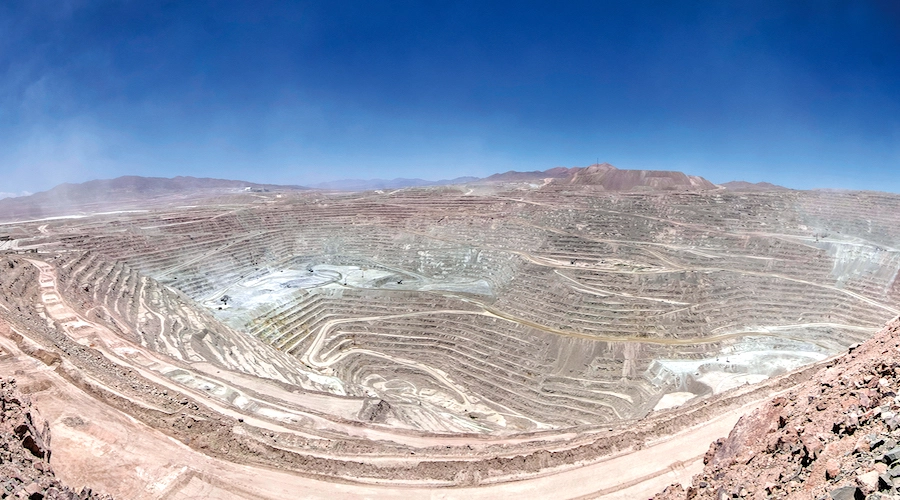
Chile is central to BHP’s copper story. The company operates Escondida, the world’s largest copper mine, in the Atacama Desert of Chile’s Antofagasta region—a remote, high-altitude area that has become the heart of global copper production.
Escondida produced 1.261 million tonnes of copper in FY2026. That represents a big share of BHP’s total group copper output of 1.953 million tonnes for the year.
BHP also runs the Spence mine in Chile, but the FY2026 production figure for Spence was not available in the results materials. Group copper output fell 3% year on year, partly due to lower volumes at Escondida and Spence.
Despite lower volumes, copper’s high prices and strong margins made it the top earner. The 70% margin on copper EBITDA reflects efficient operations, favorable market conditions, and the high quality of the ore being processed.
Live Market IntelligenceChile — Live Market Board
Rio Times · Live Market Intelligence
Chile — Live Market Board
-0.56%
187,197.46
+0.46%
63,828.60
-0.60%
10,908.18
-0.56%
2,758,840
+0.00%
2,530.05
-0.75%
59,831.84
-0.13%
| Instrument | Last | Change | YoY | Prev. | High | Low | Volume |
|---|---|---|---|---|---|---|---|
| IPSA | 10,908.18 | -0.56% | — | 10,969.49 | 11,210 | 10,984 | 1,513,213,483 |
| USD/CLP | 913.98 | +0.04% | -5.67% | 913.65 | 915.11 | 906.68 | — |
| COPPER | 6.61 | +0.03% | +46.70% | 6.61 | 6.71 | 6.61 | 39,543 |
| SQM-B | 65,305 | -0.84% | +49.03% | 65,860 | 66,949 | 64,978 | 76,539 |
| COPEC | 5,964 | -1.09% | -11.70% | 6,030 | 6,100 | 5,960 | 634,331 |
| BSANTANDER | 78.37 | -2.28% | +35.94% | 80.20 | 81.69 | 78.34 | 36,288,711 |
| FALABELLA | 6,334 | -1.48% | +23.28% | 6,429 | 6,450 | 6,300 | 26,085,814 |
| ENELAM | 87.09 | +0.10% | -10.13% | 87.00 | 87.40 | 86.50 | 13,106,417 |
| CENCOSUD | 1,946 | -2.19% | -35.30% | 1,990 | 2,010 | 1,945 | 966,528 |
| CMPC | 1,020 | -1.96% | -29.10% | 1,040 | 1,050 | 1,015 | 3,526,677 |
| BANCO CHILE | 184.96 | -1.01% | +32.87% | 186.85 | 189.99 | 184.33 | 18,101,240 |
| LATAM AIR | 24.08 | -1.11% | +16.61% | 24.35 | 24.59 | 23.88 | 573,612,753 |
| SOUTHERN COPPER | 193.97 | -0.26% | +104.01% | 194.48 | 199.36 | 192.59 | 367,102 |
What it means for the Chilean treasury
Chile’s government depends heavily on copper revenues, which fund public services, infrastructure, and social programs. When BHP’s copper profits rise, so do the tax payments that flow to the Chilean state.
BHP’s global payments to governments totaled US$12.4 billion in FY2026, according to its Economic Contribution Report, also published on 18 August 2026. That figure covers all countries where BHP operates, not just Chile.
The same report shows a total global economic contribution of US$50.8 billion, which includes wages, taxes, and payments to suppliers across all of BHP’s operations. The company’s global employee wages and benefits alone reached US$5.5 billion.
Global context and outlook
The shift to copper comes as the world invests heavily in electrification and clean energy infrastructure. Copper is essential for electric vehicles, solar panels, wind turbines, and power grids, making it a critical metal for the energy transition.
BHP’s FY2026 results reflect this rising global demand, even though the company’s own copper output dipped 3%. Revenue growth was driven primarily by higher prices for copper and other commodities, rather than increased production volumes.
For investors, copper’s rise is a sign to watch Chilean mining assets closely. Chile holds about a third of the world’s copper reserves, and the country’s mining sector is a key global supplier.
BHP’s net debt of US$8.7 billion is modest relative to its EBITDA of US$32.9 billion, giving the company ample capacity for future investments in copper projects, including in Chile. The company has already flagged growth projects such as Spence SCPY, though specific FY2026 output figures for Spence were not disclosed.
Why this matters for Latin America
If you live in or invest in Latin America, copper is a headline story. Chile’s economy, public spending, and even its currency all move with copper prices, so BHP’s results are more than just a corporate update—they are a macro indicator.
When BHP earns more from copper, it pays more taxes in Chile, which can boost public investment in schools, hospitals, and roads. A stronger copper sector also supports jobs and suppliers across the region, from mining equipment makers to logistics firms.
But lower production volumes at Escondida and Spence are a cautionary note. Operational challenges, water restrictions, or ore grade decline could limit future growth, and investors should watch for how BHP addresses these issues.
Investors should track BHP’s FY2027 guidance for copper production, which will indicate how much Chile can contribute to future profits. The company’s capital allocation decisions—whether to invest more in Chile or elsewhere—will also shape the region’s mining landscape for years to come.
More: Chile news in English, every day from The Rio Times.
Frequently Asked Questions
What is EBITDA?
EBITDA stands for earnings before interest, taxes, depreciation, and amortization. It measures operating profitability before accounting for debt costs and asset wear.
How much copper did BHP produce in FY2026?
BHP’s total copper production fell 3% to 1.953 million tonnes. Escondida produced 1.261 million tonnes. No FY2026 figure was available for the Spence mine.
What is Escondida?
Escondida is the world’s largest copper mine, located in Chile’s Antofagasta region. BHP operates it and holds a majority stake.
Connected Coverage
BHP Bets Big on Chile Copper: US$14.7bn Plan
BHP May Sell Its Chile Desalination Plant That Feeds the Top Copper Mine
Sources: investing.com; news.metal.com; tradingview.com; za.investing.com; fool.com.au
This article was produced by The Rio Times’ automated newsroom system. How we use AI · Report an error · Editorial responsibility: Matthias Camenzind, Editor-in-Chief
In depth
Read More from The Rio Times