Argentina Chile Border: Andes Pass Reopens After 25-Day Storm Ordeal
Key Facts
- Cristo Redentor — Closed from 14 July until 8 August 2026, a 25-day shutdown, stranding about 2,000 trucks.
- Pehuenche Pass — Also closed on 8 August due to weather, adding to regional disruption.
- Pino Hachado — Interrupted in early August by snow and ice, affecting alternate routes.
- Icalma Pass — Closed on 8 August with heavy snow and frozen roadway, per official reports.
- Mamuil Malal — Closed on 7 August alongside Araucanía passes, complicating diversions.
- Truck backlog — Around 2,700 Argentine trucks waited in Mendoza at the peak, per ADN Radio.
- Economic impact — Fresh produce, wine, and industrial goods face delays, raising costs for importers in Chile.
Thousands of trucks resume crossing as Cristo Redentor clears, but delays and supply chain strains persist across the Andes.
The Argentina Chile border crossing at Cristo Redentor, the main Andes highway between the two countries, reopened on 8 August after being shut for 25 days by heavy snow and storms. That reopened artery clears a bottleneck that stranded about 2,000 trucks, but other passes like Pehuenche have also faced closures, keeping travel and trade on edge.
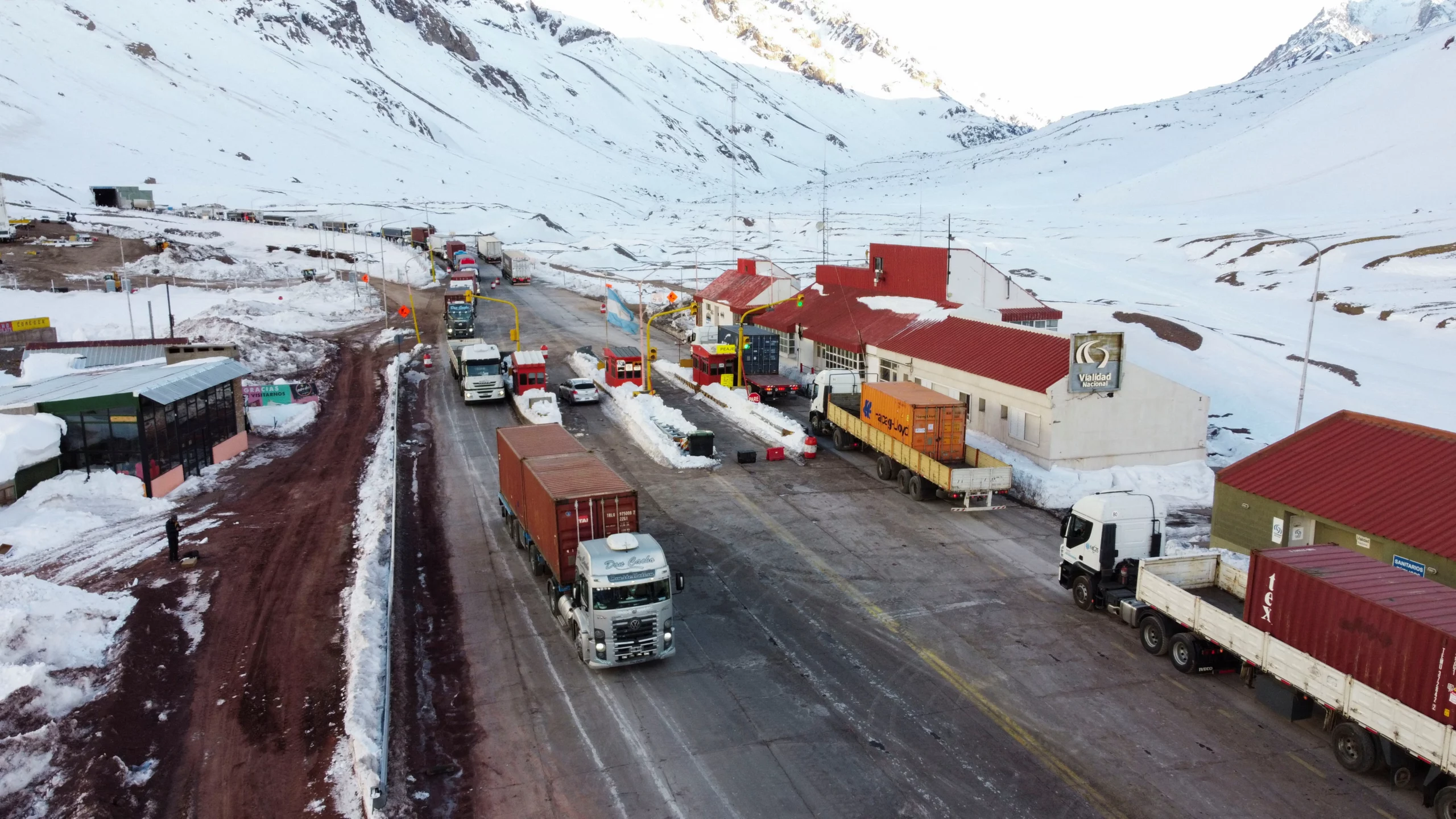
A 25-Day Shutdown at the Main Crossing: Argentina Chile border
The Cristo Redentor / Los Libertadores pass, which links Mendoza to Santiago, shut on 14 July when a severe winter storm dumped heavy snowfall. It stayed closed through at least 8 August, with reports from Prensa Latina and El Observador Mendocino confirming the 25-day duration.
During that time, roughly 2,000 trucks piled up on both sides, waiting for the road to clear. Infobae reported about 2,000 stranded, while ADN Radio cited around 2,700 Argentine trucks waiting in Mendoza alone, suggesting a location-specific count rather than the full total.
The closure forced drivers to park along mountain roads or in staging areas, creating a long queue that stretched for miles. Many drivers spent weeks in their cabs, relying on local aid for food and warmth.
Crews from both countries worked daily to clear snow and repair guardrails, but fresh storms kept undoing their progress. By the time the pass finally opened, a backlog of hundreds of trucks awaited the green light.
The reopening on 8 August let the first convoy roll through in a controlled manner, with police escorting vehicles in groups. That careful approach aimed to avoid new accidents on slick pavement.
Despite the reopening, officials warned that residual snow and ice could still cause delays. Drivers were advised to carry chains and check updates before heading to the pass.
Other Passes Also Closed, Complicating Diversions
Drivers seeking alternatives found little relief. Paso Pehuenche, a key crossing further south, closed on 8 August in both directions due to weather, according to El Observador Mendocino.
Chilean authorities also shut Pino Hachado, Icalma, and Mamuil Malal in early August because of snow and icy roads. That left few options for trucks carrying perishable goods across the Andes.
The simultaneous closure of several crossings meant that even if one pass opened, others remained blocked, forcing long detours. Some drivers opted to wait rather than risk dangerous routes.
Mountain towns along the alternate routes saw a surge of stranded travellers, filling local shelters and hostels. Shortages of fuel and supplies began to appear in the most remote areas.
For perishable goods like fresh fruit, every day of delay meant potential spoilage, adding to the urgency. Exporters scrambled to reroute shipments or find cold storage at the border.
The lack of alternatives also put extra pressure on the reopened Cristo Redentor, with hundreds of trucks queuing to cross as soon as it cleared. That suggests the backlog may take days to fully dissolve.
What It Means for Trade and Travel
This crossing handles a huge share of overland trade between Argentina and Chile, including fresh fruit, wine, and manufactured goods. The closure forced exporters to hold inventory or seek costlier air or sea routes, raising costs and delaying deliveries.
For travellers, the shutdown meant long detours or waiting out the storm in mountain towns. The reopening on 8 August brought relief, but queues remain as crews clear snow and repair roads, so expect residual delays during the week.
The economic ripple effects extend beyond the border, hitting importers in Chile who rely on Argentine produce. Supermarkets in Santiago reported spot shortages of certain fruits and vegetables during the closure.
Wine producers in Mendoza, a major export region, faced shipping delays that could push back delivery schedules to overseas buyers. Some contracts may be at risk if the backlog takes too long to clear.
Logistics companies are now reviewing their winter contingency plans, considering whether to pre-position goods on the other side of the Andes. That could add costs but also peace of mind for future storms.
For the local economy in Mendoza, the closure meant lost revenue for truck stops, hotels, and mechanics. The reopening is a welcome sign, but full recovery will take time.
Why This Matters for Expats and Investors
If you import Argentine products or rely on Chilean logistics, keep an eye on this pass during winter. A repeat closure could disrupt supply chains again, especially if another storm hits.
Investors in agriculture, mining, or retail should factor in these risks when assessing regional operations. The closure shows how a single weather event can squeeze margins and delay projects across two economies.
The incident also highlights the importance of infrastructure investment, as climate change may bring more frequent severe storms. Long-term planning should consider alternative transport modes or backup routes.
For expats living in the region, winter travel between the two countries may require extra flexibility. Checking official pass updates and weather forecasts before departure is now a must.
The reopening of the border is a relief, but the strain on supply chains is a reminder that resilience matters. Diversifying suppliers and routes can help buffer against future shocks.
Official Guidance and Sources
Argentina’s government publishes daily updates on pass conditions at argentina.gob.ar, listing Cristo Redentor and Icalma statuses. Chile’s authorities also issue alerts, so check both before travelling.
For the latest on reopening and queue times, follow El Observador Mendocino and Prensa Latina, which have tracked this closure closely. The pass is expected to return to normal within days, but winter is not over yet.
Local radio stations in Mendoza and Santiago have been relaying real-time information on pass conditions and truck queue lengths. Tune in if you are planning a crossing.
Both governments have set up coordination centres to manage the remaining backlog and ensure smooth traffic flow. They are also monitoring weather forecasts for any new storm systems.
More: Chile news in English, every day from The Rio Times.
The big picture: Argentina explained — economy, politics, society and daily life in one read.
Frequently Asked Questions
How long was the Argentina Chile border at Cristo Redentor closed?
The Cristo Redentor / Los Libertadores pass closed on 14 July and reopened on 8 August 2026, a span of 25 days. That ties to the longest closures in recent memory, per Prensa Latina.
Why did the Argentina Chile border close for so long?
A series of winter storms dumped heavy snow and triggered avalanches, making the mountain road unsafe. Chilean and Argentine crews worked to clear snow but faced repeated setbacks, extending the shutdown.
How many trucks were affected by the closure?
About 2,000 trucks were stranded at the peak, though some reports put the number higher, with 2,700 waiting in Mendoza alone. That backlog is now clearing as the pass reopens.
What alternatives exist if the Argentina Chile border closes again?
Other crossings like Pehuenche, Pino Hachado, and Icalma offer alternatives, but they also closed during this storm. In winter, check official updates and plan for possible detours or delays.
Connected Coverage
- Chile reopens its land borders with Argentina, Bolivia, and Peru
- New tourist border crossing between Argentina and Chile enabled
- Paraguayan Chancellery manages the movement of truckers on the border between Argentina and Chile
- Nearly 2,000 trucks stranded at Argentina-Chile border due to mandatory covid tests on drivers
Sources: Argentina’s Gendarmería; Chile’s border authority; La Nación; El Mercurio
This article was produced by The Rio Times’ automated newsroom system. How we use AI · Report an error
Read More from The Rio Times