
ANGOLA · POPULATION
Key Facts
- What is happening Angola’s final 2024 census counts 36,604,681 people, about 42% more than in 2014, after an adjustment for undercounting.
- Why it matters 62% of Angolans are under 25 and 65.5% live in cities, pressing jobs, schools and housing.
- The numbers Luanda has about 8.8 million people, Portuguese is the first language of 45.5%, and 44.2% are Catholic.
- Who is who Angola’s statistics institute ran the census; Ovimbundu, Kimbundu and Bakongo are the three largest ethnic groups.
- What to watch Watch the statistics institute’s remaining census tables and UN refugee counts for Luanda and Lunda Norte.
- What it means for you Angolans face a partial US visa suspension since 1 January 2026, and Americans see a Level 2 travel advisory.
Angola is a young country of 36.6 million people, and its 2024 census is the first in a decade. This guide explains who lives there and how.
Angola Population: Size and Growth
The Angola population reached 36,604,681 people in the final results of the 2024 census, Angola’s National Institute of Statistics (INE) says. INE published them in Luanda on 20 November 2025.
The census reference day was 19 September 2024, and fieldwork ran until 20 December 2024. The previous count, in 2014, found 25,789,024 people.
That is a rise of about 10.8 million, or 42%, in a decade. A calculation from the two figures gives growth of about 3.4% a year.
INE says a coverage survey in March and April 2025 estimated a net undercount of 28.3%. Without the adjustment, INE says, the census would have understated the population by almost a third.
The 42% rise therefore compares an adjusted 2024 figure with the 2014 census count. Treat the growth rate as an approximation.
Women make up 51% of residents and men 49%, which gives 96 men for every 100 women. The ratio was 94 in 2014.
INE counted 9.1 million households, with an average of 3.9 people each. Angola covers 1,246,700 square kilometres, so the density is about 29 people per square kilometre.
The World Bank put the population at about 36.75 million in 2023, before the census. That figure is an estimate, while INE’s is an adjusted census result.
More coverage sits on the Rio Times Angola page. Related reading covers the economy and key players, culture and the guide to Angola in Southern Africa.
A Young Country: Age and Households
INE says 62% of Angolans are under 25. The average age is 23.2 years, up from 20.6 in 2014.
The World Bank says about half of the population is under 18. It puts unemployment at 21.5% in the second quarter of 2026 and says about 80% of jobs are informal.
The World Bank also says real income per head in 2025 was 31% below its 2014 level. Oil still supplies about 95% of exports.
Men head 61.6% of households, and the most common age band for a head is 25 to 34 (27.0%), INE says. In Luanda that band makes up 28.0% of heads.
Urban and Rural Angola
About 23.99 million people, or 65.5%, live in urban areas, and 12.61 million, or 34.5%, live in rural areas, INE says. Urban residents are more likely to hold a birth certificate, an identity card and a secondary education.
Luanda is the most populous province, with about 8.8 million people in the national figures. That is 1.9 million more than in 2014.

Law 14/24 of 5 September split the old Luanda province, and the new Icolo e Bengo province has its seat in Catete. INE’s report for the current Luanda province counts 8,665,510 people, 99.3% of them urban.
The gap of about 151,000 people between the two Luanda figures is the size one would expect from the area that moved. That is this guide’s inference, not an INE statement.
Luanda’s mean age is 26.4, and 94.5% of people aged 15 and over can read, INE’s Luanda report says. Kilamba Kiaxi is its most populous municipality, with 1,120,781 residents.
Huíla, Huambo, Benguela, Cuanza Sul, Bié and Uíge each have more than 2 million people. Cuando has the fewest, just over 138,000.
INE’s Benguela report counts 2,597,638 people, 59.5% of them urban. It gives an intercensal growth rate of 1.5%, against 3.66% for Luanda.
Ethnic Groups of Angola
INE’s 2024 results name six main ethnolinguistic groups, meaning groups defined by shared language and ancestry. The Ovimbundu are the largest, at 29.1% of residents aged two and over.
- Ovimbundu: 29.1%, the largest group.
- Kimbundu: 27.0%, close behind.
- Bakongo: 14.4%.
- Lunda-Tchokwe: 8.9%.
- Nhaneca-Humbe: 5.8%.
- Xikwanyama: 2.6%.
Together the six groups account for 87.8% of residents aged two and over. Another 8.3% did not know their group, 3.2% named a different one and Herero people are 0.4%, INE says.
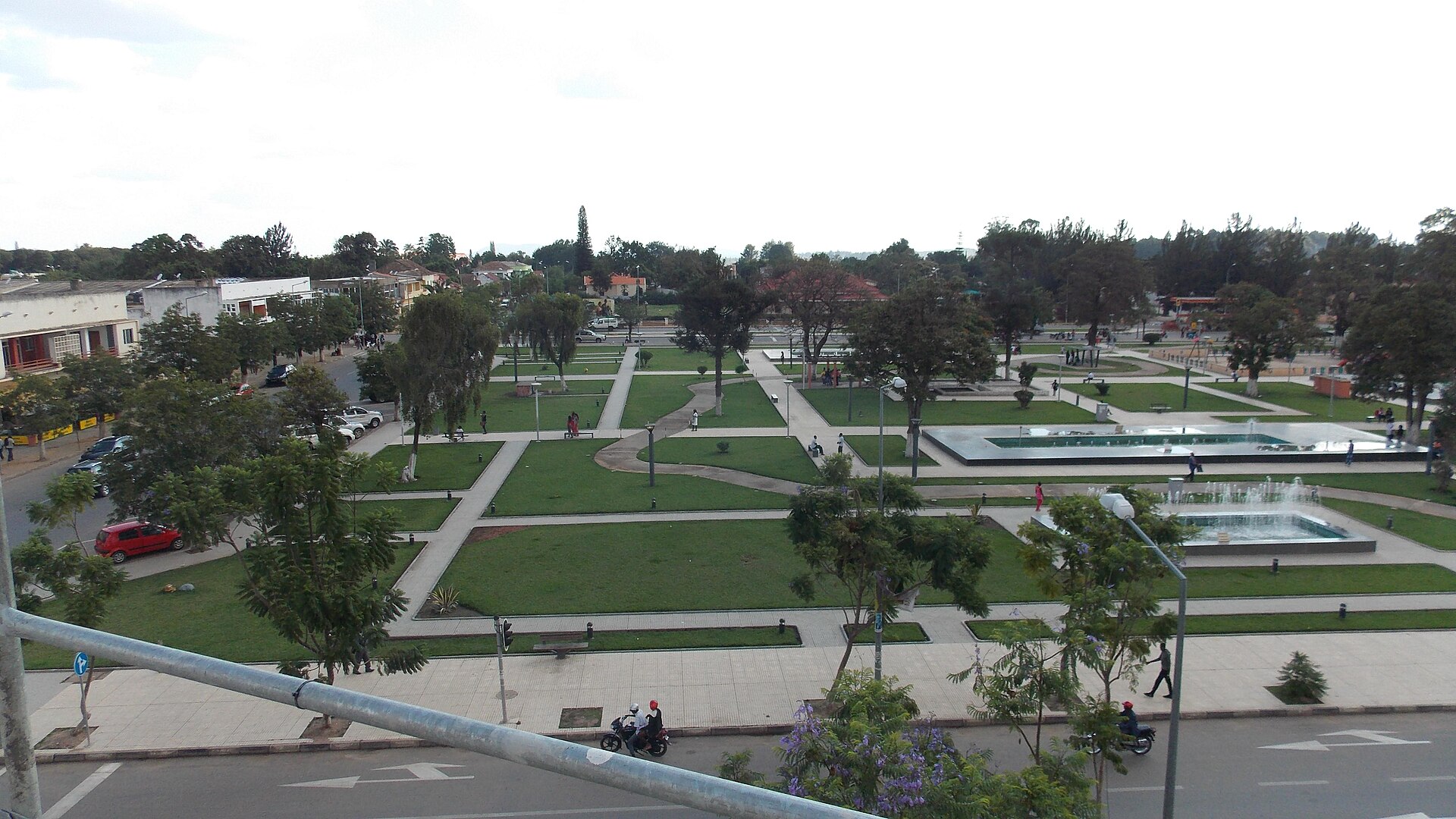
The group names mirror the main national languages: Umbundu, Kimbundu, Kikongo and Tchokwe. INE also lists smaller groups, each under 0.5%, including the Cuangar and Khoisan.
Article 23 of the constitution bars unequal treatment because of ethnic group, language or place of birth. It also says everyone is equal under the constitution and by law.
Languages of Angola
Portuguese is the first language of 45.5% of Angolans, INE says. Umbundu follows at 17.1%, Kimbundu at 10.8%, Tchokwe at 6.9% and Kikongo at 6.8%.
Article 19 of the constitution makes Portuguese the official language. It also commits the state to promote the study and use of other Angolan languages.
Portuguese reaches a larger share of people than any single group’s language. That suggests it works as a common tongue across group lines, though INE does not say so.
Religion in Angola
INE’s final 2024 report gives religion for people aged two and over. Catholics are 44.2%, up from 41.1% in 2014, and Protestants are 34.9%, down from 38.1%.
People with no religion are 11.5%, Muslims 0.4%, animists 0.1% and Jews 0.1%. Another 6.4% named a different faith and 2.4% did not answer.
Article 10 of the constitution declares a secular state with separation of state and church. A US State Department report on 2023 says the government estimates 88 registered religious groups.
Migration, Refugees and the Diaspora
The UN refugee agency, UNHCR, counted 55,173 people of concern in Angola on 30 September 2026. They include 24,692 refugees and 30,481 asylum-seekers and others.
Congolese make up 22,326 of the total, or 40.6%. Guinea (9,272), Côte d’Ivoire (6,357), Mauritania (5,725) and Somalia (2,002) follow.
The largest concentrations are in Luanda and Lunda Norte provinces, UNHCR says. The census release read gives no figure for foreign residents.
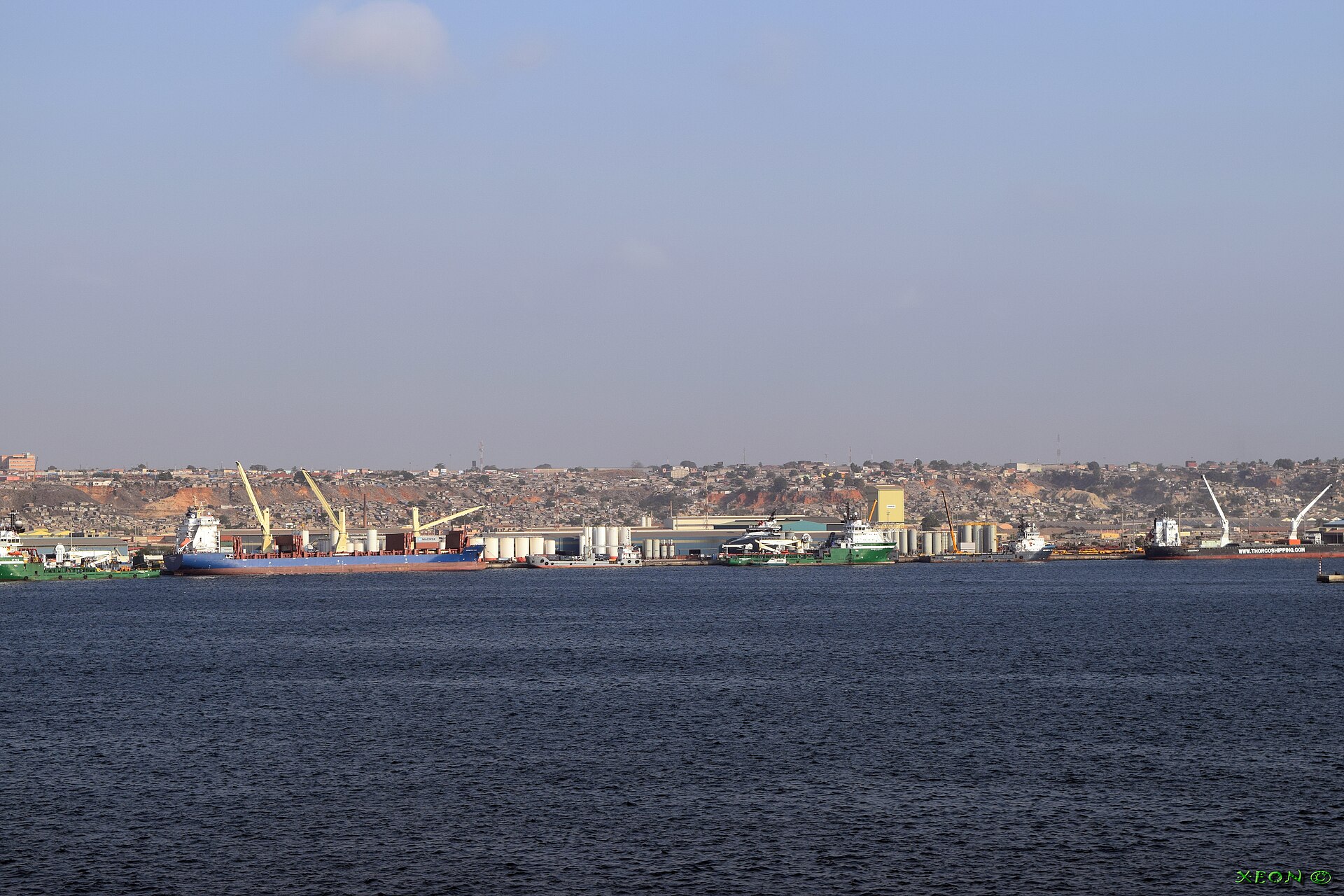
Portugal’s immigration agency, AIMA, lists 92,348 Angolan residents at the end of 2024. It issued 33,826 residence permits to Angolans that year, out of 218,332 in total.
No official count of Angolans in the United States, Brazil or France was found. The size of the diaspora outside Portugal is therefore not stated here.
How the Groups Live Together
Angola’s civil war ended in 2002, and the constitution now bars discrimination by ethnic group, language and faith. The census release read does not measure tension or intermarriage.
Luanda draws residents from across the country, and 8.67 million people live in the capital province alone, INE says. This guide found no official data on how groups mix there.
INE reports the highest sex ratios in Lunda Norte (106 men per 100 women) and Cuando (104). Benguela and Cunene have the lowest, at 92.
What It Means for US Readers
A presidential proclamation of December 2025 partly suspends entry for Angolan nationals from 1 January 2026. It covers immigrant visas and B-1, B-2, F, M and J nonimmigrant visas, meaning tourist, business, student and exchange visas.
The proclamation cites overstay rates of 14.43% for tourist and business visas and 21.92% for student and exchange visas. Green-card holders, dual nationals using another passport and diplomats are exempt, and visas issued earlier are not revoked.
Angola is on the 2026 list of 33 countries eligible for AGOA, the US duty-free trade programme. The Act is set to expire on 31 December 2026.
The State Department rates Angola Level 2, Exercise Increased Caution, in an advisory issued in September 2024. The US Embassy in Luanda is led by Chargé d’Affaires Shannon Nagy Cazeau, the acting head of mission.
For businesses, the census shows a young market centred on Luanda, but incomes per head are still below 2014 levels. Check State Department rules before booking travel or visa-dependent plans.
What Is Not Known
INE’s adjustment rests on a sample survey. Its own coverage chapter gives about 36.66 million, slightly above the 36,604,681 headline this guide uses.
The release read here has no fertility, life expectancy or foreign-resident figures. The 88 registered religious groups come from a US State Department report, not from INE.
The gap between the national and provincial Luanda figures is this guide’s inference. The size of the Angolan diaspora outside Portugal, and of Chinese, Brazilian and other foreign communities, was not found.
INE does not measure tension or intermarriage between groups. The size of the Angolan diaspora in the United States, Brazil and France is also not published.
Frequently Asked Questions
What is the population of Angola?
Angola had 36,604,681 people in its final 2024 census results, the National Institute of Statistics says. The results were published on 20 November 2025, and the total is adjusted for undercounting.
What are the largest ethnic groups in Angola?
The Ovimbundu are the largest at 29.1%, followed by the Kimbundu at 27.0% and the Bakongo at 14.4%. Lunda-Tchokwe, Nhaneca-Humbe and Xikwanyama make up the rest of the six main groups.
What languages do Angolans speak?
Portuguese is the first language of 45.5% of Angolans and the official language. Umbundu, Kimbundu, Tchokwe and Kikongo follow.
How many Angolans live in cities?
About 23.99 million people, or 65.5%, live in urban areas. Luanda has about 8.8 million residents.
Can Angolans get a US visa in 2026?
Entry of Angolan nationals as immigrants, and on tourist, business, student and exchange visas, has been suspended since 1 January 2026. Exceptions and case-by-case waivers apply.
How many refugees live in Angola?
UNHCR counted 24,692 refugees and 30,481 asylum-seekers and others on 30 September 2026, 55,173 people in all. Congolese are the largest group.
What religions are practised in Angola?
The 2024 census puts Catholics at 44.2% and Protestants at 34.9%. People with no religion are 11.5%, and Muslims are 0.4%.
Sources: National Institute of Statistics of Angola (INE), final 2024 census results, 20 November 2025; INE (2024 census, Benguela province report); INE (2024 census, Luanda province report, 2026); INE (2024 census, Bengo province report, 2026); Constitution of Angola, 2010 (Articles 10, 19 and 23); World Bank (Angola overview); UN refugee agency UNHCR (Angola data portal, 30 September 2026); Portugal AIMA (Migrations and Asylum Report 2024); US State Department (2023 Report on International Religious Freedom: Angola); INE (2024 census, final results report, religion, ethnic group and coverage survey chapters); US State Department travel advisory, Angola; White House (proclamation restricting entry, December 2025); US Federal Register (AGOA eligibility review notice, 30 June 2026); US Embassy in Angola (all accessed 3 and 4 November 2026).
This article was produced by The Rio Times’ automated newsroom system. How we use AI · Report an error · Editorial responsibility: Matthias Camenzind, Editor-in-Chief
Expat Guide to Angola
What The Rio Times publishes for foreigners who live in or move to Angola.
Understand Angola