
ANGOLA · ECONOMY
Key Facts
- The country Angola is a southwestern African oil exporter of about 39 million people, led by President João Lourenço.
- Why it matters The bill sets the oil price, kwanza rate and spending that US investors and oil firms track.
- What happened A 37.34 trillion kwanza (US$40.9 billion) bill, reviewed 27 October, is due in Parliament on 30 October.
- What it means for you Watch the oil price, exchange rate and election-year spending that the bill assumes.
- Still open The full bill text and any changes before the vote are not yet public.
Angola’s government is asking Parliament to approve a 2027 budget of 37.34 trillion kwanzas (US$40.9 billion), the bill that sets the oil price, exchange rate and spending that US investors and oil companies track. The Council of Ministers reviewed it on Tuesday 27 October, and it is due to reach the National Assembly on Friday 30 October.
Parliament must vote on the budget by Tuesday 15 December so that it can take effect on 1 January 2027, the year of the next general elections. Conversions in this article use the National Bank of Angola reference rate of 913 kwanzas per US$ on Thursday 29 October.
For US readers the bill matters because oil, fuels and gas made up 95.56% of Angola’s goods exports in September, so one price assumption drives the kwanza, the deficit and debt payments. The Brent spot price stood at US$123.10 a barrel on Tuesday 27 October, according to the US Energy Information Administration, far above the US$61 used in the 2026 budget, a gap covered in an earlier article on Angola’s oil price gap.
In Plain English
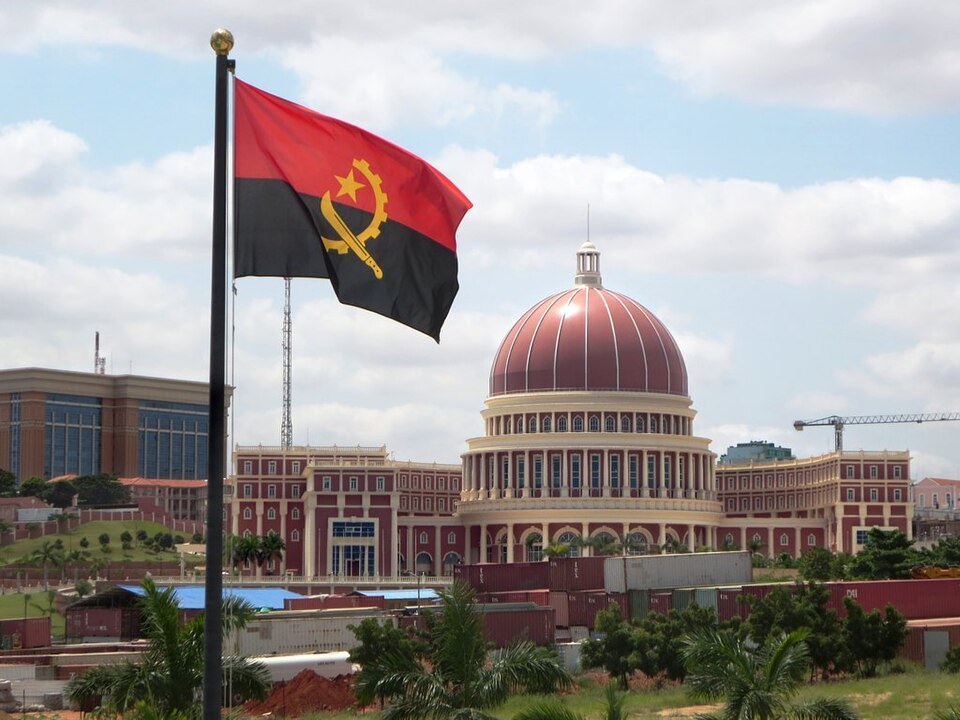
The Council of Ministers is Angola’s cabinet, chaired by the president, and it reviews bills before they go to Parliament. The National Assembly is the parliament in Luanda, where the ruling MPLA party has the largest bloc.
A budget bill, called the OGE in Portuguese, lists the revenue the state expects and the limits on spending for the year. Its oil price assumption matters most, because crude sales dominate the country’s exports.
What the Government Sent to Parliament
The Council of Ministers met in its ninth ordinary session in Luanda on Tuesday 27 October, chaired by President João Lourenço. The communiqué issued after the meeting listed the budget bill, a report on how the 2026 budget was carried out in the third quarter, and bills on ride-hailing transport and on small and medium-sized businesses.
The 37.34 trillion kwanzas set out the revenue the state expects to collect and the limits on public spending next year. Local accounts differ on the size of the increase, putting it at roughly 3 trillion to 4 trillion kwanzas above this year’s budget.
The bill has to balance the cost of an election year with spending on jobs and social services. The Finance Ministry’s website showed a maintenance notice on Friday, so the full text could not be read.
The Oil Price and Kwanza Assumptions
A business-press report citing government sources says the bill’s macroeconomic table assumes US$71 a barrel for 2027, against US$61 in the 2026 budget and an average of US$87.4 that the government now assumes for 2026. It adds that output is pencilled in at slightly above 1 million barrels a day, about 44,800 barrels a day less than the roughly 1.046 million in the revised 2026 programme.
The same report says the table assumes an average rate of 936.7 kwanzas per US$ in 2027, about 2.6% more kwanzas per dollar than the 913 now set by the central bank. That would be a gentle slide, not a sharp devaluation.
On growth, the table is described as assuming real GDP growth of 5.5% in 2027, with 7.2% for the non-oil economy and a 3.8% fall for the oil sector. It is also said to expect inflation of 7.3% at the end of 2027, after annual inflation of 8.43% in September.
A US$71 assumption sits about US$52 below the Brent spot price of US$123.10 on 27 October, which would leave a wide cushion if prices hold. The 2026 budget used 1.050 million barrels a day of output.
A Pay Rise Offer and an Election Year
On Monday 26 October the government offered the trade union confederations a 10% pay rise for civil servants in 2027, according to Teresa Rodrigues Dias, the Minister of Public Administration, Labour and Social Security. The unions welcomed a public-sector health insurance product due in January 2027, but a local business-press report of 30 October says union leaders reject the 10% and demand the full pay adjustment promised in a 2024 agreement.
The ruling MPLA party holds its congress on 9 and 10 December, just before Parliament’s budget deadline of 15 December. Lourenço is serving his second and last term, so the 2027 election will choose his successor.
What It Means for You
US investors in Angolan debt or local assets should read the bill for the oil price, the kwanza rate and the deficit, the three numbers that drive the country’s debt payments. A budget price of US$71 sits far below recent market prices, which would leave room for extra revenue if prices hold.
US oil and service companies in Angola, and US exporters selling to Angolan importers, should note the kwanza assumption, which points to a slightly weaker local currency. A weaker kwanza makes local goods cheaper in dollar terms but raises the cost of US imports for Angolan buyers, a theme that runs through the wider Angola coverage.
What Is Not Known
The full bill text was not available on the Finance Ministry’s website on Friday, so the oil, growth and exchange-rate assumptions described here come from one business-press report on the macroeconomic table and are not confirmed by the ministry. The deficit and the split between oil and non-oil revenue were not in the accounts available.
It is not known whether Parliament will change the bill before the vote, or whether the unions will accept the 10% pay offer. The baseline for the increase is also unclear, because accounts give different figures for this year’s budget.
Frequently Asked Questions
How big is Angola’s 2027 budget?
The bill totals 37.34 trillion kwanzas, or about US$40.9 billion at the central bank’s reference rate of 913 kwanzas per US$ on 29 October. It sets expected revenue and spending limits for 2027.
When will Angola’s Parliament vote on the budget?
Under Angolan law the National Assembly must vote by 15 December. If it passes, the budget is published so that it applies from 1 January 2027.
What oil price does Angola’s 2027 budget assume?
A business-press report citing government sources puts it at US$71 a barrel, up from the US$61 in the 2026 budget. The Finance Ministry has not yet published the full text.
Is Angola’s kwanza expected to weaken in 2027?
A business-press report citing government sources says the budget assumes 936.7 kwanzas per US$ on average, about 2.6% more than the 913 set by the central bank on 29 October. That points to a modest slide, not a sharp devaluation.
Sources: National Bank of Angola, reference exchange rate, 29 October 2026; Angola National Institute of Statistics, foreign trade statistics, September 2026; MPLA, convocation of the 9th Ordinary Congress, 21 March 2026; Angola National Institute of Statistics, home page, inflation for September 2026 and 2026 population projection, checked 30 October 2026; US Energy Information Administration, Europe Brent spot price, daily, release of 28 October 2026; Government of Angola, Council of Ministers page, checked 30 October 2026; Angola Ministry of Finance portal, checked 30 October 2026.
This article was produced by The Rio Times’ automated newsroom system. How we use AI · Report an error · Editorial responsibility: Matthias Camenzind, Editor-in-Chief