Algeria Gas Exports Jump as Europe Leans on Algiers
Economy · Algeria
Key Facts
- —The volumes In 2025 Algeria supplied the EU with 39–40 bcm of gas, about 13–14% of EU imports, mostly by pipeline.
- —The 2026 shift May 2026 LNG exports jumped 48% year-on-year to 1.04 million tonnes, led by France, Turkey and Spain.
- —The contracts Sonatrach signed a gas deal with Germany’s VNG on 16 July 2026, with deliveries starting 1 January 2027.
- —The fiscal exposure Hydrocarbon tax revenue of DZD 2,697 billion (about US$20.2 billion) funds a 2026 budget carrying DZD 657.65 billion (US$4.9 billion) in subsidies.
- —The catch Algeria’s budget still needs high oil prices to balance, even as pipeline routes, not LNG, carry most of its gas exports.
Algeria is selling more gas to a worried Europe. But that gas money funds a budget that still leans on subsidies and imports.
Bcm is short for billion cubic metres
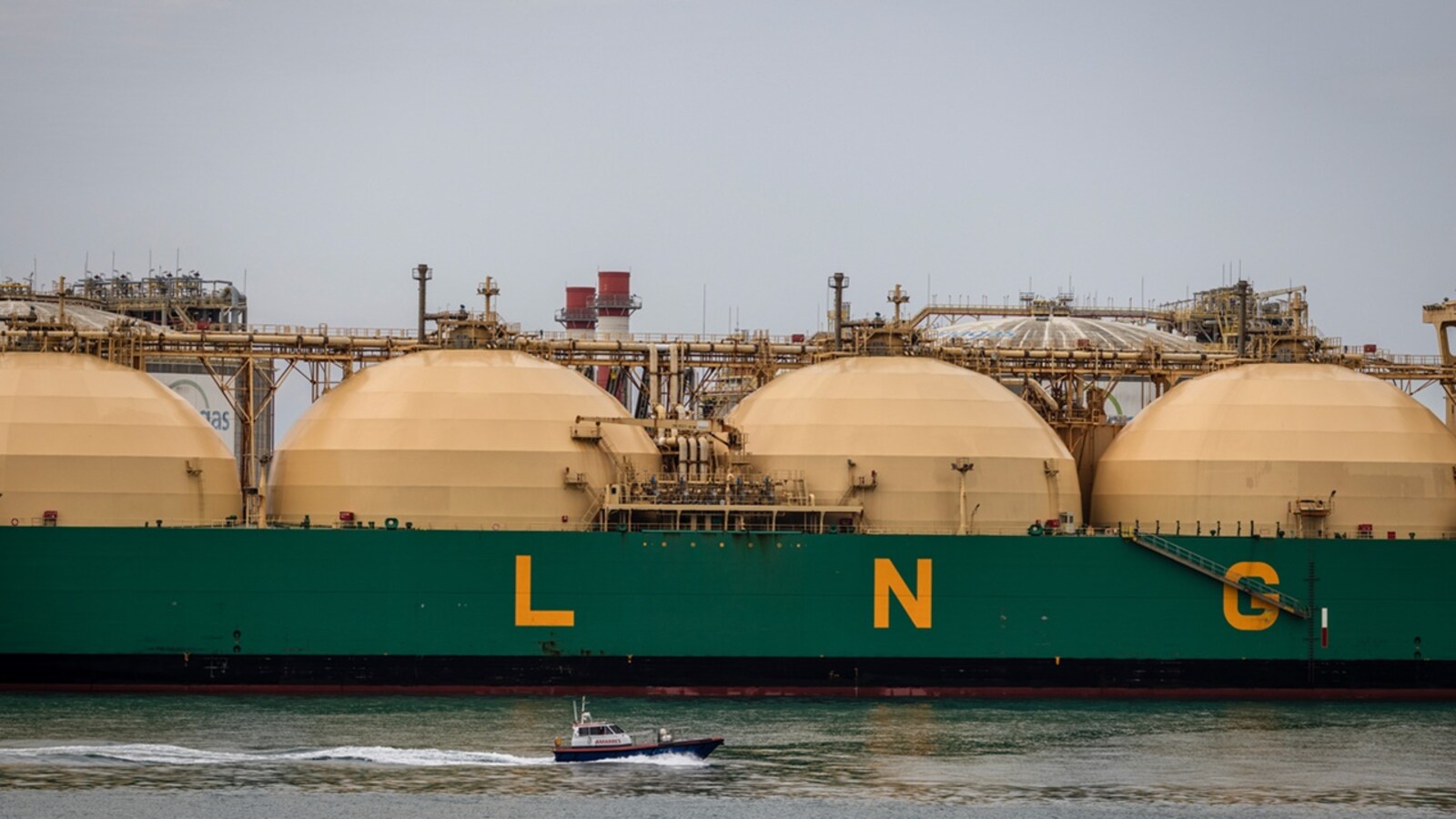
This article uses bcm, short for billion cubic metres, the standard unit for gas volumes. LNG, or liquefied natural gas, is gas cooled into liquid form for shipping by tanker rather than pipeline.
A 13% share of Europe’s import wall
In 2025 Algeria supplied the European Union with 39–40 bcm of gas, roughly 13–14% of EU imports, according to Euronews. Most of that arrived by pipeline rather than as LNG.
The figure made Algeria a steady supplier to Europe, not just a swing producer. For comparison, Algeria exported 49 bcm in total during 2024, with pipelines carrying 35 bcm and LNG the remaining 14 bcm.
Pipeline flows regain speed in 2026
In January 2026, Algerian pipeline gas flows rose 22% versus December 2025, according to European data. The increase showed a quick response to winter demand.
The Medgaz pipeline to Spain has a capacity of 10.5 bcm a year, expanded from 8 bcm in 2021. It carried a record 9.4 bcm in 2024.
The TransMed pipeline through Tunisia to Italy is commonly cited with a capacity of around 30–33 bcm a year. It remains the single largest physical gas link between Algeria and the EU.
LNG becomes the fast-moving lever
In May 2026 Algeria exported 1.04 million tonnes of LNG, up 48% from 700,000 tonnes in May 2025. Buyers concentrated in France, Turkey and Spain.
France took 234,000 tonnes in May 2026, Turkey bought 203,000 tonnes and Spain imported 200,000 tonnes. Even so, first-half 2026 LNG shipments were only 4.47 million tonnes, down 6.5% on the first half of 2025.
The picture is uneven, not a clean upward trend. LNG volumes slipped from nearly 17 bcm in 2023 to 14.5 bcm in 2024, hurt by equipment trouble at the Arzew plant.
May exports show the two-route mix
In May 2026 total Algerian gas exports reached 4.528 bcm, up more than 11% year-on-year. Pipeline flows supplied 3.209 bcm, while LNG added 1.320 bcm.
Combined pipeline and LNG exports to Europe were reported at 39.5 bcm out of 50 bcm in total exports for May 2026. That concentration gives Algiers more say over pricing, but also exposes it to any drop in European demand.
Sonatrach’s contract book thickens
Sonatrach, Algeria’s state hydrocarbons company, signed a natural gas supply deal with Germany’s VNG on 16 July 2026 in Berlin. The signing came during a visit by President Abdelmadjid Tebboune, and extends gas deliveries to Germany.
In 2024 Sonatrach renewed LNG supply contracts with Turkey’s BOTAS, Greece’s DEPA, France’s Engie and France’s TotalEnergies. These long-term deals accounted for more than 10 bcm, with the rest sold on spot markets.
A US$60 billion bet on upstream capacity
In 2023 Sonatrach announced US$50 billion of investment for 2024–2028, with more than 70% earmarked for exploration and production. Sonatrach and TotalEnergies also signed contracts worth $740 million in July 2023 to raise output from two Sahara fields.
Sonatrach has since gone further. It approved a new US$60 billion investment plan running from 2025 through 2029, focused on exploration, transport and processing of gas.
Budget arithmetic still runs on hydrocarbons
Algeria’s 2026 state budget sets expenditure at DZD 17,636 billion, or about US$132 billion. That conversion uses the September 2026 rate of roughly 133 dinars to the dollar.
Planned revenue is DZD 8,009 billion, or about US$60 billion. Separately, the government says it is targeting a 2026 deficit of about US$40 billion, 12.4% of GDP, down 35% from 2025.
Hydrocarbon-sector tax revenue of DZD 2,697 billion, about US$20.2 billion, funds nearly a third of all state income. The IMF, or International Monetary Fund, put that share at 60% in 2023, falling to 50% in 2024.
The World Bank puts oil and gas at 13.3% of GDP and 82.6% of exports over 2020–2024.
The break-even problem
Algeria’s 2026 budget assumes an oil price of $70 a barrel, according to hydrocarbons minister Mohamed Arkab. But the IMF put the price Algeria actually needs to balance its books much higher, near $119 a barrel for 2025.
That gap matters because Brent crude has traded well below $119 through most of 2026. Every dollar below that break-even level widens the budget shortfall Algeria must cover from reserves or borrowing.
Subsidies keep the social contract intact
The 2026 budget includes DZD 657.65 billion, about US$4.9 billion, for subsidies on food staples and energy. Covered items include cereals, milk, sugar, cooking oil, coffee and desalinated water.
The IMF advised Algeria in July 2026 to widen tax collection and trim subsidy spending. That advice has been repeated for years, with little change.
Algerian government spending averaged 35.5% of GDP over 2020–2024, exceeding revenue by 7.8% of GDP in the same years. The gap persisted even when hydrocarbon prices were high, pointing to a spending pattern rather than a one-off shock.
Diversification talk versus hydrocarbon reality
Official plans mention hydrogen projects such as ALTEH2A and the SoutH2 Corridor, both referenced in Sonatrach’s VNG contract. Yet hydrocarbon tax receipts still dominate revenue and exports.
The World Bank’s 82.6% export share for oil and gas leaves little room for other earners. Manufacturing and agriculture remain mostly focused on the domestic market.
What Europe’s 2026 energy map means for Algiers
Europe’s search for gas supply outside the Strait of Hormuz has raised Algeria’s importance. The Medgaz and TransMed pipelines offer more political reliability than routes through maritime chokepoints.
Sonatrach’s VNG deal shows Germany building long-term supply links beyond 2026. Spanish and Italian demand continues to anchor the older pipeline routes.
A strategic window, not a permanent reset
Algeria is selling into a window opened by European anxiety over supply and global gas tightness. The 2026 volume gains are real but modest against the country’s history as an exporter.
Sonatrach’s investment plan is large, but new upstream capacity takes years to arrive. Near-term export gains depend mostly on existing fields and spare pipeline room.
Algeria’s budget spends export revenue almost as fast as it arrives, with social spending and subsidies absorbing much of any windfall. Europe needs Algerian gas now, and Algiers needs the cash just as badly.
But the arrangement only balances Algeria’s books if oil prices stay well above the government’s own budget assumption.
The Big Picture
More from the Algeria section
Latest developments
- Elsewedy Electric Signs US$2.2bn Saudi Deal — 14 October 2026
- Morocco Growth Seen at 4.5%, Deficit Doubles — 14 October 2026
- Egyptian Pound Slides Past 53 per Dollar — 14 October 2026
- Cairo Clocks Go Back One Hour on 29 October — 14 October 2026
This article was produced by The Rio Times’ automated newsroom system. How we use AI · Report an error · Editorial responsibility: Matthias Camenzind, Editor-in-Chief
LatAm Markets: Live Signals → — real-time movers, turnover leaders and FX across Latin America.
Expat Guide to Algeria
What The Rio Times publishes for foreigners who live in or move to Algeria.
Understand Algeria