Zimbabwe Budget Adds No New Taxes
Zimbabwe’s budget trades new taxes for modest relief and a push to buy local, while slower growth and lithium export curbs test whether the plan reaches households and investors.

Zimbabwe: Budget
Zimbabwe’s finance minister told Parliament on Thursday that his 2027 budget contains no new taxes. Mthuli Ncube presented a ZiG358.3 billion (about US$12.8 billion) spending plan, counted in Zimbabwe Gold (ZiG), the local currency, in Harare, the capital, on 19 November 2026.
Workers get a higher tax-free pay limit and phone imports lose a 25% duty under the proposals, while large buyers must source part of their inputs at home from January. The curbs on raw mineral exports reach furthest abroad, because lithium, a metal used in electric-vehicle batteries, is among Zimbabwe’s exports.
Key Facts
- Who. Finance Minister Mthuli Ncube presented the 2027 National Budget to Parliament in Harare.
- What. No new taxes; the monthly tax-free pay limit rises from US$100 to US$150 under the proposals.
- Where. Parliament, Harare; the plan totals ZiG358.3 billion (about US$12.8 billion).
- When. Presented Thursday 19 November 2026; the pay limit and local-buying rule start 1 January 2027.
- As of. 20 November 2026, 10:25 GMT.
Zimbabwe’s budget trades new taxes for modest relief and a push to buy local, while slower growth and lithium export curbs test whether the plan reaches households and investors.
Recent budgets added levies: the 2025 budget, presented in November 2024, brought taxes on fast food, sports-betting winnings and plastic bags. Last November’s 2026 budget raised value-added tax by half a point and cut the Intermediated Money Transfer Tax (IMTT), a charge on electronic payments, from 2% to 1.5% on ZiG payments.
This time he told lawmakers: “In this budget, there are no new taxes; secondly, there are no increases in the current taxes either … only relief measures for the public and corporates.” Ncube said the economy grew 8.3% in 2025, which he called the fastest in the Southern African Development Community (SADC), the regional bloc, but he projects 3.5% growth in 2027, down from 5% in the earlier forecast.
The monthly tax-free pay limit rises from US$100 to US$150, or the ZiG equivalent, from 1 January 2027, and the tax bands, the income brackets, move with it. Workers earning above the old limit keep more of each month’s pay, although Parliament must still approve the proposals.
The money-transfer levy falls from 1.5% to 1.25% on ZiG payments and from 2% to 1.75% on foreign-currency ones. That is less than business wanted: the Confederation of Zimbabwe Industries (CZI), a manufacturers’ lobby, has asked for the tax to be scrapped, and lawmakers had urged 1%.
Customs duty on mobile phones falls from 25% to zero, and on electric vehicles from 25% to 10%. Ncube said the phone cut, if approved, aims “to promote adoption and use of mobile ICT capabilities by the general populace”, meaning information and communication technology.
From 1 January 2027 the government, mining companies and all large entities must buy at least 15% of their inputs at home “where capacity exists”. A framework to guide the rule is still to come, so how capacity is judged is not yet known.
Ncube also said the government will “continue strengthening measures to restrict the export of unprocessed raw minerals”. He has said this year that the January 2027 end to lithium concentrate exports will not be delayed, and President Emmerson Mnangagwa said in a speech read for him at a mining fair in Bulawayo, Zimbabwe’s second city, that Zimbabwe expects to export only lithium sulphate, a refined lithium salt, from then.
Lithium concentrate is a partly processed ore that refiners turn into battery chemicals. Whether the budget changes that timetable is the open point for foreign mine owners.
With a severe El Niño drought expected (a weather pattern that brings dry spells to southern Africa), the budget sets aside a ZiG10.9 billion (about US$400 million) contingency buffer. Treasury, the finance ministry, said the Grain Marketing Board, the state grain buyer, had bought 365,000 tonnes of grain by the end of October toward a 600,000-tonne strategic reserve in 2027.
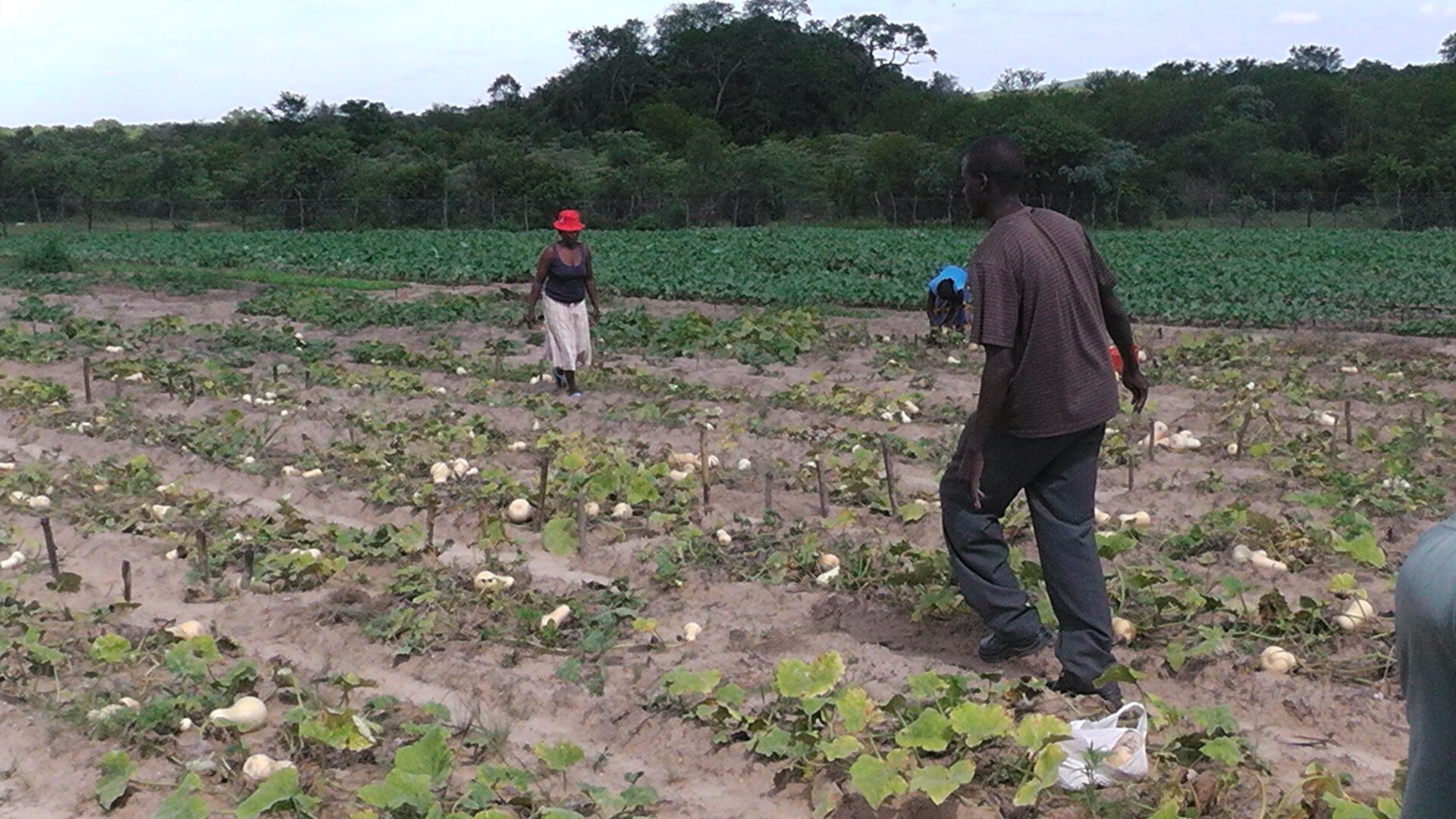
Zimbabwe has also bought drought insurance from the African Risk Capacity, a continental risk pool, for a US$3.4 million premium. After the 2023/24 drought the same scheme paid US$31.8 million, which helped more than 508,000 vulnerable households.
Not everyone sees the growth reaching people. Caston Matewu, a legislator for Marondera, a town east of Harare, said after the speech that “the people who are benefiting from this growth are those who are already rich”, and he questioned whether ministries would receive their full allocations.
Parliament now debates the proposals before they become law. The local-buying framework is due by 31 March 2027.
Frequently Asked Questions
Does Zimbabwe’s 2027 budget add new taxes?
No. The finance minister ruled out new taxes, though Parliament must still approve the proposals.
Who gains most from the changes?
Wage earners, phone and electric-vehicle buyers and anyone sending money electronically pay less. Large buyers face a new duty to source locally.
Will Zimbabwe’s lithium exports change?
Officials have set January 2027 as the end date for concentrate exports. Foreign mine owners will watch whether the budget’s raw-mineral language alters that plan.
Sources
Budget speech of 19 November 2026 (Ministry of Finance, Economic Development and Investment Promotion); President’s 2026 mining-fair speech; Treasury 2027 budget documents.
Connected Coverage
Zimbabwe Miners Project US$14.6bn Revenue · Zimbabwe Inflation Rises to 4.3% in October · Zimbabwe Power Firm Seeks US$2.4B for Grid · Zimbabwe Takes Chair of 21-State Trade Bloc
This article was produced by The Rio Times’ automated AI newsroom. Editorial responsibility: Matthias Camenzind, Publisher and Editor-in-Chief. The Rio Times also runs Ask Rio Times, which answers from 100,000+ of our own articles, the daily Latin America Power Map, and prediction-market odds on elections and markets.. How we use AI · Report an error